


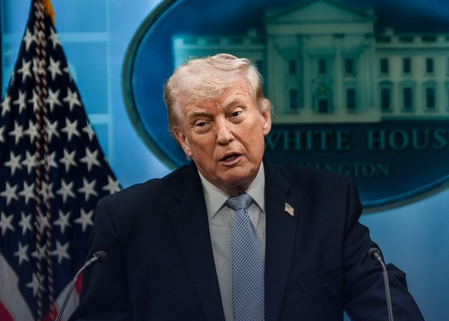
US President Donald Trump disclosed that some military officials had reservations about a daring rescue mission in Iran, citing internal concerns before he greenlit the operation. Trump acknowledged the dissent within the military ranks, stating that certain professionals were hesitant due to the operation’s high risk. The primary worry among military personnel was the potential loss of life, particularly considering the magnitude and danger of the mission.
The President, despite the cautionary advice, opted to move forward with the operation. Trump emphasized the extraordinary risks involved, including multiple aircraft navigating deep into Iranian territory, even conducting daylight operations in hostile airspace. The mission, lasting seven hours over Iran, was described as perilous, with aircraft flying at low altitudes and exposed to enemy threats.
Officials highlighted the extensive coordination required among air, ground, and intelligence units for the operation, with forces encountering gunfire during rescue attempts. Joint Chiefs Chairman Dan Caine characterized the mission as highly hazardous, noting that forces faced enemy fire upon entering Iranian airspace. Trump justified his decision based on the military principle of never leaving a service member behind, emphasizing the US military’s commitment to this doctrine.
The successful outcome of the mission, which resulted in the safe rescue of airmen without any casualties, is expected to bolster confidence in US special operations capabilities. However, the incident underscores the inherent risks associated with such missions and the crucial role of leadership decisions at the highest levels. The ongoing Iran conflict continues to pose challenges to US military strategy and decision-making, with operations growing more intricate and high-stakes.
