


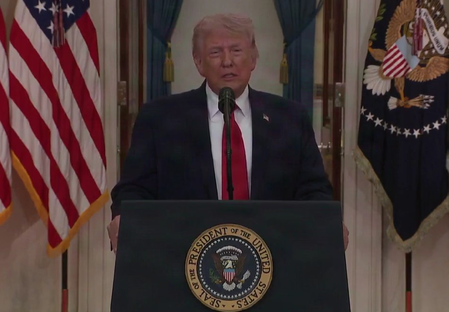
US President Donald Trump, in a televised address, called on nations reliant on Middle East oil to take responsibility for safeguarding the Strait of Hormuz, attributing disruptions and fuel price hikes to Iran’s actions. Trump emphasized that recent gasoline price surges were a direct outcome of Iran’s alleged terror attacks on oil tankers and neighboring nations. He cautioned that Iran’s behavior posed risks to global energy supplies and reiterated the US stance on Tehran’s trustworthiness regarding nuclear capabilities.
Trump stressed that the US would not shoulder the sole burden of protecting maritime routes, urging oil-importing countries using the Strait of Hormuz to ensure its security. He pointed out that some nations benefiting from the route had abstained from involvement in the conflict and should now play a role. Trump recommended that these countries purchase oil from the US and take proactive measures to safeguard the strait for their benefit.
Highlighting US energy independence, Trump asserted the nation’s robust gas and oil production capabilities, claiming the US outpaced Saudi Arabia and Russia combined in oil and gas output. He underscored the reduced reliance on Middle Eastern energy sources, emphasizing that the US, along with Venezuelan supplies, had significantly decreased its oil imports from the region. Trump expressed confidence that once tensions subside, domestic production strength would stabilize markets, leading to lower gas prices and increased stock values.
The Strait of Hormuz, a crucial passage for global oil shipments, faces potential disruptions that could impact international markets due to its strategic location between the Persian Gulf and the Arabian Sea. India, a major importer of Gulf oil, remains vulnerable to any disturbances in the strait, which could directly affect inflation, trade balances, and energy security in the region.
