


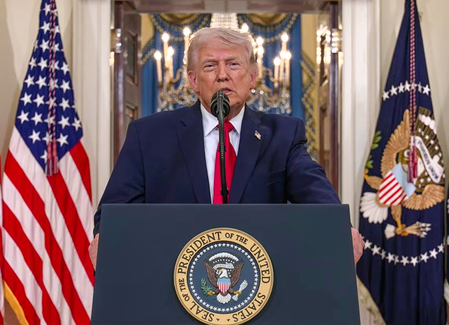
U.S. President Donald Trump issued a warning to Iran, giving them 48 hours before taking action, emphasizing that time is running out. This warning coincides with growing criticism from Congress regarding the administration’s approach to the ongoing conflict. Lawmakers have raised concerns about the lack of clarity in Trump’s objectives and strategies in dealing with Iran.
Representative Brad Schneider, a member of the House Foreign Affairs Committee, expressed disappointment in the President’s failure to provide a clear direction in his goals. Despite Trump’s commitment to preventing Iran from acquiring nuclear weapons, there remains uncertainty surrounding the strategy to achieve stability and peace in the region.
Another lawmaker, Representative Joaquin Castro, strongly opposed the administration’s request for additional funding for the conflict with Iran. Castro criticized the war as being initiated without proper congressional authorization and under false pretenses. He highlighted the potential global and domestic repercussions of the conflict, particularly Iran’s ability to disrupt the flow of essential goods through the Straits of Hormuz.
Both Schneider and Castro advocated for a diplomatic approach to resolve the situation. Schneider emphasized the importance of collaboration with allies and leveraging both negotiations and military strength, while Castro called for a ceasefire and diplomatic agreement to reopen the Straits of Hormuz.
