


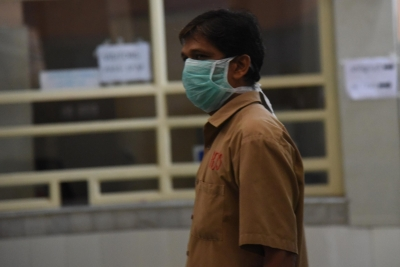
Two suspected cases of Nipah virus disease, a high-priority pathogen according to the WHO, have been found in West Bengal. The cases were identified at the Virus Research and Diagnostic Laboratory (VRDL), ICMR, AIIMS Kalyani. The Ministry of Health & Family Welfare is closely monitoring the situation, with Union Minister JP Nadda offering full support to Chief Minister Mamata Banerjee.
The Health Minister assured the Chief Minister of the Centre’s commitment to provide all necessary assistance in managing the situation. Despite Nipah being a zoonotic disease with high mortality and potential for rapid spread, the Central government is handling the situation with utmost priority. The Secretary of the Department of Health & Family Welfare, Government of India, held discussions with state officials to review the situation and ensure coordinated action.
A National Joint Outbreak Response Team, including experts from various institutions, has been deployed to assist the State Government in containment and public health response measures. Central Government guidelines on Nipah Virus Disease have been shared with the State Integrated Disease Surveillance Programme (IDSP) unit. The Public Health Emergency Operations Centre at the National Centre for Disease Control (NCDC), Delhi, has been activated to coordinate the national response.
Comprehensive technical, logistical, and operational support is being provided by the Centre to the State. All essential resources, including laboratory support, surveillance, case management, infection prevention, and expert guidance, have been mobilized. The State has been advised to ensure close coordination with the expert teams and to conduct meticulous contact tracing and containment measures.
Nipah virus disease, caused by the Nipah virus (NiV), is an emerging zoonotic infectious disease that can lead to acute encephalitis, severe respiratory illness, and high mortality rates. First discovered in Malaysia in 1999, the Nipah virus causes outbreaks in south and southeast Asia, particularly in India, with mortality rates ranging from 40% to 75%.
