


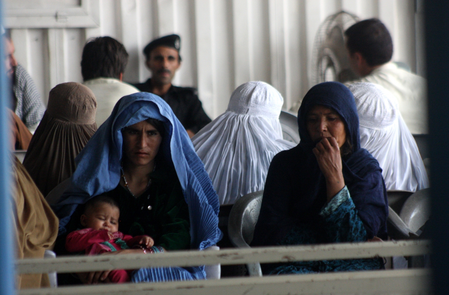
The United Nations Development Programme (UNDP) has highlighted the fragile economic conditions of Afghan women, citing limited job opportunities and income access. A recent report revealed that 75% of Afghans struggle to meet daily needs, with 88% of female-headed households lacking minimum living requirements. Afghanistan’s economy, impacted by conflict and reduced aid, has left many reliant on humanitarian aid and informal income sources for survival.
Restrictions on women’s employment and education in Afghanistan have further diminished income prospects, leading to families depending on irregular work as poverty and food insecurity rise. Only 7% of women work outside the home compared to 84% of men, underscoring significant gender disparities in employment opportunities in the country. The United Nations Office for the Coordination of Humanitarian Affairs (OCHA) predicted that 14.4 million Afghans will require health services in 2026, with only 7.2 million expected to be covered by existing programs.
The OCHA report highlighted that 54% of those needing health services are children, 24% are women, and 10% are specially-abled individuals. To address these health needs, over USD 190 million in funding will be necessary. Afghanistan is projected to remain the world’s largest humanitarian crisis in 2026, with 22 million people reliant on humanitarian aid. International organizations and NGOs are intensifying efforts to provide essential services like vaccinations, maternal care, and emergency medical assistance in the country.
