


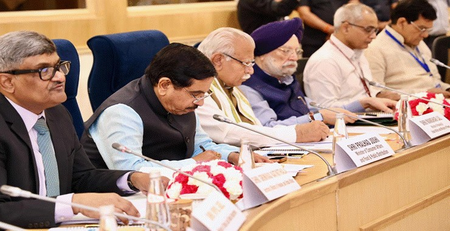
Union Minister Manohar Lal highlighted key priorities during a review meeting, focusing on single-window approvals, integrating PNG infrastructure into urban planning, enhancing last-mile connectivity, and aligning with urban development initiatives. He emphasized the crucial role of cities in driving economic growth and urged for a mission-mode approach to boost PNG expansion. The Ministry of Housing and Urban Affairs set a target of providing 50 lakh new PNG connections.
The meeting convened various stakeholders to strategize on expediting PNG network expansion in urban areas and ensuring continuous delivery of essential services. The Ministry of Petroleum and Natural Gas presented the current status of PNG rollout, emphasizing its benefits over LPG in terms of safety, reliability, affordability, and environmental sustainability. Challenges such as delays in municipal permissions and high restoration charges were identified as hindrances to timely network expansion.
Union Minister Hardeep Singh Puri discussed the evolving global energy landscape and stressed the significance of strengthening PNG infrastructure for energy security and resilience. He urged States and Urban Local Bodies to promote PNG adoption, especially in regions with existing infrastructure. Union Minister Pralhad Joshi emphasized the importance of maintaining essential supplies, combating misinformation, and preventing fuel black marketing. States were advised to enhance monitoring mechanisms and encourage the transition from LPG to PNG, prioritizing public institutions like schools and colleges.
Discussions at the roundtable highlighted best practices such as expediting road-cutting permissions and adopting deemed approval mechanisms for project acceleration. State representatives shared their insights, emphasizing the need for improved coordination among Urban Development Departments, Municipal bodies, and Food and Civil Supplies Departments for seamless implementation. Consensus was reached on facilitating a structured shift from LPG to PNG in areas with established infrastructure, supported by consumer awareness and safeguards to prevent service disruptions.
