


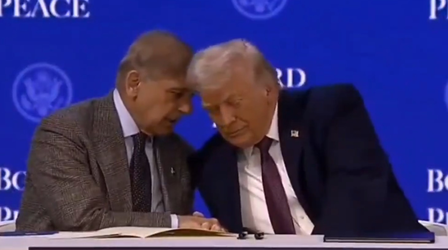
It is noteworthy that the United States has formed a ‘Board of Peace’ with Pakistan as a key member, raising concerns about the choice. The recent interactions between US President Donald Trump and Pakistan Prime Minister Shehbaz Sharif at Davos have sparked discussions due to Pakistan’s history of alleged involvement in cross-border terrorism.
Pakistan’s track record in sponsoring terrorism against India, including incidents like the 26/11 Mumbai attacks and harboring Osama bin Laden, has been a point of contention. Despite these serious allegations, Pakistan has been given a significant role in Trump’s initiative for peace, prompting questions about the board’s credibility and effectiveness.
The announcement of the Board of Peace by Trump, aiming to bring an end to long-standing conflicts and promote lasting peace, has been met with skepticism. India, having faced the brunt of Pakistan-sponsored terrorism for years, remains cautious about the board’s objectives and its potential impact on regional stability. The inclusion of Pakistan in such a crucial peace-building effort has raised doubts about the sincerity and practicality of the initiative.
The dynamics surrounding the Board of Peace suggest a departure from traditional multilateral approaches to conflict resolution, hinting at a more personalized and politically driven agenda. India’s reservations stem from past experiences of external interventions leading to instability in the region, emphasizing the need for transparent and accountable peace-building mechanisms. The concerns over the board’s composition and objectives highlight the complexities of addressing global conflicts and the importance of inclusive and credible peace initiatives.
