


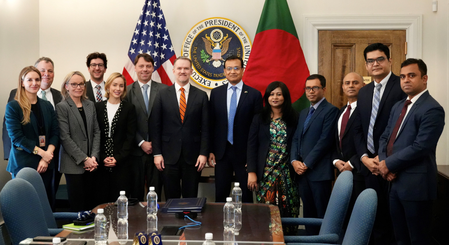
The United States and Bangladesh have signed a reciprocal trade agreement focusing on tariff schedules, market access, labor standards, and digital trade. The pact was signed by US Trade Representative Jamieson Greer and Bangladesh’s adviser for commerce, textiles, and jute, Sheikh Bashir Uddin. This agreement marks the first reciprocal trade deal the US has signed in South Asia.
Under the terms of the agreement, Bangladesh has agreed to offer preferential market access to US industrial and agricultural goods, including chemicals, machinery, medical devices, energy products, soy, dairy, poultry, beef, tree nuts, and fruit. In return, the United States will apply reciprocal tariff rates to imports from Bangladesh, with most additional tariffs not exceeding 19 percent, except for specific products listed in the agreement.
The deal also includes commitments from Bangladesh to reduce non-tariff barriers affecting US exports and to adhere to US regulatory standards for various sectors such as vehicles, medical devices, pharmaceuticals, and agricultural products. Additionally, the agreement outlines detailed labor provisions, requiring Bangladesh to protect internationally recognized labor rights, enforce labor laws, and prohibit goods produced by forced labor.
The pact covers digital trade as well, with Bangladesh agreeing not to impose discriminatory digital services taxes, allowing cross-border data transfers for business purposes, and supporting a permanent moratorium on customs duties on electronic transmissions. Furthermore, the agreement links trade commitments to economic and national security cooperation, with Bangladesh pledging to collaborate with the US on export controls, sanctions enforcement, and supply chain security.
