


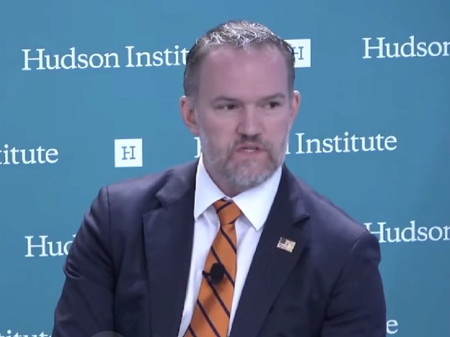
The United States Trade Representative, Jamieson Greer, stated that the US-China trade relationship is currently stable, emphasizing a cautious approach to avoid confrontation. Despite maintaining stability, the US continues to impose significant tariffs on Chinese goods, particularly in advanced manufacturing sectors, to address the trade deficit. Greer highlighted a $130 billion decrease in the US goods trade deficit with China last year, signaling substantial change.
Washington is also focusing on securing supply chains, including rare earth materials, essential for ongoing discussions with Beijing. Greer mentioned ongoing conversations with India regarding pharmaceutical supply chain vulnerabilities, noting the dependence on critical raw materials from China. Moreover, he criticized the World Trade Organization’s (WTO) inability to adapt, warning that failure to adjust could further marginalize the organization.
Greer underscored the US’s efforts to address global trade imbalances, particularly excess production capacity driven by state-backed economies. Initiatives like the Section 301 investigation target structural overcapacity, with a focus on controlling imports and boosting exports. The administration’s trade policy aims to revitalize domestic manufacturing, with indicators showing positive growth in productivity, wages, and factory construction.
Tensions with the European Union over digital trade rules were also highlighted, with concerns raised about discriminatory regulations affecting US technology firms. Greer hinted at potential changes to the US-Mexico-Canada Agreement (USMCA), indicating dissatisfaction with certain outcomes. The Trump administration’s broader trade policy agenda prioritizes domestic industry, supply chain security, and reciprocal market access.
