


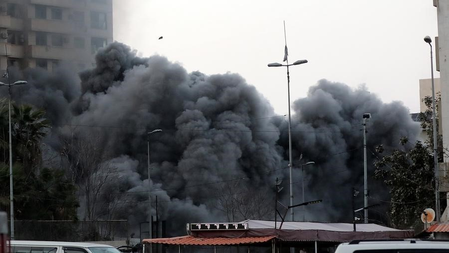
US forces launched an attack on a crucial highway bridge in Iran, heightening tensions. President Donald Trump issued a warning, signaling further actions and calling on Tehran to negotiate. The strike specifically targeted the B1 bridge, which connects Tehran to Karaj, aiming to disrupt Iran’s military supply routes for missiles and drones.
Iranian state media clarified that the bridge was not yet operational and not actively used by the military. However, the strike resulted in casualties, with at least eight individuals killed and many others injured, including civilians celebrating the Nowruz holiday. Trump praised the operation on social media, emphasizing the destruction of a significant Iranian bridge and hinting at more actions to come.
US officials highlighted that the attack was part of a broader strategy to impede Iran’s military logistics, particularly the transportation of missile and drone components. Meanwhile, Iranian leaders expressed defiance, emphasizing their readiness to defend the nation and rejecting any immediate negotiations with the US. Parliament Speaker Mohammad Ghalibaf affirmed the Iranian people’s commitment to safeguarding their homeland.
In response to the strike, Iran ruled out talks with the US, citing unfavorable conditions for negotiations. Simultaneously, other infrastructure in Iran faced attacks, including an airstrike on the Pasteur Institute of Iran, a prominent public health institution. The conflict extended beyond Iran, with Israel intercepting missiles from Iran and the Houthis in Yemen launching a missile towards Israel.
Despite diplomatic efforts, progress remains elusive, as Russia, China, and France blocked a UN Security Council resolution seeking authorization for force to reopen the Strait of Hormuz, underscoring the complex geopolitical dynamics at play.
