


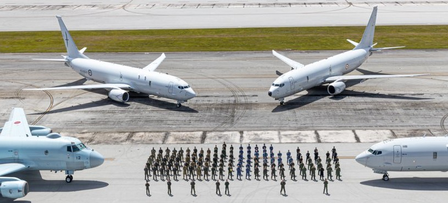
The United States, India, Japan, Australia, and New Zealand recently completed a 20-day antisubmarine warfare exercise in Guam. The exercise, named Sea Dragon 2026, aimed to enhance coordination among Indo-Pacific partners. It took place at Andersen Air Force Base, focusing on tracking and neutralizing undersea threats in a challenging operational environment.
Hosted by Commander, Task Force 72, the exercise featured aircraft from the US Navy, Indian Navy, Japan Maritime Self-Defense Force, Royal Australian Air Force, and Royal New Zealand Air Force. The drills were specifically designed to improve interoperability and strengthen shared maritime domain awareness among the participating nations.
Participants engaged in structured tracking drills using a mobile antisubmarine warfare training target known as the MK-30. Additionally, they conducted a live antisubmarine warfare exercise, actively hunting for a Navy submarine in the area. The exercise, held near Saipan, involved the use of recoverable exercise torpedoes, showcasing enhanced operational capabilities among the nations involved.
Navy Lt. Paolo Aguilar, from Patrol and Reconnaissance Squadron 4, emphasized that the exercise not only enhanced skills but also fostered teamwork across nations. The training program included a competitive element, with each nation’s performance evaluated in realistic scenarios. Japan’s Patrol and Reconnaissance Squadron 3 was awarded the Dragon Belt, previously held by the Royal Australian Air Force.
Officials highlighted the significance of exercises like Sea Dragon in showcasing the strength of partnerships and alliances. Such drills play a crucial role in upholding regional stability and deterring potential aggressors in the Indo-Pacific region. The annual Sea Dragon exercise, initiated in 2019, serves as a vital platform for enhancing coordination among maritime forces operating in the Indo-Pacific.
