


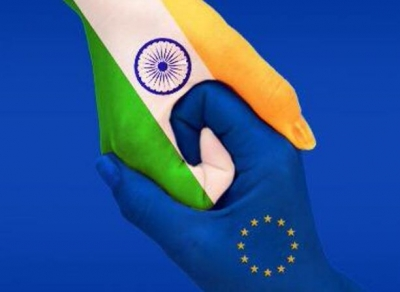
US President Donald Trump’s second term has led to significant changes in the long-standing relationship between India and the United States. The administration’s focus on an isolationist “America First” policy has prompted India to seek closer ties with the European Union for stability in the international system.
The shift in US policy towards China has strained US-India relations, particularly highlighted when President Trump hosted the Pakistani Prime Minister, viewed as a challenge by India. This incident, along with the US’s attempt to mediate between India and Pakistan, has pushed India to prioritize its own strategic interests.
India’s participation in the Shanghai Cooperation Organisation summit in response to trade challenges, including tariffs imposed by the US and a substantial trade deficit with China, showcases Prime Minister Narendra Modi’s strategic approach. India is now emphasizing cooperation with “middle powers” like Japan, Europe, Canada, the UK, the UAE, and Russia to diversify its alliances.
With the recent EU-India Summit’s Free Trade Agreement, the EU emerges as India’s key economic and technological partner. The agreement is expected to significantly boost trade between the two, benefiting a quarter of the world’s population and GDP. Despite trade and strategic disputes with the US, the Quad remains crucial in aligning Indo-American interests in the Indo-Pacific region vis-a-vis China.
