


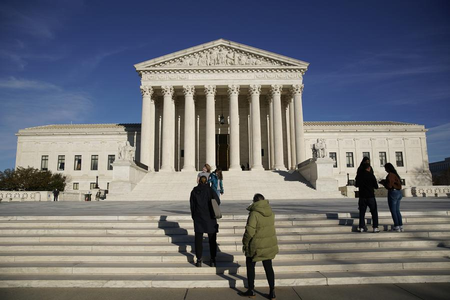
The US Supreme Court recently deliberated on whether the Constitution guarantees citizenship to all children born on American soil. The Trump administration argued for a narrower interpretation that could potentially exclude children of undocumented migrants and temporary visitors. Solicitor General John Sauer contended that the 14th Amendment’s citizenship clause was not intended to apply universally but required “direct and immediate allegiance” to the United States.
Sauer rooted his argument in history, explaining that the Amendment aimed to ensure citizenship for freed slaves and their descendants post-Civil War. He emphasized that allegiance, linked to lawful domicile, was crucial for this guarantee, not just birth on US soil. Several conservative justices questioned whether limits could be supported by the phrase “subject to the jurisdiction thereof,” while Justice Elena Kagan criticized the administration’s stance as “revisionist.”
On the other side, the challengers defended the longstanding view that almost everyone born in the US is a citizen. They referred to the Supreme Court’s 1898 ruling, establishing that birth on US soil confers citizenship, with few exceptions like children of diplomats. The case’s implications are significant, potentially impacting thousands of children born yearly in the US and raising questions about congressional and executive power over citizenship.
