


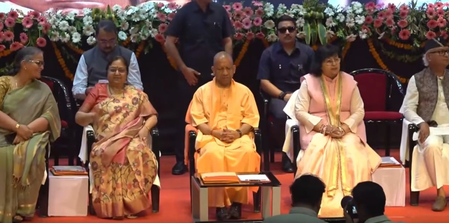
Uttar Pradesh Chief Minister Yogi Adityanath revealed plans to hire over 5,000 Anganwadi workers and 60,000 helpers this year. The recruitment process has already commenced. Adityanath made this announcement during an event at Lok Bhawan, where he inaugurated several Anganwadi projects.
Steps have been taken to enhance social security for frontline workers involved in child care. Anganwadi workers and helpers are now covered under the Pradhan Mantri Jeevan Jyoti Bima Yojana and Pradhan Mantri Suraksha Bima Yojana. Additionally, more than 3 lakh workers and helpers are receiving health insurance coverage of up to Rs 5 lakh annually through the Ayushman Bharat scheme.
The Chief Minister criticized the previous administrative system, alleging that the distribution of nutritional supplements was controlled by the “liquor mafia” before 2017, resulting in the diversion of benefits meant for malnourished children and mothers. He emphasized that the current government has brought transparency to the system, ensuring appointments based solely on merit and without recommendations. Nutrition and child development programs are being digitized using smartphones and modern growth-monitoring devices.
Policy changes include integrating 27,000 centers from the Basic Education Department into the Anganwadi network. Anganwadi centers will also have a significant role in implementing the National Education Policy, offering pre-primary classes for children aged 3-5 years. The Chief Minister highlighted the importance of Anganwadi workers in nurturing young children, a sentiment echoed by Prime Minister Narendra Modi who referred to them as “Yashoda Maiya.”
Adityanath stressed the vital role of Anganwadi workers and helpers in combating malnutrition and ensuring proper nutrition for newborns and maternal health. He announced the construction of new Anganwadi centers at a cost of Rs 137 crore and inaugurated projects worth Rs 313 crore during the event, including Anganwadi centers and Child Development Project offices.
During the Covid pandemic, Anganwadi workers, ASHA workers, and ANMs played crucial roles as frontline personnel, delivering essential health services and implementing the government’s strategies at the grassroots level.
