


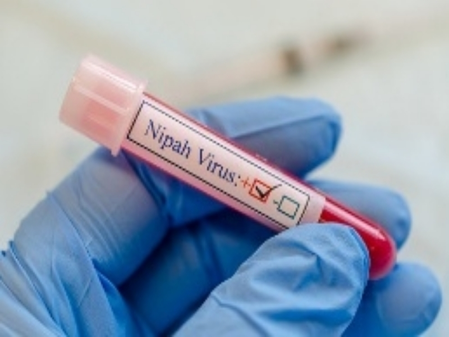
West Bengal recorded its initial Nipah virus-linked fatality as a nurse, who was infected and hospitalized in the critical care unit at a Barasat hospital in North 24 Parganas district, succumbed. State Health Department sources revealed that the deceased contracted a “secondary infection” in her lungs. Another nurse, also impacted by the virus, was receiving treatment at the same medical facility.
These two nurses represent the sole instances of individuals affected by the Nipah virus in the state. The State Health Department confirmed that beyond these cases, no new reports of Nipah virus infections have emerged. Contact tracing efforts were conducted to identify individuals who had contact with the infected nurses.
The state Health Department clarified that, apart from the two nurses, there have been no additional cases of Nipah virus infections in the state. Contact tracing was carried out to determine the individuals who had contact with the two affected nurses. All contacts were identified, and their samples were sent for laboratory testing. The latest reports indicate that all test results returned negative, with no traces of the Nipah virus found in those who had contact with the affected nurses.
Bats serve as the primary carriers of the Nipah virus. Consumption of fruit bitten by a bat can also lead to virus transmission. The World Health Organisation (WHO) has suggested that, apart from bats, pigs could also act as carriers of the virus. The fatality rate for individuals affected by the Nipah virus exceeds 50 percent. Early detection of the virus significantly improves the chances of recovery, according to medical professionals.
Initial symptoms of the disease mimic those of a common fever, including elevated body temperature, followed by convulsions, sore throat, and severe respiratory issues. In advanced stages, patients may enter a coma. Presently, treatment for the virus is not standardized, and research is ongoing for a vaccine against it.
