


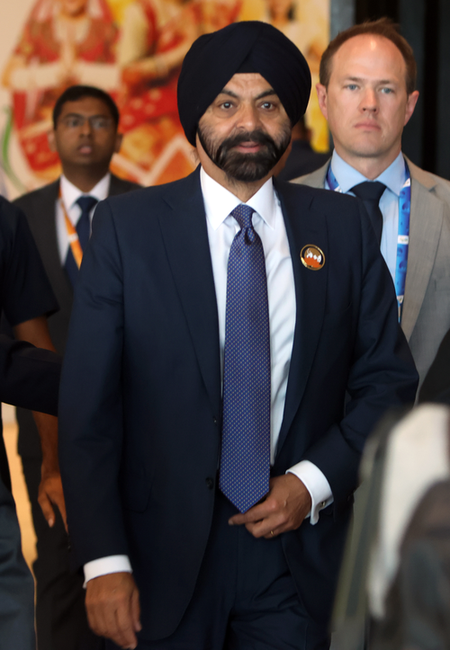
Rising geopolitical tensions are causing concerns about economic prospects, as World Bank President Ajay Banga cautioned that prolonged conflicts could hinder growth, spur inflation, and strain vulnerable economies. Banga, speaking at the Atlantic Council, highlighted the pressure on global economic conditions due to ongoing conflicts in the Middle East and Ukraine. He emphasized that emerging markets, already facing complex fiscal and debt challenges, are particularly stressed, with advanced economies also expected to feel the repercussions.
Global growth projections, previously at 2.8 to 3 percent, may drop by up to one percentage point in a more severe scenario, according to Banga. He also noted the likelihood of increased inflation, potentially rising by up to two percentage points based on the scale and duration of disruptions. The ripple effects of conflicts on global supply chains, especially in energy and critical commodities like fertilizers and chemicals, are seen as significant for economies in Asia and Africa.
In response to the economic challenges, the World Bank is gearing up to provide liquidity support to affected nations. Banga mentioned that countries could access between $20 billion and $25 billion in the short term, with a possibility of reaching $60 billion to $70 billion over a six-month period. Drawing from experiences during the COVID-19 pandemic, emergency financing tools are being readied for deployment.
While advocating for targeted and temporary support measures, Banga cautioned against unsustainable fiscal responses that could exacerbate long-term debt burdens. He stressed the importance of avoiding broad subsidies that might lead to fiscal challenges in the future. Additionally, he highlighted the broader implications of overlapping crises globally, underscoring the need for countries to reassess energy security and resilience.
Banga urged governments to adopt a diversified energy mix, encompassing gas, nuclear, and renewable sources, to ensure a reliable energy supply while aligning with sustainability objectives. The current geopolitical instability, according to Banga, reinforces the necessity for strategic energy planning in the face of volatile global conditions.
