
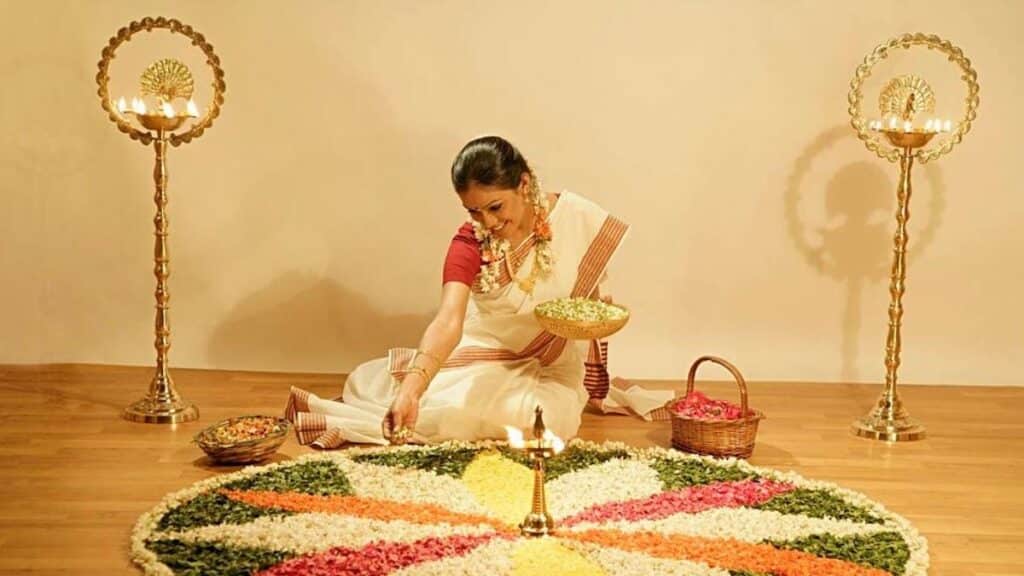
Onam is Kerala’s most beloved harvest festival and the official state celebration, marking the annual homecoming of the legendary King Mahabali. Observed primarily by Malayalis worldwide, Onam symbolizes prosperity, unity, and the values of generosity and humility. Rooted in ancient Hindu traditions, the festival celebrates the rice harvest at the end of monsoon season and represents the beginning of a new agricultural year.
The spiritual meaning of Onam comes from Hindu mythology, particularly the story of the benevolent Asura King Mahabali and Lord Vishnu’s Vamana avatar. This legend represents devotion, humility, and the promise that goodness endures beyond temporal power. The festival is commemorated through the creation of intricate pookkalam (flower carpets), which grow more elaborate each day, symbolizing the welcoming of King Mahabali back to his kingdom.
The celebration culminates on Thiruvonam day with the grand Onasadya—a traditional vegetarian feast served on banana leaves featuring up to 26 dishes. During Onam, social boundaries dissolve as communities celebrate together through boat races, traditional dances, cultural performances, and shared meals that embody the spirit of equality and joy.
While primarily observed by Hindus, Onam has evolved into a cultural festival celebrated by people of all religions in Kerala—Christians, Muslims, and others participate equally, making it a unique symbol of religious harmony and shared cultural identity. Today, Onam is celebrated worldwide in countries such as the USA, UK, Canada, Australia, UAE, and Singapore by the global Malayali diaspora.
When Is Onam Celebrated in 2026?
Onam is celebrated based on the Malayalam solar calendar in the month of Chingam, when the Thiruvonam nakshatra (Shravana constellation) occurs, which typically falls in August-September.
Onam In India 2026 Dates
Main Celebration: Thiruvonam will be celebrated on Wednesday, August 26, 2026 in India
Thiruvonam Nakshatra Timing:
- Begins: 10:51 PM IST on August 25, 2026
- Ends: 12:48 AM IST on August 27, 2026
10-Day Festival Schedule:
- Atham – August 17, 2026 (Monday)
- Chithira – August 18, 2026 (Tuesday)
- Chodhi – August 19, 2026 (Wednesday)
- Vishakam – August 20, 2026 (Thursday)
- Anizham – August 21, 2026 (Friday)
- Thriketa – August 22, 2026 (Saturday)
- Moolam – August 23, 2026 (Sunday)
- Pooradam – August 24, 2026 (Monday)
- Uthradam – August 25, 2026 (Tuesday)
- Thiruvonam – August 26, 2026 (Wednesday) – Main celebration day
Post-Onam:
- Third Onam (Avvittom) – August 27, 2026 (Thursday)
- Fourth Onam – August 28, 2026 (Friday)
The exact dates are based on the solar calendar and nakshatra positions, making Onam timing consistent with seasonal harvest cycles. birth at noon and is considered the most sacred time for worship and puja.
Table of Contents
Onam In USA, Canada, Australia, New Zealand, UK, UAE, Singapore 2026 Dates
Thiruvonam on Wednesday, August 26, 2026
- Thiruvonam Nakshathram Begins – 01:21 PM on Aug 25, 2026
- Thiruvonam Nakshathram Ends – 03:18 PM on Aug 26, 2026
Thiruvonam on Wednesday, August 26, 2026
- Thiruvonam Nakshathram Begins – 01:21 PM on Aug 25, 2026
- Thiruvonam Nakshathram Ends – 03:18 PM on Aug 26, 2026
Thiruvonam on Wednesday, August 26, 2026
- Thiruvonam Nakshathram Begins – 03:21 AM on Aug 26, 2026
- Thiruvonam Nakshathram Ends – 05:18 AM on Aug 27, 2026
Thiruvonam on Wednesday, August 26, 2026
- Thiruvonam Nakshathram Begins – 06:21 PM on Aug 25, 2026
- Thiruvonam Nakshathram Ends – 08:18 PM on Aug 26, 2026
Thiruvonam on Wednesday, August 26, 2026
- Thiruvonam Nakshathram Begins – 09:21 PM on Aug 25, 2026
- Thiruvonam Nakshathram Ends – 11:18 PM on Aug 26, 2026
Thiruvonam on Wednesday, August 26, 2026
- Thiruvonam Nakshathram Begins – 01:21 AM on Aug 26, 2026
- Thiruvonam Nakshathram Ends – 03:18 AM on Aug 27, 2026
Why Onam Dates Change Every Year?
Onam is celebrated based on the Malayalam solar calendar, not the Gregorian calendar.
It falls on the day when Thiruvonam nakshatra (Shravana constellation) occurs during the month of Chingam (Malayalam calendar), which corresponds to mid-August to mid-September.
Since the solar calendar and nakshatra positions don’t align perfectly with the Gregorian calendar:
- Onam’s date shifts slightly each year
- Timing depends on astronomical positions and nakshatra calculations
- The festival remains tied to seasonal harvest cycles
This makes Onam more consistent with Kerala’s agricultural seasons while varying by a few days each year in the Gregorian calendar.
Onam Other Names & Regional Identities
Standard Names
- Onam (ഓണം) — Primary name in Malayalam and most languages
- Thiruvonam — Refers specifically to the main festival day and the nakshatra
- Thiru-Onam — Honorific form emphasizing sacred nature
Regional Names in Kerala
North Kerala (Kannur, Kasargod, Kozhikode):
- Features Onapottan tradition – a silent folk character representing Mahabali visiting homes
Central Kerala (Thrissur, Kochi):
- Emphasis on Athachamayam – the grand opening procession
- Pulikali – Tiger dance celebrations
South Kerala (Thiruvananthapuram, Kollam):
- Travancore-style Onam – Known for traditional discipline in sadya preparation
Related Festival Names
- Vamana Jayanti — Celebrating Vamana avatar’s appearance
- Balipratipada — Related festival in Maharashtra honoring King Mahabali
Diaspora / International Naming
- Kerala Harvest Festival — Tourism and cultural promotion contextsommunities)
- Kerala Onam — Used internationally to specify cultural origin
- Onam Festival — Common in Western countries
- Festival of King Mahabali — Educational/explanatory name
The Origins, History, and Legends of Onam
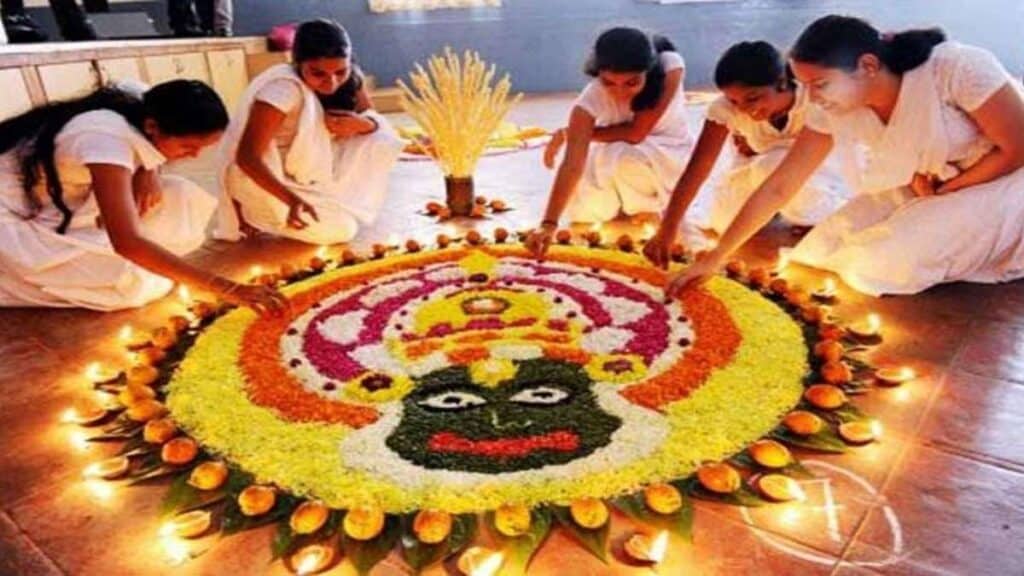
Onam is one of the oldest festivals of Kerala, with origins deeply rooted in ancient Hindu scriptures and traditions. The festival finds mention in several classical texts dating back to the 3rd century CE, including Sangam-era Tamil poetry, Alvar devotional songs, and medieval temple inscriptions. Historically, Onam marked both a spiritual celebration and the arrival of the harvest season, making it a festival of thanksgiving and renewal.
The Legend of King Mahabali and Vamana
The most beloved legend behind Onam is the story of Mahabali (also called Maveli), a benevolent Asura king who ruled Kerala with such wisdom and justice that his kingdom became a golden age. Under his reign, there was no theft, dishonesty, or inequality—everyone lived in prosperity, harmony, and happiness. People were truthful, generous, and devoted, making Mahabali’s rule a time of unparalleled peace.
However, Mahabali’s growing power and influence alarmed Indra, king of the Devas (gods), who had been defeated by the Asura king. Concerned about the cosmic balance, the Devas sought help from Lord Vishnu. Vishnu agreed to restore order, but recognizing Mahabali’s devotion and righteousness, he refused to harm the virtuous king directly.
During one of Mahabali’s grand yajnas (ritual sacrifices), where the king promised to grant any wish to visitors, Vishnu appeared disguised as Vamana, a humble dwarf Brahmin boy. When Mahabali offered him anything he desired, the modest Vamana requested only “three paces of land” to build a fire altar.
Despite warnings from his guru Shukracharya, who recognized Vamana’s divine nature, the generous Mahabali agreed to grant the seemingly simple request. Vamana then revealed his cosmic form and grew to enormous proportions. In his first step, he covered the entire earth; in his second step, he encompassed the heavens and all the upper worlds. With no space remaining for the third step, Mahabali, recognizing the deity and staying true to his promise, offered his own head.
Deeply moved by Mahabali’s humility, devotion, and integrity, Vishnu granted him a boon: the king could return once each year to visit his beloved people. This annual homecoming is celebrated as Onam—a time when Malayalis welcome their cherished king with flower carpets, grand feasts, and joyous festivities, honoring his legacy of righteous rule and selfless love for his subjects.
The Parashurama Connection
An alternate legend links Onam to Parashurama, another avatar of Vishnu credited with creating Kerala. According to this tradition, Parashurama threw his axe into the ocean after vanquishing tyrannical Kshatriya kings. The sea retreated where the axe fell, creating the land of Kerala. In this context, Onam celebrates the creation of the land and marks the Malayalam New Year, symbolizing new beginnings and the arrival of spring-like renewal after monsoon.
Historical Evidence and Ancient References
Historical documentation of Onam celebrations includes:
- 3rd century CE: Sangam-era Tamil poem Maturaikkāñci mentions a festival called Onam dedicated to Mayon (Vishnu) in Madurai, with games, temple offerings, new clothes, and feasting
- 8th century: Alvar mystic saint Nammalvar references “the one who measured the three worlds” (Vamana)
- 9th century: Pathikas and Pallads by Periyalvar describe Onam celebrations with community feasts and offerings
- 11th century: Thrikkakara Temple inscription documents offerings made over two days prior to and on Thiruvonam
- 12th century: Tiruvalla Temple inscription records donations specifically for Onam festival offerings
- Medieval period: Sanskrit poet Uddanda Shastri describes the śrāvaṇa festival (Onam) in Kerala courts
- 16th century: European memoirs document Onam celebrations in September with flower decorations and cow dung preparations believed to attract Goddess Lakshmi
Official Recognition
In 1961, during Chief Minister Pattom Thanu Pillai’s tenure, Onam was officially declared the national festival of Kerala, cementing its status as the state’s most important cultural celebration. This government recognition transformed Onam from primarily a religious observance into a grand public festival celebrated across the state and among Malayali communities worldwide.
The festival’s evolution from ancient temple-based celebrations to modern state-wide festivities reflects its enduring significance in Malayali culture—combining spiritual devotion, agricultural thanksgiving, and social unity into one magnificent celebration.
Onam: Cultural and Spiritual Significance
Onam is a festival that symbolizes prosperity, unity, and the triumph of virtue over temporal power. Spiritually, it represents the values of humility, devotion, and selfless governance through King Mahabali’s story, encouraging people to embrace righteousness and generosity in their own lives.
The festival carries profound symbolic meaning: Mahabali’s annual return reminds us that goodness endures beyond individual lifetimes, and that just, compassionate leadership remains eternally valued. The act of welcoming him with flower carpets and feasts teaches hospitality, gratitude, and the importance of honoring those who serve others selflessly.
Culturally, Onam brings people together beyond religious and social boundaries, promoting unity, equality, and harmony. The intricate pookkalam represents collective beauty created through individual contributions, while the grand Onasadya feast—served equally to all on banana leaves—embodies the democratic spirit of Mahabali’s golden rule.
As a harvest festival, Onam celebrates the bounty of Kerala’s rice harvest at the end of monsoon season, marking nature’s renewal with blooming flowers and abundant fields. This connection to agricultural cycles grounds the festival in thanksgiving, seasonal awareness, and community interdependence.
More than a religious observance, Onam is a universal celebration of Kerala’s cultural identity—embracing diversity, honoring tradition, and celebrating life’s abundance through color, music, dance, and shared joy. The festival’s ability to unite all communities regardless of faith makes it a powerful symbol of religious pluralism and social cohesion, values that define Kerala’s unique cultural landscape.
Onam Prayers and Religious Observances
Onam prayers and rituals are performed to seek blessings for prosperity, harmony, and spiritual renewal. The religious observances center primarily on Vishnu temples, particularly the Thrikkakara Vamanamoorthy Temple in Kochi, considered the spiritual heart of Onam celebrations.
Temple Rituals and Observances
At Thrikkakara Temple:
- Flag hoisting ceremony on Atham day marks the festival’s official start
- Daily pujas and special abhishekam (ritual bathing) of Vamana deity throughout the ten days
- Recitation of Vishnu-related hymns, including Vishnu Sahasranama and Vamana mantras
- Cultural performances including Kathakali, Thiruvathira, Chakyar Koothu, and Ottam Thullal
- Grand Onasadya feast open to all faiths on Thiruvonam, attended by over 20,000 people
Other Temple Traditions:
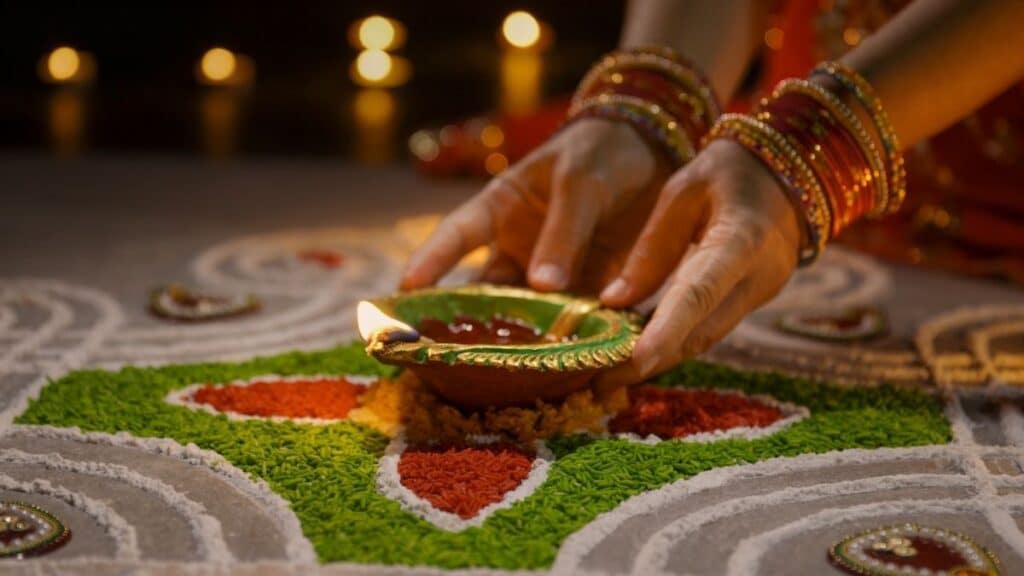
- Lighting of numerous oil lamps (nilavilakku) symbolizing welcome and auspiciousness
- Erection and ceremonial burning of palmyra trees representing Mahabali’s journey to Patala
- Theyyam ritual worship dances in northern Kerala temples
- Special processions and community gatherings
Home Observances and Family Rituals
Installation of Onathappan: Hindu families install images or small idols of Thrikkakara Appan (Vishnu as Vamana) or Onatthappan in their homes, placing the deity in the center of the pookkalam. This is similar to Ganesha installation during Ganesh Chaturthi and signifies inviting divine blessings into the home.
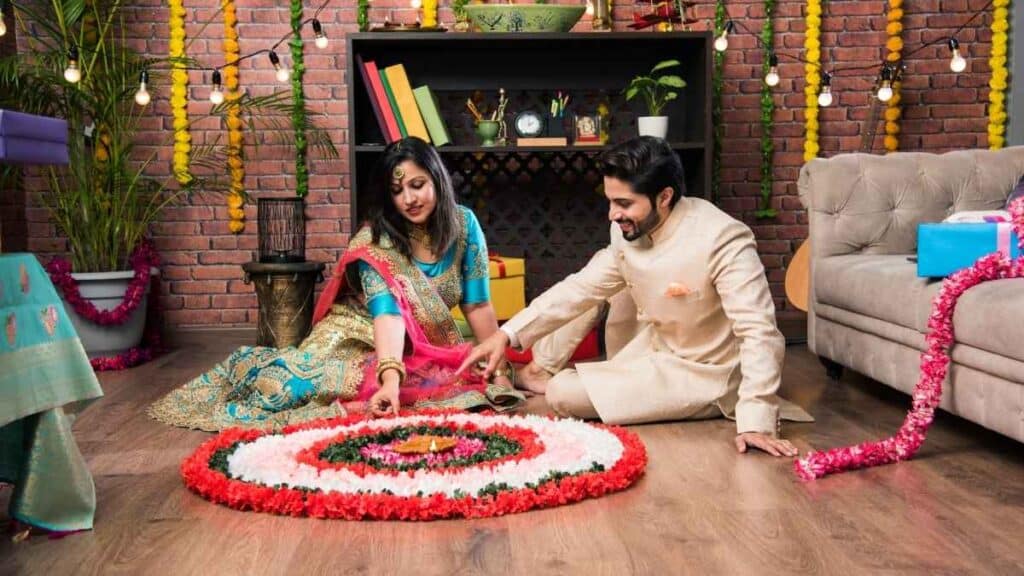
Daily Pookkalam Ritual: Beginning on Atham day, families create flower carpets that grow larger and more elaborate each day. The ritual includes:
- Morning prayers before adding flowers to the pookkalam
- Placing Mahabali and Vamana figurines at the entrance
- Offering incense, lamps, and fresh flowers
- Singing Onappaatt (Onam songs) praising Mahabali’s virtuous rule
Family Prayers: Families recite traditional mantras and prayers including:
- Vishnu Sahasranama (thousand names of Vishnu)
- Vamana Gayatri mantra
- Verses from Bhagavad Gita
- Traditional Onam songs celebrating the golden age of Mahabali
Onasadya Blessings: Before the grand feast on Thiruvonam, families offer prayers of thanksgiving for the harvest, seek blessings for continued prosperity, and remember King Mahabali’s generosity and humility.
Spiritual Symbolism
Whether observed at home or in temples, Onam rituals emphasize:
- Devotion and humility – Following Mahabali’s example of surrendering to divine will
- Gratitude for abundance – Thanksgiving for agricultural prosperity
- Forgiveness and renewal – Starting fresh with positive intentions
- Unity and equality – Welcoming all to share in celebrations regardless of status
The prayers and observances make Onam both a joyous cultural celebration and a deeply meaningful spiritual experience, connecting devotees to ancient traditions while celebrating timeless values.after the Madhyahna puja. deeply transformative..
How Onam Is Celebrated Across India
While Onam is primarily Kerala’s festival, its expressions vary beautifully across different regions of the state and increasingly in other parts of India.
State-Wide Kerala Traditions
Kochi (Ernakulam):
- Home to Thrikkakara Temple and the grand Athachamayam procession from Tripunithura featuring decorated elephants, folk dances, and floats
- Spectacular city illuminations and fireworks on Thiruvonam
- Major shopping festivals and cultural programs
Thiruvananthapuram:
- Capital hosts large-scale government-sponsored celebrations
- Elaborate lighting displays across the city
- Official cultural programs with performances by renowned artists
- Traditional sadya served in community halls
Thrissur:
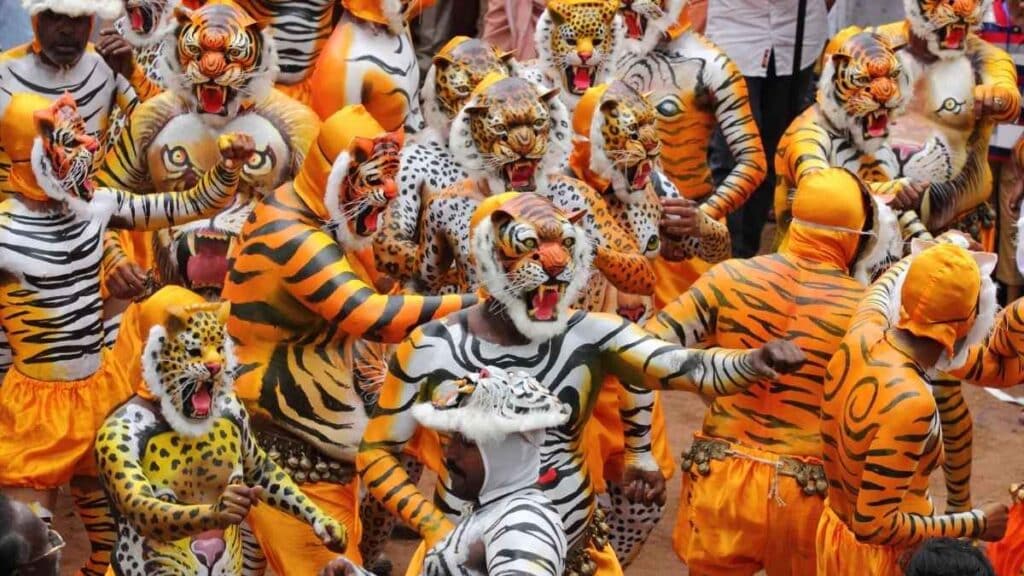
- Famous for spectacular Pulikali (tiger dance) with hundreds of performers painted in vibrant colors dancing through streets
- Major pookkalam competitions with elaborate designs
- Kathakali performances at Valluvanad and Kerala Kalamandalam in Cheruthuruthy
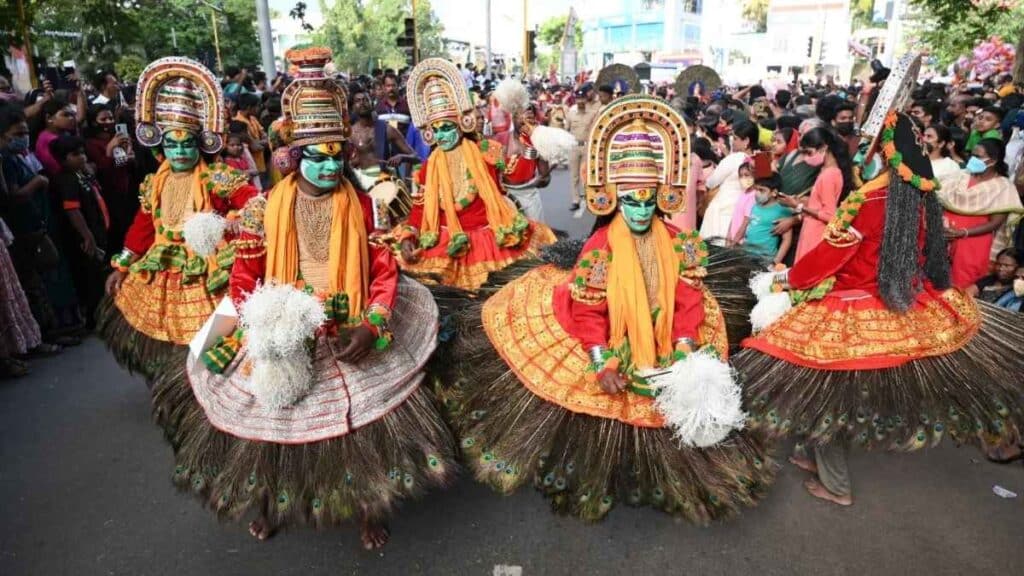
- Kummattikali masked dance processions through neighborhoods
Alappuzha:
- Renowned for the Nehru Trophy Boat Race on Punnamada Lake
- Massive snake boats with up to 100 oarsmen compete
- Thousands gather on lakeshores for this iconic spectacle
- Traditional Vallasadya feast following the races
Aranmula:
- Famous Aranmula Uthrattadhi Boat Race on sacred Pampa River
- Spiritual significance adds devotional dimension
- Grand Vallasadya serving thousands of participants
Kozhikode:
- Celebrates interfaith harmony with strong Muslim-Hindu unity
- Many Muslim families participate fully in Onasadya and festivities
- Community pookkalam competitions in mixed neighborhoods
Kannur and Kasargod (North Kerala):
- Unique Onapottan tradition – silent folk character representing Mahabali visits homes with palm-leaf umbrella and bell
- Increased handloom fairs showcasing traditional Kerala textiles
- Rural celebration styles preserving ancient customs
Regional Customs and Tribal Traditions
Kurichians Tribe (Parambikkulam): Celebrate Onam as a new grain festival with distinctive traditions:
- Community hunts before Onam with game distributed among participants
- Family feasts on Uthradam and Thiruvonam including fish and meat alongside vegetarian items
- Emphasis on thanksgiving for successful harvest
Kuravans of Travancore: Observe unique ancestral offerings:
- Kalayam vaikkal ritual on Uthradam day
- Offerings of liquor, rice cakes, flattened rice, incense, and camphor to ancestral spirits
- Prayers requesting protection and warding off evil spirits
Growing Celebrations Beyond Kerala
Karnataka (Bangalore): Large Malayali population organizes community Onam celebrations with cultural programs, group sadya, and pookkalam competitions in residential complexes and community centers.
Tamil Nadu (Chennai): Tamil-Malayali cultural associations host weekend Onam events featuring Kathakali performances, traditional games, and authentic Onasadya prepared by community members.
Maharashtra (Mumbai, Pune): The related festival Balipratipada (day after Diwali) honors the same King Mahabali legend, showing the story’s pan-Indian resonance.
Pan-India Urban Centers: Increasing participation from non-Malayali South Indians (Tamils, Kannadigas, Telugus) in urban areas, particularly in multicultural apartment complexes where Onam becomes a shared cultural experience introducing neighbors to Kerala traditions.
Despite regional variations, core elements remain universal: pookkalam creation, Onasadya feast, traditional attire, boat races, cultural performances, and the spirit of welcoming King Mahabali home.nd the connection between the two divine figures is celebrated through joint rituals and storytelling.
Participation Across Religions in India
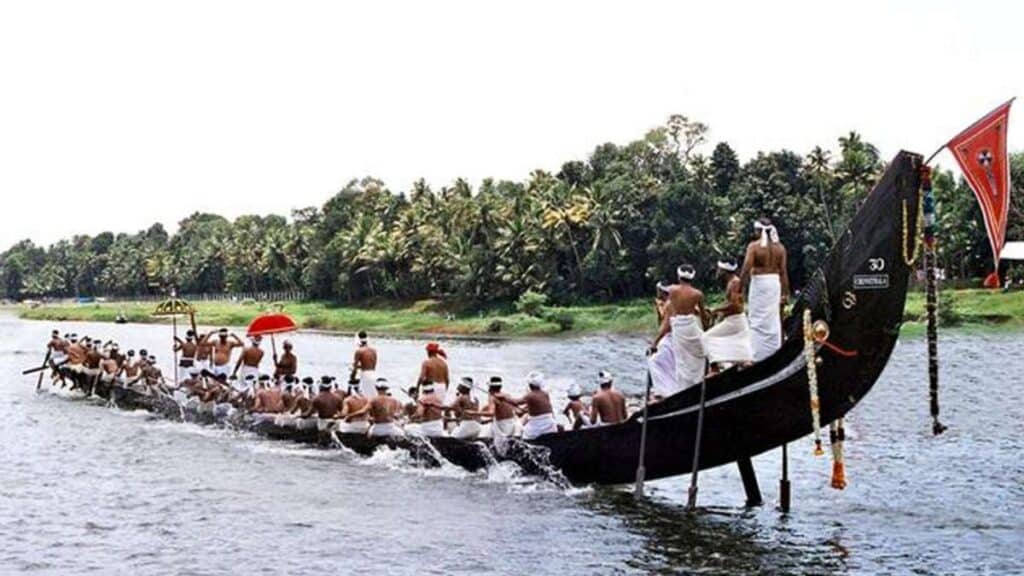
Onam is celebrated not only by Hindus but by people of all religions across Kerala, making it a truly inclusive cultural festival and a unique symbol of India’s religious pluralism. The festival has evolved beyond religious boundaries to become a shared celebration of Malayali identity, unity, and cultural pride.
Interfaith Harmony and Shared Participation
People from different faiths—Hindus, Christians, Muslims, and others—participate equally in Onam festivities by creating pookkalam, wearing traditional Kerala attire, preparing Onasadya, and joining community celebrations. The festival promotes harmony and social bonding, as entire neighborhoods come together to celebrate without distinction of religion, caste, or belief.
Christian Participation
Syrian Christians and Latin Catholics across Kerala celebrate Onam with full enthusiasm:
- Basic Ecclesial Communities (BECs) in Trivandrum celebrate with distinctive traditions including lighting nilavilakku, performing pushparati (flower offering) over the Bible, and sharing Onasadya meals with Hindu neighbors
- Churches organize community Onam celebrations with cultural programs
- Christian families create elaborate pookkalam and wear traditional Kerala saris and mundus
- Integration of Onam into church community activities viewing it as “communion of brothers and sisters of different faiths” (Bishop Selvister Ponnumuthan)
Scholar P.S. Salini notes that most Muslims join festivities with friends and neighbors, viewing Onam as a time for family unity and communal harmony. Researchers Filippo and Caroline Osella document Muslim families preparing full Onasadya despite some reformist concerns, emphasizing cultural over religious dimensions.
While some Salafi sections have raised concerns about religious participation, these represent a minority view. The overwhelming majority observe Onam’s celebrations and rituals as cultural heritage rather than religious practice.
Symbol of Kerala’s Pluralism
This inclusive celebration exemplifies Kerala’s unique model of religious pluralism, where cultural identity transcends religious boundaries. Onam serves as a powerful reminder that festivals can unite people through common values of joy, gratitude, generosity, and mutual celebration—embodying the same spirit of equality and harmony that defined King Mahabali’s golden rule.ces, enjoying festive foods, and appreciating classical music programs organized during Ram Navami celebrations.
How Onam Is Celebrated Outside India
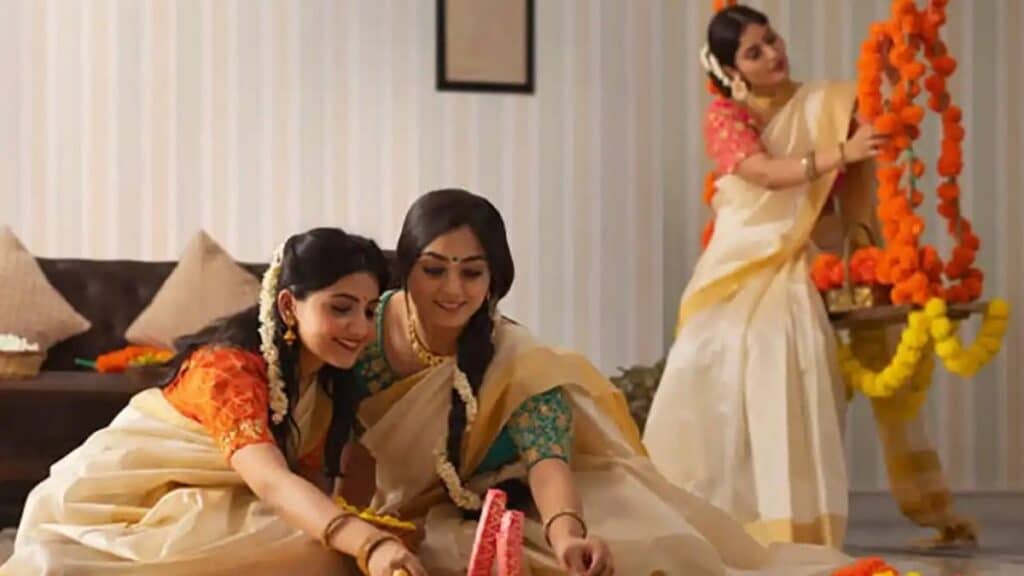
Across the United States, Canada, the UK, Australia, the UAE, Singapore, and beyond, Indian diaspora communities—especially Malayalis—celebrate Onam through vibrant events that preserve Kerala’s traditions while adapting to global settings.
Global Malayali Community Celebrations
Community & Cultural Events
- Large gatherings at community halls and convention centers
- Traditional performances like Kathakali, Thiruvathira Kali, and Pulikali
- Pookkalam (floral rangoli) competitions
- Group Onasadya feasts featuring authentic Kerala cuisine
Temple, School & Campus Celebrations
- Special Onam pujas and cultural programs at Hindu temples
- University and school events organized by Indian student associations
- Educational activities introducing Onam to non-Indian audiences
Country-Specific Highlights
- USA & Canada: Major celebrations in cities with large Malayali populations, focusing on youth participation and cultural continuity
- UK: Weekend events across London with cultural showcases and community feasts
- UAE: Grand-scale celebrations in Dubai and Abu Dhabi with large expatriate participation
- Singapore: Public cultural events, including snake boat race tributes and community pookkalam displays
- Australia & Middle East: Community-centered celebrations adapted to local norms
Through these global celebrations, Onam continues to unite communities, preserve cultural roots, and share Kerala’s message of harvest, harmony, and togetherness with the world.e’s norms.
Onam Gifting Traditions
Onam gifting symbolizes love, generosity, and new beginnings, reflecting King Mahabali’s spirit of giving and the joy of welcoming prosperity into homes and hearts.
Traditional Gifts
Onakkodi (New Clothes): The most cherished Onam tradition involves purchasing and wearing new clothes. Elders gift new garments to younger family members:
- For women: White or cream Kerala sari (Kasavu sari) with golden border
- For men: White mundu (dhoti) with golden kasavu border
- For children: Miniature traditional dress or modern festive wear
The tradition of new clothes symbolizes renewal, fresh beginnings, and the prosperity of Mahabali’s golden age.
Traditional Gift Items:
- Sweets and snacks: Traditional Kerala delicacies like banana chips, sharkaraveratti, unniappam
- Gold jewelry: Particularly for significant occasions and milestone celebrations
- Handloom products: Kerala saris, mundus, and traditional textiles from Onam fairs
- Flowers for pookkalam: Fresh flower bundles as thoughtful gifts
- Coconut and jaggery: Essential ingredients for payasam and traditional cooking
The exchange of gifts reinforces Onam’s core values of togetherness, gratitude, and celebration of abundance.
Traditional Onam Foods: The Grand Onasadya
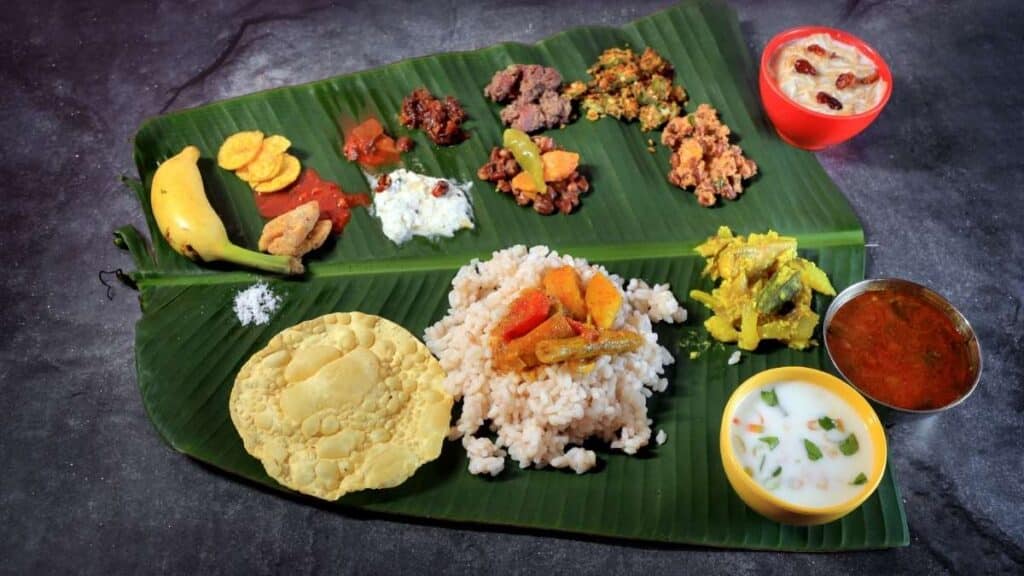
Food is the soul of Onam celebrations, with the Onasadya representing the pinnacle of Kerala vegetarian cuisine. This elaborate feast symbolizes abundance, hospitality, and the prosperity of King Mahabali’s golden rule.
The Onasadya Experience
The grand feast is served on fresh banana leaves with diners sitting cross-legged on the floor. The banana leaf is placed with the narrow end to the left, and dishes are served in a specific order from left to right, with rice occupying the center portion.
The famous Malayalam proverb “Kaanam Vittum Onam Unnanam” translates to “One must have the Onam feast even if one has to sell one’s property,” emphasizing the cultural imperative of celebrating Onasadya regardless of circumstances.
Essential Onasadya Dishes
Appetizers and Accompaniments:
- Banana chips (Upperi) – Thin-sliced crispy fried plantains
- Sharkaraveratti – Jaggery-coated fried banana pieces
- Pappadam – Crispy lentil wafers
- Pickles (Achar) – Sweet and spicy varieties
- Coconut chutney
Main Vegetable Curries:
- Avial – Mixed vegetables in coconut-yogurt gravy with curry leaves
- Thoran – Stir-fried vegetables with grated coconut (cabbage, beans, or carrot variations)
- Olan – Ash gourd and red beans in delicate coconut milk
- Kaalan – Yam and raw plantain in tangy yogurt curry
- Erissery – Pumpkin and lentils with roasted coconut
- Pulissery (Velutha curry) – Yogurt-based curry with turmeric
- Mezhukkupuratti – Simply stir-fried vegetables
Specialty Curries:
- Injipuli (Puli Inji) – Sweet and tangy ginger-tamarind chutney
- Kichadi – Cucumber in spiced yogurt
- Pachadi – Sweet version with pineapple or grapes
- Sambhar – Lentil-based vegetable stew
- Rasam – Tamarind-pepper soup
- Dal curry – Lentils with ghee tempering
Rice:
- Kerala Matta rice – Red parboiled rice served with generous ghee
Buttermilk:
- Moru – Diluted yogurt drink for digestion
Desserts (Payasam – The Grand Finale): The feast culminates with sweet payasams:
- Paal Payasam – Rice cooked in milk with sugar and cardamom
- Parippu Payasam – Moong dal with jaggery
- Ada Pradhaman – Rice ada in rich coconut milk and jaggery
- Pazham Pradhaman – Banana and jaggery in coconut milk
Other Traditional Onam Foods
Special Snacks:
- Unniappam – Sweet rice flour balls with banana and jaggery
- Ethakka Appam – Banana fritters
- Sukhiyan – Black gram paste dumplings
Regional Variations
Travancore-Style Sadya: Most traditional and disciplined, following strict serving protocols with up to 26 dishes.
Kurichians Tribal Feast: Includes fish and game meat alongside vegetarian items, celebrating community hunt traditions.
Temple Sadya: Grand scale feasts at temples like Thrikkakara serving 20,000+ people, emphasizing community unity.
The Onasadya represents more than food—it’s a celebration of Kerala’s agricultural bounty, culinary artistry, and the democratic spirit where everyone sits together as equals, sharing the abundance of harvest season.ssing, and purity of preparation, aligning with the spiritual character of the day.te thalis. Community meals (bhandaras) at temples serve traditional food to all devotees, emphasizing sharing and charity.
Onam: Music, Art, and Cultural Expression
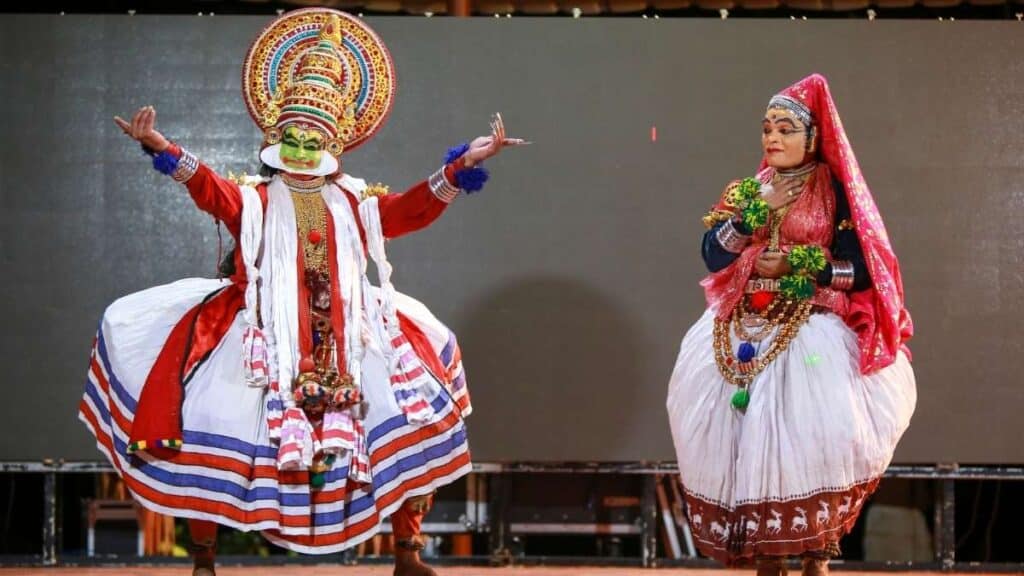
Music, art, and performance form the vibrant heartbeat of Onam celebrations, bringing energy, creativity, and cultural pride to the festival.
Traditional Music and Songs
Onappaatt (Onam Songs): Melodious folk songs celebrating Mahabali’s virtuous rule and the joy of harvest season.
Dance Forms
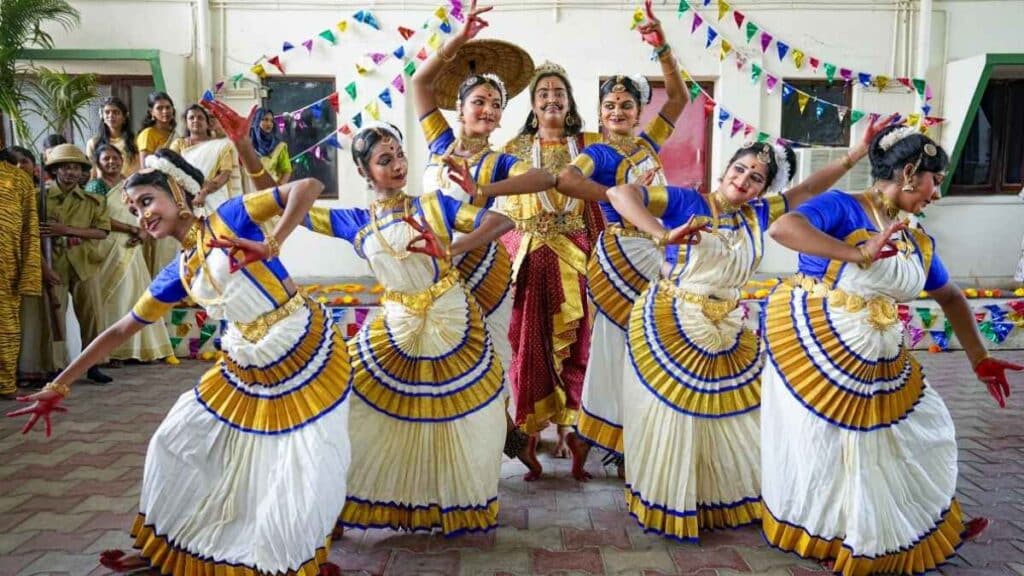
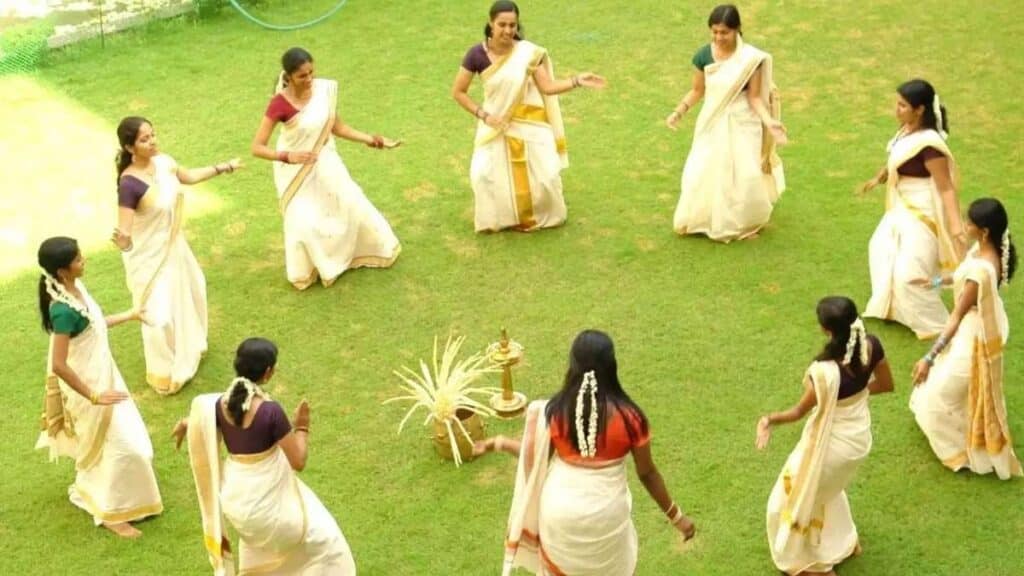
Thiruvathira Kali: Women’s graceful circle dance performed around nilavilakku (oil lamp) featuring synchronized movements and clapping patterns, performed in traditional Kerala saris.
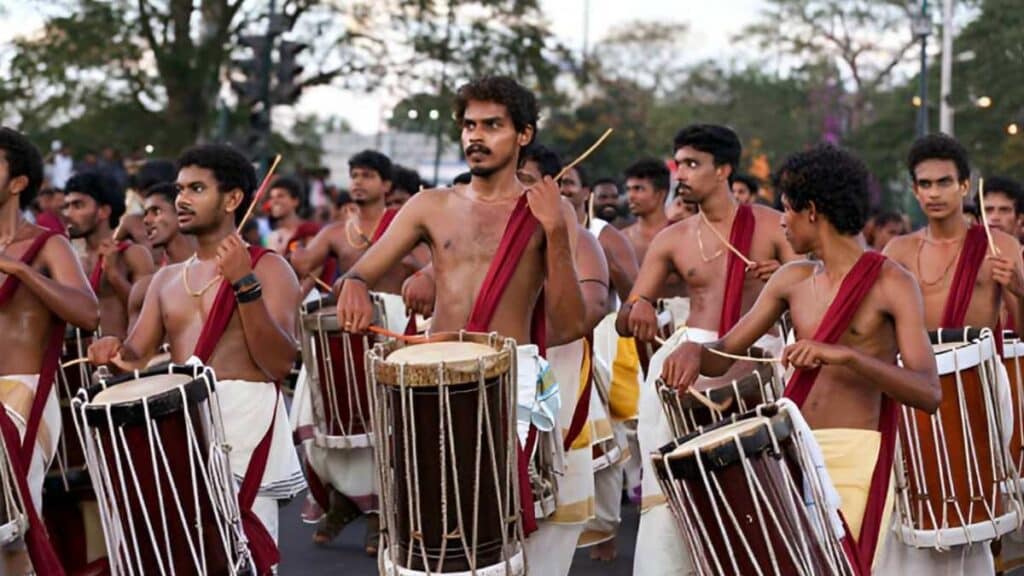
Pulikali (Tiger Dance): Spectacular athletic dance where performers paint entire bodies in vibrant tiger stripes (yellow, red, black) and dance energetically to Chenda and Thakil drum rhythms through Thrissur streets.
Kummattikali: Colorful masked dance with performers visiting homes in elaborate masks and costumes, offering blessings.
Kathakali: Elaborate classical dance-drama with extensive makeup and costumes, depicting Mahabali-Vamana stories, Ramayana episodes, and mythological tales. Performances can last hours with highly trained artists.
Traditional Temple Arts:
- Ottam Thullal – Satirical solo performance
- Chakyar Koothu – Sanskrit epic presentation with humor
- Thumbi Thullal – Onam-specific dance form
Visual Arts
Pookkalam (Flower Carpets): The artistic centerpiece—intricate circular flower carpets created daily, growing in size and complexity from Atham to Thiruvonam.
Onam’s Enduring Relevance and Cultural Continuity
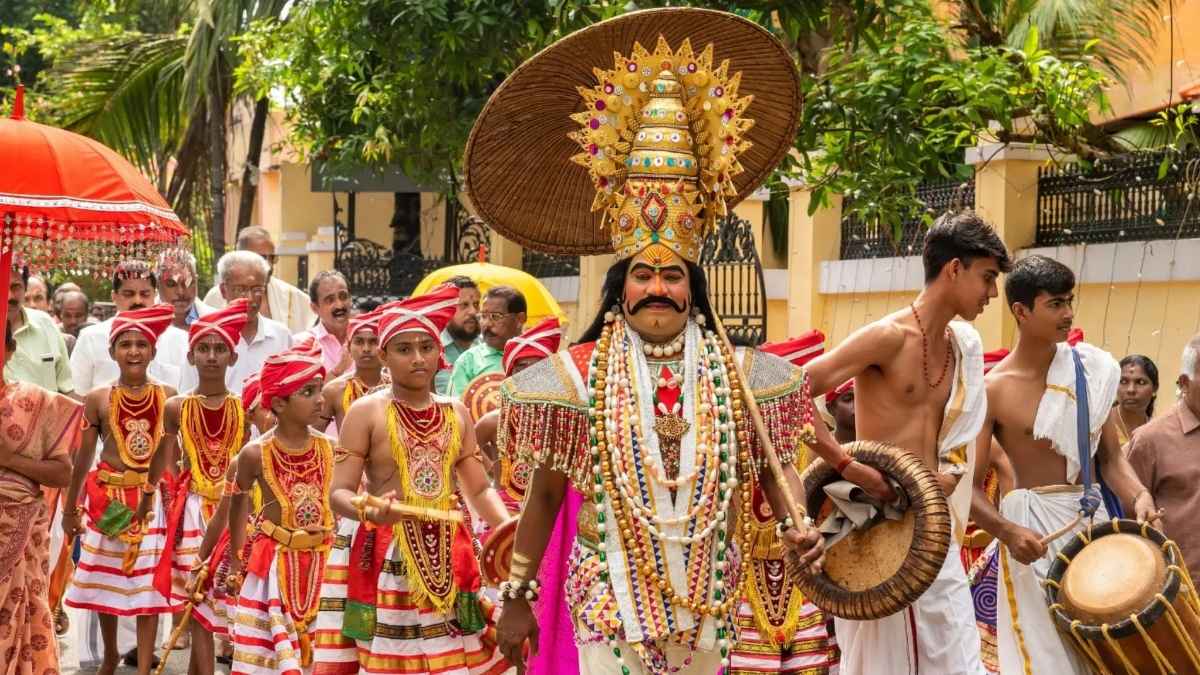
In today’s rapidly changing world, Onam continues to hold profound relevance as Kerala’s defining cultural celebration. While modern lifestyles and celebrations have evolved, the core spirit remains unchanged—welcoming King Mahabali home, celebrating harvest abundance, and bringing communities together across all boundaries.
Onam’s universal appeal lies in its celebration of timeless values: humility, generosity, equality, and devotion. The legend of King Mahabali resonates across centuries not because of supernatural elements, but because of profoundly human virtues—his selfless love for his people, his integrity in keeping promises, and his humble acceptance of truth. These qualities find expression in every Onam tradition, from the democratic Onasadya served equally to all, to the collective beauty of pookkalam where every flower contributes.
The festival’s evolution from ancient temple rituals to modern global celebrations demonstrates remarkable cultural resilience and adaptability. Whether celebrated in a Kerala village with traditional boat races or a Dubai convention center with thousands of expatriates, whether featuring elaborate 26-dish sadyas or simplified weekend feasts, the essence endures.
A Living Testament to Unity
In an increasingly fragmented world, Onam stands as a living testament to the possibility of harmony, inclusivity, and shared celebration. The festival’s ability to unite Hindus, Christians, and Muslims in joyous celebration offers hope that cultural identity can bridge religious differences. The flower carpets may fade after Thiruvonam, but the spirit they represent—of beauty created together, abundance shared generously, and a beloved king’s promise kept—blooms anew each year in millions of hearts.
Onam reminds us that festivals celebrating harvest, homecoming, and human values can still unite communities across continents, that ancient stories can speak to modern sensibilities, and that traditions can adapt without losing soul. As Malayalis worldwide gather to welcome Mahabali, they renew not just cultural practices but fundamental beliefs in justice, generosity, and the enduring power of virtue.
Onam Ashamsakal! May the spirit of King Mahabali’s golden rule—prosperity, equality, and joy for all—continue to inspire and unite us.