
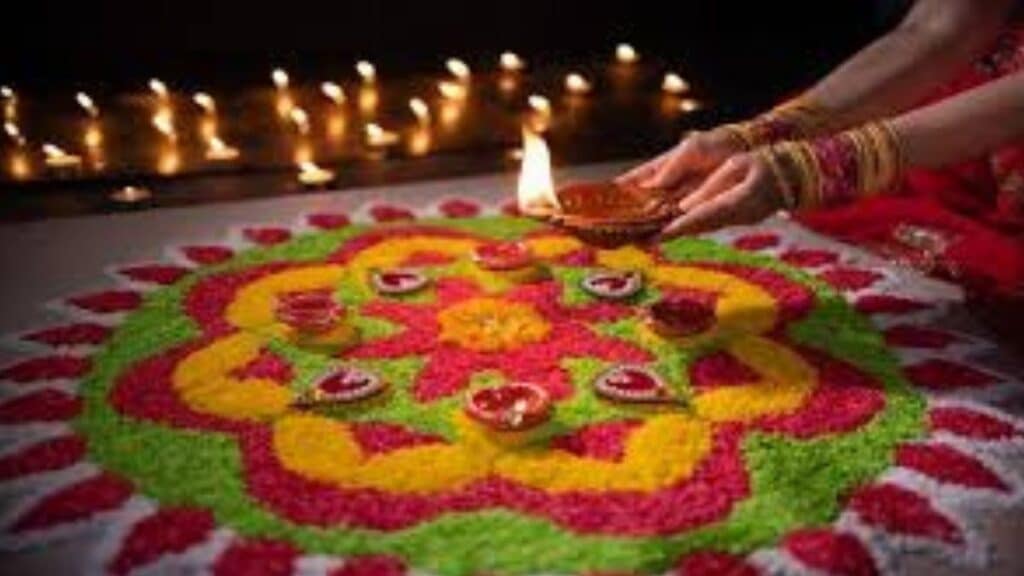
Puthandu, also known as the Tamil New Year, is one of the most cherished festivals of the Tamil people — a celebration marking the beginning of a new year, a new season, and a renewed spirit. Observed on the first day of the Tamil month of Chithirai, Puthandu is rooted in the ancient Tamil solar calendar and carries deep cultural, spiritual, and astronomical significance.
The word Puthandu (புத்தாண்டு) simply means “new year” — putu (new) + āṇṭu (year). Also known as Varusha Pirappu, meaning “birth of the year,” the festival celebrates the Sun’s entry into Aries (Mesha Rashi), an astronomical event that marks the start of the Tamil calendar year.
Puthandu is observed across Tamil Nadu, Puducherry, Sri Lanka, Malaysia, Singapore, Mauritius, Réunion, and the global Tamil diaspora. It is a public holiday in Tamil Nadu and Sri Lanka. Beyond a date change, Puthandu is a time for family, devotion, the viewing of the auspicious Kani tray, temple visits, and sharing a vegetarian feast — all woven together into one of South Asia’s most enduring solar new year traditions.
When Is Puthandu in 2026?
Puthandu is a solar festival fixed to the Sun’s transit into Aries (Mesha Sankranti), which causes it to consistently fall around April 14 each year on the Gregorian calendar.
Puthandu 2026 Dates
- Puthandu (Tamil New Year): Tuesday, April 14, 2026
- Mesha Sankranti Moment (IST): 9:39 AM
- Tamil Calendar Year: Tamil Shaka Samvat 1948 begins
- Tamil Month: Chithirai 1
As per Tamil tradition, if the Sankranti occurs after sunrise and before sunset, the new year is observed on the same day. Since the Sankranti moment falls at 9:39 AM IST on April 14, 2026, the Tamil New Year begins that day.
Table of Contents
Puthandu In USA, Canada, Australia, New Zealand, UK, UAE, Singapore 2026 Dates
- Puthandu on Tuesday, April 14, 2026
- Sankranti Moment on Puthandu – 12:09 AM
- Puthandu on Tuesday, April 14, 2026
- Sankranti Moment on Puthandu – 12:09 AM
- Puthandu on Tuesday, April 14, 2026
- Sankranti Moment on Puthandu – 02:09 PM
- Puthandu on Tuesday, April 14, 2026
- Sankranti Moment on Puthandu – 05:09 AM
- Puthandu on Tuesday, April 14, 2026
- Sankranti Moment on Puthandu – 08:09 AM
- Puthandu on Tuesday, April 14, 2026
- Sankranti Moment on Puthandu – 12:09 PM
Why Does Puthandu Always Fall Around April 14?
Unlike lunar festivals, Puthandu follows the Hindu solar calendar. It marks the Sun’s entry into Aries (Mesha Rashi) — the first sign of the zodiac — which falls consistently around April 14 each year on the Gregorian calendar.
In Tamil Nadu, if the Sankranti occurs between sunrise and sunset, the new year is observed that same day; if after sunset, it is observed the following day.it occurs on the sixth day (Shashthi) of Kartik Shukla Paksha.
Puthandu Overview
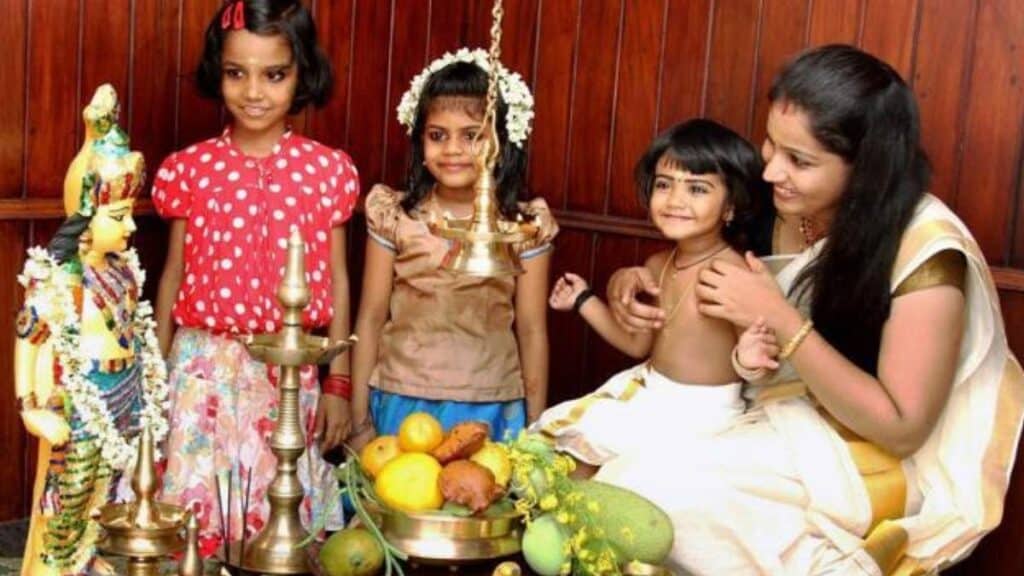
Puthandu is the traditional new year of the Tamil people, primarily observed by Tamil Hindus and the broader Tamil community worldwide. It celebrates cosmic renewal — the Sun entering Aries marks both the astronomical new year and the beginning of the Tamil agricultural and cultural calendar.
On this day, families rise early, arrange the auspicious Kani tray the night before, view it at sunrise as the year’s first sight, perform an oil bath, wear new clothes, seek the blessings of elders, visit temples, and share a vegetarian feast. Tamil people greet each other with “Iṉiya Puttāṇṭu Nalvāḻttukaḷ!” — the Tamil equivalent of “Happy New Year.”
Puthandu carries social and cultural importance far beyond religion. It is an occasion for family reunion, the settling of old debts, the beginning of new ventures, and the renewal of human bonds.
Puthandu Other Names & Regional Identities
Puthandu is known by several names across regions and related communities:
Tamil Names
- Puthandu (புத்தாண்டு) — Standard Tamil name, meaning “new year”
- Varusha Pirappu (வருடப்பிறப்பு) — “Birth of the year,” classical Tamil term
- Puthuvarusham — Alternative Tamil usage
- Chittirai Thiruvilha — Temple and festival context in Madurai and Kumbakonam
- Chithirai Vishu — Used in parts of Southern Tamil Nadu
Regional Indian Names for the Same Solar New Year
- Vishu — Kerala (Malayalam)
- Vaisakhi / Baisakhi — Punjab, Haryana, Himachal Pradesh
- Pohela Boishakh — West Bengal, Tripura (Bengali)
- Rongali Bihu — Assam
- Pana Sankranti — Odisha
- Bisu Parba — Tulunadu (Karnataka coast)
International & Diaspora Names
- Tamil New Year — Used widely in the English-speaking diaspora (USA, UK, Canada, Australia)
- Puthandu — Retained as-is by diaspora communities globally; no significant renaming in international contexts
Related Southeast Asian Celebrations (Same Solar New Year)
- Songkran — Thailand
- Thingyan — Myanmar
- Aluth Avuruthu — Sri Lanka (Sinhalese New Year, same day)
- Chol Chnam Thmey — Cambodia
The Origins, History, and Legends of Puthandu
Puthandu is one of the oldest solar new year observances in the world, with references traceable across two millennia of Tamil literature and history.
Sangam Literature (300 BCE – 300 CE): The poet Nakkirar in Neṭunalvāṭai describes the Sun’s journey beginning from Mesha (Chithirai) through twelve zodiac signs — one of the earliest literary records of the Tamil solar calendar. The Puṟanāṉūṟu by Kūdalūr Kiḻār explicitly identifies Mesha Raasi as the year’s commencement.
Tolkaapiyam: The oldest surviving Tamil grammar divides the year into six seasons, with Chithirai marking the start of Ilavenil (spring/summer) — establishing the month as the year’s beginning centuries before the Common Era.
Silappadikaaram & Manimekalai: These two of the five great Tamil epics reference the twelve zodiac signs beginning with Mesha and the Hindu solar calendar framework still observed today.
Medieval Evidence: Inscriptions in Pagan, Myanmar (11th century CE) and Sukhothai, Thailand (14th century CE) reference South Indian, often Vaishnavite, courtiers tasked with establishing the traditional calendar beginning in mid-April — evidence of Tamil cultural and astronomical influence across Southeast Asia.
Unlike Holi’s mythology of Holika Dahan, Puthandu’s origins are astronomical and literary rather than mythological — making it a festival born of the Tamil people’s sophisticated understanding of solar cycles, seasons, and time.
Puthandu: Cultural and Spiritual Significance
Puthandu is the Tamil civilization’s annual covenant with cosmic order. The Sun’s entry into Aries is not merely an astronomical event — it is experienced as a personal and family moment of renewal, gratitude, and beginning.
The Kani tray — with its three fruits (mango, banana, jackfruit), betel leaves, coins, jewelry, flowers, and mirror — is a microcosm of abundance. Viewing it as the very first sight of the new year is a spiritual practice of setting intention for prosperity. Tamil tradition teaches that what you first perceive on the new year morning shapes the entire year ahead.
The Mango Pachadi, the signature Puthandu dish combining raw mango’s sourness, jaggery’s sweetness, neem’s bitterness, and chilli’s heat, is a profound cultural metaphor: life brings all flavors, and wisdom lies in accepting them all.
For the Tamil diaspora across the world, Puthandu carries an additional layer of meaning — it is an anchor of cultural identity, a ritual thread connecting generations, and a declaration that Tamil civilization continues to thrive far from its homeland.
Puthandu Prayers and Religious Observances
Puthandu observances blend astronomical timing with devotional practice, performed both at home and in temples.
The day begins before sunrise with the Kani Darshan — elders light lamps and lead younger family members, eyes closed, to the Kani tray. Opening the eyes to this auspicious arrangement is the spiritual centerpiece of Puthandu, believed to invite abundance and well-being for the year.
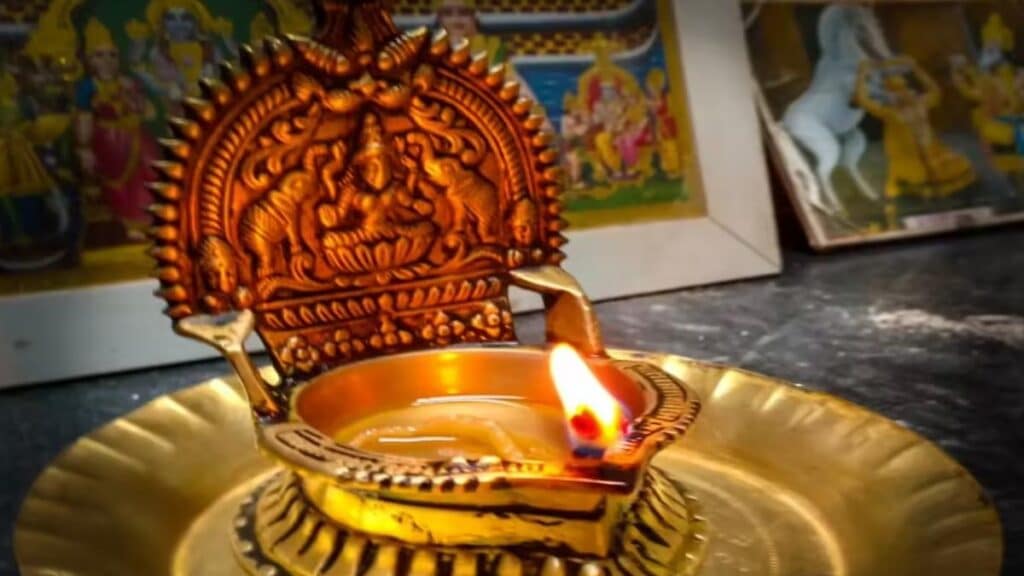
Families then perform puja at the home altar, light lamps before the deity, offer flowers and fruits, and recite traditional prayers and Thiruvasagam (Tamil devotional hymns). This is followed by an oil bath (Ganga Snanam) — a ritual purification before dressing in new clothes.
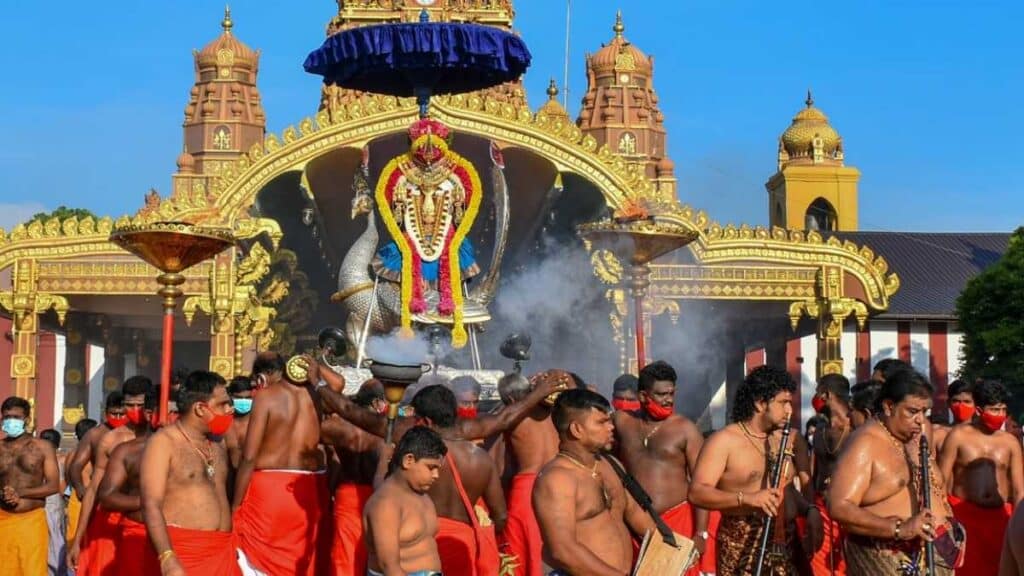
Temple visits are an essential part of Puthandu. The Chittirai Thiruvilha at the Meenakshi Amman Temple in Madurai is the grandest Puthandu temple event — a month-long festival beginning on the new year day. Large Car Festivals (Ther Thiruvizha) are held at Tiruvidaimarudur near Kumbakonam. Special Puthandu pujas are conducted at Murugan, Vinayagar, and Vishnu temples across Tamil Nadu.
While Puthandu does not have a fixed mantra the way some Hindu rituals do, the underlying prayer is universal: gratitude for the past year, blessings for the new one, and the aspiration for prosperity, health, and devotion.
How Puthandu Is Celebrated Across India
Tamil Nadu: The heartland of Puthandu. Madurai’s Meenakshi Amman Temple hosts the Chittirai Thiruvilha, one of South India’s grandest temple festivals. Kumbakonam, Kanchipuram, and Tiruchirapalli host processions, Car Festivals, and cultural programs. Homes are decorated with kolam patterns at entrances, and the aroma of festive cooking fills neighborhoods.
Puducherry: The Lieutenant Governor and Chief Minister publicly felicitate the Tamil community. The city’s unique blend of Tamil and French culture gives Puthandu celebrations a distinct character.
Kongu Nadu (Western Tamil Nadu): Known here as Chithiraikani, the festival mirrors Kerala’s Vishu very closely — the Kani tray is viewed before sunrise, agricultural blessings are sought, and community feasts are held. The Kani tray in this region typically includes coconut, cucumber, lemon, and rice alongside the standard items.
Southern Tamil Nadu (Tirunelveli, Thoothukudi): Called Chittirai Vishu locally, celebrations include arpudu (first ritual ploughing) to mark the start of the agricultural cycle, village coconut games, and community cultural events.
Participation Across Religions in India
While Puthandu is rooted in Tamil Hindu tradition, it is celebrated as a cultural new year across communities. Tamil Christians mark the day with family gatherings, new clothing, church prayers, and festive meals — the kolam at the doorstep and the shared feast remain common cultural markers regardless of faith.
Tamil Muslims in Tamil Nadu and Sri Lanka acknowledge Puthandu as a cultural milestone. In Singapore and Malaysia, the mid-April period is a shared new year season across Tamil, Sikh, Malayalee, and Bengali communities, with Gurdwaras, Hindu temples, and Tamil community centers all hosting events side by side.
The agricultural and cosmic dimensions of Puthandu — gratitude for the harvest, hope for the new cycle — are universally resonant, making the festival naturally inclusive.
How Puthandu Is Celebrated Outside India
Tamil diaspora communities across the world celebrate Puthandu through:
- Temple events and special Puthandu pujas at Murugan and Perumal temples
- Cultural programs featuring Bharatanatyam, Carnatic music concerts, and kolam competitions
- Community feasts organized by Tamil Sangams and cultural associations
- Tamil language schools hosting Puthandu programs for children
- Virtual Kani viewings connecting families across time zones
In Singapore and Malaysia, Puthandu is a public holiday celebrated with Little India district festivities, temple processions, and cultural events. In Sri Lanka, Tamil and Sinhalese communities observe their respective new years simultaneously — making mid-April a shared national celebration. In Mauritius and Réunion, Tamil Hindu communities hold temple processions and family gatherings.locally available substitutes, and connect virtually with India-based families during arghya times.
Puthandu Gifting Traditions
Gifting on Puthandu is an expression of love, blessing, and shared prosperity:
Kai Vishesham (Money Gift): Elders gift currency to younger family members as a blessing of abundance — a tradition especially significant in Sri Lankan Tamil culture.
New Clothes: Gifting new clothing — silk sarees, salwar suits, and dhotis — is central to Puthandu. Children receive new outfits worn for the first time on the new year morning.
Gold and Jewelry: Gold coins, chains, and pendants are considered the most auspicious Puthandu gifts, traditionally included within the Kani tray itself.
Sweet Boxes and Festive Foods: Homemade murukku, ladoo, and sweet boxes are exchanged with neighbors and extended family. Diaspora families often send traditional sweet hampers across borders.
Modern Gifting: In international settings, digital money transfers, ethnic wear from online stores, Tamil music and literature, and festive e-cards are increasingly popular ways to celebrate Puthandu connections across distance.
Puthandu Foods & Culinary Traditions
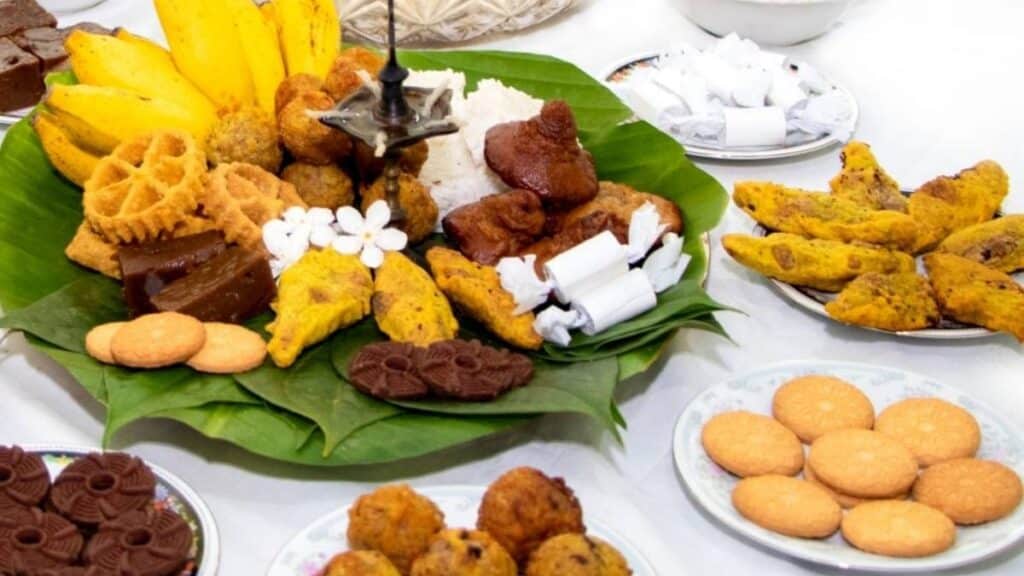
The Puthandu feast is vegetarian by tradition and rich with symbolic meaning. Every dish reflects the season, the culture, and Tamil philosophical outlook.
Mango Pachadi is the defining dish of Puthandu — raw mango cooked with jaggery, neem flowers, and green chillies creates a dish that is simultaneously sour, sweet, bitter, and spicy. The symbolism is explicit: life brings all flavors, and the wise person accepts them all. Eating this dish together as a family is an act of collective philosophical acceptance.
Neem and Jaggery (Veppam Poo): Neem flowers mixed with jaggery are consumed at the start of the day — a traditional health practice and a symbolic embrace of life’s bitterness alongside its sweetness.
Pongal (sweet and savoury): Chakkarai Pongal with rice, jaggery, and ghee is the festival morning staple. Ven Pongal with lentils and pepper is also prepared.
Other traditional Puthandu dishes include drumstick sambar, rasam, kozhukattai (steamed rice dumplings), payasam (sweet milk dessert), vadai and murukku (savoury snacks), and cooling neer mor (spiced buttermilk). In Sri Lanka, Kavun (oil cake) is shared alongside Tamil dishes as both communities mark their simultaneous new years.
Music, Art & Cultural Expression
Kolam Art is Puthandu’s most visible artistic tradition. These geometric and floral patterns drawn with rice powder at home entrances are both meditative practice and public art — welcoming prosperity and expressing the household’s creative spirit. Kolam competitions are held in neighborhoods, schools, and online platforms every Puthandu.
Carnatic Music: Temples and cultural halls host Carnatic concerts on Puthandu morning. Television channels broadcast music specials, and artists release devotional albums timed to the new year.
Bharatanatyam: Cultural organizations schedule classical dance performances and folk dance programs. Puthandu is a favored occasion for young dancers’ arangetrams (debut performances).
Folk Arts: Villu Pattu (bow song), Therukoothu (street theatre), and Karagattam (pot dance) are performed in villages, connecting communities to their agricultural and devotional roots.
Tamil Cinema: Major film releases, streaming platform Tamil content, and new songs are traditionally timed around Puthandu, making the festival a significant moment in Tamil popular culture as well.
Modern Observance & Evolving Practices
Puthandu is evolving beautifully while preserving its essential character. Families separated by oceans join virtual Kani viewings over video calls. Tamil diaspora youth in Toronto, London, and Sydney organize cultural events that blend classical Tamil arts with contemporary programming.
Social media has amplified Puthandu’s visibility globally — the hashtag #PuthanduVazhthukkal trends on April 14 each year, with families sharing kolam art, festive recipes, and new year greetings. Tamil musicians release digital Puthandu songs, and streaming platforms see a surge in Tamil content.
Sustainability is entering Puthandu traditions: eco-kolams with organic rice powder, minimal-waste feasts, and community seed-sharing events honor the festival’s agricultural roots in an environmentally aware way.
How to Wish Someone on Puthandu:
- Tamil: இனிய புத்தாண்டு நல்வாழ்த்துகள்!
- Transliteration: Iṉiya Puttāṇṭu Nalvāḻttukaḷ!
- English: Happy Tamil New Year! / Happy Puthandu 2026!
Cultural Reflection
Puthandu is evidence of the extraordinary continuity of Tamil civilization. A festival described in Sangam poetry two millennia ago is today celebrated with the same devotion in Chennai, Colombo, Singapore, London, and Toronto. The Kani tray still holds the same fruits; the mango pachadi still blends the same flavors; children still close their eyes and wait for that first auspicious sight of the new year morning.
What makes Puthandu remarkable is its seamless marriage of the astronomical and the intimate — a cosmic event experienced as a family moment. For the global Tamil diaspora, Puthandu is not nostalgia — it is identity in motion, culture carried forward with pride across generations. Each kolam drawn in Melbourne, each pachadi cooked in New Jersey, each temple visit in Mississauga is the Tamil New Year renewing itself, one family at a time.