


In this Rahu Ketu movie review, we explore a film that arrives with the audacity to ask: what if ancient mythology crashed headfirst into modern corruption? When was the last time Hindi cinema attempted something this genuinely adventurous with its mythological roots? Director Vipul Vig’s Rahu Ketu doesn’t just entertain; it completely reimagines shadow planets as flesh-and-blood vigilantes dispensing karmic justice across the misty hills of Himachal Pradesh.
Debutant feature director Vipul Vig announces his arrival with the confidence of someone who’s passionate about both mythology and meaningful cinema. This is Pulkit Samrat’s most physically transformed, emotionally committed performance in years, supported by Varun Sharma’s heartfelt comedy and a premise that celebrates the power of storytelling itself. With Piyush Mishra lending gravitas as the mysterious writer whose diary manifests reality, Rahu Ketu is the cinematic equivalent of that friend who shows up with wild ideas and somehow makes you believe in magic again.
Quick Takeaway:
Rahu Ketu is a visually breathtaking, thematically ambitious mythological fantasy that succeeds as both emotional storytelling and social commentary. Though the non-linear narrative occasionally challenges conventional viewing expectations, the film’s sheer creative courage, stunning Himachal cinematography, and that fascinating meta-narrative about written destiny make it essential viewing for anyone craving original, boundary-pushing Hindi cinema.
Language: Hindi
Genre: Mythological Fantasy, Social Drama, Action
Director: Vipul Vig
The Plot: Divine Intervention Meets Modern Corruption
At its core, Rahu Ketu is about redemption and justice—but calling it just that would be like calling the Himalayas “some hills.” The film’s brilliance lies in its layered premise: two divine entities, Ketu (Pulkit Samrat) and Rahu (Varun Sharma), are literally written into existence by a mysterious writer (Piyush Mishra) whose enchanted diary has the power to manifest reality.
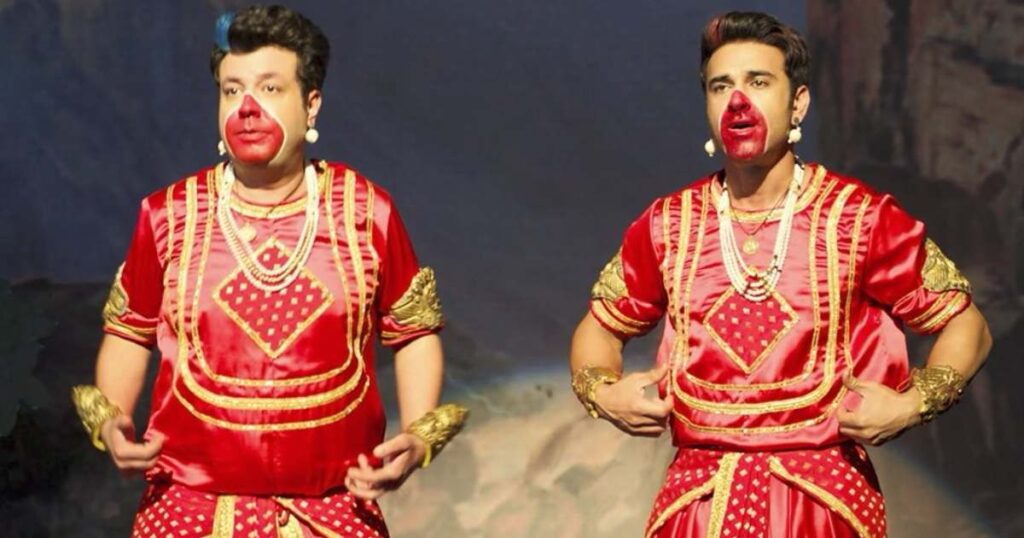
Their mission? Eradicate corruption in Himachal Pradesh. But here’s where Vipul Vig’s vision gets fascinating: these aren’t your textbook mythological figures. The film boldly reimagines Rahu and Ketu—traditionally shadow planets representing desire and detachment in Vedic astrology—as benevolent vigilantes delivering moral justice based on karma. It’s a creative reinterpretation that honors the spirit of mythological storytelling while making it urgently relevant to contemporary social issues.
What makes this approach liberating is the meta-narrative layer. When your protagonists discover they’re characters being written into existence, suddenly questions of free will, destiny, and the power of narrative itself become central to the experience. The film asks: if our stories shape reality, what kind of reality do we want to create?
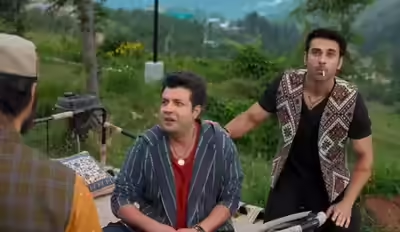
Set against the ethereal backdrop of Himachal’s misty mountains and lush valleys, Rahu Ketu uses its stunning location not just as scenery but as a character—a paradise threatened by the very corruption our divine heroes must combat.
Performances: Every Actor Commits to the Vision
Pulkit Samrat: A Physical and Emotional Transformation
This Rahu Ketu movie review must celebrate what is undeniably Pulkit Samrat’s most committed performance to date. His Ketu is a revelation—ripped, sculpted, radiating divine righteousness while maintaining surprising emotional depth. This isn’t just physical transformation for show; Samrat brings genuine gravitas to a character that could easily have become one-dimensional.
Watch him navigate scenes that require both mythological authority and human vulnerability. There’s real power in his presence, the kind that makes you believe this is indeed a divine being walking among mortals. Yet he never loses the emotional truth that keeps us invested—a flickering moment of doubt here, a flash of compassion there. This is an actor rediscovering his range and absolutely owning it.
Varun Sharma: Heart and Humor in Perfect Balance
Every wild film needs soul, and Varun Sharma provides exactly that. His Rahu could have been mere comic relief, but Sharma elevates the role with genuine heart. Yes, he leans into his slapstick strengths, but there’s thoughtfulness beneath the humor—a character who understands the weight of their divine responsibility even as he brings levity to the journey.
The brotherly chemistry between Sharma and Samrat is the film’s emotional anchor. Their banter feels authentic, their moments of connection genuine. When the film asks us to care about these divine beings, it’s Sharma’s warmth that makes it possible. He reminds us that even gods need companionship, that power without heart is meaningless.
Piyush Mishra: The Voice of Cosmic Storytelling
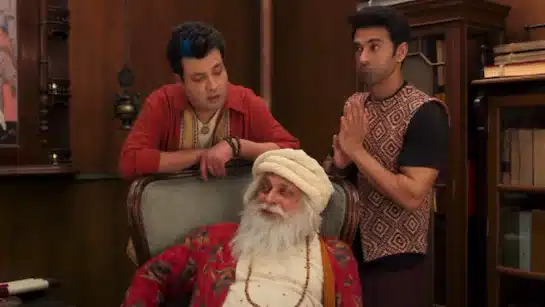
Piyush Mishra brings his legendary gravitas to the role of the mysterious writer, embodying the very power of narrative that drives the film’s meta-structure. His philosophical presence adds layers of meaning to what could have been a simple action premise. When Mishra speaks about karma, destiny, and the stories that shape our lives, you listen.
There’s a beautiful irony in casting Mishra—an acclaimed poet and storyteller—as the character whose written words create reality. He grounds the film’s flights of fancy with measured wisdom, his weathered face conveying the weight of cosmic knowledge. Every scene he’s in carries added significance simply through his presence.
Shalini Pandey: Fierce and Fearless
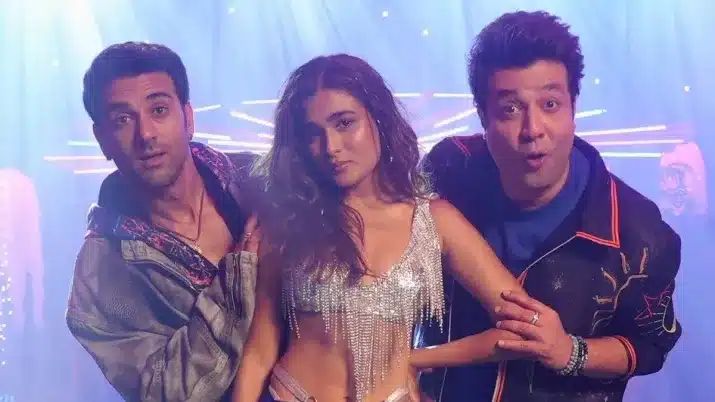
Shalini Pandey attacks her role as a wannabe drug queen with impressive fearlessness, creating a character who refuses to be simple. She brings intensity and complexity to what could have been a standard antagonist, navigating between empowerment and vulnerability in ways that add texture to the narrative. Her presence challenges the heroes in meaningful ways, representing the very corruption they seek to eliminate.
Chunky Pandey: International Flavor
Chunky Pandey’s transformation into an Israeli gangster settled in Himachal’s hills adds unexpected cultural dimension to the story. It’s a bold character choice that expands the film’s canvas beyond local corruption to suggest global criminal networks. Pandey commits fully to the accent, mannerisms, and mindset, creating memorable moments that enhance the film’s scope.
Direction and Vision: A Director Who Trusts His Audience
Vipul Vig makes the kind of confident directorial statement that immediately marks him as a filmmaker with vision. His approach to Rahu Ketu is unapologetically ambitious—he wants to blend mythology with social commentary, fantasy with gritty reality, meta-narrative with genuine emotion. And remarkably, he largely succeeds.
The non-linear storytelling isn’t confusion; it’s intentional artistry. Vig structures the narrative to mirror the chaotic nature of divine intervention in mortal affairs, creating a dreamlike quality that reflects the characters’ own discovery of their manufactured existence. He trusts audiences to stay with him through temporal shifts and perspective changes, respecting our intelligence even as he entertains us.
His visual grammar borrows from diverse sources—there are echoes of international fantasy cinema, touches of classic Hindi mythological films, moments of contemporary social realism—but Vig synthesizes these influences into something uniquely his own. The way he uses the Himachal landscape as both paradise and battleground, the manner in which he frames action sequences to emphasize mythological power, the quiet moments of philosophical reflection between explosive set pieces—these are the marks of a director who’s studied cinema deeply before adding his distinctive voice.
Technical Brilliance: When Craft Elevates Vision
Cinematography: Himachal as Divine Canvas
The visual achievement of Rahu Ketu cannot be overstated. Every frame celebrates Himachal Pradesh’s natural majesty—misty roads winding through mountains, lush valleys bathed in golden light, dramatic peaks touching clouds. But this isn’t mere tourism footage; the cinematography transforms location into mythology.
The camera work during action sequences utilizes the dramatic terrain brilliantly, creating compositions that feel genuinely divine. Wide shots emphasize the cosmic scale of the conflict, while intimate close-ups ground us in character emotion. Colors pop with intention—the greens impossibly lush, the mist ethereal and otherworldly, the action sequences vibrant with energy.
What’s particularly impressive is how the visual language supports the film’s meta-narrative. When characters question their reality, the cinematography responds with choices that blur fiction and truth, dream and waking. This is visual storytelling at its most sophisticated.
Sound Design and Music: The Soundtrack of Karma
The background score knows exactly when to swell with mythological grandeur and when to pull back for human moments. It blends traditional Indian musical elements with contemporary arrangements, creating soundscapes that honor mythological roots while feeling thoroughly modern.
The sound design during action sequences deserves special mention—every impact resonates with divine power, every movement through space carries weight and consequence. It’s deliberately heightened, matching the film’s mythological scope while maintaining emotional authenticity.
Editing: Navigating Non-Linear Complexity
Keeping a non-linear mythological fantasy coherent requires exceptional editing. The film largely succeeds in maintaining narrative clarity despite its temporal complexity. Scene transitions flow naturally, the interweaving of different story threads makes thematic sense, and the pacing—while occasionally contemplative—serves the film’s philosophical ambitions.
The editing trusts quiet moments to breathe, understanding that mythology needs space for reflection as much as action needs momentum. This balance between explosive sequences and meditative pauses gives Rahu Ketu its distinctive rhythm.
Cultural Significance: Mythology for Modern Times
This Rahu Ketu movie review celebrates the film’s boldness in completely reimagining mythological figures for contemporary relevance. By transforming shadow planets into vigilantes fighting corruption, Vig creates a bridge between ancient wisdom and modern social issues that feels both respectful and revolutionary.
The meta-narrative about a writer whose words create reality is a beautiful meditation on storytelling’s power—a theme that resonates across all cultures but feels particularly meaningful in Indian cinema’s mythological tradition. When characters question their written destiny, they’re asking questions about fate versus free will that have animated Indian philosophy for millennia.
The film’s choice to set this divine intervention in Himachal Pradesh adds regional specificity that grounds the fantasy in recognizable reality. It’s mythology that doesn’t feel distant or abstract but immediate and urgent.
Strengths: What Makes Rahu Ketu Shine
- Pulkit Samrat’s transformed performance – Career-defining physicality and emotional depth
- Creative mythological reimagining – Bold reinterpretation that makes ancient lore relevant
- Stunning Himachal cinematography – Every frame a visual celebration
- Heartfelt brotherly chemistry – Samrat and Sharma create genuine emotional connection
- Ambitious meta-narrative – Questions of destiny and free will add philosophical weight
- Committed ensemble performances – Every actor fully invested in the vision
- Visual and technical excellence – Cinematography, sound, and editing all superb
- Social consciousness with heart – Addresses corruption meaningfully while entertaining
Minor Growth Opportunities
- Non-linear structure occasionally challenges – Artistic choice that rewards patient viewing
- Supporting characters deserve deeper exploration – More time with Pandey and Pandey would enrich
- Pacing favors contemplation – Philosophical moments extend runtime slightly
Final Verdict: 4.5/5 Stars ⭐⭐⭐⭐½
Rahu Ketu is exactly what Hindi cinema needs right now—a film that remembers that mythology can be radically reimagined, that audiences hunger for stories with genuine creative courage, and that the space between ancient wisdom and modern storytelling is where magic happens.
This Rahu Ketu movie review celebrates a film that succeeds brilliantly in its ambitious goals. Yes, the non-linear narrative requires active viewing. Yes, the mythological reinterpretation won’t please purists. Yes, the contemplative pacing might challenge expectations. But these aren’t weaknesses—they’re features of a film that respects its audience enough to demand engagement.
For director Vipul Vig, this film announces a major talent—someone willing to take genuine creative risks while maintaining emotional authenticity, to embrace experimental storytelling while delivering genuine entertainment, to trust ambitious filmmaking instincts while keeping the heart beating at the center.
