
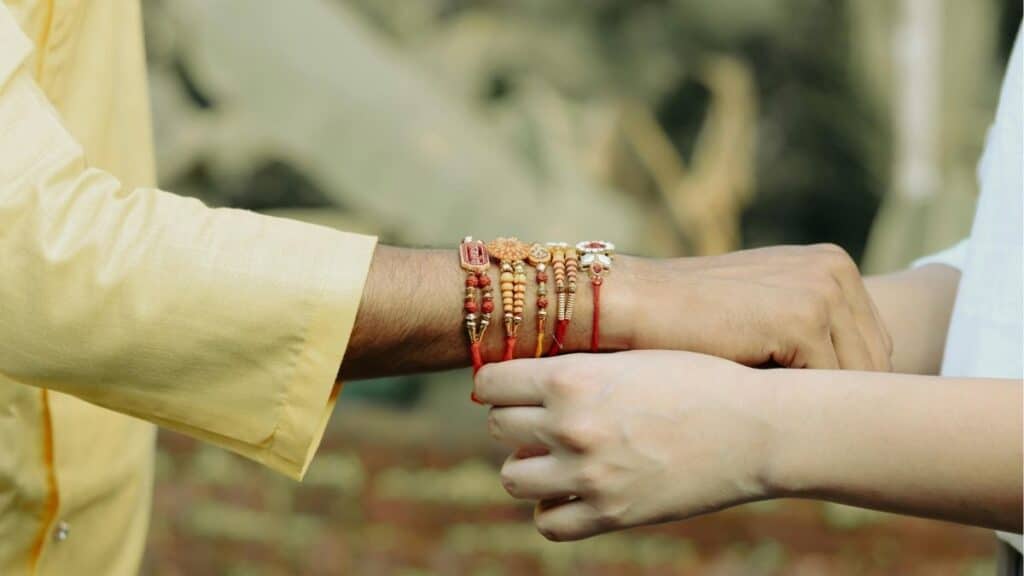
Raksha Bandhan is one of India’s most cherished festivals, celebrating the beautiful bond between brothers and sisters. Popularly known as Rakhi, this festival symbolizes love, protection, and lifelong commitment between siblings. Rooted in ancient Hindu traditions, Raksha Bandhan honors the special relationship where sisters tie a sacred thread (rakhi) around their brothers’ wrists, and brothers pledge to protect and support their sisters throughout life.
The name Raksha Bandhan comes from two Sanskrit words: “Raksha” (protection) and “Bandhan” (bond), literally meaning “the bond of protection.” This festival goes beyond biological relationships—it celebrates chosen family bonds, friendship, and mutual care. During Raksha Bandhan, sisters pray for their brothers’ well-being while brothers offer gifts and promises of lifelong support.
Raksha Bandhan is primarily observed by Hindus across India, Nepal, and worldwide, but today it transcends religious boundaries. Jains, Sikhs, and people from various communities celebrate this festival, making it a truly inclusive occasion that honors siblinghood and family unity.
When Is Raksha Bandhan Celebrated in 2026?
Raksha Bandhan is celebrated on the full moon day (Purnima) of the Hindu lunar month of Shravana, which typically falls in August.
Raksha Bandhan In India 2026 Dates
- Raksha Bandhan Date: Friday, August 28, 2026
- Shubh Muhurat for Rakhi Tying Ceremony:
Morning 5:57 AM to 9:48 AM IST
Purnima Tithi Begins: Thursday, August 27, 2026 at 9:08 AM IST
Purnima Tithi Ends: Friday, August 28, 2026 at 9:48 AM IST
The exact dates vary each year based on the lunar calendar, making Raksha Bandhan a movable festival rather than a fixed-date event.
Table of Contents
Raksha Bandhan In USA, Canada, Australia, New Zealand, UK, UAE, Singapore 2026 Dates
Date: Thursday, August 27, 2026
- Raksha Bandhan Thread Ceremony Time: 11:58 AM to 09:45 PM
- Aparahna Time Raksha Bandhan Muhurat: 02:17 PM to 04:57 PM
- Pradosh Time Raksha Bandhan Muhurat: 07:36 PM to 09:45 PM
- Raksha Bandhan Bhadra End Time: 11:58 AM
- Purnima Tithi Begins: 11:38 PM on Aug 26, 2026
- Purnima Tithi Ends: 12:18 AM on Aug 28, 2026
Date: Thursday, August 27, 2026
- Raksha Bandhan Thread Ceremony Time: 11:58 AM to 09:55 PM
- Aparahna Time Raksha Bandhan Muhurat: 02:25 PM to 05:07 PM
- Pradosh Time Raksha Bandhan Muhurat: 07:49 PM to 09:55 PM
- Raksha Bandhan Bhadra End Time: 11:58 AM
- Purnima Tithi Begins: 11:38 PM on Aug 26, 2026
- Purnima Tithi Ends: 12:18 AM on Aug 28, 2026
Date: Friday, August 28, 2026
- Raksha Bandhan Thread Ceremony Time: 06:19 AM to 02:18 PM
- Aparahna Time Raksha Bandhan Muhurat: 01:04 PM to 02:18 PM
- Raksha Bandhan Bhadra: Got over before Sunrise
- Purnima Tithi Begins: 01:38 PM on Aug 27, 2026
- Purnima Tithi Ends: 02:18 PM on Aug 28, 2026
Date: Thursday, August 27, 2026
- Raksha Bandhan Thread Ceremony Time: 04:58 PM to 10:00 PM
- Aparahna Time Raksha Bandhan Muhurat: 04:58 PM to 05:11 PM
- Pradosh Time Raksha Bandhan Muhurat: 07:58 PM to 10:00 PM
- Raksha Bandhan Bhadra End Time: 04:58 PM
- Purnima Tithi Begins: 04:38 AM on Aug 27, 2026
- Purnima Tithi Ends: 05:18 AM on Aug 28, 2026
Date: Thursday, August 27, 2026
- Pradosh Time Raksha Bandhan Muhurat: 07:58 PM to 08:58 PM
- Raksha Bandhan Bhadra End Time: 07:58 PM
- Purnima Tithi Begins: 07:38 AM on Aug 27, 2026
- Purnima Tithi Ends: 08:18 AM on Aug 28, 2026
Date: Friday, August 28, 2026
- Raksha Bandhan Thread Ceremony Time: 07:02 AM to 12:18 PM
- Raksha Bandhan Bhadra: Got over before Sunrise
- Purnima Tithi Begins: 11:38 AM on Aug 27, 2026
- Purnima Tithi Ends: 12:18 PM on Aug 28, 2026
Why Raksha Bandhan Dates Change Every Year?
Raksha Bandhan is celebrated based on the Hindu lunar calendar, not the Gregorian calendar.
It falls on the Full Moon (Purnima) of Shravana month, which usually occurs in August.
Since lunar months are shorter than solar months:
- The festival typically falls between late July and late August
- Raksha Bandhan’s date shifts every year
- Timing depends on moon position and local sunrise
Upcoming Raksha Bandhan Dates:
| Year | Date | Day |
|---|---|---|
| 2026 | August 28 | Friday |
| 2027 | August 17 | Tuesday |
| 2028 | August 5 | Saturday |
| 2029 | August 23 | Thursday |
| 2030 | August 13 | Tuesday |
Raksha Bandhan Other Names & Regional Identities
Standard Names
Raksha Bandhan — Most common name in Hindi, Sanskrit, and English
Rakhi — Popular shortened version used widely
Saluno / Silono — Traditional folk names in rural North India
Rakri — Alternative regional name
North & East India
Rakhi Purnima — West Bengal (রাখি পূর্ণিমা), combining rakhi with Krishna-Radha worship
Jhulan Purnima — Bengal, associated with swing festival
Saluno / Silono — Traditional names in Hindi-speaking rural areas
Pavitropana — Gujarat, emphasizing purification rituals
South India
Avani Avittam — Tamil Nadu, Kerala (sacred thread ceremony for Brahmins)
Upakarma — South Indian Brahmin thread-changing ritual
Rakhi Pournima — Used in urban South Indian families adopting the tradition
West India
Rakhi Pournima — Maharashtra
Narali Poornima — Maharashtra coastal regions (coconut offering festival)
Pavitropana — Gujarat (purification ceremony)
Central & East India
Kajari Purnima — Madhya Pradesh, Chhattisgarh (farmers’ festival)
Gamha Purnima — Odisha (celebrating Lord Balabhadra)
Nepal
Janai Purnima — Nepal’s sacred thread ceremony
Rishitarpani — Alternative Nepali name
Diaspora / International Naming
Raksha Bandhan / Rakhi — Standard names used globally
Rakhi Festival — Common in English-speaking diaspora communities
Sister’s Day — Sometimes described this way in Western contexts
The festival is predominantly known as Raksha Bandhan or Rakhi worldwide, maintaining the Hindi name across all international Indian communities.
The Origins, History, and Legends of Raksha Bandhan
Raksha Bandhan is rooted in both ancient Hindu scriptures and folk traditions, making it a festival with deep historical and cultural significance. The festival finds mention in the Bhavishya Purana, where Lord Krishna describes the ritual of tying protective amulets (raksha) on the full moon day of Shravana month. Historically, Brahmin priests would tie sacred threads on their patrons’ wrists while receiving gifts—a practice that continues in some communities today.
According to anthropological studies, Raksha Bandhan evolved from the “little tradition” of folk culture, where it was called Saluno. In this rural custom, sisters placed barley shoots behind their brothers’ ears as symbols of protection and family bonds. Over centuries, this evolved into the rakhi-tying ceremony we know today.
The festival holds special significance for married women in traditional village exogamy systems, where brides marry outside their natal villages. Raksha Bandhan provides an opportunity for married sisters to return home, with brothers often traveling to escort them back. This ritual reinforces the brother’s role as a lifelong protector and intermediary between his sister’s marital and parental homes.
Mythological Legends
Lord Krishna and Draupadi
The most beloved story associated with Raksha Bandhan involves Lord Krishna and Draupadi. When Krishna’s finger bled while fighting the demon king Shishupal, Draupadi immediately tore a piece of cloth from her saree and bandaged his wound. Deeply touched by her selfless gesture, Krishna promised to protect her whenever she needed help. Years later, when the Kauravas attempted to disrobe Draupadi after the Pandavas lost her in a dice game, Krishna miraculously extended her saree endlessly, saving her honor. This story illustrates the divine bond of protection and reciprocal care that rakhi represents.
King Bali and Goddess Lakshmi
According to the Bhagavata Purana, Goddess Lakshmi tied a rakhi on demon King Bali to secure his protection for her husband Lord Vishnu, who was staying in Bali’s kingdom. This legend emphasizes how the rakhi creates sacred bonds of obligation and mutual respect.
Historical Legends (Debated by Scholars)
Rani Karnavati and Emperor Humayun
Popular accounts claim that in 1535 CE, Rani Karnavati of Chittor, facing invasion by the Sultan of Gujarat, sent a rakhi to Mughal Emperor Humayun seeking his protection. Moved by this gesture, Humayun reportedly rushed to her aid, though he arrived too late to save her. However, historians note that contemporary sources, including Humayun’s own memoirs, do not mention this episode. The story appears in mid-17th century Rajasthani texts and may have been embellished over time.
Alexander and King Porus
The 1941 film “Sikandar” popularized the story of Alexander the Great’s wife Roxana sending a rakhi to Indian King Porus, requesting him to spare her husband in battle. While this legend remains widely cited, historians have found no ancient textual evidence supporting this account. It represents a modern mythologization of the rakhi tradition.
Scripturally and culturally, Raksha Bandhan represents the sacred bond of protection, family continuity, and reciprocal care. Over centuries, it evolved from religious observance and folk custom into a pan-Indian festival celebrating sibling love, unity, and lifelong commitment.
Raksha Bandhan: Cultural and Spiritual Significance
Raksha Bandhan is more than just a festival—it embodies the sacred bond between siblings and the values of protection, love, and mutual responsibility. Spiritually, the rakhi thread serves as a talisman symbolizing a sister’s prayers for her brother’s well-being and divine protection. The brother’s acceptance represents his pledge to safeguard his sister throughout life, creating a bond that transcends physical distance and time.
Culturally, Raksha Bandhan reinforces family continuity, especially in traditional systems where married women live away from their birth families. The festival provides a structured occasion for sisters to return to their parental homes, maintaining crucial family connections. Brothers serve as lifelong intermediaries between their sisters’ marital and natal homes, offering emotional and sometimes material support during times of need.
The festival also promotes social harmony through the tradition of voluntary kin relations. By tying rakhis to non-blood relatives—friends, neighbors, community leaders—people create bonds that cut across caste, class, and even religious lines. This expansion of the rakhi tradition demonstrates its power to forge unity and mutual care in diverse communities.
At its core, Raksha Bandhan symbolizes:
- Love and Commitment — The unconditional bond between siblings
- Protection and Responsibility — Mutual care and support throughout life
- Family Unity — Strengthening connections across households and generations
- Social Harmony — Building bridges beyond biological relationships
- Reciprocity — The balanced exchange of love, blessings, and support
In modern times, the festival has evolved to emphasize mutual care rather than one-directional protection, resonating with contemporary values of gender equality while maintaining its essential message: that family bonds are sacred, enduring, and worth celebrating.
Raksha Bandhan Prayers and Religious Observances
Raksha Bandhan prayers and rituals are performed to seek blessings for siblings’ long life, prosperity, and well-being. The religious observances focus on strengthening family bonds and invoking divine protection. While primarily a domestic festival, the ceremonies blend devotion, tradition, and heartfelt emotion.
Purpose of Prayers
Raksha Bandhan prayers focus on:
- Seeking divine blessings for brothers’ safety, health, and success
- Strengthening the spiritual bond between siblings
- Invoking protection against misfortune and negativity
- Expressing gratitude for family relationships
- Praying for sisters’ happiness and prosperity
Traditional Rakhi-Tying Ritual
Preparation: A puja thali (prayer plate) is prepared with:
- Rakhi threads
- Roli (vermillion) and rice grains
- Diya (lamp) and incense
- Sweets and water
Ritual Steps:
- Aarti: Sisters perform aarti, circling the lamp before their brothers
- Tilak Application: Sisters apply roli and rice on brothers’ foreheads
- Rakhi Tying: While tying the rakhi, sisters recite prayers or mantras
- Sweet Offering: Sisters feed sweets to their brothers
- Blessings and Gifts: Brothers bless their sisters and present gifts
Traditional Mantras
Common Rakhi Mantra:
“Yena baddho Balee raajaa daanavendro mahaabalah
Tena twaam anubadhnaami rakshe maa chala maa chala”
(With the same thread that bound the mighty demon king Bali, I tie you. O Raksha, remain firm, do not waver)
Simple Prayer:
“Suraj shakhan chhodian, Mooli chhodia beej
Rakhi ka bandhan hai, choote na kabhi”
(The sun gave up its radiance, the radish gave up its seed, but may the bond of rakhi never break)
Home vs Temple Observance
Home Celebrations (Primary):
Raksha Bandhan is predominantly celebrated at home where families gather in an intimate, personal setting. The informal atmosphere emphasizes the private nature of the sibling bond. Sisters perform rituals for their brothers in the presence of family elders who offer blessings.
Temple Visits (Supplementary):
Some families visit temples before or after home ceremonies to:
- Seek additional divine blessings for the family
- Participate in special Raksha Bandhan pujas
- In West Bengal, devotees visit temples for Jhulan Purnima celebrations honoring Radha-Krishna
- In Nepal, visit temples for Janai Purnima sacred thread ceremonies
Brahmin Thread-Changing:
The ancient “great tradition” continues in some communities where Brahmin priests change their sacred threads (janeu) and tie protective amulets on patrons’ wrists, receiving gifts in return—the original form of Raksha Bandhan described in the Bhavishya Purana.
Whether observed at home or temple, Raksha Bandhan rituals emphasize devotion, familial love, gratitude, and the sacred promise of lifelong protection and care.
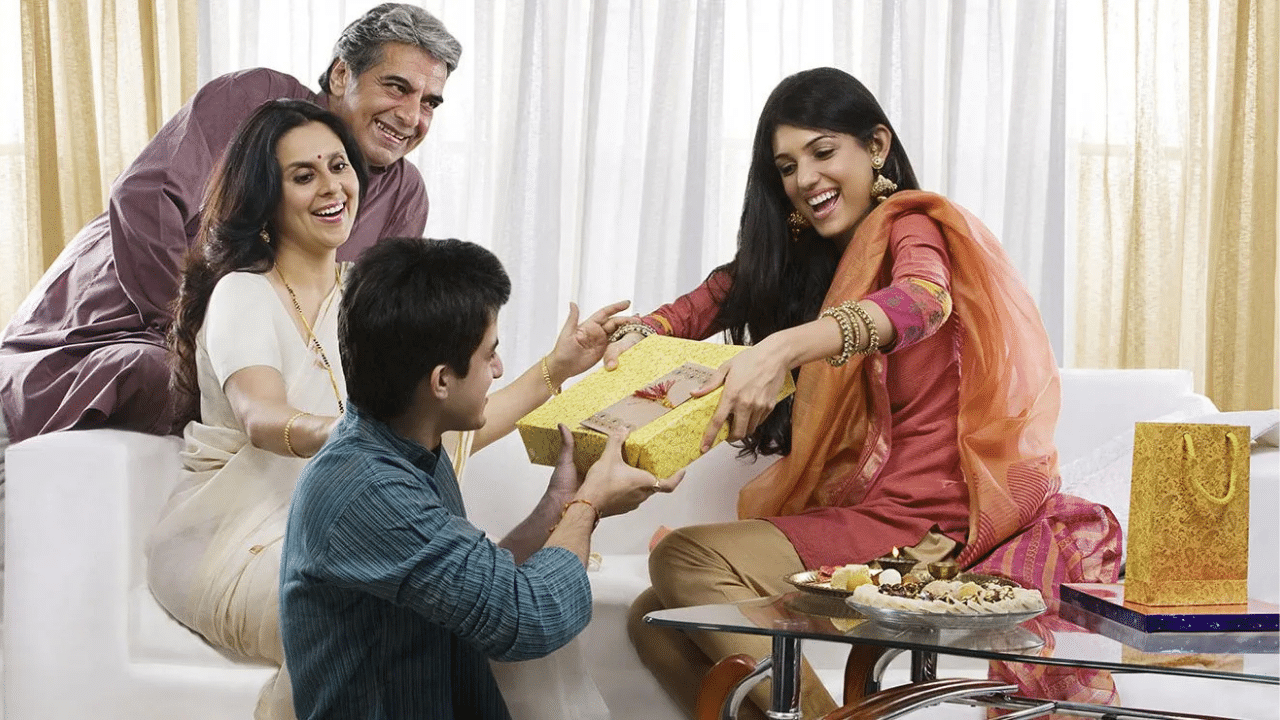
How Raksha Bandhan Is Celebrated Across India
While the essence of Raksha Bandhan remains consistent—celebrating sibling bonds—its expressions vary beautifully across India’s diverse regions.
North India
Raksha Bandhan reaches its peak celebration in northern states including Uttar Pradesh, Punjab, Haryana, Rajasthan, Delhi, and Himachal Pradesh.
Traditional Customs:
- Married women travel to their parental homes, often arriving weeks early
- Brothers escort sisters from their marital homes
- Vibrant rakhi shopping in bustling markets
- Exchange of traditional sweets like ghewar, peda, and ladoo
- Kite flying competitions, especially around the festival
- Lumba Rakhi tied by sisters on bhabhis’ (sisters-in-law) wrists
- Elaborate family gatherings with festive meals
Regional Highlights:
- Delhi NCR: Grand bazaars with designer rakhis; corporate office celebrations
- Punjab: Special sargi meals prepared; emphasis on family feasts
- Rajasthan: Traditional rakhis with mirror work; ghewar as signature sweet
East India
West Bengal:
Celebrated as Jhulan Purnima, merging rakhi with Radha-Krishna worship.
- Decorating swings for Radha-Krishna idols
- Temple celebrations with devotional music
- Political and social institutions organize rakhi ceremonies
- Exchange of sandesh and rasgulla
Odisha:
Known as Gamha Purnima, coinciding with Lord Balabhadra’s birthday.
- Farmers tie rakhis to cattle, honoring them as agricultural partners
- Preparation of special grain-based dishes
- Sisters tie rakhis while praying for prosperity
West India
Maharashtra (Coastal):
Combines with Narali Poornima (Coconut Full Moon).
- Koli fishing community worships Varuna, the sea god
- Coconuts offered to the ocean for safe voyages
- Coconut-based dishes like narali bhaat prepared
- Traditional rakhi-tying among siblings
Gujarat:
Celebrated as Pavitropana, emphasizing purification.
- Women worship Lord Shiva in temples
- Seeking forgiveness for past transgressions
- Traditional rakhi ceremonies with family
Central India
Celebrated as Kajari Purnima in Madhya Pradesh and Chhattisgarh.
- Farmers worship the land and crops
- Mothers perform special rituals with sons
- Folk Kajari songs celebrating harvest
- Community celebrations in villages
South India
Kerala, Tamil Nadu, Karnataka:
Known as Avani Avittam, primarily a Brahmin sacred thread ceremony.
- Ritual bathing in rivers or sea
- Changing of sacred threads (janeu/yagnopaveetam)
- Prayers for forgiveness and spiritual renewal
- Rakhi-tying tradition increasingly adopted through cultural exchange
Nepal
Janai Purnima celebration among Hindus and Buddhists.
- Sacred thread tying ceremonies
- Visits to sacred lakes and temples
- Some communities practice sister-brother rakhi traditions
Despite regional variations, family gatherings, gift exchanges, and festive foods remain central to celebrations everywhere.ion remain central everywhere.
Participation Across Religions in India
Raksha Bandhan is celebrated not only by Hindus but by people of various religions across India, making it a truly inclusive cultural festival that transcends religious boundaries.
Hindu Observance
Raksha Bandhan is fundamentally a Hindu festival, observed across various Hindu communities, sects, and regions with local variations.
Jain Community
Jains celebrate Raksha Bandhan with equal enthusiasm:
- Sisters tie rakhis to brothers following similar rituals
- Jain priests tie protective threads to devotees
- Emphasis on forgiveness and compassion aligned with Jain values
- Exchange of traditional sweets
Sikh Community
Especially prominent in Punjab and diaspora:
- Sikh sisters tie rakhis to their brothers
- Aligns with Sikhism’s emphasis on family unity
- Celebrated in gurdwaras with special prayers
- Exchange of traditional Punjabi sweets and gifts
Muslim Participation
While not a religious observance for Muslims, interfaith rakhi-tying occurs:
- Muslim men accepting rakhis from Hindu female neighbors or colleagues
- Historical examples during Partition promoting communal harmony
- Urban workplaces see cross-religious celebrations
- Some progressive families embrace it as cultural rather than religious
Buddhist Observance (Nepal)
In Nepal, Buddhists celebrate Janai Purnima alongside Hindus:
- Tying protective threads around wrists
- Temple visits and sacred ceremonies
- Some Buddhist communities also observe rakhi traditions
Shared Cultural Practices
The tradition of voluntary kin relations has crossed religious boundaries:
- Hindu-Muslim rakhi bonds during communal tensions
- Interfaith rakhi ceremonies in schools and colleges
- Public figures receiving rakhis from citizens of all faiths
- Workplace celebrations where colleagues of all religions participate
Promoting Harmony
Raksha Bandhan promotes social bonding as neighborhoods come together to celebrate without distinction of caste, creed, or belief. The festival encourages forgiveness, friendship, and shared happiness, reflecting India’s pluralistic spirit. By creating bonds beyond blood and religion, Raksha Bandhan serves as a reminder that festivals can unite people through common values of love, protection, and mutual celebration.
How Raksha Bandhan Is Celebrated Outside India
Indian diaspora communities around the world celebrate Raksha Bandhan, maintaining cultural connections while adapting to local contexts.
North America (USA & Canada)
Community Celebrations:
- Temple gatherings with special pujas and cultural programs
- Weekend celebrations for family convenience
- Community centers organize rakhi melas with food stalls
- Online rakhi delivery connecting distant siblings
- Virtual celebrations via video calls across time zones
Major Cities: New York, Toronto, San Francisco Bay Area, Vancouver
United Kingdom
British-Indian Traditions:
- Temple events in London, Leicester, Birmingham
- Indian grocery stores stock extensive rakhi collections
- School multicultural days featuring Raksha Bandhan
- Weekend family gatherings at restaurants
United Arab Emirates
Vibrant Celebrations:
- Large expatriate population maintains strong traditions
- Dubai and Abu Dhabi host elaborate rakhi bazaars
- International courier services for rakhi delivery
- Community events in temples and cultural centers
Australia & New Zealand
Weekend Observations:
- Temple gatherings on Sundays near the actual date
- Indian cultural associations organize events
- Rakhi delivery services from India
- Fusion celebrations incorporating local customs
Southeast Asia
Singapore, Malaysia, Fiji:
- Little India (Singapore) becomes rakhi shopping hub
- Hindu temple celebrations
- Indo-Fijian community maintains strong traditions
- Cultural preservation through festival observance
Europe & Middle East
Germany, Mauritius, Qatar, Bahrain:
- Growing Indian communities celebrate in cultural centers
- Temple events and family gatherings
- Workplace celebrations among Indian professionals
These celebrations help second and third-generation Indians stay connected to their cultural roots while introducing non-Indians to Indian traditions of family love and sibling bonds.ons.
Raksha Bandhan Gifting Traditions
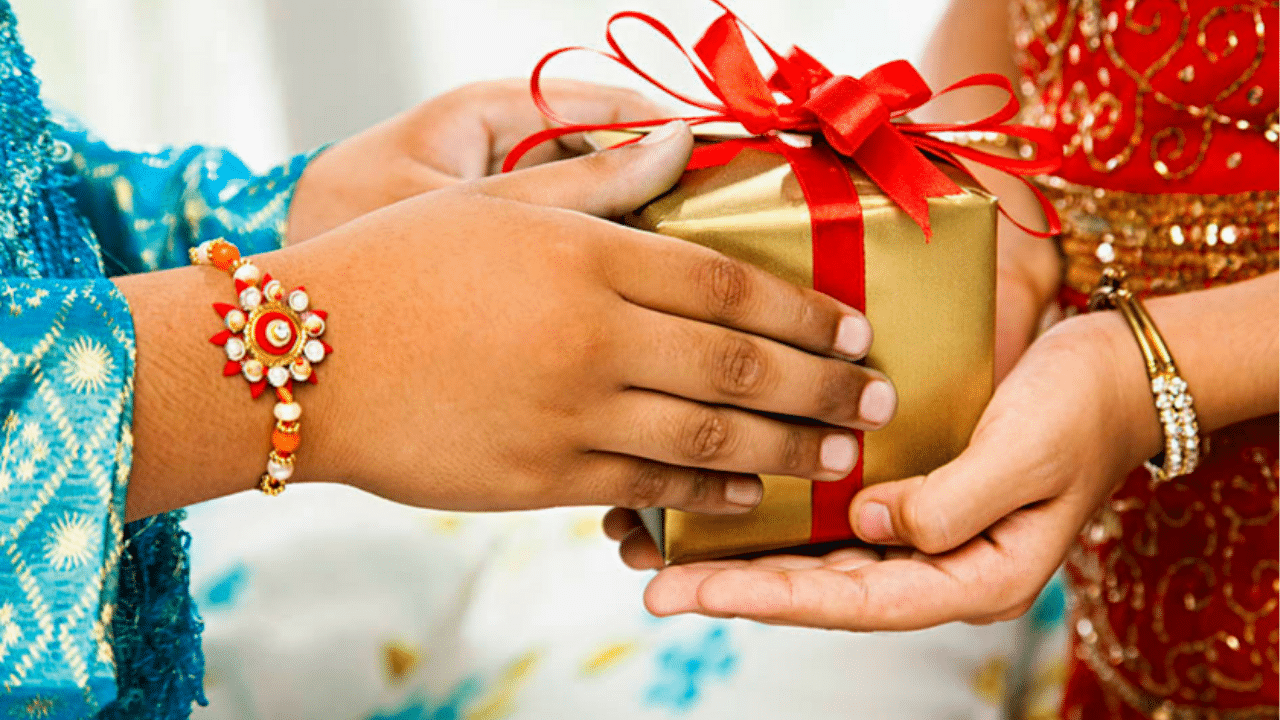
Raksha Bandhan gifting is a beautiful tradition symbolizing love, protection, and lifelong commitment between siblings. The exchange of rakhi and gifts represents balanced reciprocity—love given and returned, promises made and honored.
Traditional Gifts
Sisters to Brothers:
- Rakhi Thread: The central gift, from simple threads to elaborate designs
- Homemade Sweets: Traditional mithai prepared with love
- Tilak and Prayers: Sacred blessings with roli and rice
Brothers to Sisters:
- Cash Gifts: Traditional money in decorative envelopes
- Jewelry: Gold, silver ornaments, bangles
- Clothing: Sarees, suits, dress materials
- Household Items: Practical gifts for married sisters
Modern Gifting Practices
Contemporary Rakhi Designs:
- Designer rakhis with precious stones and crystals
- Bracelet rakhis that can be worn fashionably
- Eco-friendly rakhis (seed paper, plantable, organic materials)
- Kids’ rakhis featuring cartoon characters
- Lumba rakhis for sisters-in-law
- Spiritual rakhis with Rudraksha, Om symbols
Popular Gift Ideas:
- Personalized Gifts: Custom mugs, photo frames, engraved items
- Tech Gadgets: Smartwatches, headphones, tablets
- Grooming Kits: Premium fragrances and skincare
- Plants: Lucky bamboo, succulents
- Experience Gifts: Concert tickets, adventure activities
- Subscription Services: Streaming platforms, meal kits
- Chocolates: Premium international and Indian brands
Diaspora Gifting Adaptations
- Amazon and online gift cards for international siblings
- Specialized rakhi courier services
- Video messages accompanying physical gifts
- Hybrid gifts (traditional rakhis + Western presents)
- Charitable donations in siblings’ names
- Virtual rakhis sent digitally
- Coordinated deliveries across countries
The symbolism remains constant: rakhis represent protection and prayers, while gifts acknowledge the sacred bond and promise of lifelong care.
Traditional Raksha Bandhan Foods and Sweets
Food plays an essential role in Raksha Bandhan celebrations, symbolizing love, hospitality, and family togetherness.
Traditional Sweets (Mithai)
Pan-Indian Favorites:
- Kaju Katli: Diamond-shaped cashew fudge with silver leaf
- Ladoo: Besan, motichoor, coconut varieties
- Barfi: Milk-based fudge in multiple flavors
- Milk Cake (Kalakand): Soft, granular sweet
- Peda: Milk-based confection
- Jalebi: Crispy syrupy spirals
Regional Specialties:
North India:
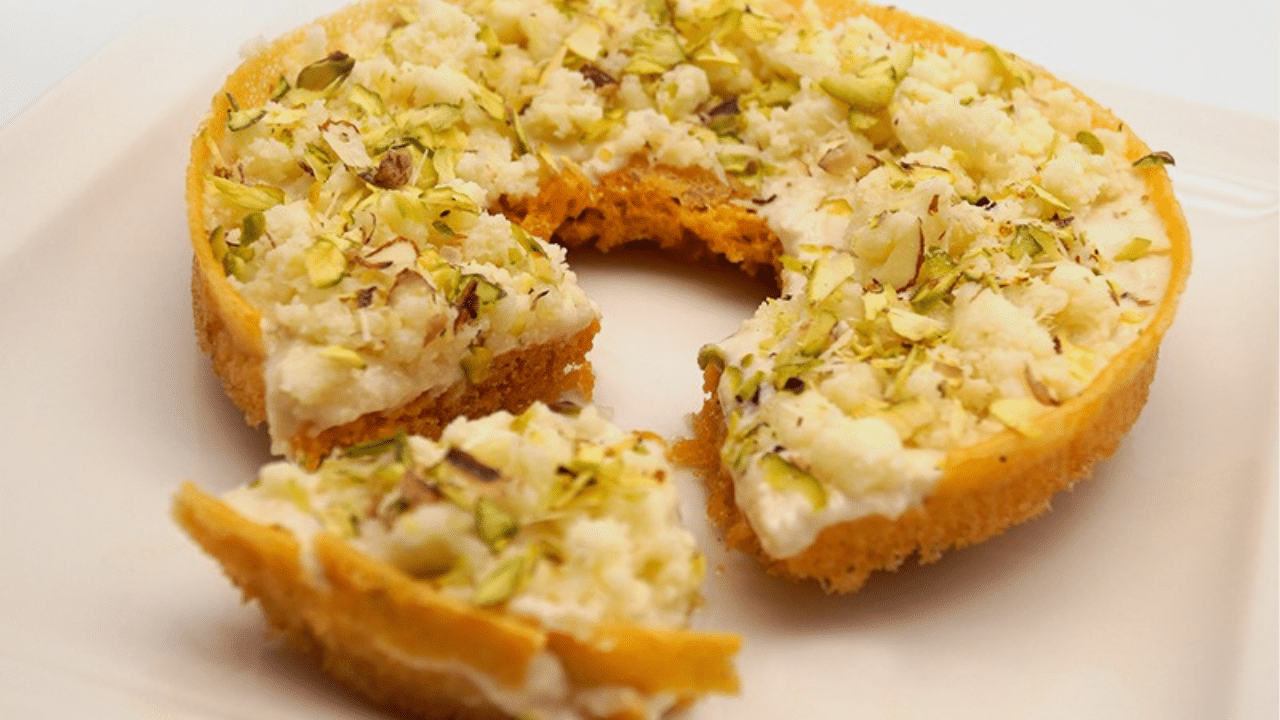
- Ghewar (Rajasthan): Signature Raksha Bandhan sweet, honeycomb-textured
- Gujiya: Fried pastries with khoya filling
- Balushahi: Flaky donut-like sweet
East India:
- Sandesh: Bengali cottage cheese sweet
- Rasgulla & Rasmalai: Syrupy cheese balls
West India:
- Mohanthal (Gujarat): Gram flour fudge
- Shrikhand: Sweetened yogurt
- Puran Poli: Sweet stuffed flatbread
- Modak: Dumpling-shaped sweet (Maharashtra coastal)
South India:
- Mysore Pak: Ghee-rich crumbly sweet
- Payasam: Rice or vermicelli pudding
Festive Meals
Savory Dishes:
- Puris and special sabzi (vegetable curry)
- Chana masala (spiced chickpeas)
- Paneer preparations
- Dal makhani (creamy lentils)
- Biryani in some regions
Regional Specialties:
- Punjab: Chole bhature, makke di roti
- Bengal: Fish curry, luchi-cholar dal
- Maharashtra: Narali bhaat (coconut rice), coconut curries
- Gujarat: Dhokla, khandvi, undhiyu
Modern Culinary Trends
- Chocolate Fusion: Chocolate barfi, chocolate-covered sweets
- Healthy Options: Sugar-free, vegan sweets
- Branded Boxes: Premium packaged mithai
- International Chocolates: Ferrero Rocher, Lindt alongside traditional sweets
- Fusion Desserts: Gulab jamun cheesecake, rasmalai cake
These culinary traditions make Raksha Bandhan a feast for both heart and taste buds, strengthening bonds through shared meals and sweet memories.

Raksha Bandhan: Music, Art, and Cultural Expression
Music, art, and cultural performances play a vibrant role in Raksha Bandhan celebrations, adding joy and emotional depth to the festival.
Traditional Music
Folk Songs:
- Sawan Songs: North Indian melodies celebrating monsoon and sibling bonds
- Rakhi Songs: Traditional tunes sung during ceremonies
- Regional folk music specific to local celebrations
Devotional Music:
- Krishna-Radha bhajans in Bengal (Jhulan Purnima)
- Temple kirtans and devotional singing
- Classical ragas associated with Shravana month
Bollywood and Popular Culture
Iconic Film Songs:
- “Phoolon Ka Taron Ka” (Hare Rama Hare Krishna, 1971): Quintessential rakhi song
- “Behna Ne Bhai Ki Kalai Se” (Resham Ki Dori, 1974): Classic celebration song
- “Bhaiya Mere Rakhi Ke Bandhan Ko Nibhana” (Chhoti Bahen, 1959): Emotional sibling song
Influential Films:
- Jai Santoshi Maa (1975): Popularized Santoshi Maa mythology
- Sikandar (1941): Created Alexander-Porus rakhi legend
- Hindi cinema spread North Indian traditions nationwide
Television & Media:
- Special Raksha Bandhan episodes in TV serials
- Celebrity rakhi celebrations on reality shows
- Cooking shows demonstrating traditional sweets
- Cultural programs on satellite channels
Visual Arts
Rakhi Craft:
- Traditional handmade rakhis with zari, beads, mirrors
- Regional craft styles (Rajasthani, Gujarati)
- Contemporary designer collaborations
- Children’s rakhi-making competitions
Raksha Bandhan’s Modern Relevance and Cultural Continuity
In today’s rapidly changing world, Raksha Bandhan continues to hold deep significance as a festival celebrating family bonds, protection, and mutual care. While lifestyles and celebrations have evolved, the core spirit remains unchanged—honoring the sacred relationship between siblings and the promise of lifelong support.
Modern Raksha Bandhan blends tradition with contemporary expressions. Technology enables virtual celebrations across continents, eco-friendly rakhis reflect environmental consciousness, and workplace observances foster community beyond biological relationships. Yet the ritual essence—tying the rakhi, offering prayers, exchanging gifts—remains beautifully constant.
Cultural Continuity Across Generations
Raksha Bandhan plays a crucial role in preserving cultural continuity. For Indian families worldwide, the festival connects people to their roots while allowing space for personal interpretation. Diaspora communities pass traditions, values, and stories to younger generations through this annual celebration, ensuring cultural heritage survives across geographies.
The festival also adapts to social change. From emphasizing one-directional male protection to celebrating mutual sibling care, from biological bonds to chosen family relationships, Raksha Bandhan evolves with society while maintaining its fundamental message of love and commitment.
A Timeless Message
Beyond threads and gifts, Raksha Bandhan carries a timeless message of family unity, reciprocal care, and enduring love. In an increasingly digital and fragmented world, the festival reminds us of the importance of human connection, emotional support, and family bonds.
Raksha Bandhan’s enduring relevance lies in its beautiful simplicity: a thread tied with love symbolizes an unbreakable bond. Whether celebrated in a village home in Rajasthan or via video call between New York and Mumbai, the essence remains the same—celebrating the sacred promise that siblings make to each other: “I will always be there for you.”
As long as families cherish these bonds, Raksha Bandhan will continue to thrive, adapting to new times while honoring ancient wisdom about love, protection, and the ties that bind us together.
Happy Raksha Bandhan 2026! May the sacred thread strengthen your bonds and bring joy, prosperity, and lifelong love to you and your siblings.