
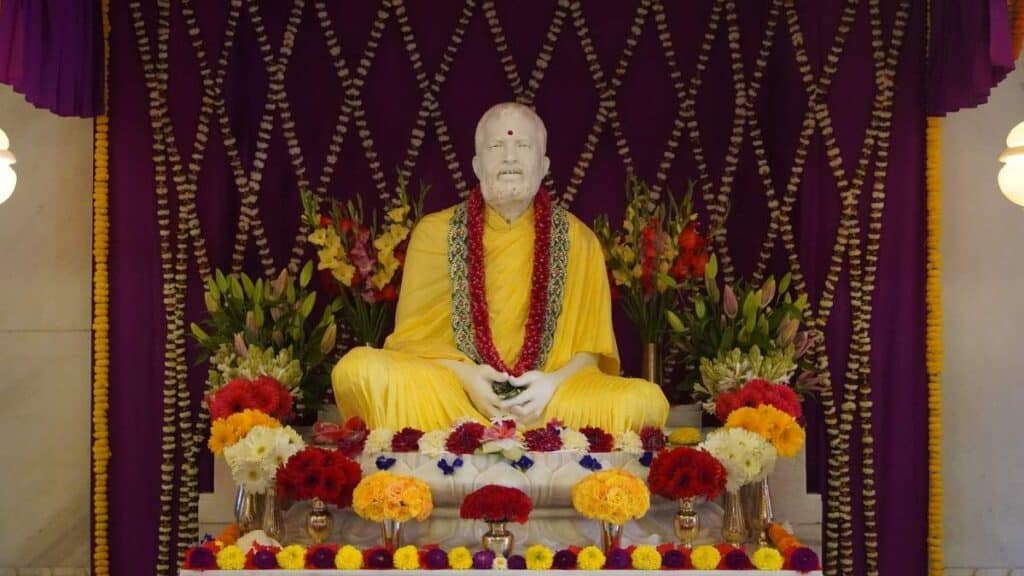
Ramakrishna Jayanti is the annual celebration of the birth of Sri Ramakrishna Paramahamsa, one of the most revered spiritual masters of 19th-century India. Known as the mystic of Dakshineswar, Ramakrishna dedicated his life to experiencing God through every religious path — Hindu, Islamic, and Christian — and declared that all genuine paths lead to the same divine truth. His life and teachings gave rise to the global Ramakrishna Movement, carried forward by his chief disciple Swami Vivekananda, whose message continues to inspire millions across the world.
Celebrated on the Dwitiya Tithi of Shukla Paksha in the Hindu month of Phalguna, Ramakrishna Jayanti falls each year on a different Gregorian date, following the Hindu lunar calendar. The day is marked by special pujas, devotional singing, readings from the Gospel of Sri Ramakrishna, and large public celebrations at Ramakrishna Mission centers across India and around the world.
When Is Ramakrishna Jayanti Celebrated in 2026?
Ramakrishna Jayanti 2026 falls on Thursday, February 19, marking the 190th birth anniversary of Sri Ramakrishna Paramahamsa. It is observed on the Dwitiya Tithi (second lunar day) of Shukla Paksha in the month of Phalguna, as per the Hindu lunisolar calendar.
Ramakrishna Jayanti 2026 Dates in India
Ramakrishna Jayanti: Thursday, February 19, 2026 Dwitiya Tithi Begins: 04:57 PM on February 18, 2026 Dwitiya Tithi Ends: 03:58 PM on February 19, 2026
The exact date changes each year based on the lunar calendar, making Ramakrishna Jayanti a movable observance rather than a fixed-date event.
Table of Contents
Ramakrishna Jayanti In USA, Canada, Australia, New Zealand, UK, UAE, Singapore 2026 Dates
Ramakrishna Jayanti on Wednesday, February 18, 2026
- Dwitiya Tithi Begins – 06:27 AM on Feb 18, 2026
- Dwitiya Tithi Ends – 05:28 AM on Feb 19, 2026
Ramakrishna Jayanti on Wednesday, February 18, 2026
- Dwitiya Tithi Begins – 06:27 AM on Feb 18, 2026
- Dwitiya Tithi Ends – 05:28 AM on Feb 19, 2026
Ramakrishna Jayanti on Thursday, February 19, 2026
- Dwitiya Tithi Begins – 10:27 PM on Feb 18, 2026
- Dwitiya Tithi Ends – 09:28 PM on Feb 19, 2026
Ramakrishna Jayanti on Thursday, February 19, 2026
- Dwitiya Tithi Begins – 11:27 AM on Feb 18, 2026
- Dwitiya Tithi Ends – 10:28 AM on Feb 19, 2026
Ramakrishna Jayanti on Thursday, February 19, 2026
- Dwitiya Tithi Begins – 03:27 PM on Feb 18, 2026
- Dwitiya Tithi Ends – 02:28 PM on Feb 19, 2026
Ramakrishna Jayanti on Thursday, February 19, 2026
- Dwitiya Tithi Begins – 07:27 PM on Feb 18, 2026
- Dwitiya Tithi Ends – 06:28 PM on Feb 19, 2026
Why Does the Date Change Each Year?
Ramakrishna Jayanti follows the Hindu lunisolar calendar, not the Gregorian calendar. It is observed on the Dwitiya Tithi of Shukla Paksha in the month of Phalguna, which is tied to the position of the moon. Since lunar months are approximately 10–11 days shorter than solar months, the Gregorian date shifts every year.
In 2025, Ramakrishna Jayanti was observed on February 28; in 2026, it falls on February 19. it occurs on the sixth day (Shashthi) of Kartik Shukla Paksha.
Ramakrishna Jayanti: Other Names and Regional Identities
Across languages and communities, this day is known by several names:
Bengali (Standard): রামকৃষ্ণ জয়ন্তী (Ramakrishna Jayanti)
Bengali (Devotional/Informal): Thakur Jayanti — “Thakur” (Lord/Master) is the affectionate name used by Ramakrishna’s disciples and still widely used by devotees today
Hindi: रामकृष्ण जयंती Tamil: ராமகிருஷ்ண ஜயந்தி
Formal English: Sri Ramakrishna Paramahamsa Jayanti — used in Ramakrishna Mission publications worldwide
Diaspora/International: Sri Ramakrishna’s Birthday or Sri Ramakrishna’s Birth Anniversary — used by Vedanta Societies in the USA, UK, Canada, and Europe
The Origins, History, and Legends of Ramakrishna Jayanti
Ramakrishna was born on February 18, 1836, in the small village of Kamarpukur, Hooghly district, West Bengal, into a devout Bengali Brahmin family. His birth name was Gadadhar Chattopadhyay — “Gadadhar” being a name of Lord Vishnu, reflecting a vision his father Khudiram reportedly had before the child’s birth. He was the fourth child of Khudiram Chattopadhyaya and Chandramani Devi, a poor but deeply religious family devoted to Lord Rama.
From childhood, Ramakrishna displayed an extraordinary spiritual sensitivity. At around age 10–11, while walking through a paddy field near Kamarpukur, he reportedly experienced his first spontaneous samadhi upon seeing a flock of white cranes against a dark monsoon sky — losing external consciousness and collapsing in a state of inner bliss.
At around age twenty, he became a priest at the Dakshineswar Kali Temple, founded by the philanthropist Rani Rasmani on the banks of the Hooghly river in Calcutta. There, he entered years of intense devotional practice, including visions of Goddess Kali, periods of deep samadhi, and encounters with wandering saints who initiated him into various spiritual traditions.
What set Ramakrishna apart was his deliberate practice of multiple religious paths — Tantra under Bhairavi Brahmani (1861), Vaishnava bhakti under Jatadhari (1864), Advaita Vedanta under the monk Tota Puri who also initiated him into Sannyasa (1865), Islam through the Sufi practitioner Govinda Roy (1866), and Christianity (1873–74), after which he reportedly had a vision of Jesus merging into his body. Each tradition, he declared, had brought him to the same experience of God.
Ramakrishna passed away on August 16, 1886, at Cossipore, due to throat cancer. After his death, his disciples led by Swami Vivekananda established the Ramakrishna Order and, in 1897, formally founded the Ramakrishna Math and Ramakrishna Mission — which now operates over 200 centers across 30+ countries. The annual Jayanti celebration was institutionalized as a key observance at all Mission centers from its earliest years.
Ramakrishna Jayanti: Cultural and Spiritual Significance
Ramakrishna Jayanti is more than a birthday commemoration — it is an annual reaffirmation of the most universalist spiritual message in Indian tradition. Ramakrishna’s core teaching, Jato Mat, Tato Path (“As many faiths, so many paths”), declared that every sincere spiritual path leads to the same divine truth. His life itself was the proof: he practiced Hinduism, Islam, and Christianity not as an intellectual exercise but as lived spiritual experience.
Culturally, the Jayanti belongs to the broader story of the Bengali Renaissance — the 19th-century intellectual and spiritual awakening of Bengal. Ramakrishna reinvigorated Hindu philosophical traditions at a time of intense colonial pressure, offering not a defensive retreat but a confident, inclusive spirituality that could hold its own against any tradition.
His legacy through Swami Vivekananda shaped modern India’s self-understanding, influencing figures from Mahatma Gandhi and Rabindranath Tagore to Subhas Chandra Bose. The Ramakrishna Mission today remains one of India’s most respected humanitarian organizations, rooted in the principle that serving human beings is the highest form of worship.
Ramakrishna Jayanti: Prayers and Religious Observances
Ramakrishna Jayanti observances are centered on devotion, scriptural study, and community. Religious practices follow the traditions of the Ramakrishna Math and vary between temple and home settings.
Mangala Arati — Dawn worship with lamps and incense, performed before sunrise at Ramakrishna temples and Vedanta centers.
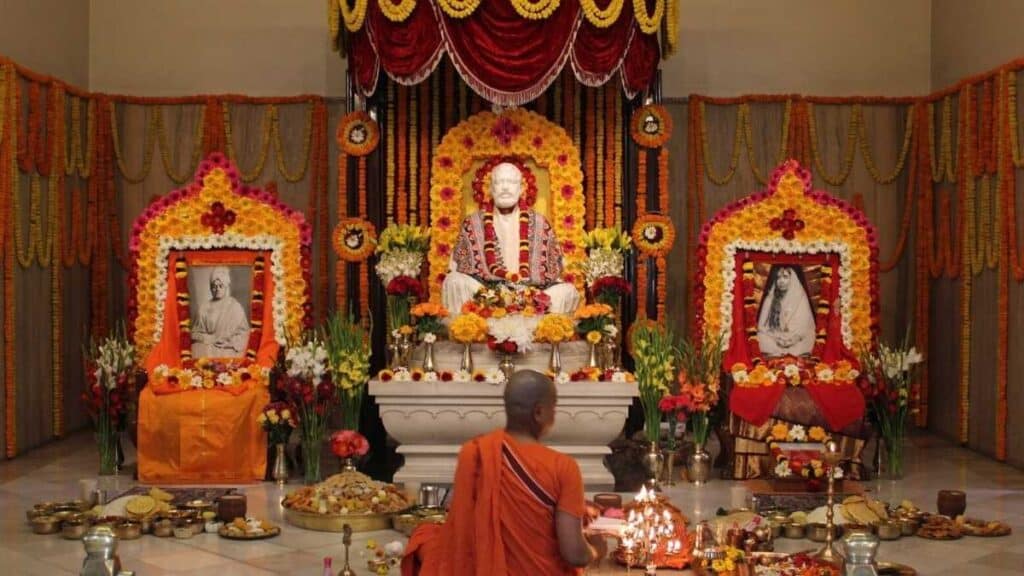
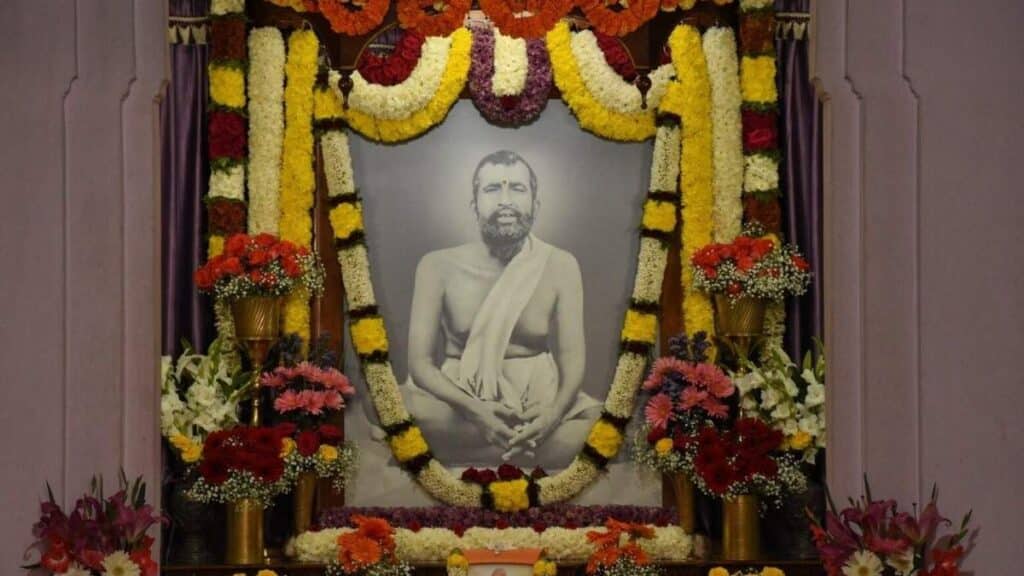
Vishesh Puja (Special Puja) — An elaborate ritual worship of Sri Ramakrishna’s image or portrait, incorporating offerings of flowers, fruit, sandalwood paste, and lamp.
Abhisheka — Ritual bathing of the consecrated image of Ramakrishna with Ganga water, milk, honey, and flowers.
Pushpanjali — Devotees offer flowers with prayers and mantras at the sanctum.
Pranam Mantra of Sri Ramakrishna: Sthāpakāya ca dharmasya sarvadharmasvarūpiṇe | Avatāravariṣṭhāya Rāmakṛṣṇāya te namaḥ || (“Salutations to Ramakrishna — the embodiment of all dharmas, the greatest of avatars, who reestablished dharma in the world.”)
At home, devotees light a lamp before a portrait of Sri Ramakrishna, read from the Gospel of Sri Ramakrishna, and perform simple puja with flowers and fruit. It is a day of quiet introspection, scriptural study, and satsang.
The central text of the day is the Sri Sri Ramakrishna Kathamrita — written by householder disciple Mahendranath Gupta (pen name “M”) and published in five volumes from 1902 to 1932. Its English translation, The Gospel of Sri Ramakrishna by Swami Nikhilananda, is read by devotees worldwide. Aldous Huxley described it as “unique in the literature of hagiography.”
How Ramakrishna Jayanti Is Celebrated Across India
While the spirit of the Jayanti is consistent, its expressions vary by region.
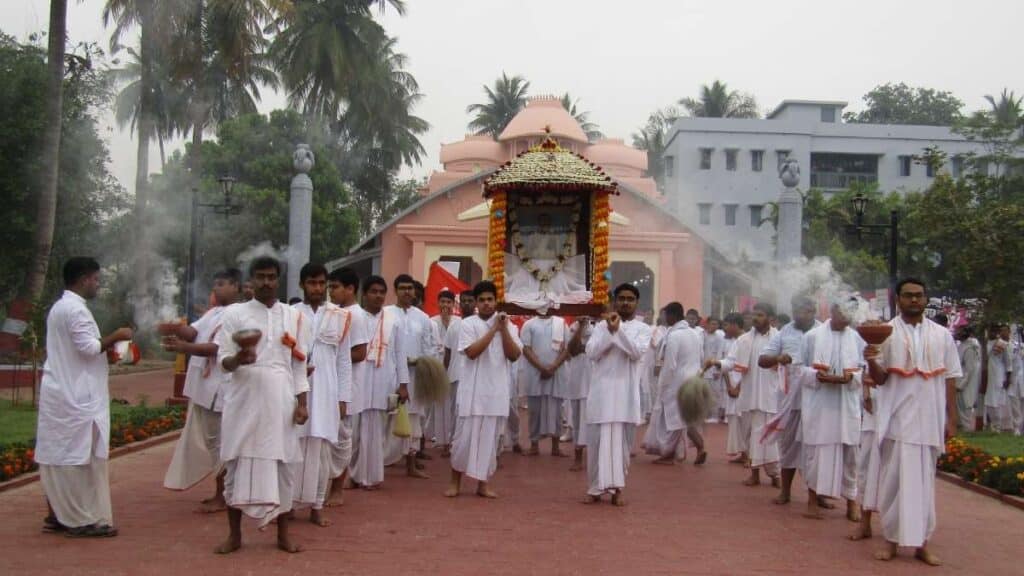
In West Bengal, Belur Math — the global headquarters of the Ramakrishna Mission on the banks of the Hooghly in Howrah — hosts the grandest celebrations. Tens of thousands of devotees arrive for the all-night kirtan program on the eve of the Jayanti, followed by Mangala Arati before dawn, Vishesh Puja, public discourses, and large prasad distribution.
Dakshineswar Kali Temple, where Ramakrishna served as a priest and experienced his transformative visions of Kali, holds special aartis and devotional programs. Kamarpukur, Ramakrishna’s birthplace village, hosts pilgrimage gatherings at the ancestral home now maintained as a shrine. Jayrambati, the birthplace of Holy Mother Sarada Devi, also observes special programs.
Across India, Ramakrishna Mission centers in Maharashtra, Tamil Nadu, Karnataka, Delhi, Kerala, and Assam hold puja, discourse, and cultural programs. Mission-affiliated schools and colleges use the day for values-based educational programs, essay competitions, and community service initiatives — embodying Ramakrishna’s own teaching that service to humanity is service to God.
Participation Across Religions in India
Ramakrishna Jayanti is perhaps the only Hindu saint’s birth anniversary that invites genuinely cross-religious participation — not as a courtesy but as a direct expression of the saint’s own life. Because Ramakrishna personally practiced Islam and Christianity and declared his experience of the divine in each to be identical, followers of these traditions feel a natural connection to his memory.
At many Ramakrishna Mission centers, readings from the Bible and the Quran are included alongside the Upanishads and the Gospel on Jayanti day. Sufi practitioners, Christian theologians, and interfaith scholars have addressed Jayanti programs at Vedanta centers in India, the USA, and the UK. The celebration reflects Ramakrishna’s own declaration:
“A lake has several ghats. At one, the Hindus take water in pitchers and call it ‘Jal’; at another the Mussalmans call it ‘Pani’. At a third the Christians call it ‘water’. The substance is One under different names.”ood bonds, creating collaborative festive atmospheres that transcend religious divisions.
How Ramakrishna Jayanti Is Celebrated Outside India
The Ramakrishna Mission’s global network of over 200 centers makes this one of the most widely observed Hindu spiritual occasions outside India. Indian diaspora communities celebrate through:
- Temple pujas and special Vishesh Puja programs at Vedanta Society centers
- Satsangs, Gospel readings, and spiritual discourses
- Community gatherings with prasad, devotional music, and kirtan
- Cultural programs, book distributions, and service activities
These celebrations help diaspora communities — particularly Bengali Hindus — stay connected to their spiritual heritage while introducing the broader community to Ramakrishna’s universalist teachings.
Ramakrishna Jayanti Gifting Traditions
Ramakrishna Jayanti is primarily a day of devotion and inner reflection rather than material gift exchange. Gifting is oriented toward spiritual growth and community welfare:
Books and Sacred Texts — Gifting the Gospel of Sri Ramakrishna or The Complete Works of Swami Vivekananda is the most cherished tradition, available at Vedanta Society bookstores worldwide
Donations to Ramakrishna Mission — Contributing to the Mission’s educational, healthcare, and disaster relief programs in Ramakrishna’s name is considered the most meaningful act of offering
Prasad — Blessed food distributed at temples and centers is received as a divine gift; families prepare and share prasad at home
Portraits and Images — Framed images of Sri Ramakrishna, Holy Mother Sarada Devi, and Swami Vivekananda are gifted to new devotees
Sponsoring Seva — Sponsoring a meal distribution, a lamp offering, or a child’s education at a Mission school is a popular form of diaspora participation
Ramakrishna Jayanti Foods and Culinary Traditions
The culinary tradition on Ramakrishna Jayanti centers on prasad — food consecrated through ritual offering and distributed to all devotees without distinction of caste, religion, or background. This itself enacts Ramakrishna’s teaching against social hierarchy.
All food is prepared following sattvic principles — without onion, garlic, or meat — emphasizing purity, lightness, and spiritual clarity.
Common Jayanti prasad includes:
- Khichuri — Rice and lentils cooked together with spices and ghee; the quintessential Bengali festival prasad
- Labra — A mixed sattvic vegetable curry made with seasonal produce like raw banana, drumstick, and sweet potato
- Begun Bhaja — Fried eggplant, a classic festival accompaniment
- Payesh (Kheer) — Sweet rice pudding in milk with cardamom; the celebratory dessert of Bengali festivals
- Sandesh and Mishti Doi — Fresh cottage cheese sweets and sweet yogurt distributed as prasad at many centers
- Luchi — Deep-fried flatbreads served at Mission centers on festive days
Bengali diaspora communities worldwide gather for a full Bengali festive meal as a way of honoring the saint’s cultural heritage alongside his spiritual legacy.
Ramakrishna Jayanti: Music, Art, and Cultural Expression
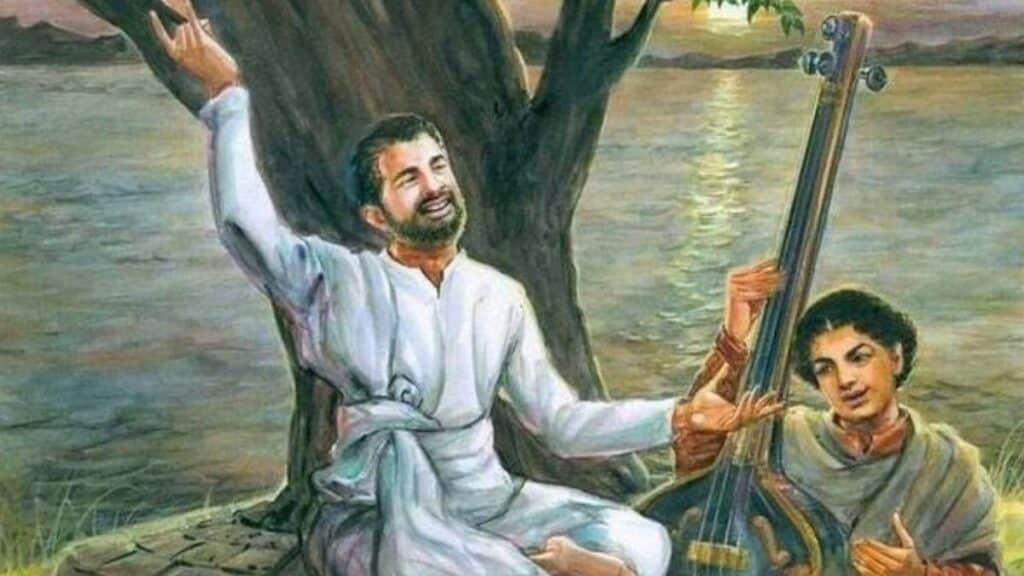
Music is central to Ramakrishna Jayanti. Ramakrishna himself was profoundly moved by devotional songs — particularly the Shyama Sangeet of Bengali Shakta poets Ramprasad Sen and Kamalakanta Bhattacharya, composed to Goddess Kali. He would often enter samadhi while listening to their compositions. On Jayanti eve, these songs fill Belur Math and Mission centers through the night.
All-night kirtan programs are a hallmark of the celebration — continuous devotional singing through the night of the Jayanti eve, with musicians from across Bengal performing in traditional Bengali kirtan style.
At Vedanta centers outside India, bhajans in Hindi, Bengali, and English are performed, often accompanied by harmonium and guitar. Hymns composed by Swami Vivekananda himself are also featured. Ramakrishna-affiliated schools stage devotional dramas depicting scenes from the saint’s life — his visions of Kali, his conversations with disciples, and his encounter with the wandering monk Tota Puri.
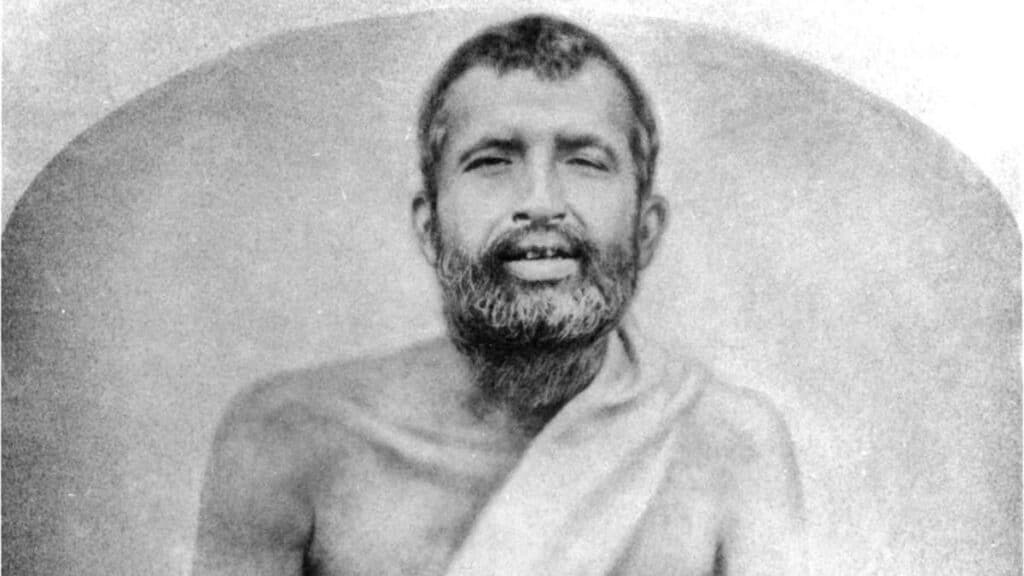
The iconic 1883–84 photograph of Ramakrishna in samadhi at Dakshineswar — one of the most reproduced spiritual images in India — is displayed at all observance venues. Documentary films on Ramakrishna and Vivekananda are screened at centers and in diaspora communities around the Jayanti.
Ramakrishna Jayanti in the Modern World
Ramakrishna Jayanti has adapted naturally to contemporary life. Belur Math’s livestream of the full celebration regularly draws hundreds of thousands of viewers on YouTube and the Mission’s website. Devotees in California, London, and Singapore tune in for the Mangala Arati before their own local dawn breaks. On this day, devotees share quotes from the Gospel, audio clips of Shyama Sangeet, and images of Ramakrishna on WhatsApp and social media.
How to wish someone on Ramakrishna Jayanti:
- “Jai Sri Ramakrishna!” — the traditional devotional salutation
- “Wishing you a blessed Ramakrishna Jayanti. May Thakur’s grace guide you.”
- “Happy Ramakrishna Jayanti! May His teachings of universal love and harmony inspire us all.”
Ramakrishna Mission schools and colleges use the Jayanti as a day for values programs, community service drives, and youth workshops centered on the saint’s teachings of selfless service and universal brotherhood. Many Mission centers use eco-friendly leaf plates for prasad distribution, and increasingly emphasize sustainable celebration.
In the diaspora, celebrations have evolved into a blend of devotional observance and cultural identity — with family-friendly programs, Bengali cooking, book stalls, and talks on Ramakrishna’s relevance to contemporary pluralism.
Cultural Reflection
In an era defined by religious division and cultural fragmentation, Ramakrishna Jayanti carries a message of extraordinary relevance. Sri Ramakrishna did not preach tolerance as a political position — he lived plurality as a spiritual discipline. He prayed as a Hindu, as a Muslim, as a Christian, and declared the experience identical in its depth, its grace, and its destination.
His Jayanti is not simply the commemoration of a man born in 1836. It is an annual invitation to remember that the deepest human longing — for truth, for love, for the divine — transcends every boundary we draw between ourselves.
As he himself said: “So many religions, so many paths to reach one and the same goal.”
Jai Sri Ramakrishna 🪔