
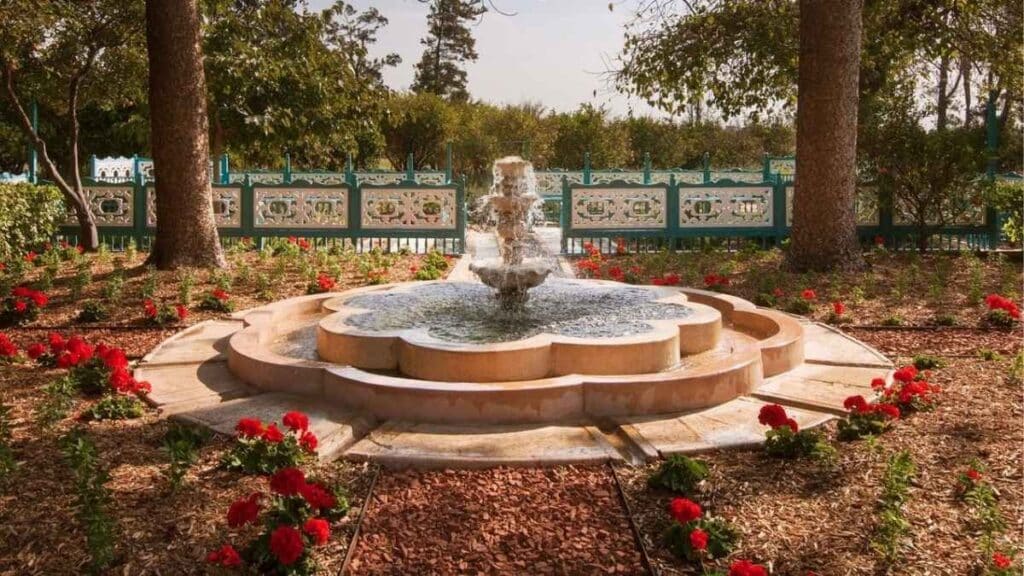
Riḍván is the holiest festival of the Baháʼí Faith, celebrated over twelve joyful days each spring. Known as the “Most Great Festival” and the “King of Festivals,” Riḍván commemorates a pivotal moment in 1863 when Baháʼu’lláh — the founder of the Baháʼí Faith — declared His mission as a Manifestation of God in a garden on the banks of the Tigris River in Baghdad.
The name Riḍván (رضوان) is Arabic for paradise or divine good pleasure, reflecting the profound spiritual joy associated with Baháʼu’lláh’s declaration and the dawning of a new age of faith. The festival marks not only a historical event but the founding of a world religion whose central teaching is the oneness of humanity.
Riḍván is observed by Baháʼís across the globe — from India and Iran to the United States, Canada, the United Kingdom, Australia, and beyond. While rooted in the Baháʼí Faith, the festival’s themes of unity, peace, and the harmony of all peoples resonate far beyond any single community.
When Is Riḍván Celebrated in 2026?
Riḍván is observed according to the Baháʼí calendar, beginning on the 13th of the month of Jalál — exactly 31 days after Naw-Rúz (the Baháʼí New Year, which coincides with the March equinox). The festival spans twelve consecutive days.
Riḍván 2026 Dates in India
- Festival Opens: Evening of 20 April 2026 (approx. 2 hours before sunset)
- First Day of Riḍván: 21 April 2026 — Holy Day; work and school suspended
- Ninth Day of Riḍván: 29 April 2026 — Holy Day; work and school suspended
- Twelfth Day of Riḍván: 2 May 2026 — Holy Day; festival closes at sunset
The three key holy days — the 1st, 9th, and 12th — are the most sacred within the twelve-day period.
Table of Contents
Riḍván In USA, Canada, Australia, New Zealand, UK, UAE, Singapore 2026 Dates
Riḍván will be observed from April 21 to May 2
- First Day of Riḍván: April 21, 2026 (Tuesday)
- Ninth Day of Riḍván: April 29, 2026
- Twelfth Day of Riḍván: May 2, 2026
Riḍván will be observed from April 21 to May 2
- First Day of Riḍván: April 21, 2026 (Tuesday)
- Ninth Day of Riḍván: April 29, 2026
- Twelfth Day of Riḍván: May 2, 2026
Riḍván will be observed from April 21 to May 2
- First Day of Riḍván: April 21, 2026 (Tuesday)
- Ninth Day of Riḍván: April 29, 2026
- Twelfth Day of Riḍván: May 2, 2026
Riḍván will be observed from April 21 to May 2
- First Day of Riḍván: April 21, 2026 (Tuesday)
- Ninth Day of Riḍván: April 29, 2026
- Twelfth Day of Riḍván: May 2, 2026
Riḍván will be observed from April 21 to May 2
- First Day of Riḍván: April 21, 2026 (Tuesday)
- Ninth Day of Riḍván: April 29, 2026
- Twelfth Day of Riḍván: May 2, 2026
Riḍván will be observed from April 21 to May 2
- First Day of Riḍván: April 21, 2026 (Tuesday)
- Ninth Day of Riḍván: April 29, 2026
- Twelfth Day of Riḍván: May 2, 2026
Why Do Riḍván Dates Change Every Year?
The Baháʼí calendar ties its New Year, Naw-Rúz, to the precise moment of the March equinox. Riḍván begins exactly 31 days after Naw-Rúz.
Since the equinox falls on either 20 or 21 March depending on the year, the opening of Riḍván correspondingly falls on either 20 or 21 April. The festival closes twelve days later on either 1 or 2 May.
Riḍván Other Names and Regional Identities
The festival is formally known as Riḍván in Baháʼí orthography, derived from the Arabic Riḍwān (رضوان). Regional and linguistic variations include:
Arabic (origin): Riḍwān | Persian: Rezván / رضوان | Common English: Ridvan | Hindi: रिज़वान (Rizwān) | Urdu: رضوان
The garden where the declaration took place — historically known as the Najibiyyih Garden in Baghdad — was renamed the Garden of Riḍván by the Baháʼí community and remains a venerated site.
In diaspora communities, the festival is often referred to as the Twelve-Day Festival or simply the Festival of Paradise. In Western contexts, it is sometimes described as the “King of Festivals” or the “Most Great Festival” — titles given to it by Baháʼu’lláh Himself in the Kitáb-i-Aqdas.
The Origins, History, and Legends of Riḍván
Riḍván has its origins in one of the most dramatic moments in 19th-century religious history — the declaration of Baháʼu’lláh as a Messenger of God, made in secret in a riverside garden in Baghdad, Iraq.
In 1844, a young merchant from Shiraz named Ali-Muhammad proclaimed himself the Báb (“Gate”), announcing the coming of a greater divine Messenger. His followers, the Bábís, faced severe persecution in Qajar Iran. Among them was Mírzá Ḥusayn-ʻAlí Núrí — later known as Baháʼu’lláh (“Glory of God”) — who received the intimation of his divine mission while imprisoned in Tehran’s Síyáh-Chál (“Black Pit”) in 1852.
After his release, Baháʼu’lláh was exiled to Baghdad, where he spent ten years revitalizing the Bábí community. His growing influence alarmed both the Qajar government and Ottoman authorities, who summoned him to Constantinople. As Baháʼu’lláh prepared to leave Baghdad in April 1863, vast numbers came to bid farewell. He withdrew to the Najibiyyih Garden across the Tigris to accommodate the visitors and allow his family to prepare for the journey.
On 22 April 1863 — the first day in the garden — Baháʼu’lláh privately disclosed to a small circle of companions that He was the “Him Whom God shall make manifest,” the Promised One foretold by the Báb. He also announced three foundational teachings: that religious warfare was abrogated, that no new Manifestation of God would appear for at least a thousand years, and that the names of God were fully manifested in all things. His family, separated by a flooded Tigris River, rejoined him on the ninth day. On the twelfth day, the group departed for Constantinople — and the Baháʼí Faith began its journey to the world.
Baháʼu’lláh later enshrined Riḍván as one of two “Most Great Festivals” in the Kitáb-i-Aqdas (written 1873), formally establishing its observance for all Baháʼís.
Riḍván: Cultural and Spiritual Significance
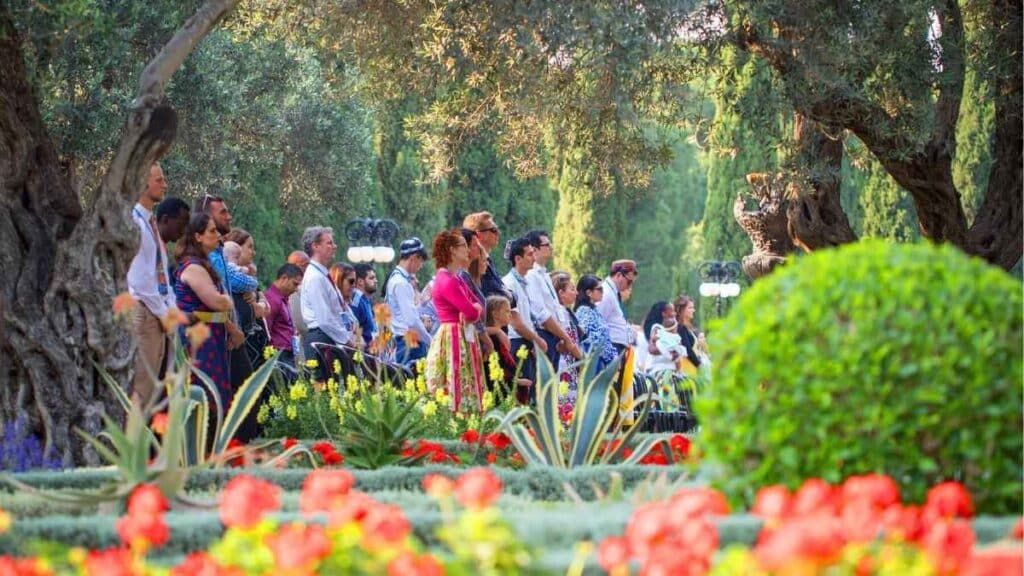
Riḍván is a festival of profound spiritual and historical meaning. On its first day, Baháʼu’lláh called it the “Day of supreme felicity” and described the Garden of Riḍván as “the Spot from which He shed upon the whole of creation the splendours of His Name, the All-Merciful.”
The three holy days each carry distinct significance. The First Day commemorates Baháʼu’lláh’s arrival and declaration — the moment a new world religion was born. The Ninth Day marks the reunion of his family across the flooded Tigris, symbolizing unity, love, and the breaking of barriers. The Twelfth Day commemorates the departure toward Constantinople — the beginning of the Faith’s outward journey to the world, despite the hardships that lay ahead.
Beyond history, Riḍván represents the core Baháʼí vision: that humanity is one family, that all religions come from the same divine source, and that a new era of global unity and peace is possible. The festival is both a joyful celebration and a spiritual renewal — a yearly recommitment to these founding principles.
Riḍván Prayers and Religious Observances
The Baháʼí Faith has no clergy and no prescribed rituals. Riḍván observance centers on prayer, sacred scripture, and communal gathering — simple in form, profound in meaning.
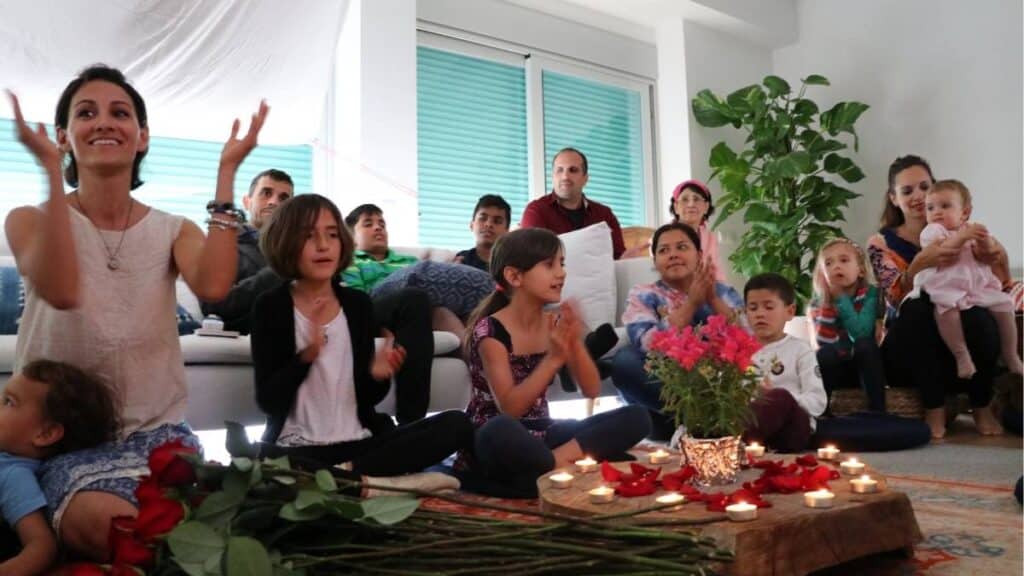
Special Tablets (scriptural texts) revealed by Baháʼu’lláh specifically for Riḍván — including the Tablet of Riḍván and selections from the compilation Days of Remembrance — are read or recited at home and in community gatherings. Families decorate their homes simply, often with flowers, particularly roses, which evoke the garden setting of the original declaration.
On the three holy days, Baháʼí communities worldwide hold devotional gatherings featuring prayers, readings, music, and shared celebration open to all. The atmosphere is one of joy and gratitude.
A uniquely Baháʼí practice linked to Riḍván is the annual election of governing institutions. On the First Day of Riḍván, Local Spiritual Assemblies are elected in Baháʼí communities everywhere. National conventions are held across approximately 180 countries during the twelve days, at which delegates elect nine-member National Spiritual Assemblies. Baháʼí elections are entirely nomination-free and campaign-free — members vote by prayerful secret ballot. Each year on the First Day, the Universal House of Justice also issues a message to all Baháʼí communities worldwide, offering guidance and vision for the coming year.
How Riḍván Is Celebrated Across India
India is home to one of the largest Baháʼí populations in the world, and Riḍván is celebrated with warmth and cultural richness across every region.
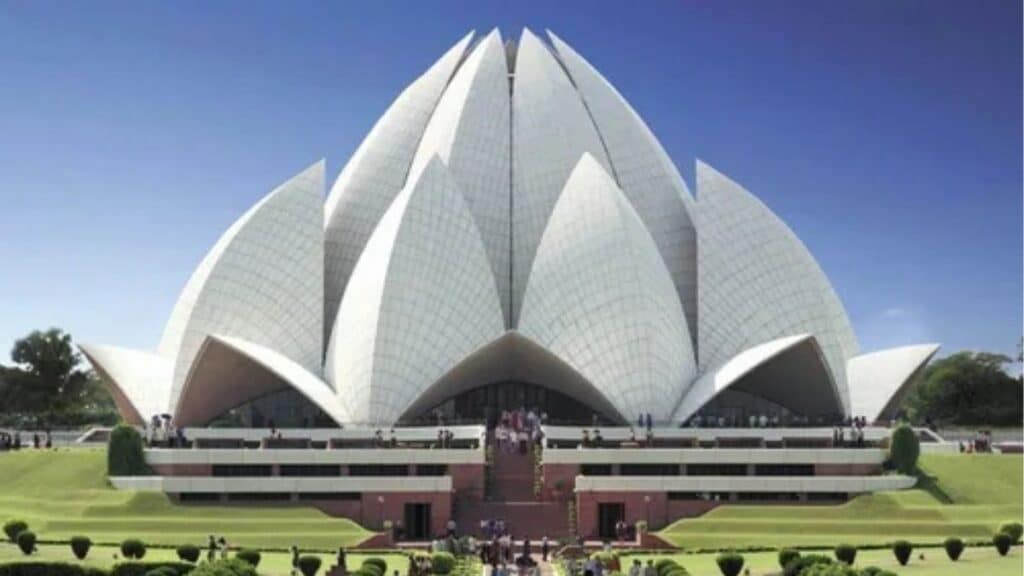
The Lotus Temple in New Delhi — one of the most visited buildings on Earth — hosts special devotional programs during Riḍván, open to people of all faiths. Its lotus-flower architecture, symbolizing purity and universality, is a fitting focal point for the festival.
Across Maharashtra, Gujarat, Rajasthan, Madhya Pradesh, Tamil Nadu, and the North-East, local communities organize Riḍván feasts and prayer gatherings. In tribal and rural areas — where Baháʼí community development work is strongest — celebrations weave together local music, shared meals, and children’s programs. Youth and junior youth groups mark the holy days with arts, drama, and service projects, reflecting the Baháʼí emphasis on spiritual and moral education for the next generation.
Participation Across Religions in India
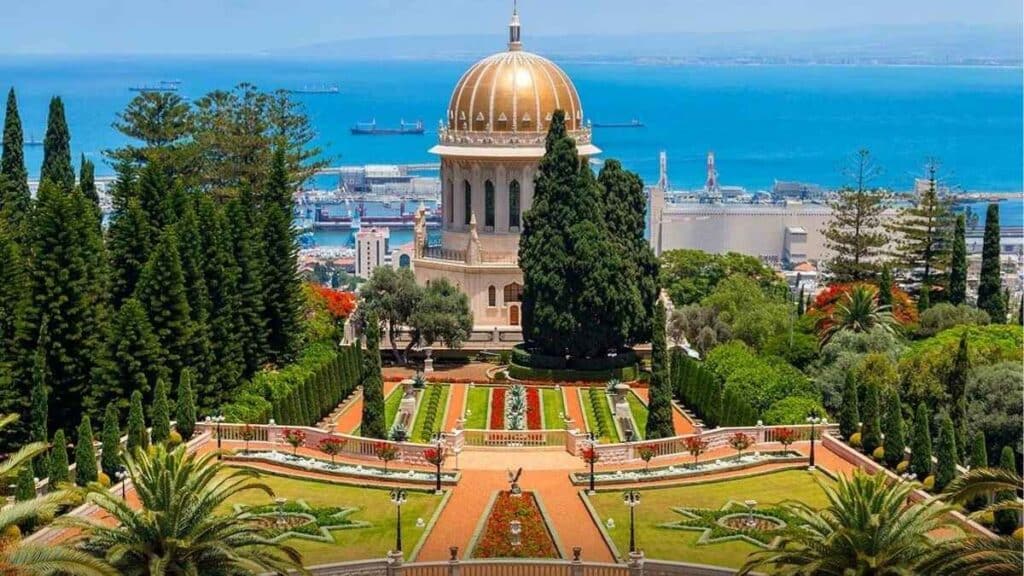
One of the most distinctive aspects of the Baháʼí Faith is its foundational teaching that all major religions come from the same divine source. As a result, Riḍván gatherings are explicitly open to people of all faiths and backgrounds.
In India, where the Baháʼí community works alongside Hindu, Muslim, Sikh, Christian, and Zoroastrian neighbors, Riḍván celebrations often draw interfaith attendees who come to pray, share food, or simply learn more about the occasion. The Lotus Temple, which has no priests or rites of any kind, welcomes visitors of every religion year-round — and especially during Riḍván.
Baháʼí-inspired study circles, children’s classes, and community schools across India regularly include participants from non-Baháʼí backgrounds. During Riḍván, these neighbors join in the celebration, making it a genuinely interfaith event in many Indian villages and towns.
How Riḍván Is Celebrated Outside India
With Baháʼí communities in virtually every country, Riḍván is one of the world’s most globally observed spiritual festivals.
In North America, communities hold large Riḍván gatherings in cities like Chicago, New York, Los Angeles, Toronto, and Vancouver. The Baháʼí Temple in Wilmette, Illinois — with its stunning ornate dome — hosts special devotional programs throughout the festival.
In the United Kingdom and Europe, national conventions and community events mark the holy days, with Iranian, South Asian, and African diaspora Baháʼís bringing rich cultural traditions to their celebrations.
In the UAE and Gulf region, Baháʼís observe Riḍván in community gatherings; the Iranian Baháʼí diaspora marks it with deep devotion.
In Australia and New Zealand, the Sydney Baháʼí Temple hosts programs open to the public, while Pacific Island communities blend Baháʼí prayer with local hospitality traditions.
In Singapore, the cosmopolitan Baháʼí community holds multi-ethnic Riḍván feasts bringing together Chinese, Malay, Indian, and expatriate members in a spirit of unity.
Riḍván Gifting Traditions
Riḍván does not carry a commercial gifting tradition, but thoughtful exchanges between family and friends are a cherished part of the celebration.
Flowers — especially roses, which recall the garden setting of the original declaration — are the most traditional Riḍván gift. Bringing roses to a Riḍván gathering or gifting them to a Baháʼí friend is a warm, symbolic gesture.
Books and sacred texts, including compilations from Baháʼu’lláh’s writings, are also commonly exchanged. Among Iranian Baháʼí diaspora communities, Persian sweets, handmade crafts, and calligraphic art featuring sacred verses are popular gifts. In Indian Baháʼí communities, sharing fruit, mithai, and home-cooked festive food is a natural expression of the festival spirit.
Charitable giving — contributing to Baháʼí funds supporting education and community development — is considered one of the most meaningful ways to honor Riḍván.
Riḍván Foods and Culinary Traditions
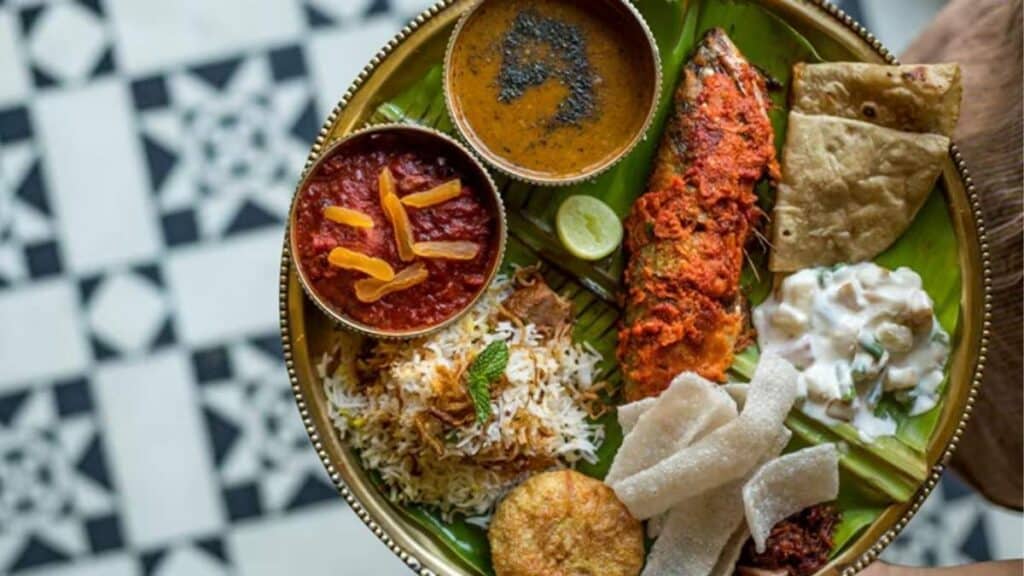
The Baháʼí Faith prescribes no specific festival foods, so Riḍván cuisine reflects the extraordinary diversity of the global community. Common festive foods and traditions include:
- Persian saffron rice dishes (such as zereshk polo — barberry rice) in Iranian Baháʼí homes worldwide, honoring the faith’s Persian roots
- Rose water-infused sweets and drinks, evoking the rose garden symbolism of Riḍván
- Persian baklava and shirini (traditional Persian confections) shared at community feasts
- Indian mithai, biryani, and vegetarian feasts served after devotional programs in Indian communities
- Community potluck gatherings where every family brings a dish from their own cultural tradition — a beloved global Riḍván custom
Food at Riḍván is above all communal — a shared table that reflects the Baháʼí principle of the oneness of humanity.
Music, Art, and Cultural Expression
Music is integral to Riḍván. Baháʼí-inspired songs set to the words of Baháʼu’lláh and ʻAbdu’l-Bahá are performed in Persian, English, Hindi, Swahili, Spanish, and dozens of other languages, reflecting the faith’s global reach. Many communities have dedicated choruses or ensembles that perform for the holy days. Poetry holds deep significance in Persian Baháʼí culture — recitations of Baháʼu’lláh’s mystical verse are a cherished part of Riḍván programs worldwide.
Visual arts — calligraphy of sacred phrases, paintings inspired by the Garden of Riḍván, and decorative arts featuring the nine-pointed star — adorn community halls and homes. Drama and storytelling, especially for children and junior youth, bring the story of the garden to life in creative ways. In India, classical devotional music, folk instruments, and regional artistic traditions are woven naturally into Riḍván observances.
Modern Observance and Evolving Practices
Riḍván observance has adapted to modern life while preserving its spiritual core. Online gatherings have become a significant feature, allowing geographically dispersed Baháʼí families to celebrate together across continents. Social media plays a growing role, with communities sharing reflections, sacred verses, and images of their celebrations worldwide. Eco-conscious practices are emerging, with Riḍván increasingly used as an occasion for tree planting, garden dedications, and environmental service projects — honoring the garden setting of the original event. Interfaith outreach during Riḍván is also growing, with communities hosting open devotional events designed to introduce neighbors of other faiths to Baháʼí prayer and culture.
How to wish someone on Riḍván: A warm and appropriate greeting is simply “Happy Riḍván!” or “Mubárak Riḍván!” (Arabic/Persian for “Blessed Riḍván”). You may also say: “Wishing you a joyful and blessed Riḍván” or, referencing the meaning: “May this Festival of Paradise bring you peace and joy.”
Cultural Reflection
Riḍván endures because it celebrates something timeless — the moment a human being, facing exile and adversity, declared a vision of unity and peace for all of humanity. In twelve days spent in a garden on the banks of the Tigris, Baháʼu’lláh laid the foundations of a faith that now encompasses millions across every nation, culture, and background.
For Baháʼís, Riḍván is not merely a historical commemoration. It is an annual renewal of commitment to the principles announced in that garden: the oneness of humanity, the harmony of science and religion, the equality of all people, and the essential unity of the world’s great religions. In a world still shaped by division, these twelve days serve as a reminder of what is possible — a paradise not as a distant dream, but as a vision actively built, community by community, year by year.