


Saali Mohabbat arrives as a refreshing, intelligent thriller that understands how to weave suspense without losing emotional depth. Directed by Tisca Chopra in an astonishingly confident debut, the film blends psychological tension, moral dilemmas, betrayal, and betrayal with a storytelling style that feels both intimate and cinematic.
Quick Summary:
With atmospheric visuals, multi-layered characters, and a narrative structure that folds into itself like a story whispered in shadows, Saali Mohabbat Review proves that Indian thrillers can be sharp, stylish, and deeply human—without relying on loud plot twists or over-the-top drama.
Table of Contents
This is a film where every performer, every scene, and every silence adds to the mystery.
Language: Hindi
Genre: Drama, Thriller, Mystery
Age Rating: UA
Plot Overview – A Tale of Betrayal, Secrets & Female Resilience
Set against the quiet yet unsettling charm of a fictional small town, the story follows Smita, a gentle homemaker whose life revolves around her plants, her kitchen, and her fragile marriage. But nothing in her world is as simple as it appears.
Her husband, drowning in debt and dishonesty, pushes her towards selling her ancestral land. Her cousin moves in, bringing warmth but also unexpected disruptions. And beneath the calm of everyday routine, betrayal begins to fester—leading Smita into a moral maze filled with choices no woman should ever have to make.
Parallel to this narrative is Kavita, a modern woman narrating Smita’s story while dealing with betrayals of her own. The film cleverly uses this story-within-a-story framework to show how women across worlds, eras, and lifestyles face eerily similar emotional battles.
What unfolds is a slow-burning thriller that grips you through emotion, not noise.
Performances – A Stellar Ensemble That Elevates Every Moment
Radhika Apte – A Masterclass in Duality
Playing both Kavita and Smita, Radhika Apte is spellbinding.
- As Smita, she is gentle yet perceptive, vulnerable yet quietly fierce.
- As Kavita, she brings modern sharpness and emotional ache.
Her performance is layered, unsettling, and profoundly empathetic. This might be one of her finest screen turns in recent years.
Divyenndu – Effortlessly Charming, Unpredictable & Magnetic
Divyenndu plays the morally ambiguous cop, Ratan Pandit, with such ease that you can’t help but be captivated.
He balances humour, suspicion, vulnerability, and crookedness seamlessly—making him one of the film’s biggest strengths.
Anshumaan Pushkar – A Flawed Husband Played with Authenticity
As the troubled Pankaj, Anshumaan delivers a performance that feels real, flawed, and human. He never plays the villain; instead, he brings emotional softness to a morally conflicted character.
Sauraseni Maitra – Graceful, Believable & Emotionally Resonant
Her portrayal of Shalini is natural and nuanced. She brings charm to the role without ever overshadowing the central narrative.
Anurag Kashyap – Menacingly Calm & Impactful
As Gajendra, his presence is intimidating yet subtle. He never overplays the menace, and that restraint makes him more effective.
Sharad Saxena – A Warm, Wise, Steady Influence
Sharad Saxena adds emotional grounding to the film. His character becomes Smita’s anchor, offering quiet strength that balances the darker tones of the story.
Every actor shines. Every role matters. The ensemble feels organically written and perfectly portrayed.
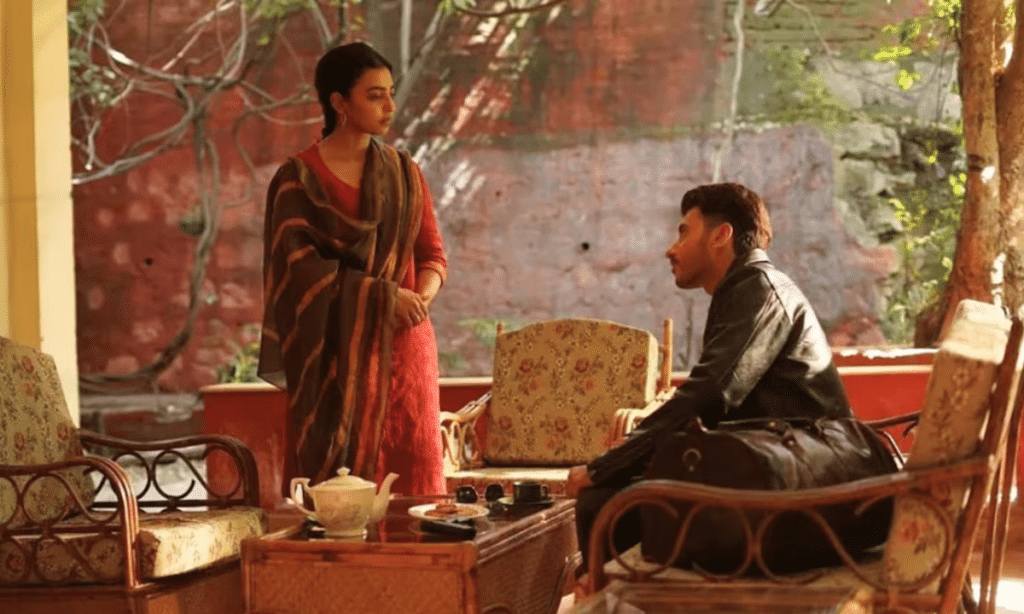
Direction – Tisca Chopra Delivers a Stunning Debut
Tisca Chopra enters direction with maturity beyond expectation.
Her handling of:
- complex emotional arcs
- slow-building tension
- layered characters
- female-driven perspectives
- moral ambiguity
is nothing short of exceptional.
She avoids melodrama and embraces subtlety—letting the audience sink slowly into the psychological landscape of the film.
Her storytelling respects the viewer’s intelligence.
Cinematography – Visual Poetry with a Dark Heart
Vidushi Tiwari’s cinematography is moody, lingering, and deeply immersive.
- Soft close-ups capture emotional tremors
- Wide frames build suspense
- Natural light and shadows heighten tension
- Slow pans add to the atmospheric unease
The visuals complement the story’s psychological nature without ever distracting from it.
Music & Background Score – Haunting & Immersive
Karan Kulkarni’s background score is subtle yet powerful.
- Atmospheric tones
- Unsettling rhythmic cues
- Soft musical motifs tied to Smita’s inner world
The sound design heightens tension without overpowering the scenes.
Themes – Love, Betrayal & Female Agency
Betrayal & Emotional Breakdown
At the heart of Saali Mohabbat lies a devastating exploration of betrayal—not just the physical act of cheating, but the deeper emotional fractures it creates. The film suggests that infidelity is often only the surface wound. What truly breaks a person are the lies, the repeated silences, the erosion of trust, and the loneliness that grows between conversations. Smita’s world doesn’t fall apart in a single moment; it unravels slowly, as she discovers how deeply she has been taken for granted. Through her breakdown, the film highlights how betrayal is not just a crime against love—it is a theft of emotional security, identity, and self-worth.
Nature as Healing & Metaphor
One of the film’s most poetic elements is Smita’s bond with plants. Her garden becomes a mirror of her inner world. The soil she nurtures is symbolic of the life she is trying to cultivate for herself despite the chaos growing around her. Plants do not speak, yet they respond—wilting, blooming, or bending depending on how they are treated. Much like Smita. Nature becomes her escape, her solace, and eventually her quiet rebellion. Every plant she tends to feels like a silent reminder that resilience is grown, not given. The film beautifully uses nature to show that healing often begins in places untouched by noise—inside quiet routines and private rituals that give women strength.
Choices & Moral Dilemmas
As the tension heightens, Saali Mohabbat forces each character into morally ambiguous territory. The choices they make—rooted in survival, fear, and desperation—reveal the complexity of human behavior under pressure. Smita must choose between staying trapped in a suffocating life or confronting a truth that could destroy everything. Ratan must choose between justice and corruption. Pankaj must choose between repentance and self-preservation. These dilemmas fuel the narrative, reminding viewers that right and wrong often blur when emotions, loyalties, and futures collide. The film does not judge its characters; it allows them to be flawed, frightened, and deeply human.
Feminine Strength & Silent Revolutions
One of the strongest themes running through Saali Mohabbat is the idea that women often fight their greatest battles quietly. Smita doesn’t scream, break things, or seek dramatic revenge. Her strength is internal—calm, calculated, and born from years of suppressed emotion. The film reframes empowerment not as loud defiance but as strategic self-preservation. Kavita’s narrative parallels Smita’s journey, creating a powerful commentary on how women across generations inherit patterns of silence and pain—yet also inherit the courage to break them. The film celebrates this subtle power, the kind that grows slowly like a seed but eventually transforms entire landscapes.
Identity, Self-Worth & Rediscovery
Another underlying theme is a woman’s search for her own identity beyond domestic roles. Smita, who once buried her education, her dreams, and her ambitions under household routines, begins to rediscover fragments of who she used to be. The film honors this rediscovery without sensationalizing it. Instead, it shows how reclaiming one’s self-worth is a deeply personal and emotional process—one that begins the moment a woman stops apologizing for her pain.
The Web of Human Weakness
At its core, the film acknowledges that weakness is universal. Whether it’s addiction, greed, loneliness, or fear, each character is trapped in their own emotional web. These weaknesses connect them while also pulling them apart. The narrative compassionately examines how flawed choices often stem not from evil intentions but from deep-seated insecurities.
Final Verdict – A Bold, Beautiful & Emotionally Layered Thriller (4.5/5)
Saali Mohabbat is not just a thriller—it is a deeply textured emotional journey that blends suspense with psychological depth. Tisca Chopra’s directorial debut delivers a smartly structured narrative, enriched by mature storytelling and unforgettable performances from Radhika Apte, Divyenndu, Anshumaan Pushkar, Sauraseni Maitra, Anurag Kashyap, and Sharad Saxena.
Is Saali Mohabbat suitable for family viewing?
It contains emotional intensity and dark themes, so it’s best suited for adults and mature teens.
Is the film too slow?
It’s intentionally slow-burn, focusing on suspense and character depth rather than fast-paced thrills.
Who delivers the best performance?
Radhika Apte excels in both roles, but the entire cast shines beautifully.
What genre does the film belong to?
Drama + Psychological Thriller.
Latest Movie Reviews
- Mirai Movie Review: A Mesmerizing Fantasy Adventure That Redefines Indian Epic Cinema
- S/o Muthanna Movie Review: Heartwarming Father–Son Drama with Standout Performances
- Bomb Movie Review – A Brilliant & Powerful Village Satire That Truly Shines
- Ahana: The Light Within Movie Review – A Powerful & Heartfelt Bengali Drama That Shines Bright
- Love in Vietnam Movie Review – A Mesmerizing Visual Journey with Heartfelt Performances
- Dashavatar Movie Review – A Powerful & Heartwarming Celebration of Tradition and Family
- Heer Express Movie Review: A Heartwarming, Power-Packed Ride of Love and Family
