
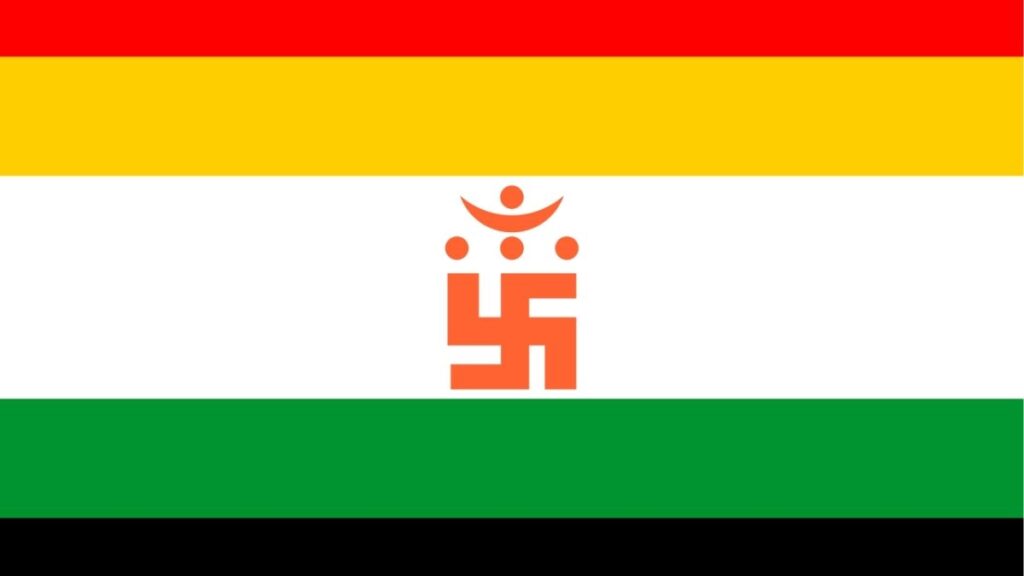
Samvatsari is the holiest day in the Jain calendar, celebrated as the Festival of Forgiveness. Observed as the final and most sacred day of Paryushana Parva — an eight-day period of fasting, introspection, and devotion — Samvatsari marks the moment when Jains seek forgiveness from every living being for any harm caused, knowingly or unknowingly, over the past year.
The spiritual heart of the day is the phrase Micchami Dukkadam (Prakrit), meaning “May all the evil that has been done be rendered fruitless.” This sincere plea for forgiveness is extended to friends, family, strangers, and all living creatures — reflecting the core Jain values of ahimsa (non-violence), kshama (forgiveness), and the continuous effort to shed accumulated karma.
The day is marked by the Samvatsari Pratikramana, a lengthy confessional prayer ritual, complete fasting, temple gatherings, and the personal practice of visiting elders and community members to exchange forgiveness. On Samvatsari, social distinctions fade as Jains come together in a spirit of humility, renewal, and universal compassion.
Samvatsari is primarily observed by the Shvetambara sect of Jainism across India, and today by Jain diaspora communities worldwide in the USA, UK, Canada, Australia, and the Middle East.
When Is Samvatsari Celebrated in 2026?
Samvatsari falls on Bhadrapada Shukla Chaturthi (Shukla Choth) of the Jain lunar calendar, typically between mid-August and mid-September in the Gregorian calendar.
Samvatsari In India 2026 Date Samvatsari will be celebrated on Tuesday, 15 September 2026 in India — the final day of the eight-day Paryushana Parva festival.
The exact date varies each year based on the Jain lunar calendar, making Samvatsari a movable observance rather than a fixed-date event.
Table of Contents
Samvatsari In USA, Canada, Australia, New Zealand, UK, UAE, Singapore 2026 Dates
Samvatsari is on Tuesday, 15 September 2026
Samvatsari is on Tuesday, 15 September 2026
Samvatsari is on Tuesday, 15 September 2026
Samvatsari is on Tuesday, 15 September 2026
Samvatsari is on Tuesday, 15 September 2026
Samvatsari is on Tuesday, 15 September 2026
Why Samvatsari Dates Change Every Year?
Samvatsari is observed according to the Jain lunar calendar, not the Gregorian calendar. It falls on Bhadrapada Shukla Chaturthi each year — the fourth day of the bright fortnight of Bhadrapada month. Since lunar months do not align precisely with solar months:
– Samvatsari’s date shifts every year – Timing depends on lunar tithi and regional calendar calculations – Some years it coincides closely with Ganesh Chaturthi, which falls in the same lunar period
Samvatsari Other Names and Regional Identities
These are general or widely used names for Samvatsari:
Samvatsari — Standard name used by the Shvetambara Jain community; from Sanskrit Samvatsara, meaning “a year.” Forgiveness Day / Jain Forgiveness Day — Widely used in diaspora communities in the USA, UK, Canada, and Australia. Kshama Yachna Divas — Used in Hindi-speaking Jain communities, meaning Day of Seeking Forgiveness. Micchami Dukkadam Day — Colloquially named after the festival’s defining phrase, especially on social media.
Shvetambara and Digambara Variants
Samvatsari — Observed by the Shvetambara sect on Bhadrapada Shukla Chaturthi, the final day of their eight-day Paryushana. Kshamavani — The Digambara sect’s corresponding Forgiveness Day, observed on the first day of Ashvin Krishna — a different date, as Digambara Paryushana begins and ends separately.
Diaspora / International Naming
Paryushana Forgiveness Day — Used by second-generation Jains in Western countries.
Micchami Dukkadam Festival — Increasingly used on social media internationally to describe the day.
The Origins, History, and Legends of Samvatsari
Samvatsari is rooted in the ancient Jain practice of Paryushana, one of the oldest continuously observed religious festivals in the world. The festival finds its earliest references in Jain canonical texts, particularly the Kalpa Sutra — a sacred Shvetambara scripture recited ceremonially throughout Paryushana — and the broader corpus of Agamic literature.
Paryushana, meaning “to dwell near” or “to stay close,” historically coincided with the monsoon season, during which Jain monks remained stationary to avoid inadvertently harming the insects and organisms that emerge during the rains. This period of settled dwelling gradually formalized into an annual season of fasting, scriptural study, and penance — with Samvatsari as its sacred culmination.
The theological foundation of Samvatsari lies in Jain metaphysics. Karma, in Jain philosophy, is understood as a subtle matter that adheres to the soul through thought, word, and action. Negative karma accumulated over the year — through anger, greed, ego, or deceit — clouds the soul’s innate radiance. The Pratikramana ritual, fasting, and forgiveness-seeking on Samvatsari are designed to shed this karmic burden, allowing the soul to begin the new year spiritually renewed.
The tradition of saying Micchami Dukkadam traces to early Jain Prakrit texts and is not merely a social courtesy but a formal religious utterance — an acknowledgment of harm one may have caused, combined with an appeal to the other’s magnanimity — preserved unbroken across centuries.
Samvatsari: Cultural and Spiritual Significance
Samvatsari stands apart from most religious festivals because it is not a celebration of mythological victory or divine power — it is an inward-facing day of moral accountability. At its center is kshama (forgiveness), one of the Dash Lakshanas — ten supreme virtues in Jain philosophy.
Spiritually, Samvatsari represents the annual opportunity to shed the karmic weight of anger, pride, and resentment through sincere humility. Culturally, the festival brings Jain communities together in a shared act of collective renewal — across temples, households, and continents.
What gives Samvatsari its universal resonance is its totality: forgiveness is sought not only from people one has wronged, but from every living being in the world. This expansiveness reflects the Jain conviction that harm ripples outward invisibly, and that responsibility extends far beyond conscious awareness. More than a religious practice, Samvatsari is a profound expression of non-violence, compassion, and the aspiration toward a more peaceful inner and outer world.
Samvatsari Prayers and Religious Observances
Prayers and rituals on Samvatsari are performed to seek spiritual purification, shed accumulated karma, and renew one’s commitment to ahimsa and righteous living.
The central ritual is the Samvatsari Pratikramana — an elaborate confessional prayer lasting two to four hours, performed in the evening under the guidance of monks, nuns, or learned laypersons. Pratikramana (meaning “to step back from wrongdoing”) involves recitation of sutras in Prakrit, confession of sins committed through thought, word, and deed, and Kaussagga meditative postures. The Navkar Mantra — the most fundamental Jain prayer, saluting the five supreme beings — forms the devotional foundation of the ritual.
Many devout Jains observe a complete fast (upavasa) for the day, abstaining from both food and water. Others observe partial fasts such as ayambil (a single bland, unseasoned meal) or ekasana (one meal). Following Pratikramana, the personal practice of going from person to person, bowing, and exchanging Micchami Dukkadam is observed both at the temple and among family and neighbors.
Whether observed at home or in the community, Samvatsari rituals emphasize humility, introspection, forgiveness, and spiritual renewal — making it one of the most deeply meaningful days in the Jain year.
How Samvatsari Is Celebrated Across India
While the spirit of Samvatsari is consistent everywhere, its expression varies by region. In Gujarat — the heartland of Shvetambara Jainism — Samvatsari is observed with extraordinary community depth. Temples in Ahmedabad, Surat, Rajkot, and Vadodara host Pratikramana sessions attended by thousands. Many businesses pause, families gather, and neighborhoods near Jain temples fill with worshippers dressed in white, the liturgical color of purity.
In Rajasthan, particularly in Jaipur, Bikaner, and Jodhpur, Jain temples and havelis host special Kalpa Sutra readings throughout Paryushana, culminating on Samvatsari. The tradition of seeking forgiveness from business partners and associates is especially strong in historically trading Marwari Jain communities. In Mumbai, well-organized temple programs in Malabar Hill, Ghatkopar, and Mulund draw large urban Jain communities. Charitable activities — including donations to animal shelters and the release of caged birds — are common, bringing ahimsa to life in tangible ways.
Despite regional variations, Pratikramana, fasting, and the exchange of Micchami Dukkadam remain central everywhere.
Participation Across Religions in India
Samvatsari is a distinctly Jain observance, but its central theme of forgiveness resonates widely across India’s religious communities. In Gujarat and Rajasthan, where Jains are a visible cultural presence, non-Jain neighbors — Hindus, Muslims, and others — are often familiar with the festival and exchange Micchami Dukkadam greetings with Jain friends on the day, treating it as a shared cultural moment.
Jainism’s deep historical ties with Hinduism mean that many Hindu families in these regions observe the spirit of the day informally. Some Hindu religious teachers have referenced Samvatsari in discourses on forgiveness, drawing parallels within their own traditions. The festival’s emphasis on non-violence and compassion for all living beings also resonates with Buddhist values, and in interfaith settings Samvatsari is frequently cited as a model for institutionalized forgiveness practices.
By encouraging universal compassion and the release of grievances, Samvatsari reflects India’s pluralistic spirit — a reminder that festivals rooted in one tradition can carry meaning for all.
How Samvatsari Is Celebrated Outside India
Jain diaspora communities across the United States, United Kingdom, Canada, Australia, and East Africa observe Samvatsari with strong fidelity to Indian tradition, through:
– Full eight-day Paryushana programs culminating on Samvatsari – Community Pratikramana led by resident monks, nuns, or trained laypersons – Kalpa Sutra recitations and talks on Jain philosophy – Personal Micchami Dukkadam exchanges at temples and among families
In the USA, cities including Houston, Chicago, Edison (New Jersey), Atlanta, and the San Francisco Bay Area host well-organized Paryushana programs. In the UK, the Jain Samaj communities in Leicester, London, and Birmingham have vibrant and long-established Samvatsari traditions. Social media has transformed the festival’s global reach — #MicchhamiDukkadam trends annually among diaspora communities on Instagram, WhatsApp, and X (formerly Twitter), with individuals sending forgiveness greetings to hundreds of contacts simultaneously.
These celebrations help second-generation Jains stay connected to their spiritual roots while introducing the universal message of forgiveness to wider audiences.
Samvatsari Gifting Traditions
Samvatsari gifting is rooted in humility, compassion, and spiritual generosity. The most meaningful gift of the day is the sincere offering of forgiveness itself — considered in Jain philosophy a form of dana (spiritual giving) of the highest order.
In practice, Jain families exchange sweets and dry fruits when visiting elders and relatives. Home-prepared sweets such as mohanthal and ladoo are shared in Gujarati Jain households. In the diaspora, illustrated Micchami Dukkadam greeting cards and WhatsApp messages have become their own gifting tradition. Many Jain families and trusts also donate to animal shelters, gaushala (cow shelters), and charitable causes, aligning generosity with the day’s ahimsa ethos. Today, thoughtful and purposeful giving has become a meaningful way to honor the spirit of Samvatsari both at home and globally.
Samvatsari Foods and Culinary Traditions
Food — or rather its deliberate absence — is central to Samvatsari. The most observant Jains fast completely (upavasa), abstaining from both food and water, which is considered the highest form of spiritual discipline on this day.
For those observing partial fasts, strict Jain dietary principles apply: no root vegetables, no eating after sunset, and avoidance of green leafy vegetables during Paryushana. Common observances include:
Ayambil — A single bland meal with no spices, ghee, or seasonings Ekasana — One meal taken before sunset Sabudana khichdi, dal-rice, and khichdi — Simple dishes for those not fasting
Charitable food distribution by Jain trusts and families on Samvatsari aligns material generosity with the day’s spiritual values. The kitchen itself, during Paryushana, becomes a site of spiritual practice — emphasizing restraint over indulgence.
Samvatsari: Music, Art, and Cultural Expression
Music and cultural expression on Samvatsari are contemplative rather than celebratory, reflecting the day’s inward spirit. Devotional Jain stotras (hymns) and stuti (praises) sung in Prakrit, Sanskrit, and Gujarati fill the temple air during Pratikramana and throughout Paryushana. The ceremonial recitation of the Kalpa Sutra — performed by skilled narrators in a formal temple setting — is itself a sacred oral performance art preserved for over two thousand years.
In contemporary Jain communities, the festival inspires rangoli and floral designs at temple entrances, illustrated Micchami Dukkadam greeting cards, and digital art shared widely on social media. Jain youth organizations in the diaspora organize cultural programs combining devotional music with educational presentations on the meaning of forgiveness and Jain philosophy. Together, these expressions make Samvatsari a living tradition — spiritually anchored, yet creatively alive across generations.
Samvatsari’s Modern Relevance and Cultural Continuity
In today’s fast-changing world, Samvatsari continues to hold deep relevance as a festival that places forgiveness, non-violence, and moral reflection at the center of community life. While celebrations have evolved — from in-person temple gatherings to global digital exchanges — the core spirit of the day remains unchanged.
Samvatsari plays a vital role in cultural continuity. Across generations and geographies, it connects Jain families to their heritage while allowing space for new expressions. For Indian communities abroad, it is often the most emotionally significant religious moment of the year — a day when calls are made to parents and childhood friends, old misunderstandings are quietly set aside, and Micchami Dukkadam carries with it decades of shared history.
Beyond ritual, Samvatsari carries a timeless message: that releasing resentment is not weakness but wisdom, and that the willingness to forgive — unconditionally, universally — is among the most radical and liberating acts a person can choose. That message is as relevant today as it was when the first Jain monks sat through the monsoon rains, practicing stillness so as not to harm a single living thing.