
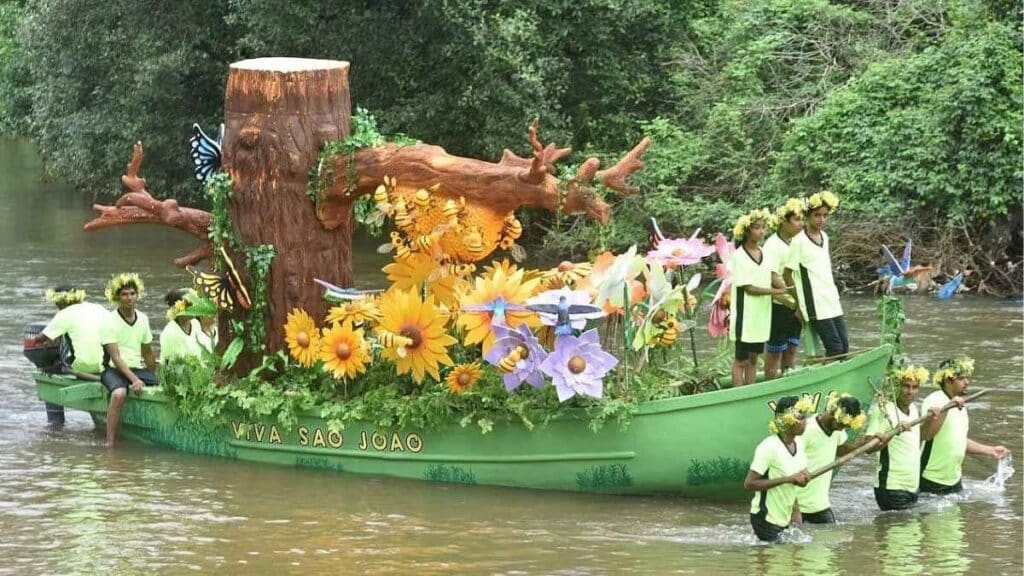
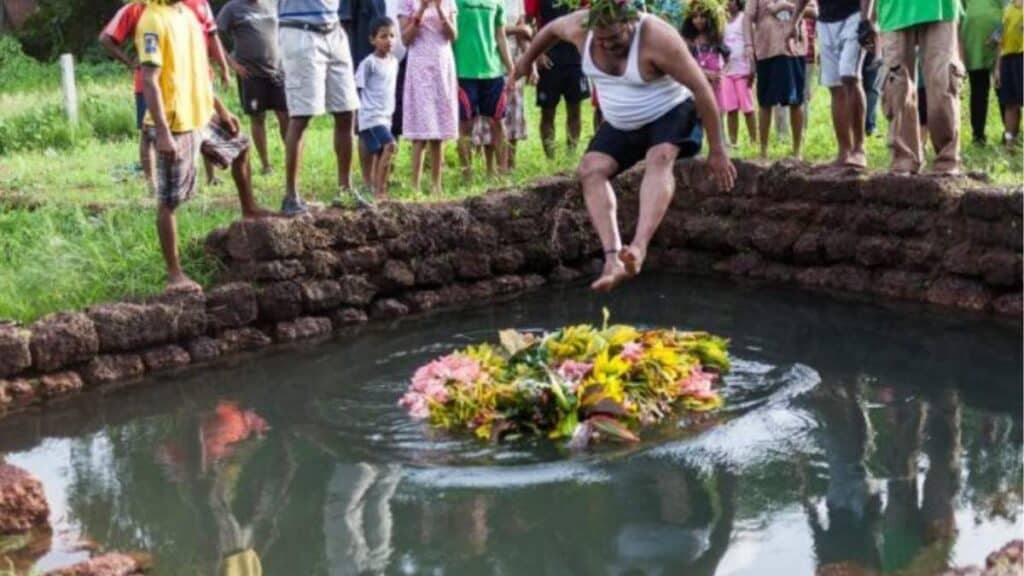
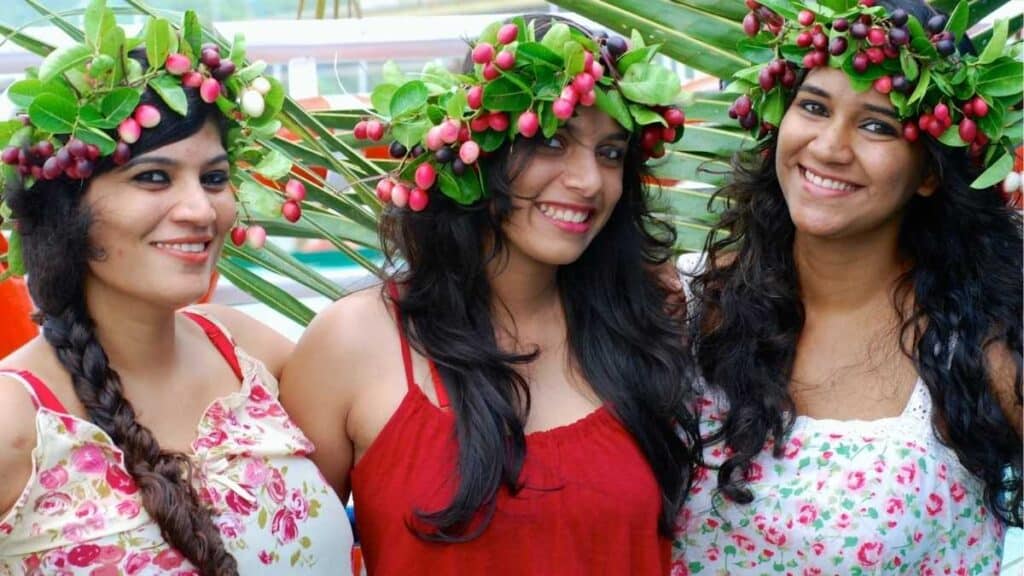
Sao Joao is one of Goa’s most beloved and visually spectacular Catholic festivals, celebrated every year on June 24 in honor of Saint John the Baptist. Locally known as the feast where young men leap into wells and rivers wearing flower-and-fruit crowns called kopels, the festival is a joyful convergence of faith, monsoon season, community, and centuries-old Goan tradition.
Falling precisely at the arrival of the Southwest Monsoon, Sao Joao is both a religious feast and a celebration of rain, new beginnings, and life. Streets fill with singing processions, Goan villages host free community feasts, and the iconic Siolim boat parade draws crowds from across the state. It is a festival that belongs equally to the church, the village well, and the open sky.
When Is Sao Joao Celebrated in 2026?
Sao Joao is observed on June 24 every year — the fixed feast day of Saint John the Baptist in the Roman Catholic liturgical calendar. Unlike many Hindu festivals, this date does not change based on a lunar calendar. It always falls exactly six months before Christmas (December 24), as Saint John the Baptist was said to be born six months before Jesus Christ.
Sao Joao 2026 Date in India
Day 1 – Eve Celebrations: June 23, 2026 — Informal community gatherings and preparations begin in Goan villages on the evening before the feast.
Day 2 – Main Feast: June 24, 2026 (Wednesday) — Solemn Mass, well-jumping, kopel processions, village singing, Siolim boat parade, and community feasting.
Table of Contents
Sao Joao In USA, Canada, Australia, New Zealand, UK, UAE, Singapore 2026 Dates
- Day 1 – Eve Celebrations: June 23, 2026
- Day 2 – Main Feast: June 24, 2026 (Wednesday)
- Day 1 – Eve Celebrations: June 23, 2026
- Day 2 – Main Feast: June 24, 2026 (Wednesday)
- Day 1 – Eve Celebrations: June 23, 2026
- Day 2 – Main Feast: June 24, 2026 (Wednesday)
- Day 1 – Eve Celebrations: June 23, 2026
- Day 2 – Main Feast: June 24, 2026 (Wednesday)
- Day 1 – Eve Celebrations: June 23, 2026
- Day 2 – Main Feast: June 24, 2026 (Wednesday)
- Day 1 – Eve Celebrations: June 23, 2026
- Day 2 – Main Feast: June 24, 2026 (Wednesday)
Why Sao Joao Always Falls on June 24
Sao Joao is a fixed-date liturgical feast, unlike lunar festivals that shift annually. It is anchored to the Roman Catholic calendar as the Nativity of Saint John the Baptist — a celebration documented as far back as 506 AD, making it one of the oldest feasts in Christian history. The date mirrors Christmas in its placement: just as December 25 celebrates Christ’s birth, June 24 marks the birth of the one who came to prepare his way.
Sao Joao Festival Overview
Sao Joao is primarily celebrated by Goan Catholics, but it has grown into a shared cultural experience for all Goans, domestic tourists, and the global Goan diaspora. The festival marks the birth of Saint John the Baptist, the arrival of the monsoon, the blessing of new marriages, and the thanksgiving for babies born in the preceding year.
What makes Goa’s celebration entirely unique is the tradition of jumping into wells, rivers, ponds, and streams — practiced nowhere else in the Catholic world. Combined with the wearing of kopels, communal singing, boat parades, and lavish feasting, Sao Joao is a full-day immersion in Goan Catholic identity.
The festival promotes community bonds, inter-village connections, and the preservation of Konkani music, Goan cuisine, and centuries-old customs that are inseparable from the Goan way of life.r-day lunar calendar sequence.
Other Names and Regional Identities
| Name | Language / Context |
|---|---|
| São João | Portuguese — original colonial-era name |
| Sao Joao | Standard English spelling |
| Feast of Saint John the Baptist | Universal Catholic liturgical name |
| Zanvoiamchem fest | Konkani — meaning “Son-in-law’s Feast” |
| Vangodd de Saligao | Local name for Saligao village’s community celebration |
| San Juan | Spanish Catholic equivalent (global) |
Across the Catholic world, June 24 is observed as the Nativity of Saint John the Baptist. In Portugal, it is celebrated as Festa de São João with fireworks and street parties; in Brazil as Festa Junina. However, Goa is the only place in the world where the festival is uniquely commemorated through jumping into wells — a tradition rooted in Goa’s geography, monsoon timing, and devotional creativity.
Origins, History, and Legends of Sao Joao
Sao Joao is rooted in the Gospel of Luke (1:41–44). When the Virgin Mary visited her cousin Saint Elizabeth — then pregnant with John the Baptist — the infant John leapt in his mother’s womb upon hearing Mary’s greeting, recognizing the presence of Jesus. This single act of joy became the symbolic heart of the festival.
The Nativity of Saint John the Baptist is among the oldest feasts in Christianity, with documented celebrations from 506 AD. Portuguese missionaries brought the feast to Goa in the 16th century, where it took root in a land where June marks the arrival of the Southwest Monsoon. Wells fill with fresh water, vegetation blooms, and flowers carpet the hillsides. The community’s leap into these monsoon-filled waters evolved as a natural fusion of the scriptural act of leaping, the baptism of Jesus by John in the River Jordan, and a deeply Goan thanksgiving for the rains.
The Siolim boat parade carries its own origin story. Dating back 175 years, revelers from the villages of Chapora, Zhor (Anjuna), Badem (Assagao), and Siolim would travel by boat every year to the Chapel of São João in Pereira Vaddo, Siolim, to pay homage to the saint. This devotional river pilgrimage evolved over generations into the elaborate and colorful float festival celebrated today.
Cultural and Spiritual Significance
Sao Joao is at once a feast of faith, a monsoon celebration, and a living archive of Goan Catholic identity. Spiritually, the well-jumping re-enacts two of the most significant moments in the life of Saint John the Baptist — his joyful leap in the womb, and the baptism of Jesus in the River Jordan. Immersion in water carries a sense of renewal, cleansing, and joyful devotion.
Culturally, the festival endures because it is genuinely participatory. It belongs to the village — celebrated household by household, street by street — with every family, singing group, and newly married couple playing a specific and meaningful role. The festival also carries the spirit of thanksgiving: for the rains, for new marriages, for children born, and for the harvest yet to come.
Sao Joao reminds Goans, wherever they are in the world, of who they are — their language, their food, their music, and their irreplaceable way of celebrating life.
Prayers and Religious Observances
The day begins with solemn Holy Mass at Catholic churches across Goa, particularly in parishes with deep São João traditions — Siolim, Saligao, Anjuna, Calangute, and Panaji.
A distinctive Goan tradition is the recitation of the Litany of All Saints in Latin, followed by hymns honoring Saint John the Baptist, the Virgin Mary, and other saints. This is performed both during the son-in-law’s welcome ritual and by village youth groups completing their singing rounds through the village.
As part of the son-in-law’s feast, the family gathers at the home oratory — a feature of traditional Goan Catholic homes — to offer a short prayer before distributing the contents of the ojem (gift basket) among neighbors. Youth groups assemble at the village cross at the end of their rounds to pray the litany of Saint John before distributing received gifts among themselves.
How Sao Joao Is Celebrated Across India
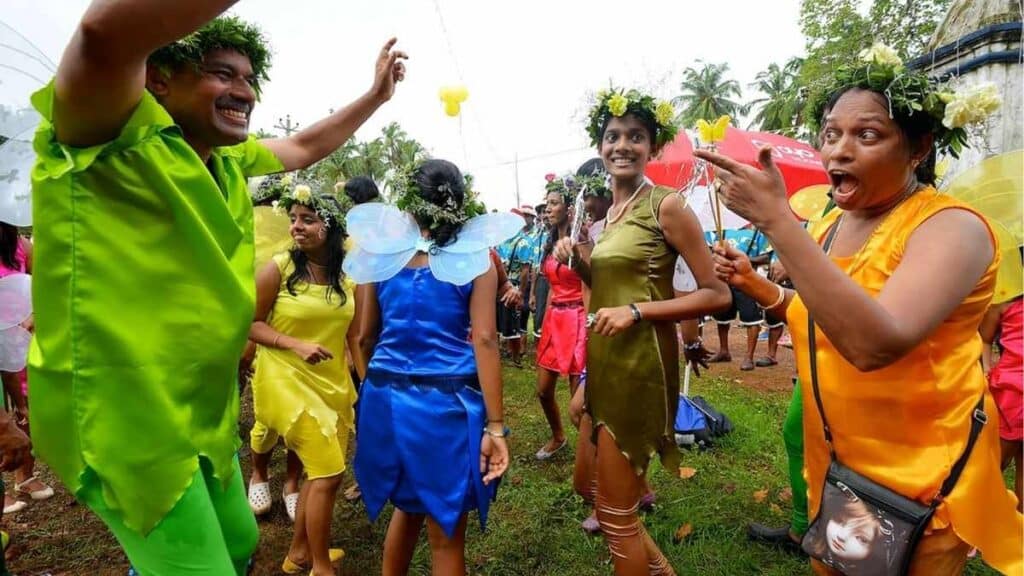
Sao Joao is celebrated across every Catholic village in Goa, but a few locations are particularly iconic.
In Siolim (Bardez taluka), the festival reaches its most spectacular expression through the Sangodd — a colorful procession of decorated boats on the Chapora River. Arriving at the Chapel of São João in Pereira Vaddo, the floats are accompanied by music, costumed revelers, and enthusiastic crowds. The parade begins at approximately 3:30 PM and draws visitors from across Goa and beyond.
In Saligao (Bardez taluka), the festival is celebrated as Vangodd de Saligao — a full community gathering of music, dance, and free food for all visitors. Villagers cook in large quantities and open their celebration to everyone, embodying the Goan spirit of generosity.
Across all villages, youth groups go from house to house singing traditional Konkani songs dedicated to Saint John, announcing their arrival by striking coconut palm stumps on the ground. They wear kopels, play traditional instruments, and receive offerings of feni, sannas, patollyo, and seasonal fruits from every household.
Participation Across Religions in India
While Sao Joao is a Catholic festival, it has become a shared Goan cultural experience that welcomes people of all faiths. Hindus and non-Christians across Goa participate in the Siolim boat parade, community feasts, and music-filled public celebrations. The spirit of the festival — welcoming the monsoon, celebrating community, sharing food freely — resonates across all communities.
Tourists of every religion and nationality are warmly welcomed, and the festival’s open, public nature makes it one of the most inclusive cultural events in the Goan calendar.
How Sao Joao Is Celebrated Outside India
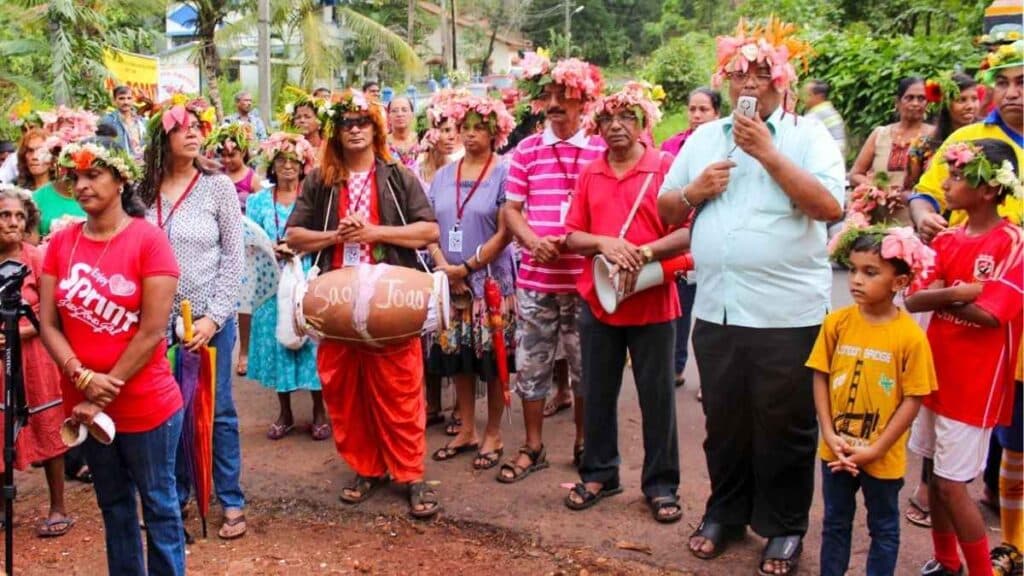
The Goan Catholic diaspora — spread across the UK, USA, Canada, Australia, UAE, Portugal, and East Africa — keeps Sao Joao alive far from Goa’s wells and rivers.
In the UK, Goan communities in London and Leicester organize parish Masses, cultural evenings, and Goan food gatherings. In the UAE, large expatriate communities in Dubai and Abu Dhabi celebrate with community Masses and cultural programs at Catholic churches. In Canada and the USA, Goan associations in Toronto, New York, and San Francisco host cultural events with traditional Konkani music and authentic Goan cuisine. In Australia, communities in Sydney and Melbourne mark the day with parish events and festive gatherings. In Singapore, an active Goan Catholic community holds Masses and community celebrations every June 24.
Sao Joao Gifting Traditions
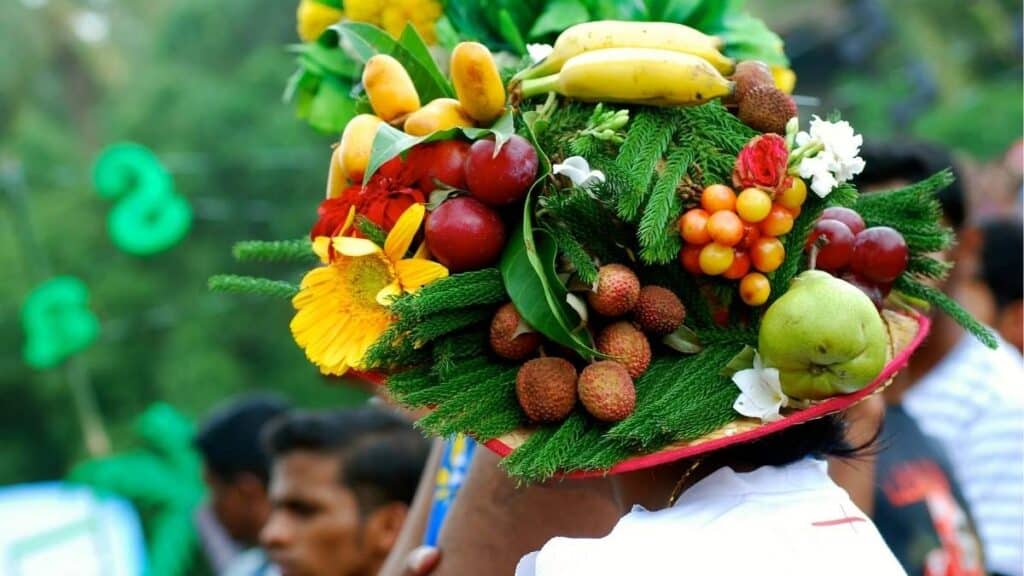
The most iconic gifting tradition of Sao Joao is the ojem — a large bamboo basket gifted by a mother-in-law to her newly married son-in-law. The ojem is filled with seasonal fruits (pineapples, jackfruit, mangoes), traditional Goan sweets including patollyo, and feni. The son-in-law brings the ojem home, places it at the home oratory, and after a short family prayer, distributes the contents among neighbors — symbolizing that a marriage unites not just two families, but two whole villages.
Families with newborns also bring a dali (fruit basket) to share with the community as a public act of thanksgiving.
In the diaspora and urban Goa, gifting has modernized to include Goan food hampers, handcrafted kopels, festive sweets, and WhatsApp greetings wishing loved ones “Viva São João!”
Traditional Sao Joao Foods and Culinary Traditions
Food is central to Sao Joao, particularly the festive lunch prepared for the son-in-law’s feast. Traditional dishes include:
Sanna — steamed rice cakes fermented with coconut palm toddy, soft and slightly tangy, served at every major Goan Catholic feast.
Verdur — pumpkin cooked in coconut milk with spices and shrimp, a distinctly festive Goan dish.
Pork Vindaloo — the iconic slow-cooked pork in a spiced vinegar marinade, inseparable from Goan Catholic celebrations.
Patollyo — steamed dumplings of grated coconut and palm jaggery wrapped in fresh turmeric leaves, fragrant and seasonal.
Seasonal fruits — jackfruit, mangoes, and pineapple, all at peak ripeness during June in Goa.
Feni — the local cashew or toddy spirit, freely shared throughout the day.
In Saligao, villagers cook in large communal quantities and serve all visitors free of cost — a tradition that captures the generosity and abundance at the heart of the festival.
Sao Joao: Music, Art, and Cultural Expression
Traditional Konkani songs dedicated to Saint John are sung by village youth groups as they travel from house to house — an oral tradition passed through generations that functions as a living musical archive of Goan Catholic culture.
The primary instruments are the ghumot (a clay percussion instrument unique to Goa), the kansallem (a bronze cymbal), and the mhadalem (a double-headed drum). Together they create the unmistakable rhythm of Sao Joao.
The kopel is both costume and craft — handmade from seasonal flowers, the sanjuachi vaal creeper (which grows in wells during early monsoon and bears small red flowers), fruits, and twigs. Some believe Saint John himself wore natural vegetation as clothing, making the kopel both a devotional symbol and a creative expression.
The Siolim Sangodd boats are floating art — elaborately decorated with flowers, flags, and creative themes, reflecting the competitive creativity of Goan village culture. The festival also includes the burning of Judas effigies made from hay and dry leaves, carried through villages before being burnt at the village cross — a symbolic act of communal purification.
Sao Joao’s Modern Relevance and Cultural Continuity
Sao Joao today is a festival navigating tradition and change with characteristic Goan ease. Tourism has brought pool parties, resort events, and ticketed celebrations to North Goa beach areas, raising the festival’s profile while drawing some criticism from traditionalists who prefer the village-centered approach.
Well-jumping now frequently takes place in designated community pools and water tanks rather than private wells, a practical shift that preserves the spirit of the tradition safely. Women increasingly participate in all aspects of the festival, including boat parades and singing processions that were once exclusively male domains.
On social media, kopel photos and slow-motion well-jump videos flood Instagram every June 24, giving Sao Joao a global digital footprint that strengthens diaspora connections and introduces new audiences to Goan culture.
How to wish someone on Sao Joao: Say “Viva São João!” (the traditional Portuguese exclamation), “Happy Sao Joao!” in English, or “Sao Joao Fest-acho Ovis!” in Konkani. Share a kopel photo, a plate of sannas, or a clip from the Siolim parade to celebrate with loved ones near and far.
Cultural Reflection
Sao Joao endures because it is impossible to replicate anywhere else. The specific alchemy of monsoon rains, Goan Catholic faith, Konkani music, coconut palm, and village community produces a festival that is entirely itself — joyful, soaking, fragrant with turmeric and feni, and alive with centuries of devotion.
Whether celebrated at a well in Siolim or in a Goan parish hall in Toronto, the festival carries the same essential message: that faith is best expressed with joy, community is best celebrated with food and music, and the arrival of the rains — like the arrival of grace — is always worth leaping for.
Viva São João!