
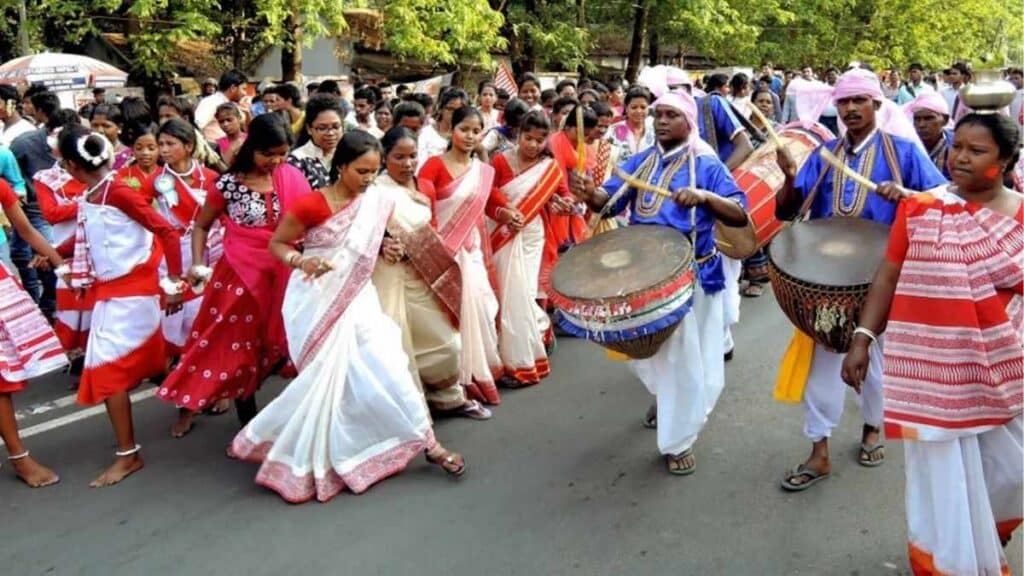
Sarhul is the most beloved tribal festival of Jharkhand, celebrated as the beginning of the tribal New Year and the arrival of spring. Known as the Festival of Flowers, Sarhul centers on the sacred worship of the Sal tree (Shorea robusta) and the symbolic union between the Earth and the Sun. Rooted in the ancient animist traditions of Adivasi communities, the festival is a collective thanksgiving to nature, the village deity, and the ancestors — expressed through sacred rituals, joyful dance, and the offering of Sal flowers.
The spiritual heart of Sarhul is the Sarna — a sacred grove where the village priest, known as the Pahan, performs rituals on behalf of the entire community. The festival spans three days and includes fasting, forest-gathering, sacrifice, ancestor worship, music, and feasting. It is a state-level public holiday in Jharkhand and is observed by communities including the Oraon (Kurukh), Munda, Ho, Santal, Bhumij, and Kharia tribes, as well as the Sadan communities of the region.
In December 2025, Member of Parliament Sujeet Kumar advocated for Sarhul’s nomination to UNESCO’s Intangible Cultural Heritage list — a reflection of the festival’s deep cultural significance and global relevance.
When Is Sarhul Celebrated in 2026?
Sarhul is observed on Chaitra Shukla Tritiya — the third day of the waxing moon (Shukla Paksha) in the Hindu month of Chaitra. The festival lasts three days, from Chaitra Shukla Tritiya through Chaitra Purnima.
Sarhul 2026 Date: Saturday, March 21, 2026
| Detail | 2026 |
|---|---|
| Main Festival Day | Saturday, March 21, 2026 |
| Tithi | Chaitra Shukla Tritiya |
| Duration | Three days (Chaitra Shukla Tritiya to Chaitra Purnima) |
| Calendar System | Hindu Lunisolar Calendar |
Table of Contents
Sarhul In USA, Canada, Australia, New Zealand, UK, UAE, Singapore 2026 Dates
Sarhul on Saturday, March 21, 2026
Sarhul on Saturday, March 21, 2026
Sarhul on Saturday, March 21, 2026
Sarhul on Saturday, March 21, 2026
Sarhul on Saturday, March 21, 2026
Sarhul on Saturday, March 21, 2026
Why Does Sarhul’s Date Change Every Year?
Sarhul follows the Hindu lunisolar calendar, not the Gregorian calendar. It falls on Chaitra Shukla Tritiya, whose corresponding Gregorian date shifts each year based on the lunar cycle.
The timing of specific rituals is also calculated according to the position of the moon and local sunrise, making it a movable festival.
Sarhul Overview
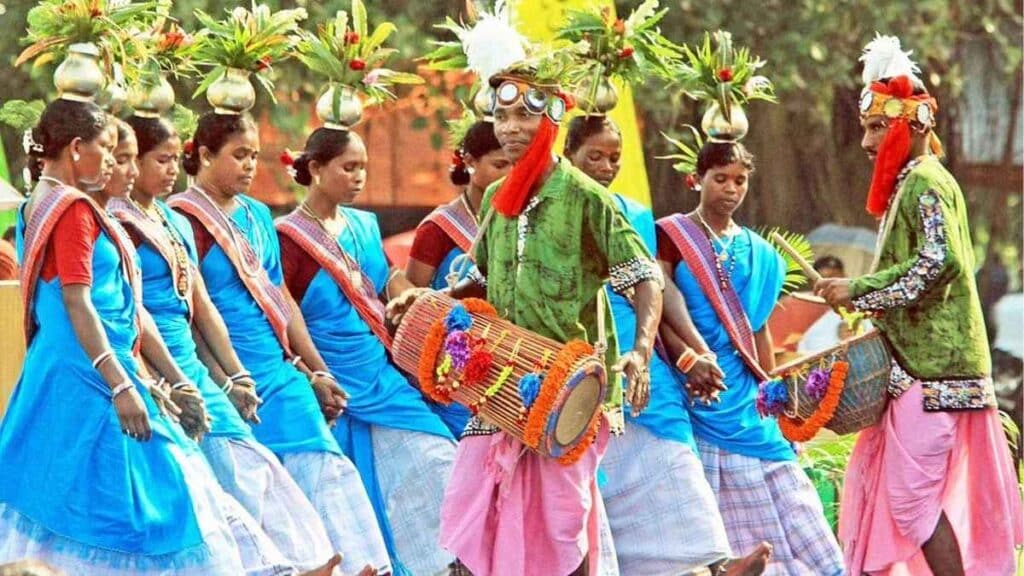
Sarhul marks the tribal New Year and the onset of spring across Jharkhand and the adjoining tribal belts of Odisha, West Bengal, Chhattisgarh, and Assam. At its core, it is a nature festival — a community expression of gratitude to the Earth, the Sun, and the ancestral spirits that protect village life.
The festival is primarily observed by Adivasi (tribal) communities and has been a living tradition for thousands of years, predating recorded history. In urban areas, Sarhul has also grown into a powerful expression of Adivasi identity and regional pride, with large processions and cultural programmes organized by tribal associations and state institutions..
Sarhul Other Names and Regional Identities
Different tribes celebrate the same spring festival under their own names, each reflecting their language and cultural tradition:
| Festival Name | Language | Tribe/Community | Region |
|---|---|---|---|
| Sarhul | Nagpuri | Several communities | Jharkhand, West Bengal, Odisha, Chhattisgarh, Assam |
| Baha Parab / Baha Bonga | Santali | Santal | Jharkhand, Odisha, West Bengal, Assam |
| Baa Parab | Mundari, Ho | Munda, Ho | Jharkhand, Odisha |
| Hadi Bonga | Bhumij | Bhumij | Jharkhand, West Bengal, Odisha |
| Khāddi / Khakhel-benja | Kurukh | Oraon | Jharkhand |
| Amnuakhia | Kharia | Kharia | Odisha, Jharkhand, West Bengal |
The name Sarhul comes from Nagpuri: Sar/Sarai (Sal tree) + Hul (collectively/grove), meaning a collective celebration of nature through the Sal tree. Alternative meanings include Hul as “revolution” (a revolution through Sal flowers) or Sar as “year” and Hul as “begin” — representing the start of a new year.
In diaspora and international contexts, the festival is increasingly referred to simply as Sarhul or the Jharkhand Tribal Spring Festival.
Origins, History, and Legends of Sarhul
Sarhul’s origins lie in the ancient animist traditions of Jharkhand’s Adivasi communities, who have revered the natural world — particularly the Sal tree — for thousands of years. The festival emerges from a worldview in which trees, rivers, and the Earth are living, sacred entities deserving worship and gratitude.
The Central Legend: The Marriage of Earth and Sun
The most enduring story behind Sarhul is the symbolic marriage between the Earth (feminine, nurturing) and the Sun (masculine, life-giving). Each spring, when the Sal trees burst into bloom, it is understood as the moment the Earth has been awakened by the Sun’s warmth and is ready to sustain life again. The Sal flower becomes a sacred offering celebrating this cosmic union, and the community’s rituals renew the relationship between humans and the natural world for another year.
Historically, Sarhul processions in urban centres like Ranchi and Gumla began in 1961, introduced by tribal activists to strengthen regional identity. Before that, celebrations were purely village-based — rituals at the Sarna grove and dancing around sacred trees. Today, both traditions coexist.
Cultural and Spiritual Significance
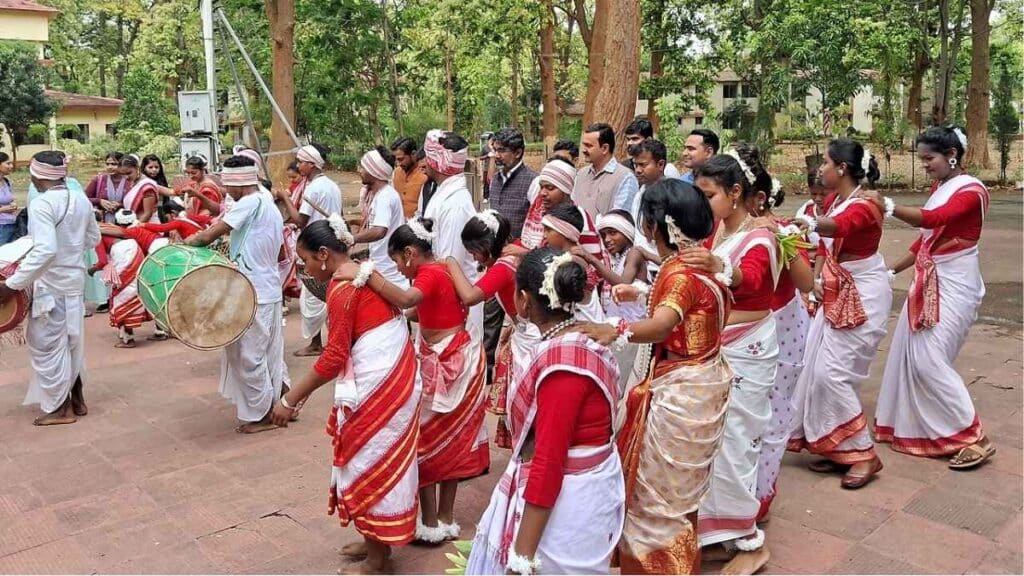
Sarhul is a statement of Adivasi cosmology — the belief that human beings are inseparable from nature and that prosperity depends on living in harmony with the Earth, the Sun, and the ancestors. The Sal tree is not merely a plant but the sacred dwelling of Sarna Devi, the village protector deity. The Sarna grove where rituals are performed is untouched by ploughing or cutting, representing a permanent space of reverence within the community’s land.
The festival reinforces community bonds, ecological values, and intergenerational memory. In contemporary India, it has also become a symbol of Adivasi land rights, forest protection, and indigenous identity — a living tradition that speaks to both ancient wisdom and modern urgency.
Prayers and Religious Observances
Sarhul rituals follow a structured sequence across three days:
Day 1 – Fasting and Preparation: The community observes a fast. Young people collect Sal flowers from nearby forests and gather crabs and fish from local streams.
Day 2 – The Sarna Ritual (Main Day): The village gathers at the Sarna to the beats of the Dhol, Nagara, and Mandar. The Pahan (village priest, also called Laya or Deuri) and the Pujar perform the central ritual — offering Sal flowers, fruits, vermilion, and Tapan (rice liquor) to the village deity. Three roosters of different colours are sacrificed, each dedicated to the Sun, the village deities, and the ancestors. The Pahan places a water pot in the Sarna overnight.
Day 3 – Prediction and Celebration: The Pahan reads the water levels in the pot to predict the coming year’s monsoon and harvest. He distributes Sal flowers to every household as a blessing. Families then worship their ancestors at home and offer food before eating themselves. The community celebrates with Handia (rice beer), singing, and the Sarhul dance.
Ploughing the earth is strictly forbidden on the main festival day, as the Earth is considered to be in a sacred state.
How Sarhul Is Celebrated Across India
Jharkhand is the epicentre of Sarhul celebrations. Ranchi hosts the largest processions, with thousands in traditional red and white attire carrying Sal flower garlands. Gumla, Khunti, and Simdega celebrate with equal devotion, each village conducting its own Sarna rituals.
West Bengal: The Santal and Bhumij communities of Purulia, Bankura, and Jhargram observe Baha Parab and Hadi Bonga with traditional dances and forest rituals.
Odisha: The Munda, Ho, and Kharia communities of Sundargarh, Keonjhar, and Mayurbhanj celebrate Baa Parab and Amnuakhia, maintaining ancient ritual forms tied to local forest traditions.
Chhattisgarh and Assam: Migrant tribal communities from Jharkhand and Odisha observe Sarhul in their new homes, keeping the cultural tradition alive.
Participation Across Religions in India
Sarhul is rooted in the Sarna (animist/nature-based) tradition of Adivasi communities, but it has always been inclusive in practice. Non-tribal neighbours, local Hindu families, and members of other communities often participate in or attend Sarhul celebrations, particularly in Jharkhand’s mixed communities.
Tribal Christian communities also participate in the cultural dimensions of the festival — attending processions, wearing traditional attire, and celebrating the spirit of spring — reflecting the festival’s broad, community-centred appeal.
How Sarhul Is Celebrated Outside India
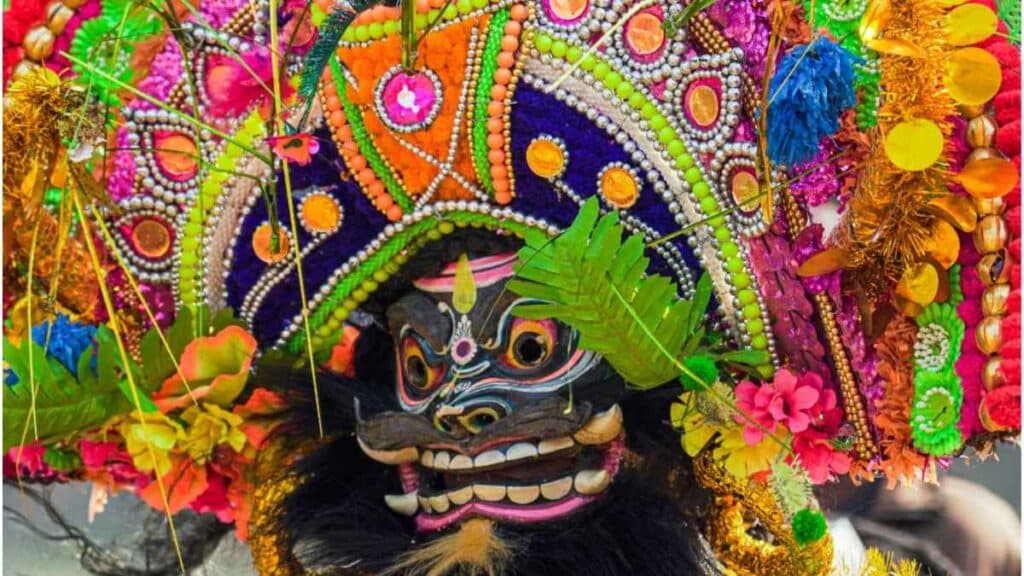
The Jharkhand and Adivasi diaspora in the USA, Canada, UK, UAE, Australia, Germany, New Zealand, and Singapore organise Sarhul celebrations on the nearest weekend to March 21. Community events typically include traditional Sarhul dances and music, Nagpuri folk song performances, community feasts, and storytelling sessions connecting children of the diaspora to their tribal heritage.
For many diaspora families, Sarhul is both a cultural celebration and an assertion of Adivasi identity on the global stage.
Sarhul Gifting Traditions
Traditional gifting at Sarhul is rooted in community and nature. The Pahan distributes Sal flower clusters to every household as a sacred blessing — the most meaningful gift of the festival. Handia (rice beer) and festival foods are shared among neighbours as gestures of goodwill.
In diaspora and urban settings, modern gifting has emerged — tribal handloom textiles, Dokra metalwork, Sohrai paintings, and books on Adivasi culture are thoughtful and culturally meaningful gifts. Donations to tribal welfare and forest conservation initiatives are another growing practice.
Sarhul Foods and Culinary Traditions
Sarhul’s food traditions celebrate the harvest, the forest, and community cooking. Common festival foods include:
- Handia — Fermented rice beer, the iconic festival drink, shared during and after rituals as a symbol of community joy.
- Pittha — Rice flour dumplings filled with jaggery and coconut or lentils, steamed or fried.
- Rugra — Wild mushroom curry made with forest mushrooms, a beloved Jharkhand delicacy in season during Sarhul.
- Mahua preparations — The Mahua flower is used in cooking and to make a traditional fermented drink considered sacred.
- Crab and fish — Gathered fresh from local streams on the festival eve and cooked simply for the communal feast.
Food is communal — offerings are made to ancestors first, then the community feasts together.
Sarhul: Music, Art, and Cultural Expression
The Sarhul dance is the festival’s visual heart — men and women in traditional red and white attire move in circles holding Sal flower garlands to the rhythm of the Dhol, Nagara, and Mandar. Nagpuri folk songs (Jhumair) and traditional Ho, Mundari, and Santali songs fill the air, many passed down orally through generations.
Sohrai and Khovar paintings — Jharkhand’s traditional wall art featuring Sal tree motifs, animals, and natural patterns — reflect Sarhul’s nature-worship themes and have gained national and international recognition. Dokra metalwork and tribal jewellery are prominently worn during processions.
In recent years, Sarhul has inspired Nagpuri music videos, short films, and social media content that blends traditional sounds with contemporary production, reaching tribal youth across India and the diaspora..
Sarhul in the Modern World

Sarhul is evolving meaningfully while remaining rooted in tradition. Urban processions have grown into civic events used by tribal activists to advocate for Adivasi rights, forest protections, and land sovereignty. Several tribal organisations now use Sarhul as an occasion for tree plantation drives and environmental awareness campaigns, making its ecological message more relevant than ever.
How to wish someone on Sarhul:
- In Nagpuri: “Sarhul ki badhai ho”
- In Mundari: “Baa Parab johar”
- In Santali: “Baha Parab re johar”
- In English: “Wishing you a joyful Sarhul!”
Cultural Reflection
Sarhul endures because it speaks to something timeless — the human need to connect with the natural world, honour ancestors, and celebrate life in community. As it moves toward UNESCO recognition, Sarhul’s message carries relevance far beyond Jharkhand’s forests: that indigenous peoples hold irreplaceable wisdom about living in harmony with the Earth, and that culture, when celebrated with joy and pride, is always worth protecting.