
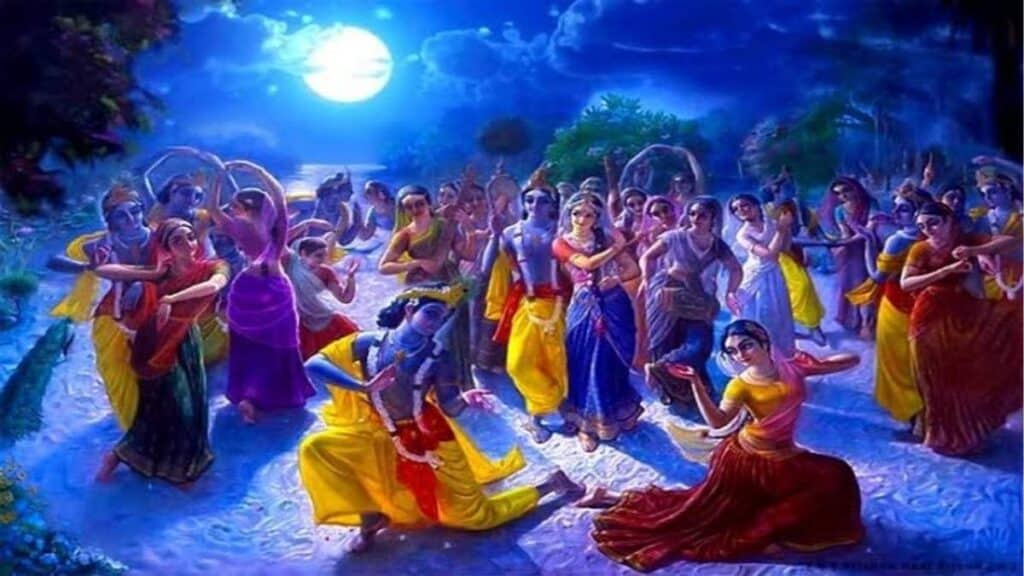
Sharad Purnima is one of the most luminous and spiritually significant festivals in the Hindu calendar, celebrated on the full moon night of the lunar month of Ashvin, which falls in September or October. Known as the night when the moon shines with complete brilliance, Sharad Purnima marks the end of the monsoon season and the arrival of cool, clear autumn nights. It is a night of devotion, healing, and joy — when families prepare moonlit kheer, worship Goddess Lakshmi, and stay awake in prayer and celebration under the open sky.
The festival is rooted in two of Hinduism’s most beloved stories: Lord Krishna’s Maha Raas Leela with the Gopis of Vrindavan, and Goddess Lakshmi’s nighttime visit to bless devoted households. It is also the one night in the year when the moon is believed to radiate all sixteen of its Kalas — its complete divine energy — making its rays uniquely nourishing for the body and soul.
Sharad Purnima is observed across India, Nepal, and by Hindu communities worldwide, with regional names, rituals, and culinary traditions that vary beautifully from state to state.
When Is Sharad Purnima in 2026?
Sharad Purnima falls on the Purnima Tithi of the Hindu month of Ashvin. In 2026, it is observed on Sunday, October 25.
Sharad Purnima in India 2026:
- Purnima Tithi Begins — 11:55 AM IST on October 25, 2026
- Purnima Tithi Ends — 9:41 AM IST on October 26, 2026
- Moonrise on Sharad Purnima — 4:55 PM IST on October 25, 2026
The main celebration — moonlit kheer preparation, Lakshmi Puja, and the Kojagara Vrata — takes place on the night of October 25.
Table of Contents
Sharad Purnima In USA, Canada, Australia, New Zealand, UK, UAE, Singapore 2026 Dates
Sharada Purnima on Sunday, October 25, 2026
- Moonrise on Sharad Purnima Day – 05:25 PM
Sharada Purnima on Sunday, October 25, 2026
- Moonrise on Sharad Purnima Day – 05:41 PM
Sharada Purnima on Sunday, October 25, 2026
- Moonrise on Sharad Purnima Day – 06:32 PM
Sharada Purnima on Sunday, October 25, 2026
- Moonrise on Sharad Purnima Day – 04:00 PM
Sharada Purnima on Sunday, October 25, 2026
- Moonrise on Sharad Purnima Day – 05:00 PM
Sharada Purnima on Sunday, October 25, 2026
- Moonrise on Sharad Purnima Day – 06:03 PM
Why Does the Date Change Every Year?
Sharad Purnima follows the Hindu lunisolar calendar, falling on the Purnima Tithi of Ashvin month, which typically lands in September or October. Because lunar months are shorter than solar months, the Gregorian date shifts each year. The festival is always observed on the full moon night — making it a movable celebration rather than a fixed-date event.
Sharad Purnima Overview
Sharad Purnima is observed by Hindus as a night of spiritual completeness, harvest gratitude, and divine love. The festival is tied to the belief that the autumn full moon is uniquely powerful — its rays carry Amrita, the nectar of immortality, which is absorbed into kheer left outdoors overnight. Families break their fast the next morning by consuming this prasad.
The night also carries deep Vaishnava significance as the occasion of Krishna’s Maha Raas Leela, and Shakta significance as the night Goddess Lakshmi descends to earth to bless devoted households. The festival is observed at home, in temples, and in open community gatherings, with fasting, prayer, moonlit rituals, and devotional music at its heart.
Other Names and Regional Identities
Sharad Purnima is known by several names across India’s linguistic landscape:
Kojagari Purnima / Kojagrat Purnima — Bengal, Assam, Tripura, and Nepal (meaning “one who is awake”) Kumara Purnima — Odisha, celebrated by unmarried women Raas Purnima — Braj region of Uttar Pradesh, commemorating Krishna’s Maha Raas Sharad Poonam — Gujarat, one of the most beloved full moon nights of the year Kaumudi Purnima — meaning “the full moon of moonlight,” used in classical texts Navanna Purnima — in harvest-associated regional traditions
In the Indian diaspora across the UK, USA, Canada, and Australia, the festival is most commonly known as Sharad Purnima or Sharad Poornima, while Gujarati communities worldwide continue to call it Sharad Poonam.
Origins, History, and Legends
Sharad Purnima is one of the most ancient observances in the Hindu calendar, with references in the Brahma Purana, Skanda Purana, Brahma Vaivarta Purana, and the Linga Purana.
Krishna’s Maha Raas Leela The most celebrated legend of this night is Lord Krishna’s Maha Raas. On the full moon of Ashvin, the sound of Krishna’s flute drew the Gopis of Vrindavan into the forest, where they danced with him through a night stretched to the length of a cosmic age. Lord Shiva himself, wishing to join this divine dance, took the form of Gopeshwar Mahadev. The Raas Leela is seen as the ultimate expression of divine love — between the soul and the Supreme.
Goddess Lakshmi and the Kojagara Vrata It is believed that on this night, Goddess Lakshmi descends to earth and visits households, blessing only those who are awake and devoted. This belief gives rise to the Kojagara Vrata — a night-long vigil of prayer and worship. It is also said that Lakshmi appeared from the churning of the cosmic ocean (Samudra Manthan) on this day.
The Sixteen Kalas of the Moon In Hindu philosophy, the moon on Sharad Purnima shines with all sixteen Kalas — sixteen divine qualities representing a complete and perfect being. Lord Krishna, believed to be born with all sixteen Kalas, is the only complete avatar of Vishnu. Worshipping the moon on this night is therefore an act of reaching toward that divine completeness.
Cultural and Spiritual Significance
Sharad Purnima holds significance at multiple levels — cosmic, devotional, Ayurvedic, and communal. The moon on this night is considered to be at its most powerful and healing. Its rays are believed to carry Amrita, making the ritual of moonlit kheer both spiritually and physically nourishing.
The festival encourages devotion, gratitude, and staying awake in awareness — a metaphor for spiritual wakefulness. It also marks the transition from the monsoon to the harvest season, carrying associations of abundance and new beginnings. Within the Swaminarayan Sampradaya, particularly BAPS, the night is also observed as the birth anniversary of Gunatitanand Swami, giving it additional significance across different streams of Hindu practice.
Prayers and Religious Observances
Devotees observe a day-long fast on Sharad Purnima, broken only after moonrise following the completion of puja. In the evening, an altar is prepared with images of Goddess Lakshmi, Lord Vishnu, and Chandra Dev, draped in white — the color of the moon’s purity. Offerings include white flowers, kheer, fruits, and incense.
Key observances include the Kojagara Vrata performed under the open sky, Lakshmi Stotras and Chandra mantras, Satyanarayan Puja (considered especially auspicious on this night), and Chandra Arghya — offering water to the moon with folded hands. Newly married women traditionally begin their year-long Purnimasi fasting vow on this night.
Temples are decorated in white and silver, and in Mathura, Vrindavan, and Nathdwara, elaborate Raas Leela performances continue through the night.
Celebrations Across India
While the spirit of Sharad Purnima is unified, its celebrations are richly varied across India.
In Bengal, Assam, and Tripura, the night is observed as Kojagari Purnima. Families stay awake welcoming Goddess Lakshmi, and owl figurines — her vahana — are considered especially auspicious.
In Uttar Pradesh, Bihar, and Madhya Pradesh, kheer is set on rooftops overnight to absorb the moon’s Amrita and consumed as prasad the next morning.
In Odisha, Kumara Purnima is a celebration for unmarried women who fast, offer puffed rice, coconut, and fruits in a woven bamboo kula, and pray to the moon for a virtuous partner.
In Maharashtra, Kojagiri Paurnima is marked by spiced masala milk left under the open sky.
In Gujarat, Sharad Poonam brings moonlit Garba performances.
In the Braj region, Raas Purnima is celebrated with all-night Raas Leela performances at Krishna temples.
In Mithila, newlywed households observe a tradition of exchanging makhana and betel from the bride’s family to the groom’s relatives.
Participation Across Religions in India
While Sharad Purnima is a Hindu observance, the communal joy of a harvest full moon draws broad participation across communities in many regions. The Raas Leela performances of Mathura and Vrindavan welcome visitors of all backgrounds. The Sufi poetic tradition has long drawn on the full moon as a symbol of divine longing, creating a shared cultural resonance. In villages across eastern India and Nepal, the Ashvin Purnima is naturally an occasion for community gathering beyond religious lines.
How Sharad Purnima Is Celebrated Outside India
For Indian communities worldwide, Sharad Purnima is a cherished evening of moongazing, kheer rituals, and cultural connection.
In the UK, Hindu temples in Leicester, Harrow, and Birmingham organize Lakshmi Pujas and Satyanarayan Kathas.
In the USA, communities in New Jersey, Houston, Chicago, and the Bay Area celebrate with Garba events and moonlit prayers.
In Canada, South Asian communities in Toronto, Vancouver, and Brampton gather for devotional programs.
Temples in Dubai, Abu Dhabi, and Sharjah host community pujas and dinners.
In Australia and New Zealand, Hindu Parishads organize cultural evenings in Sydney, Melbourne, and Auckland. ISKCON temples globally mark the night with Raas Leela kirtans.
Gifting Traditions
Traditional Sharad Purnima gifting is centered on the night’s nourishing spirit. Homemade kheer and milk-based sweets are exchanged as prasad between families and neighbors. Makhana (fox nuts), dry fruits, and silver items are considered auspicious. In Mithila, the gifting of makhana from the bride’s family to the groom’s household is a formalized community tradition.
In the modern diaspora, gifting has expanded to include Indian mithai boxes, silver bowls for the kheer ritual, puja kits, and curated festive hampers — available online for delivery across India and abroad.
Sharad Purnima Foods and Culinary Traditions
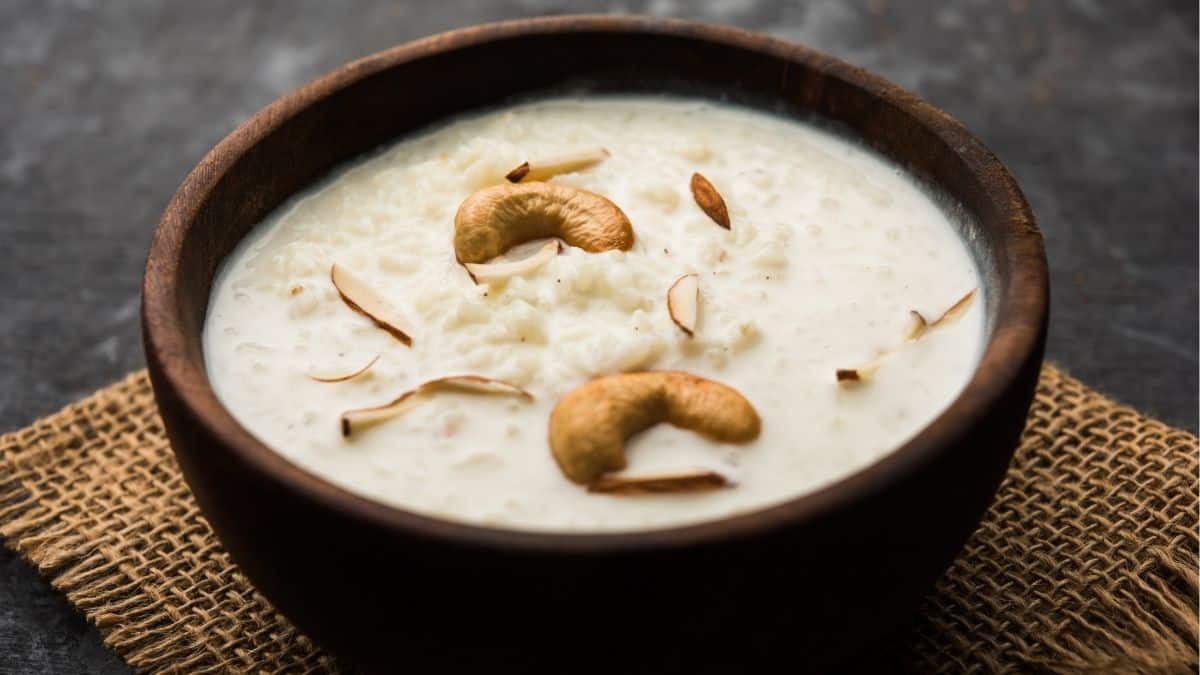
The centerpiece of Sharad Purnima’s culinary world is kheer — slow-cooked rice, full-fat cow’s milk, sugar, and cardamom, prepared in the evening and placed outdoors overnight to absorb the moon’s healing rays. It is consumed as prasad the following morning. In Maharashtra, masala milk — infused with saffron, cardamom, and dry fruits — is the signature festive drink. In Odisha, puffed rice, curd, jaggery, and seasonal fruits are offered to the moon and then eaten. In Gujarat, milk sweets and Garba refreshments complete the night’s celebrations.
Music, Art, and Cultural Expression
Sharad Purnima’s most enduring artistic tradition is the Raas Leela — devotional theatrical performances depicting Krishna’s divine dance — performed in Mathura, Vrindavan, Nathdwara, and by diaspora groups worldwide. Bhajans to Radha-Krishna and Lakshmi Stotras fill temples and homes. In Gujarat, Garba performed under the full moon is one of the season’s most joyful expressions. Classical and folk musicians have long drawn on the imagery of this moon — its fullness, its nectar, its association with divine love — and the night continues to inspire both traditional and contemporary devotional art.
Modern Observance and Evolving Practices
Urban families who may not have terraces set kheer on balconies or windowsills facing the moon. Many households time their Satyanarayan or Lakshmi Puja to this auspicious night. Social media fills each year with photographs of moonlit kheer, Garba reels, and silver-draped temple altars. The diaspora uses the occasion not only for prayer but for cultural reconnection — sharing the stories of Krishna and Lakshmi with younger generations and keeping alive the simple, beautiful tradition of sitting together under the autumn sky.
To wish someone on Sharad Purnima: “Sharad Purnima ki Hardik Shubhkamnayein” or “Sharad Poonam Mubarak” in the Gujarati tradition.
Cultural Reflection
Sharad Purnima endures because it speaks to something deeply human — the impulse to look up at a full autumn moon and feel wonder. In the Hindu imagination, this particular moon is the most complete, the most nourishing, the most alive with divine presence. Whether it is the Gopis dancing with Krishna in the forests of Vrindavan, Goddess Lakshmi walking quietly through devoted homes, or a family in Toronto or Melbourne setting a bowl of kheer on their balcony — the message of the festival remains the same: be present, stay awake, and let the light in.