
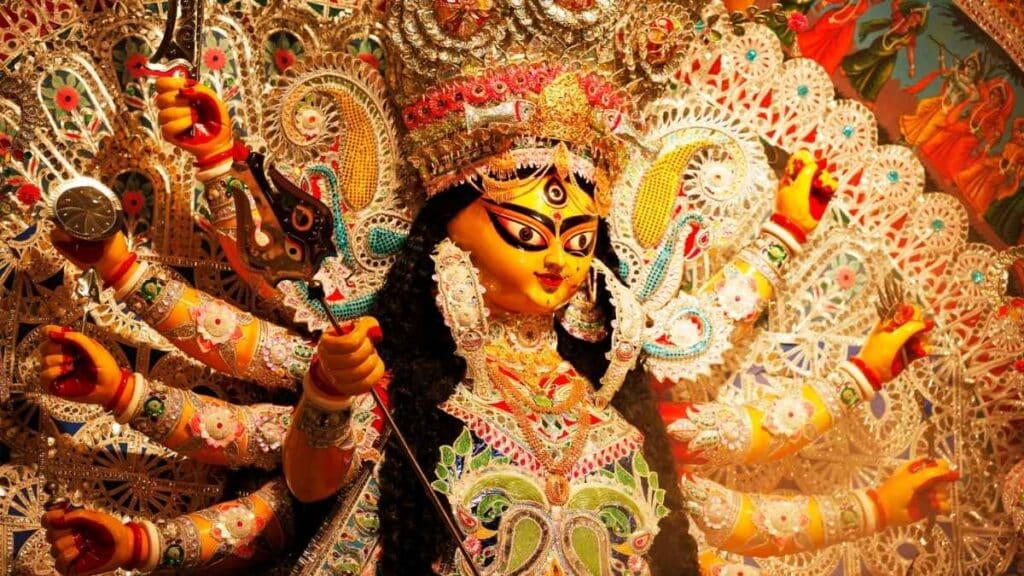
Shardiya Navratri is one of most celebrated and spiritually significant Indian festival, honoring Goddess Durga and her nine divine forms. Observed during the autumn season, Navratri symbolizes the victory of good over evil, the celebration of divine feminine power (Shakti), and spiritual renewal through devotion and fasting.
Rooted in ancient Hindu traditions, the festival marks the triumph of Goddess Durga over the demon Mahishasura after nine days of fierce battle. This victory is celebrated through daily worship of the Navadurga—nine manifestations of the Goddess, each representing unique virtues and spiritual principles.
The spiritual meaning of Navratri comes from Hindu mythology and the worship of Shakti—the cosmic feminine energy that creates, sustains, and transforms the universe. The nine nights represent a journey of inner purification, where devotees fast, pray, and engage in devotional practices to overcome their inner demons of ego, anger, and desire.
During Navratri, communities come alive with devotion and celebration—from elaborate Durga Puja pandals in Bengal to vibrant Garba and Dandiya dances in Gujarat, from temple rituals in South India to Ramlila performances in North India. The festival culminates on the tenth day with Vijayadashami (Dussehra), marking the ultimate victory of righteousness.
Shardiya Navratri is primarily observed by Hindus across India and Nepal, but today it is celebrated worldwide in countries such as the USA, UK, Canada, Australia, UAE, and beyond. In many places, it has evolved into a cultural celebration that welcomes people of all backgrounds.
When Is Shardiya Navratri Celebrated in 2026?
Shardiya Navratri is celebrated from Pratipada (first day) to Navami (ninth day) of Shukla Paksha (waxing moon phase) in the Hindu lunar month of Ashwin, which typically falls in September or October.
Navratri In India 2026 Dates
Day 1: Ghatasthapana – October 11, 2026 (Sunday)
- Goddess Shailputri worship
- Kalash installation ceremony
- Ghatasthapana Muhurta: 6:19 AM – 10:12 AM IST
- Navratri Color: Orange
Day 2 – October 12, 2026 (Monday)
- Goddess Brahmacharini worship
- Chandra Darshan observance
- Navratri Color: White
Day 3 – October 13, 2026 (Tuesday)
- Goddess Chandraghanta worship
- Sindoor Tritiya
- Navratri Color: Red
Day 4 – October 14, 2026 (Wednesday)
- Goddess Kushmanda worship
- Navratri Color: Royal Blue
Day 5 – October 15, 2026 (Thursday)
- Goddess Skandamata worship
- Navratri Color: Yellow
Day 6 – October 16, 2026 (Friday)
- Goddess Katyayani worship
- Saraswati Avahan
- Navratri Color: Green
Day 7 – October 17, 2026 (Saturday)
- Goddess Kaalratri worship
- Saraswati Puja
- Navratri Color: Grey
Day 8 – October 18, 2026 (Sunday)
- Goddess Mahagauri worship
- Navratri Color: Purple
Day 9 – October 19, 2026 (Monday)
- Goddess Siddhidatri worship
- Durga Ashtami, Maha Navami
- Sandhi Puja: 10:27 AM – 11:15 AM IST
- Navratri Color: Peacock Green
Day 10: Vijayadashami – October 20, 2026 (Tuesday)
- Ayudha Puja, Navami Havan
- Navratri Parana (fast-breaking)
- Durga Visarjan, Dussehra celebrations
Table of Contents
Shardiya Navratri In USA, Canada, Australia, New Zealand, UK, UAE, Singapore 2026 Dates
Ashwin Ghatasthapana Sunday, October 11, 2026
- Ghatasthapana Muhurat – From 07:03 A.M. 10:49 AM
- Abhijit Muhurat – From 12:20 p.m. 01:05 PM
Ashwin Ghatasthapana Sunday, October 11, 2026
- Ghatasthapana Muhurat – From 07:27 A.M. – 11:12 AM
- Abhijit Muhurat – From 12:42 p.m. 01:27 PM
Ashwin Ghatasthapana Sunday, October 11, 2026
- Ghatasthapana Muhurat – From 06:27 AM – 10:43 AM
- Abhijit Muhurat – From 12:25 p.m. – 01:16 PM
Ashwin Ghatasthapana Sunday, October 11, 2026
- Ghatasthapana Muhurat – From 07:17 A.M. – 10:57 AM
- Abhijit Muhurat – From 12:25 p.m. – 01:09 PM
Ashwin Ghatasthapana Sunday, October 11, 2026
- Ghatasthapana Muhurat – From 06:16 A.M. 10:09 AM
- Abhijit Muhurat – From 11:43 A.M. – 12:29 PM
Ashwin Ghatasthapana Sunday, October 11, 2026
- Ghatasthapana Muhurat – From 06:49 A.M. – 10:50 AM
- Abhijit Muhurat – From 12:27 p.m. 01:15 PM
Why Navratri Dates Change Every Year?
Navratri is celebrated based on the Hindu lunar calendar (Panchang), not the Gregorian calendar. It falls on Pratipada Tithi of Shukla Paksha in Ashwin month, which usually occurs in September or October.
Since lunar months are shorter than solar months:
- Navratri’s date shifts every year
- Timing depends on moon position and local sunrise
- Ritual timings (like Ghatasthapana) are calculated using planetary positions and nakshatra
How is Ghatasthapana Muhurat Decided?
The timing of Ghatasthapana is decided based on Pratipada Tithi, sunrise time, and auspicious planetary combinations as per Hindu scriptures.
- First preference is given to performing Ghatasthapana during the first one-third of the day on Pratipada Tithi
- If this time is unavailable, Ghatasthapana can be performed during Abhijit Muhurta
- Chitra Nakshatra and Vaidhriti Yoga should ideally be avoided but are not strictly prohibited
- Ghatasthapana must be performed before Hindu noon (local midday)
- Night time, Amavasya, and time after 16 Ghatis from sunrise are strictly prohibited for Ghatasthapana
- Performing Ghatasthapana at an inappropriate time may incur the wrath of Goddess Shakti
The auspicious time varies by location based on sunrise, sunset, and local astronomical calculations.
Navratri Other Names & Regional Identities
General Names:
- Navratri / Navaratri — Standard name in Hindi, English, Sanskrit
- Shardiya Navratri / Sharadiya Navratri — Autumn Navratri
- Maha Navratri — The Great Navratri (most important of four Navratris)
North & East India
- Durga Puja — West Bengal, Assam, Odisha, Tripura
- Sharadotsav — Bengali name meaning Autumn Festival
- Navratri / Navratras — Hindi-speaking regions
- Ramlila — North Indian emphasis on Ramayana performances
South India
- Navaratri / Navarathri — Tamil, Telugu, Kannada regions
- Dasara / Dussehra — Karnataka, Andhra Pradesh, Telangana
- Nadahabba — Karnataka’s state festival name
- Bommai Kolu / Golu — Tamil Nadu, Kerala (doll display tradition)
- Bathukamma — Telangana’s flower festival during Navratri
West India
- Navratri — Gujarat, Maharashtra, Rajasthan
- Garba / Dandiya — Gujarati cultural emphasis
- Sharad Navratrotsav — Formal Marathi name
Other Regional Variants
- Kullu Dussehra — Himachal Pradesh (week-long celebration)
- Mysore Dasara — Karnataka (royal heritage celebration)
Diaspora / International Naming
- Navratri Festival — USA, UK, Canada, Australia
- Durga Puja — Bengali diaspora worldwide
- Festival of Nine Nights — English explanation for non-Indians
- Garba Night — Popular event naming in Western countries
The Origins, History, and Legends of Navratri
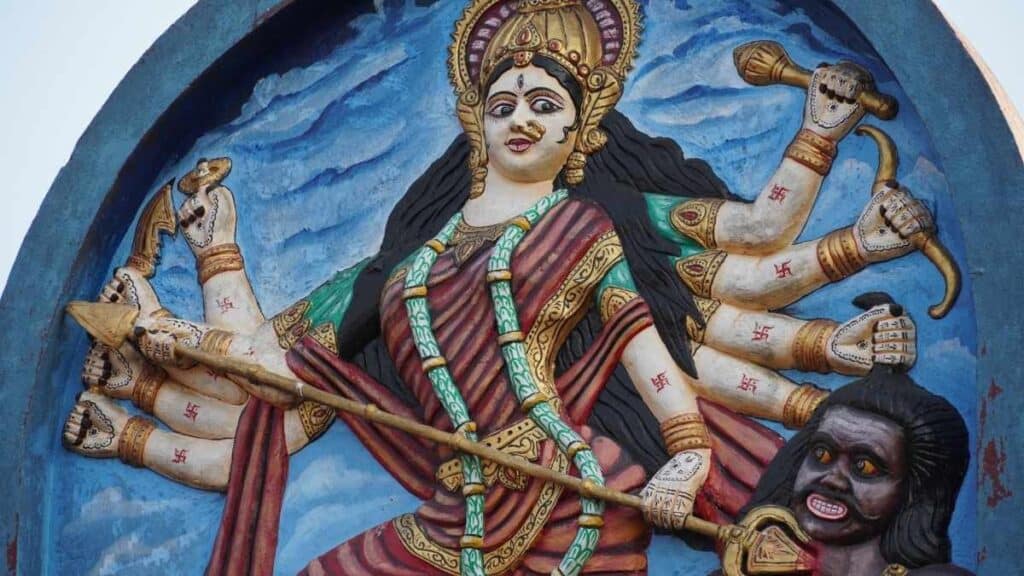
Navratri is one of the oldest festivals of India, with origins deeply rooted in ancient Hindu scriptures and Vedic traditions. The festival finds mention in classical texts such as the Devi Mahatmya (Durga Saptashati), Markandeya Purana, Kalika Purana, and Devi Bhagavata Purana, which describe Navratri as a celebration of divine feminine power and the victory of good over evil.
Historically, Navratri also marked seasonal transitions—Shardiya Navratri celebrates the arrival of autumn and the harvest season, making it both a spiritual and agricultural festival.
The Legend of Durga and Mahishasura
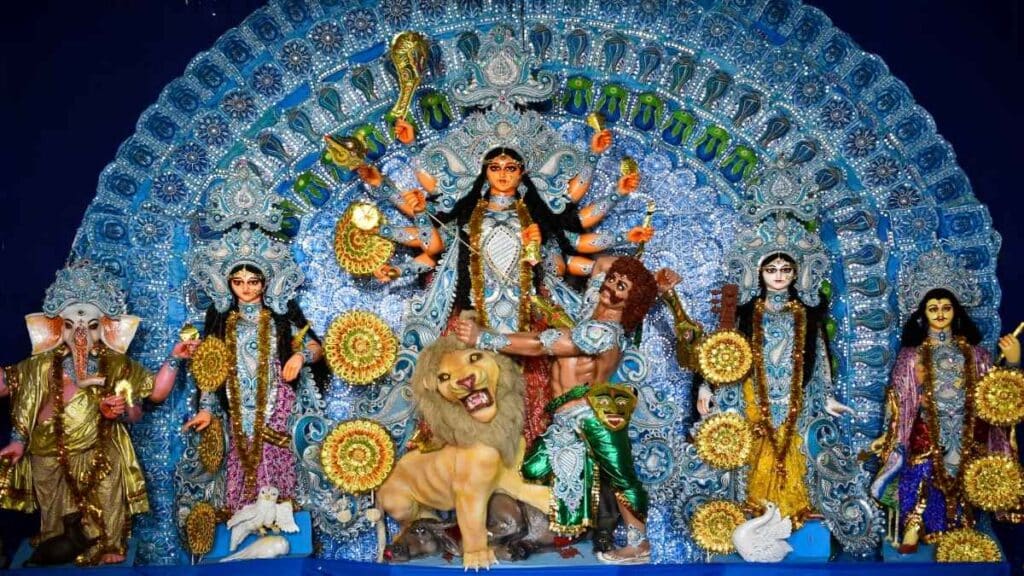
The most widely known legend is the battle between Goddess Durga and the demon Mahishasura. Mahishasura, empowered by a boon that made him nearly invincible, conquered the heavens and earth, terrorizing gods and humans alike. When the gods could not defeat him, they combined their divine energies to create Goddess Durga—a warrior embodiment of Shakti armed with weapons from each deity.
Durga fought Mahishasura for nine days and nights, ultimately slaying him on the tenth day. This victory is commemorated as Vijayadashami, symbolizing the triumph of righteousness over tyranny.
Lord Rama’s Worship of Durga
Another important legend connects Navratri to Lord Rama’s worship of Goddess Durga before his battle with Ravana. According to the Ramayana, Rama performed Chandi Puja during autumn to seek the Goddess’s blessings for victory. This established the tradition of Sharadiya Navratri and its connection to Dussehra, which celebrates Rama’s victory over Ravana.
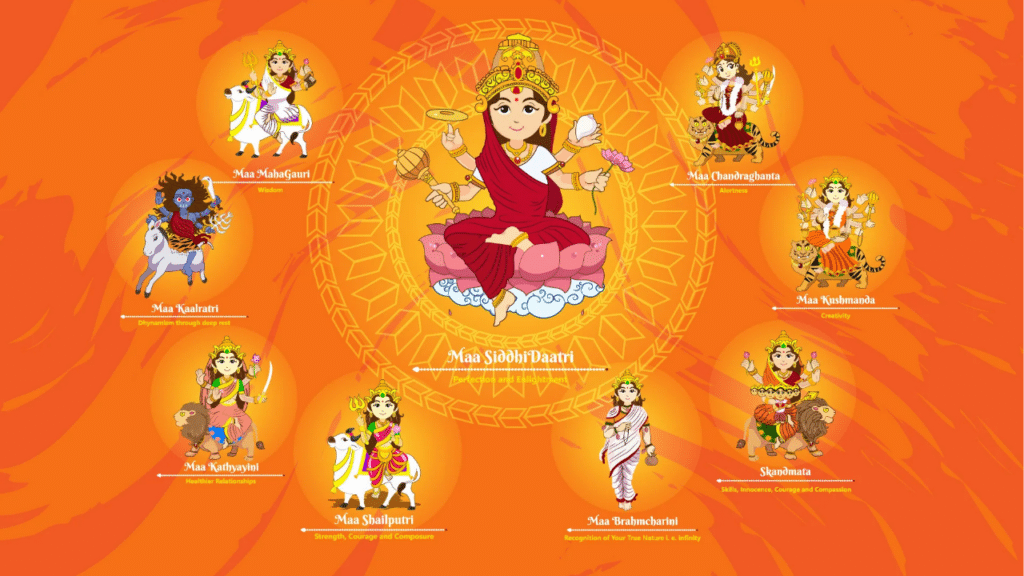
The Nine Forms of Navadurga
Each day honors a specific manifestation of the Goddess:
- Shailputri — Daughter of mountains, symbolizing strength
- Brahmacharini — The ascetic, representing discipline and devotion
- Chandraghanta — Bell-adorned, bringing peace and contentment
- Kushmanda — Creator of universe, dispelling fear
- Skandamata — Mother of Kartikeya, bestowing power
- Katyayani — The warrior, granting health and victory
- Kaalratri — The fierce, destroying evil and ignorance
- Mahagauri — The pure, symbolizing virtue and wisdom
- Siddhidatri — Granter of perfection and spiritual accomplishment
Scripturally, Navratri represents purification, spiritual awakening, and the destruction of negativity. Over centuries, it evolved from a religious observance into a grand social and cultural festival that promotes unity, joy, devotion, and harmony.
Navratri: Cultural and Spiritual Significance
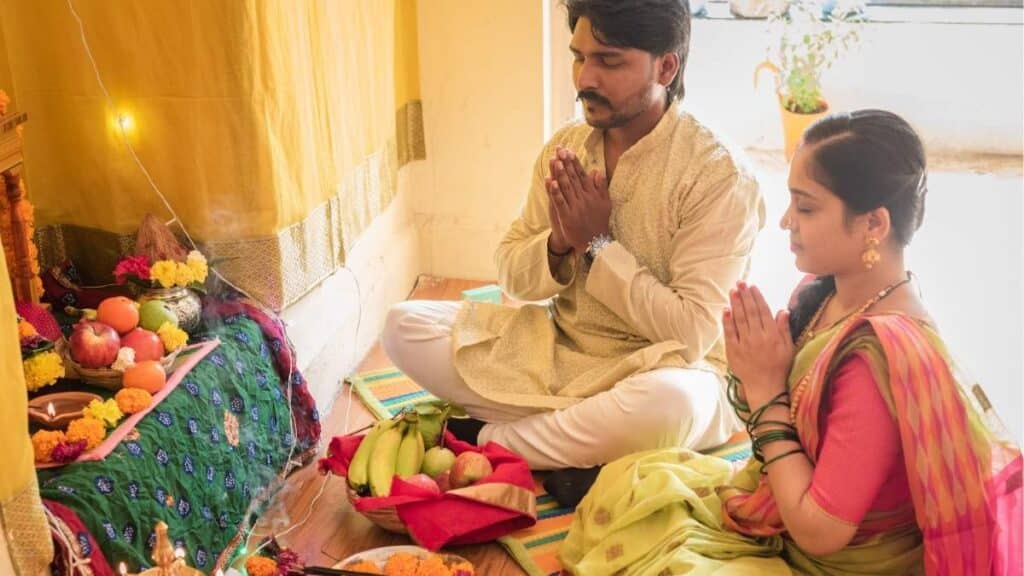
Navratri is a festival that symbolizes divine feminine power, renewal, and the eternal victory of good over evil. Spiritually, it represents the journey of self-transformation—overcoming inner demons of ego, desire, and ignorance through devotion, discipline, and spiritual practice.
The nine nights signify progressive stages of spiritual awakening, with each goddess form teaching essential life virtues: from Shailputri’s determination to Siddhidatri’s mastery and accomplishment.
Culturally, Navratri brings people together beyond social boundaries, promoting unity, equality, and collective celebration. The vibrant celebrations—from Garba dances to Durga Puja pandals—reflect happiness, creativity, and the celebration of life itself.
Marking the arrival of autumn, Navratri also signifies seasonal transition, harvest gratitude, and preparation for the festive season ahead. The festival’s emphasis on fasting purifies the body and helps adapt to seasonal changes.
More than a religious festival, Navratri is a universal celebration of Shakti—the creative, protective, and transformative power that sustains the universe. It reminds us that divine power resides not just in distant deities but within each individual, particularly honoring the strength and grace of the feminine.
Navratri Prayers and Religious Observances

Navratri prayers and rituals seek spiritual purification, divine blessings, protection, and empowerment through worship of the Goddess. Religious observances span nine days, with each day dedicated to a specific form of Durga.
Ghatasthapana (Kalash Sthapana)
The festival begins with installing a sacred kalash (pot) filled with water, adorned with coconut, mango leaves, and red cloth. Barley or wheat seeds are sown in soil around the kalash, symbolizing prosperity and growth. This ritual invokes Goddess Shakti into the home or temple for the nine-day period.
Daily Puja Rituals
Devotees perform morning and evening worship:
- Lighting diyas and incense
- Offering flowers, fruits, and sweets to the Goddess
- Reciting Durga Saptashati (700 verses)
- Chanting specific mantras for each day’s goddess
- Performing aarti with devotional songs
Fasting Practices
Many observe fasts (vrat) during Navratri, abstaining from grains, onions, garlic, and non-vegetarian food. Fasting foods include sabudana (tapioca), kuttu (buckwheat), fruits, milk, and special vrat preparations. Fasting is believed to purify the body and mind, enhancing spiritual receptivity.
Kanya Puja (Kumari Puja)
On Ashtami or Navami, nine young girls representing the Goddess’s nine forms are worshipped, fed special meals, and given gifts—honoring the divine feminine in its purest manifestation.
Sandhi Puja
The most powerful ritual occurs at the junction (sandhi) of Ashtami and Navami, when Goddess Durga is believed to have slain Mahishasura. Special worship is performed during this auspicious 48-minute period.
Whether observed at home or temples, Navratri rituals emphasize devotion, gratitude, discipline, and spiritual transformation, making the festival both joyous and deeply meaningful.
How Navratri Is Celebrated Across India
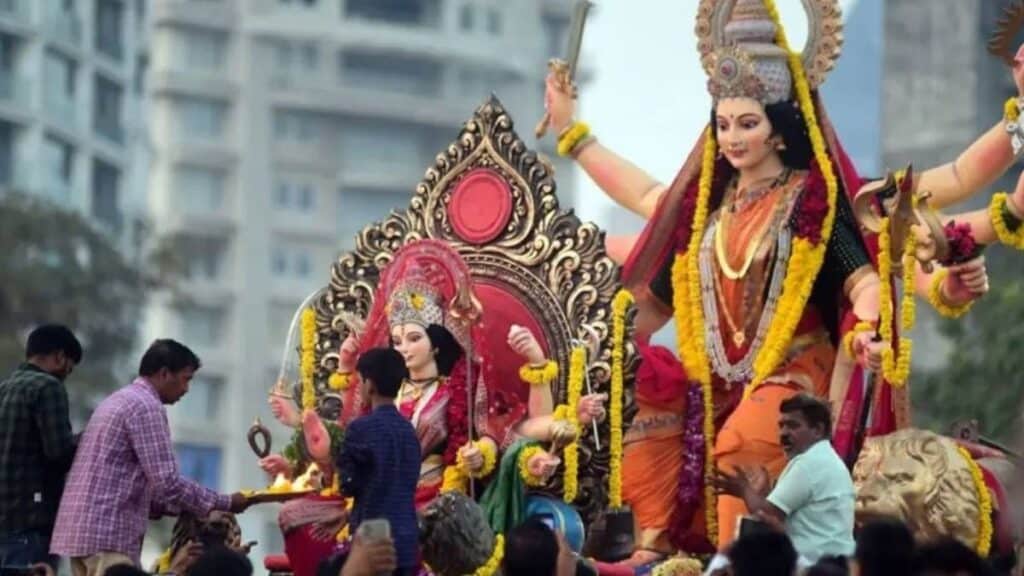
While the essence of Navratri remains consistent—worshipping Goddess Durga and celebrating divine victory—its expressions vary beautifully across regions.
Gujarat and Western India — Navratri here is synonymous with Garba and Dandiya Raas. Communities gather for all-night dance celebrations in elaborately decorated venues. Women wear colorful chaniya cholis, and the circular Garba dance honors the Goddess. Cities like Ahmedabad and Vadodara host India’s grandest Garba events.
West Bengal and Eastern India — Celebrated as Durga Puja with breathtaking artistic pandals and clay idols. Kolkata transforms into an outdoor art gallery. The festival emphasizes artistic creativity, community meals (bhog), and emotional Vijaya Dashami immersion processions. Assam, Odisha, and Tripura follow similar traditions.
Karnataka and South India — Mysore Dasara features the illuminated Mysore Palace with 100,000 lights and the grand Jamboo Savari elephant procession. Homes display Golu (tiered doll arrangements), and Ayudha Puja honors tools and vehicles. Tamil Nadu and Kerala emphasize Saraswati worship alongside Durga.
Maharashtra — Blends devotional worship with social celebration. Mumbai showcases diverse traditions from Durga Puja pandals to Garba events. Some regions display Kolu dolls and focus on Gauri worship.
North India (Delhi, UP, Punjab) — Ramlila performances depicting the Ramayana dominate the cultural landscape, culminating in burning Ravana’s effigy on Vijayadashami. Temples conduct continuous worship, and Varanasi’s ghats glow with diyas and classical music.
Himachal Pradesh — Kullu Dussehra is unique, featuring a week-long celebration where 200+ deity idols from surrounding villages gather in colorful processions.
Rajasthan — Jaipur and Udaipur celebrate with temple decorations, cultural programs, and vibrant markets selling traditional attire and jewelry.
Despite regional variations, devotion, fasting, music, dance, and community participation remain central everywhere.
Participation Across Religions in India
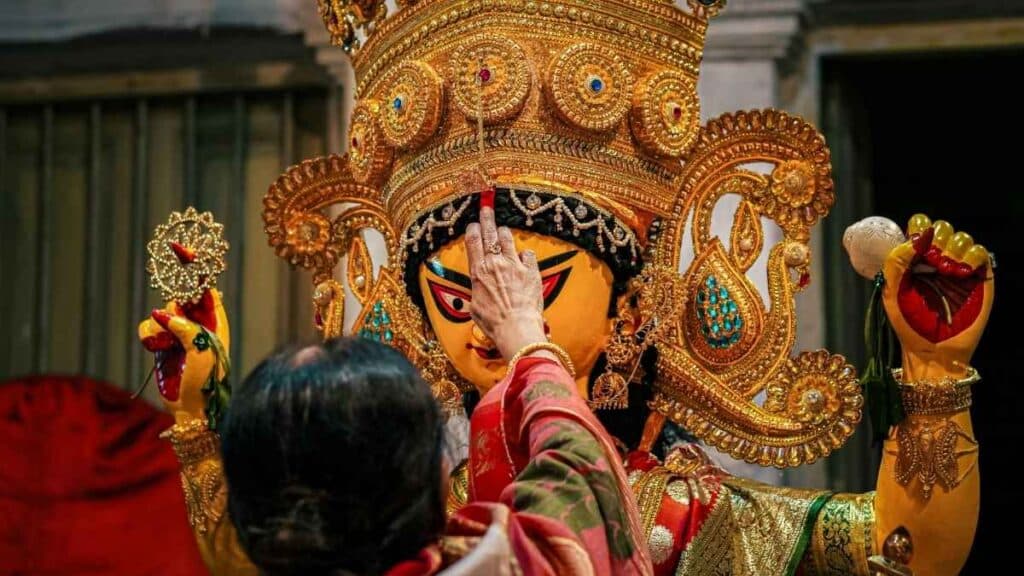
Navratri is celebrated not only by Hindus but by people of many religions across India, making it a truly inclusive cultural festival. Over time, Navratri has evolved beyond religious boundaries and become a shared celebration of joy, culture, and togetherness.
People from different faiths—Hindus, Muslims, Sikhs, Christians, and others—participate in Navratri festivities by attending Garba nights, viewing Durga Puja pandals, exchanging sweets, and joining community gatherings.
The festival promotes harmony and social bonding, as neighborhoods come together to celebrate without distinction of caste, creed, or belief. In West Bengal, Muslim artisans traditionally craft Durga idols, and people of all backgrounds participate in pandal-hopping. In Gujarat, Garba events welcome participants regardless of religion.
In many regions, interfaith participation is a natural part of Navratri, reflecting India’s pluralistic spirit and cultural diversity. By encouraging unity, creativity, and shared happiness, Navratri serves as a reminder that festivals can unite people through common values of joy, respect, and celebration.
How Navratri Is Celebrated Outside India

Indian diaspora communities across the United States, Canada, the UK, Australia, UAE, Singapore, and beyond celebrate Navratri through:
- Community Events — Large-scale Garba and Dandiya nights at convention centers, community halls, and outdoor venues attracting thousands
- Temple Gatherings — Daily puja, aarti, and Durga Saptashati recitations maintaining traditional worship
- Durga Puja Celebrations — Bengali diaspora creates elaborate pandals with cultural programs, especially in USA, UK, and Australia
- University and School Programs — Student organizations host Navratri celebrations, introducing non-Indians to the festival
- Fusion Events — Blending traditional and contemporary music, attracting multicultural audiences
- Weekend Observance — Major celebrations shifted to weekends to accommodate work schedules while maintaining daily home worship
- Cultural Education — Workshops teaching children Garba, traditional dress, and religious significance
These celebrations help second-generation Indians stay connected to their cultural roots while introducing non-Indians to Indian traditions, making Navratri a bridge between heritage and contemporary multicultural life.
Navratri Gifting Traditions
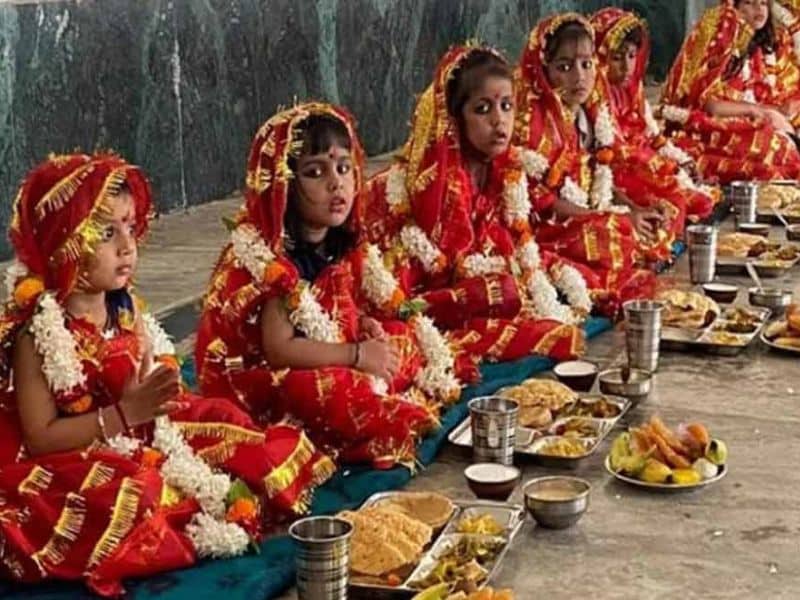
Navratri gifting symbolizes devotion, love, and new beginnings. The tradition reflects the spirit of sharing blessings and strengthening community bonds during this auspicious period.
Traditional Gifts:
- Idols or pictures of Goddess Durga and Navadurga
- Sacred texts (Durga Saptashati, Devi Mahatmya)
- Pooja thalis, kalash sets, and devotional items
- Traditional clothing (sarees, lehengas, chaniya cholis)
- Decorative dandiya sticks
- Sweets and festive snack boxes
- Silver or gold coins considered auspicious
For Kanya Puja:
- New clothes for young girls
- Toys, books, and educational items
- Sweets and festive foods
- Dakshina (monetary gifts)
Modern Gifting:
- Eco-friendly gift hampers
- Wellness packages
- Home decor with spiritual motifs
- Gift vouchers for ethnic wear
- Charitable donations in someone’s name
Navratri is considered highly auspicious for purchasing gold, vehicles, property, and beginning new ventures, making gift-giving both spiritually meaningful and culturally significant.
Traditional Navratri Foods and Fasting Cuisine
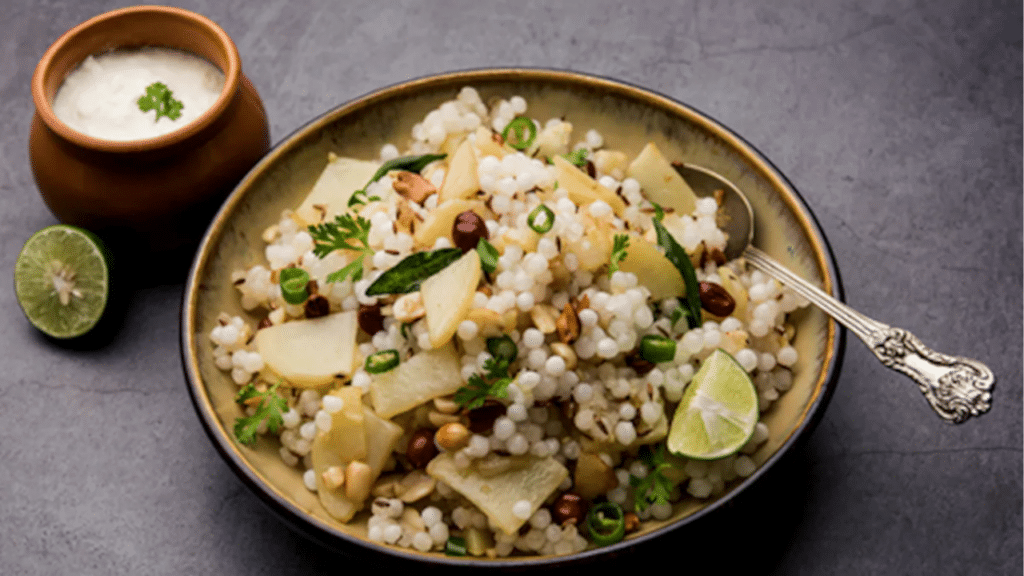
Food plays an essential role in Navratri, with devotees observing fasts and preparing special vrat (fasting) meals that are both nutritious and spiritually appropriate.
Common Navratri Fasting Foods:
Sabudana Preparations:
- Sabudana Khichdi — Savory tapioca with peanuts and potatoes
- Sabudana Vada — Crispy fried tapioca patties
- Sabudana Kheer — Sweet tapioca pudding
Kuttu and Singhara:
- Kuttu Ki Puri — Buckwheat flour bread
- Singhare Ke Pakore — Water chestnut fritters
- Kuttu Dosa — Savory buckwheat crepes
Potato Dishes:
- Aloo Jeera — Cumin-spiced potatoes
- Aloo Ki Kadhi — Yogurt curry with potatoes
- Vrat Wale Aloo — Special fasting-style potatoes
Beverages:
- Thandai — Spiced milk with almonds, saffron, and rose
- Lassi — Sweet yogurt drink
- Fresh fruit juices
Snacks:
- Makhana — Roasted or curried fox nuts
- Samak Rice — Barnyard millet preparations
- Fresh and dry fruits
Regional Specialties:
Gujarat: Rajgira kheer, fada ni khichdi West Bengal (Non-fasting): Khichuri, luchi, payesh, sandesh Maharashtra: Sabudana thalipeeth, rajgira ladoo North India: Singhare ka halwa, shakarkandi chaat South India: Sundal (lentil salads), coconut-based dishes
Prasad Offerings: Each goddess traditionally receives specific offerings—ghee, sugar, milk, malpua, bananas, honey, jaggery, coconut, and sesame seeds across the nine days.
These dishes are often prepared in advance and shared freely with family, neighbors, and guests, embodying the festival’s spirit of community and devotion.
Navratri: Music, Art, and Cultural Expression
Music, art, and performance are integral to Navratri celebrations, bringing energy, devotion, and cultural vibrancy to the festival.
Traditional Music:
- Durga Chalisa, Durga Aarti (“Jai Ambe Gauri”), and devotional stotras
- Garba Songs — Traditional Gujarati folk music expressing devotion to Goddess Amba
- Bengali Puja Songs — Mahalaya, Agomoni gaan, and dhaki drum music
- Bhajans and Kirtans — Devotional singing at temples
Dance Forms:
- Garba — Circular dance performed around a central lamp or deity, symbolizing life’s cyclical nature
- Dandiya Raas — Energetic stick dance in pairs with rhythmic coordination
- Classical Dance — Bharatanatyam, Kathak, Odissi performances depicting Goddess stories
Visual Arts:
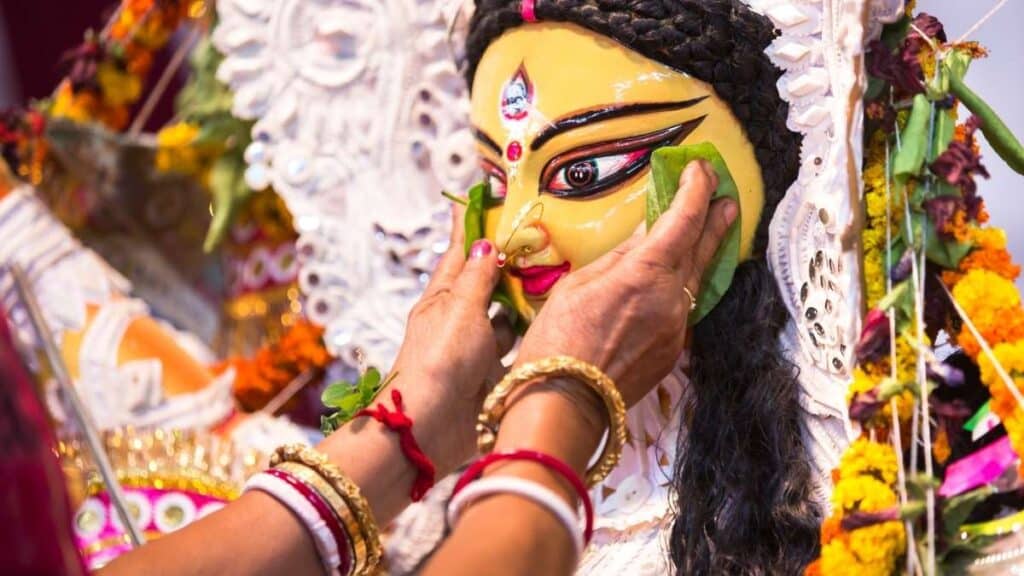
- Durga Idol Craftsmanship — Bengali artisans spend months creating elaborate clay idols using traditional techniques
- Pandal Architecture — Temporary structures ranging from traditional designs to contemporary themes with social messaging
- Rangoli — Colorful floor designs at temple and home entrances
- Folk Art — Madhubani paintings, Warli art celebrating divine feminine
Literary Traditions: Sacred texts like Durga Saptashati (700 verses) and regional literature keeping spiritual essence alive through generations.
Together, music, art, and celebration make Navratri a powerful expression of creativity, devotion, freedom, and cultural unity.
Navratri’s Modern Relevance and Cultural Continuity
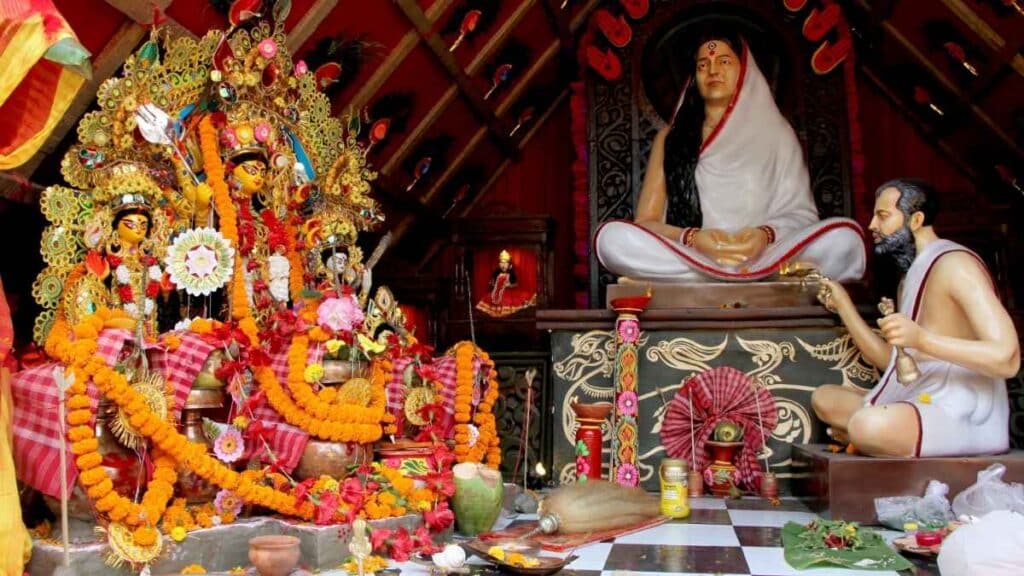
In today’s fast-changing world, Navratri continues to hold deep relevance as a festival that celebrates divine feminine power, unity, and spiritual renewal. While lifestyles and celebrations have evolved, the core spirit of Navratri remains unchanged—honoring the Goddess, bringing people together, and celebrating the victory of good over evil.
Modern Navratri celebrations blend tradition with contemporary expressions, from eco-friendly practices to organized cultural events and global festivals. The festival transcends religious boundaries, becoming a shared cultural celebration that promotes creativity, joy, and community bonding.
Navratri also plays an important role in preserving cultural continuity. Across generations and geographies, the festival connects people to their roots while allowing space for new interpretations. For Indian communities living abroad, Navratri serves as a powerful link to heritage, helping pass traditions, values, and stories to younger generations.
Beyond colorful celebrations and devotional rituals, Navratri carries a timeless message: that Shakti—divine feminine energy—resides within each individual, empowering us to overcome obstacles and transform ourselves. The nine goddess forms teach essential virtues: determination, discipline, contentment, fearlessness, creativity, health, destruction of negativity, purity, and accomplishment.
In an increasingly complex world, the festival reminds us of the importance of spiritual grounding, cultural identity, and collective celebration. Navratri’s enduring relevance lies in its ability to adapt while staying true to its essence—celebrating divine power, human potential, and the eternal triumph of light over darkness.
Jai Mata Di! May the blessings of the Goddess bring strength, wisdom, prosperity, and joy to all. spiritual rewards, and hope for family welfare.