


There’s a specific kind of frustration that comes with standing in front of the bathroom mirror, running your fingers through hair that just won’t cooperate. You’ve tried the expensive salon treatments, watched countless YouTube tutorials, stocked your shower with promising bottles—yet your hair still feels like it’s working against you rather than with you.
For many of us in the Indian diaspora, hair carries extra weight. It’s tied to family advice passed down through generations, to aunties who swear by coconut oil warmed in their palms, to mothers who knew exactly how to braid without breaking a single strand. But somewhere between the old wisdom and the new country’s climate, between hard water and central heating, our hair changed. And we kept treating it the same way, expecting different results.
The truth is, what transforms hair isn’t a single miracle product. It’s understanding what your specific hair actually needs, then building a routine smart enough to deliver it consistently.
In a Nutshell:
Your hair doesn’t need more products—it needs the right approach. A smarter hair care routine starts with understanding your unique hair type, porosity, and scalp health, then building consistent habits around gentle cleansing, proper conditioning, heat protection, and internal nourishment. Simple shifts like switching to a bamboo brush, sleeping on satin, and using targeted repair products can transform your hair from the roots up.
In this Article
Understanding Your Hair’s Unique Blueprint
Your hair has been trying to tell you what it needs. The frizz at your crown, the way it falls flat by midday, how it tangles the moment humidity rises—these aren’t personal failures. They’re clues about your hair’s type, texture, and porosity.
Hair type ranges from straight to coily, and each variation has different requirements. Straight hair gets oily faster at the roots and needs lightweight products. Wavy hair craves definition without weight. Curly and coily hair thirsts for moisture and gentle handling. If you’re still using the same products your roommate swears by, you might be solving the wrong equation entirely.
Porosity matters just as much. High-porosity hair absorbs moisture quickly but loses it just as fast—it needs rich, sealing products. Low-porosity hair resists moisture absorption and can feel weighed down easily—it needs lighter formulas and warmth to help products penetrate. Medium-porosity hair is the Goldilocks zone, accepting and retaining moisture with balanced care.
Most of us have never thought about our hair this way. We inherited routines without inheriting the reasoning behind them. But once you understand your hair’s actual structure and needs, everything else starts making sense.
The Foundation: Your Scalp Deserves Attention
Healthy hair grows from healthy roots, and healthy roots need a healthy scalp. This sounds obvious until you realize most of us focus entirely on our hair lengths while ignoring the soil from which they grow.
Your scalp accumulates product buildup, dead skin cells, and oil over time. If you’ve noticed your hair feeling heavy even right after washing, or if you’re experiencing unexpected hair fall, your scalp might be sending distress signals. A gentle scalp massage while shampooing—using your fingertips, not your nails—improves blood circulation and helps remove buildup. It takes an extra minute, maybe two. That minute makes a difference.
For those dealing with particularly stubborn buildup or living in areas with hard water (which many of us encounter after moving abroad), a clarifying treatment once a month helps reset your scalp’s environment. Think of it as spring cleaning for your hair’s foundation.
Washing: Less Often, More Intentionally
One of the biggest shifts in a smarter routine is rethinking how often you wash. Many of us grew up washing hair daily or near-daily, but overwashing strips the natural oils your scalp produces to protect and nourish your hair. Those oils aren’t the enemy—they’re your hair’s built-in conditioning system.
Most hair types thrive on washing 2-3 times a week. Dry, curly, or coily hair often does better with even less frequent washing. The transition period might feel uncomfortable—your scalp may overproduce oil at first as it adjusts—but give it two to three weeks. Your hair will find its balance.
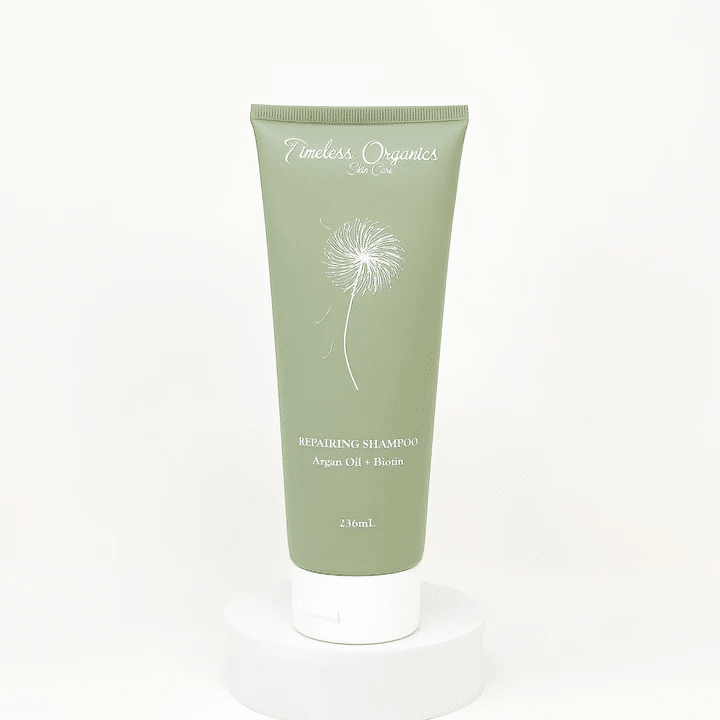
When you do wash, use a sulfate-free, pH-balanced shampoo like a Repairing Shampoo that cleanses without stripping. Apply it only to your scalp, not your hair lengths. Your lengths will get clean as the shampoo rinses through—they don’t need the concentrated cleansing action. Use lukewarm or cool water rather than hot, which opens the hair cuticle and leads to moisture loss.
The difference between scrubbing your hair and gently massaging your scalp with shampoo is the difference between agitation and care. Your hair isn’t a dirty plate. It’s a delicate fiber that responds better to gentle, consistent treatment.
Conditioning: Where the Real Work Happens
If shampooing is about cleansing, conditioning is about restoration. This is where you rebuild what daily life strips away—moisture, smoothness, manageability. Yet many people rush through conditioning or skip it when they’re in a hurry. That’s like cleaning a cut but not bandaging it.
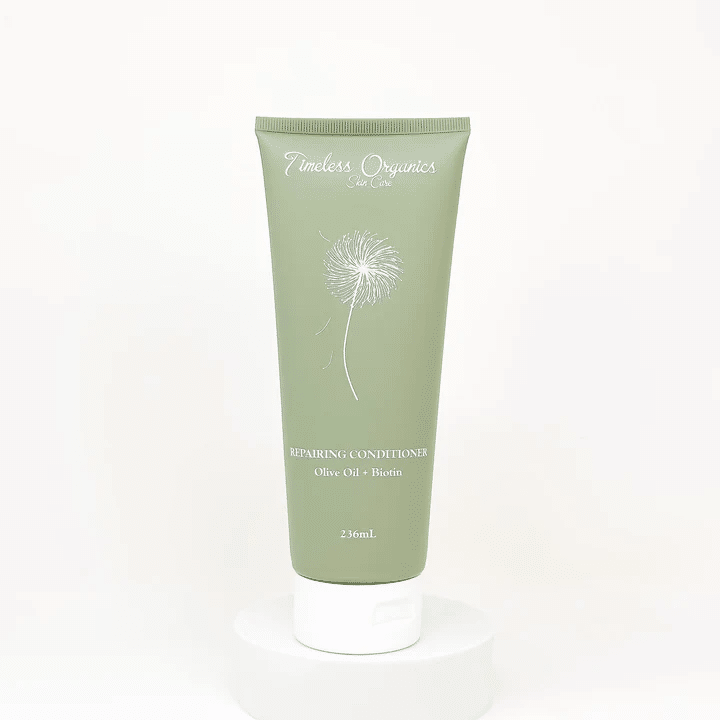
Apply a Repairing Conditioner from mid-length to ends, avoiding the roots unless your hair is particularly dry. Let it sit for at least three minutes. This isn’t wasted time—the conditioner needs those minutes to penetrate the hair shaft and seal the cuticle. If you’re conditioning while rushing through your shower, you’re leaving benefits on the table.
Here’s a small habit that makes an enormous difference: detangle your hair in the shower while the conditioner is still in, using a wide-tooth comb. Wet hair is fragile, but wet hair with conditioner has slip—it allows the comb to glide through with minimal resistance. Start from the ends and work your way up. Never start from the roots and pull down; that’s how hair snaps and breaks.
For those with particularly dry, damaged, or textured hair, a weekly deep conditioning treatment adds an extra layer of repair. These treatments contain concentrated ingredients that penetrate deeper than daily conditioners.
Drying: The Gentlest Transition
How you dry your hair might be causing more damage than anything else in your routine. We’ve been taught to rub our hair vigorously with a towel, but that friction roughens the hair cuticle, causes frizz, and leads to breakage. Wet hair is at its most vulnerable—it’s swollen with water, the cuticle is raised, and the hair shaft is weakened.
Instead of rubbing, gently blot your hair with a microfiber towel or even a soft cotton T-shirt. Press and squeeze, don’t scrub. The goal is to remove excess water without creating friction. This one change can reduce frizz dramatically, especially for those with wavy or curly hair.
Air-drying is ideal whenever possible, but if you’re using a blow dryer, apply a heat protectant first and use the lowest heat setting that works. High heat might dry your hair faster, but it also causes long-term damage that no product can fully repair. Point the dryer down the hair shaft, following the direction of the cuticle, to encourage smoothness.
Brushing: The Right Tool Matters
Not all brushes are created equal, and using the wrong one can undo all your other careful work. Metal brushes with sharp bristles can scratch your scalp and snap your hair. Plastic brushes create static. Dense bristles pull and tear through tangles rather than gently working them loose.
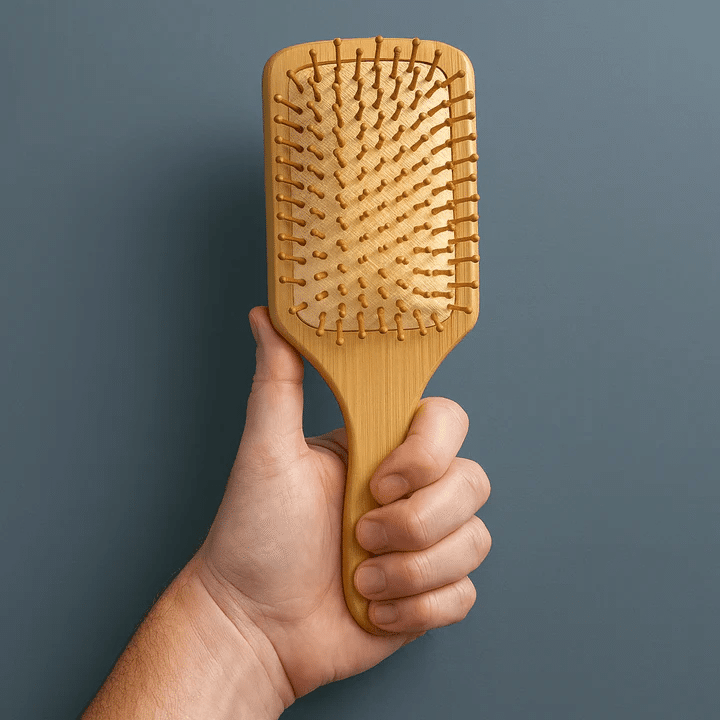
A Large Paddle Style Bamboo Hairbrush distributes natural oils from your scalp down the hair shaft while being gentle enough not to cause breakage. Bamboo bristles are smooth, flexible, and naturally anti-static. The wide paddle design covers more surface area with each stroke, making brushing faster and more efficient.
Brush before washing to remove tangles and distribute oils, then again once hair is dry or nearly dry. Never brush soaking wet hair unless you’re using a wide-tooth comb with conditioner in the shower. And always brush from the ends up, working through small sections at a time. Starting at the roots and dragging down concentrates all the tangles at the ends and creates breakage.
Heat Styling: Protection Is Non-Negotiable
Heat tools—blow dryers, straighteners, curling irons—are part of many of our styling routines. There’s nothing wrong with using heat, but unprotected heat causes cumulative damage that shows up as dry ends, breakage, and loss of natural texture over time.
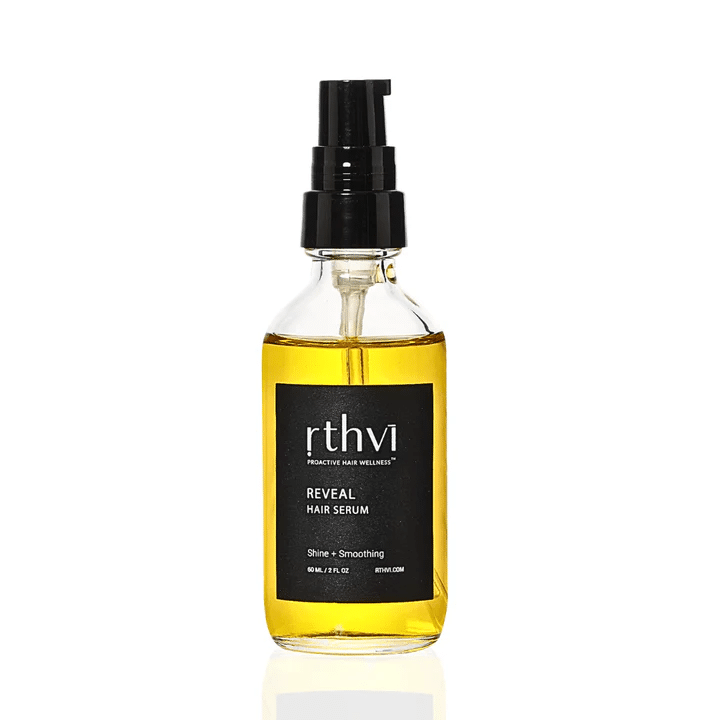
If you’re going to use heat, always start with a heat protectant. These products create a barrier between your hair and the high temperatures, reducing moisture loss and preventing protein damage. A Reveal Hair Serum for Shine & Frizz Control can work double duty—protecting during styling while adding smoothness and shine to the finished look.
Use the lowest temperature that achieves your desired style. Fine hair might only need 300°F, while thicker, coarser hair might need 350-380°F. You don’t need to max out your flat iron to 450°F unless your hair is extremely resistant—and even then, consider whether the temporary style is worth the long-term damage.
Limit heat styling to a few times a week rather than daily. On non-heat days, embrace your hair’s natural texture with minimal manipulation. Your hair will thank you over time.
Nighttime: When Protection Happens
We spend roughly a third of our lives sleeping, and during those hours, our hair is rubbing against pillowcases, getting crushed under our heads, and forming tangles. A regular cotton pillowcase creates friction that roughens the hair cuticle and causes breakage, especially for those with longer hair or textured curls.
Switching to a Clean Design Home Satin Pillowcase reduces that friction dramatically. Satin’s smooth surface allows your hair to glide rather than snag. You’ll wake up with less frizz, fewer tangles, and your hairstyle better preserved. For those with curly or coily hair, this simple change can extend a wash day by several days.

If you have longer hair, loosely braid it or tie it in a low ponytail with a silk scrunchie before bed. Avoid tight elastics that create tension breakage. The goal is to protect your hair while you sleep, not restrict it so tightly that you’re creating new damage.
Trimming: Maintenance, Not Punishment
Many of us view haircuts as something to avoid for as long as possible, especially when we’re trying to grow our hair longer. But split ends don’t heal themselves—they travel up the hair shaft, causing more damage and making your hair look thin and unhealthy even as it grows.
Regular trims every 6-12 weeks remove split ends before they spread. You don’t need to cut off inches; even a quarter-inch trim maintains hair health. Think of it as pruning a plant—you’re removing the damaged parts so the healthy parts can flourish. This is maintenance, not setback.
If you’re growing out your hair, strategic trims actually help you reach your length goals faster by preventing damage that would eventually require cutting off more length.
Internal Health: What You Feed Shows
Your hair is made of protein, and it grows from follicles that depend on nutrients delivered through your bloodstream. All the external care in the world can’t compensate for internal deficiency. What you eat matters.
A diet rich in protein supports hair structure. Iron helps carry oxygen to hair follicles. Omega-3 fatty acids nourish the scalp and add shine. Vitamins A, C, D, and E all play roles in hair health. Biotin and zinc support growth. This doesn’t mean you need expensive supplements—though they can help if you have specific deficiencies. It means eating a balanced diet with plenty of whole foods, healthy fats, and lean proteins.
Hydration matters too. Dehydrated hair is brittle hair. Drinking enough water seems too simple to be important, but your hair cells need hydration from the inside out.
For many of us managing busy lives abroad—working full-time, maybe caring for family, navigating different food systems—nutrition can slide. But the weeks you prioritize eating well show up in your hair. It’s one of those quiet investments that compounds over time.
Stress and Hair: The Connection We Ignore
Chronic stress disrupts your hair growth cycle, pushing follicles into a resting phase and leading to increased shedding months later. This is called telogen effluvium, and it’s more common than most people realize. If you’ve noticed unusual hair fall during particularly stressful periods—after moving countries, during visa uncertainty, through family difficulties—you’re not imagining it.
Managing stress isn’t hair-specific advice, but it has hair-specific benefits. Whether it’s regular exercise, meditation, adequate sleep, or simply making time for things that bring you peace, these habits protect your hair from the inside. Your body prioritizes vital functions under stress, and hair growth isn’t vital for survival—so it’s one of the first things to suffer when your system is overtaxed.
This doesn’t mean stress is your fault, or that you can think your way to perfect hair. It means acknowledging that hair health is connected to overall wellbeing, and caring for yourself holistically includes caring for your hair.
The Consistency Principle
The smartest hair care routine isn’t the one with the most steps or the most expensive products. It’s the one you’ll actually maintain. A simple routine done consistently beats a complicated routine done sporadically.
Hair change happens slowly. You won’t see transformation overnight or even in a week. The hair currently growing from your scalp won’t show results for months—you’re playing the long game. But three months from now, six months from now, you’ll run your fingers through your hair and realize something shifted. The breakage slowed. The texture improved. The frizz calmed. That’s when you’ll know the routine worked.
What Actually Changed
What changed my hair—and what might change yours—wasn’t a single product or one dramatic intervention. It was understanding that hair responds to consistency, gentleness, and attention to its actual needs rather than what we assume it needs.
It was learning that healthy hair starts with a healthy scalp, that washing less can mean better hair, that the way you dry matters as much as how you clean. It was realizing that heat isn’t evil but unprotected heat is damaging. That the right brush makes a difference. That what you eat and how you sleep and how you manage stress all show up in your hair eventually.
The mirror moment that used to bring frustration can eventually bring satisfaction—not because your hair suddenly became someone else’s hair, but because it became the healthiest version of your own.
