
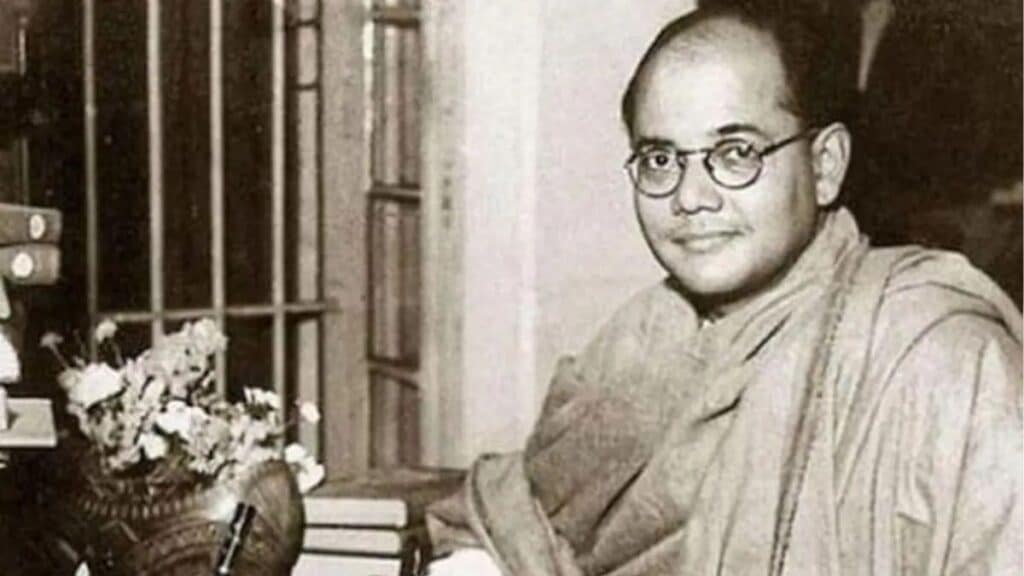
Subhas Chandra Bose Jayanti, officially known as Parakram Diwas (Day of Valour), is one of India’s most significant patriotic observances. Celebrated annually on 23 January, the day honours the birth anniversary of Netaji Subhas Chandra Bose — freedom fighter, visionary leader, and commander of the Indian National Army (Azad Hind Fauj). Netaji’s fearless pursuit of India’s independence, his rallying cry “Tum mujhe khoon do, main tumhe azadi dunga,” and his founding of the Azad Hind Government continue to inspire generations of Indians at home and across the world.
When Is Subhas Chandra Bose Jayanti Celebrated in 2026?
Subhas Chandra Bose Jayanti falls on a fixed date each year — 23 January — tied to Netaji’s birth date on 23 January 1897. Unlike lunar calendar festivals, this observance does not shift annually.
As a fixed Gregorian calendar date, Subhas Chandra Bose Jayanti is observed simultaneously across all countries on 23 January. Events in India begin from early morning (IST, UTC+5:30) with official tributes and flag hoisting ceremonies.
Table of Contents
Subhas Chandra Bose Jayanti In USA, Canada, Australia, New Zealand, UK, UAE, Singapore 2026 Dates
Parakram Diwas on Friday, 23 January 2026
Parakram Diwas on Friday, 23 January 2026
Parakram Diwas on Friday, 23 January 2026
Parakram Diwas on Friday, 23 January 2026
Parakram Diwas on Friday, 23 January 2026
Parakram Diwas on Friday, 23 January 2026
Subhas Chandra Bose Jayanti Overview
Subhas Chandra Bose Jayanti commemorates the birth anniversary of one of India’s greatest freedom fighters. Born on 23 January 1897 in Cuttack, Odisha, Netaji Subhas Chandra Bose led the Indian National Army and established the Azad Hind Government in exile, directly challenging British colonial rule through armed resistance and extraordinary personal courage.
Since 2021, the Government of India officially observes this day as Parakram Diwas, with the aim of inspiring India’s youth to exhibit courage and patriotism in Netaji’s spirit. The day is a public holiday in West Bengal, Jharkhand, Tripura, Assam, and Odisha, and is observed nationally through tributes, cultural programmes, and community events.
Other Names and Regional Identities
Subhas Chandra Bose Jayanti is known by several names across India’s languages and regions:
| Language / Region | Name |
|---|---|
| Official (Government of India) | Parakram Diwas / Parakram Divas |
| Hindi | नेताजी जयंती (Netaji Jayanti) |
| Bengali | নেতাজি জন্মজয়ন্তী (Netaji Janmajanmabanti) |
| Odia | ନେତାଜୀ ଜୟନ୍ତୀ (Netaji Jayanti) |
| Tamil | நேதாஜி ஜெயந்தி |
| Telugu | నేతాజీ జయంతి |
| Marathi | नेताजी जयंती |
| Kannada | ನೇತಾಜಿ ಜಯಂತಿ |
| Malayalam | നേതാജി ജയന്തി |
The Forward Bloc sought the day to be named Deshprem Divas (Day of Patriotism), while West Bengal Chief Minister Mamata Banerjee proposed Deshanayak Divas (Day of National Hero). The Government of India’s decision to name it Parakram Diwas remains a point of debate among Bose’s family members and several political parties. In the Indian diaspora, the day is widely referred to as Netaji Jayanti or Subhas Chandra Bose Birthday.
Origins, History, and Legacy
Subhas Chandra Bose was born on 23 January 1897 into a Bengali family in Cuttack, Odisha. A brilliant student, he cleared the Indian Civil Services examination in 1920 but resigned the following year, choosing to join the freedom movement under the influence of Mahatma Gandhi and Swami Vivekananda’s teachings.
Bose rose rapidly through the Indian National Congress, serving as its President in 1938 and 1939. Ideological differences over the urgency and method of achieving independence led him to found the All India Forward Bloc in 1939, seeking to consolidate all anti-British forces under one banner.
During World War II, Bose escaped British surveillance, travelling secretly through Afghanistan and the Soviet Union to Germany and later Japan. With Japanese support, he reorganized the Indian National Army (INA / Azad Hind Fauj), comprising Indian prisoners-of-war and plantation workers from Southeast Asia. In 1943, he declared the Azad Hind Government in exile in Singapore — the Provisional Government of Free India — and led the INA in the battles of Imphal and Kohima, penetrating Indian soil in the effort to end colonial rule.
Netaji is believed to have died in a plane crash in Taiwan on 18 August 1945, though the circumstances of his death remain debated to this day.
The first Netaji Jayanti was celebrated in Rangoon approximately five months after his disappearance. In 2021, the Government of India formally elevated the observance to Parakram Diwas on his 124th birth anniversary, giving it national recognition across all states.
Cultural and Spiritual Significance
Subhas Chandra Bose Jayanti carries profound national significance. Netaji represents a strand of India’s freedom struggle defined by urgency, sacrifice, and an uncompromising will — a counterpoint that broadens and deepens the story of independence.
His deep grounding in Swami Vivekananda’s philosophy — combining spiritual strength with vigorous action — gives the day a dimension that goes beyond politics. For millions of Indians, especially in Bengal, Odisha, and the Northeast, Netaji occupies a near-devotional place in cultural memory.
Parakram Diwas is also a celebration of the inclusive vision Netaji embodied. The INA united soldiers from across religions, regions, castes, and genders — Hindus, Muslims, Sikhs, and Christians; men and women from across the subcontinent and the Indian diaspora in Southeast Asia — all bound by a single goal. This model of unity remains deeply relevant to India’s national identity today.
Tributes and Religious Observances
Subhas Chandra Bose Jayanti is a patriotic and civic observance rather than a religious festival. Key observances include:
Official National Tributes: The President and Prime Minister of India pay formal tribute, with floral wreaths laid at Netaji’s portrait in Parliament and Rashtrapati Bhavan. The Ministry of Culture organizes national-level events.
Birthplace Observances: Special programmes are held at Netaji Bhawan (Bose’s ancestral home in Kolkata) and at Cuttack, Odisha, drawing large crowds for flag hoisting and commemorative ceremonies.
INA Memorial, Moirang: At the INA Memorial in Moirang, Manipur — where the Azad Hind Fauj first hoisted the Indian national flag on Indian soil — solemn ceremonies are held each year in memory of INA soldiers.
Moments of Silence and Patriotic Recitation: Schools, colleges, and community organizations observe moments of silence, recite Netaji’s speeches, and sing patriotic songs, particularly the INA’s anthem “Qadam Qadam Badhaye Ja.“
Celebrations Across India
While the observance is national, celebrations are most vibrant in the states most closely connected to Netaji’s life and legacy.
West Bengal hosts the most elaborate celebrations, centered on Netaji Bhawan in Kolkata. Processions, cultural programmes, exhibitions, and political gatherings fill the day. It is a state public holiday, with tens of thousands visiting Netaji Bhawan.
Odisha celebrates with particular pride in Cuttack — Netaji’s birthplace. Government ceremonies, school events, and public tributes mark the day as a state holiday.
Delhi sees Ministry of Culture-organized national events including exhibitions, youth competitions, and official ceremonies at Parliament and India Gate.
Manipur holds solemn ceremonies at the INA Memorial in Moirang, a site of deep historical significance for communities connected to the INA’s campaign.
Assam and Tripura observe the day with processions, exhibitions, and community gatherings, reflecting the Northeast’s strong INA connections.
Pan-India, schools and colleges organize flag hoisting, speech competitions, essay contests, and cultural programmes themed around Netaji’s life and legacy.
Participation Across Communities in India
Subhas Chandra Bose Jayanti is a broadly inclusive national observance. Netaji’s INA drew soldiers from every religion, caste, and region of India — and the Rani of Jhansi Regiment, the INA’s all-women unit, is remembered on this day as a powerful symbol of women’s contribution to the freedom struggle.
Interfaith unity events are common, particularly in Bengal and the Northeast, where Netaji’s inclusive vision is actively promoted. The shared memory of Hindu, Muslim, Sikh, and Christian soldiers fighting side by side under the Azad Hind banner makes Parakram Diwas a genuinely cross-community occasion, reflecting the pluralism at the heart of India’s independence story.
Global and Diaspora Celebrations
Indian communities worldwide observe Subhas Chandra Bose Jayanti with pride, particularly in countries with large Bengali diaspora populations.
Singapore holds special significance — Netaji delivered some of his most inspiring speeches here, and the city was the seat of the Azad Hind Government. The Indian community observes the day with cultural events and historical commemorations.
United Kingdom sees Indian and Bengali cultural organizations in London, Birmingham, and Leicester organize tribute meetings, lectures, and film screenings.
USA and Canada — Indian-American and Indian-Canadian communities, particularly Bengali associations in New York, New Jersey, Toronto, and Vancouver, organize cultural programmes and exhibitions.
UAE, Australia, Germany, and New Zealand — Indian community organizations and consulates observe Parakram Diwas with official flag hoisting and tribute events.
Indian embassies and high commissions globally participate in official Parakram Diwas observances, reinforcing the day’s standing as a truly national occasion for Indians worldwide.
Music, Art, and Cultural Expression
Netaji’s legacy has inspired a rich body of artistic and cultural expression:
“Qadam Qadam Badhaye Ja” — the marching anthem of the INA — is the most enduring musical symbol of this day, sung at schools, processions, and public events nationwide.
Theatre: Bengali theatre has a long tradition of plays depicting Netaji’s escape, the INA’s campaign, and his vision of a free India. These are performed widely during the Jayanti season in Bengal and beyond.
Visual Art: Painting competitions, murals, and art exhibitions on the INA’s history are organized at schools and cultural centres.
Films and Documentaries: Screenings of films and documentaries on Netaji’s life are organized at cultural events and on digital platforms, reaching wide audiences on 23 January.
Digital Tributes: Netaji’s photographs, quotes, and historical content trend nationally on social media every year. “Tum mujhe khoon do, main tumhe azadi dunga” and “Jai Hind” are among the most shared phrases on Indian social media on this date.
Modern Observance and Evolving Practices
In recent years, Parakram Diwas has evolved from a primarily regional Bengali observance into a prominently national occasion. The 2021 elevation to official national status brought broader institutional participation from all states and central government ministries.
Contemporary trends include growing youth engagement through inter-school competitions, youth summits, and digital campaigns; increased historical tourism to Netaji Bhawan, the Netaji Museum in Kurseong, and the INA Memorial in Moirang; and a surge in digital commemoration, with documentaries, Instagram tributes, and educational content reaching young Indians across the country and abroad.
Indians greet one another on this day with “Parakram Diwas ki shubhkamnayein” or simply “Jai Hind” — the salutation Netaji popularized, and perhaps the most resonant two words of the day.
Cultural Reflection
Subhas Chandra Bose Jayanti endures because Netaji represents something each generation rediscovers for itself — an uncompromising commitment to freedom, a readiness to act rather than wait, and a vision of India that transcended every division of caste, creed, region, and gender. His INA remains a model of the unity India aspires to, and his courage an invitation to every Indian to ask what they are willing to stand for.
As India’s place in the world deepens and its diaspora grows, the legacy of Netaji carries renewed relevance — not merely as history, but as a living ideal. Parakram Diwas is ultimately a celebration of that ideal.
Jai Hind.