
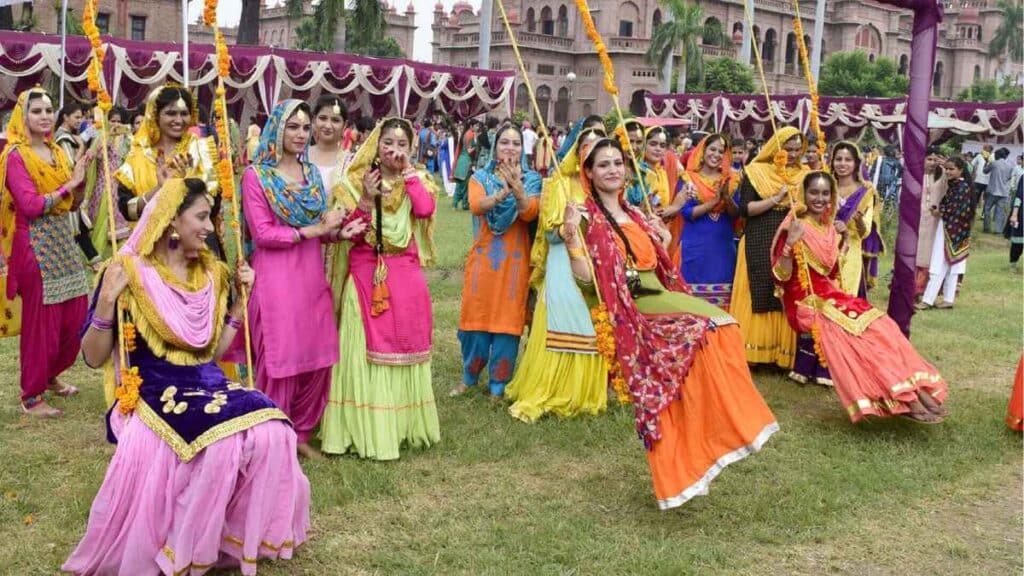
Teej is one of the most beloved Hindu monsoon festivals, celebrated primarily by women across North India, Nepal, and the global Indian diaspora. Known as a festival of devotion, joy, and marital bliss, Teej honors the eternal love of Goddess Parvati for Lord Shiva and welcomes the arrival of the monsoon season through fasting, singing, swinging, henna, and vibrant celebration.
The spiritual heart of Teej is the story of Parvati’s unwavering devotion — her lifetimes of prayer and austerity that ultimately united her with Shiva. This devotion is commemorated through fasting, puja, and all-night vigils. The following days bring joyous celebration with swings, folk songs, green attire, and the exchange of traditional sweets and gifts.
Teej is primarily observed by married women — who fast for the longevity and well-being of their husbands — and by unmarried girls seeking blessings for a devoted partner. Beyond its religious dimension, Teej is a rare, protected space for women’s gathering, expression, and solidarity.
When Is Teej Celebrated in 2026?
Teej follows the Hindu lunar calendar and falls on the Tritiya Tithi (third day) of Shraavana and Bhadrapada months. There are three main Teej celebrations, each with its own date, character, and tradition.
Teej Dates in India 2026:
Hariyali Teej — August 15, 2026 (Saturday) Tritiya Tithi Begins: 06:46 PM on August 14, 2026 Tritiya Tithi Ends: 05:28 PM on August 15, 2026
Kajari Teej — August 31, 2026 (Monday) Tritiya Tithi Begins: 09:36 AM on August 30, 2026 Tritiya Tithi Ends: 08:50 AM on August 31, 2026
Hartalika Teej — September 14, 2026 (Monday) Pratahkala Hartalika Puja Muhurat: 06:05 AM to 07:06 AM Tritiya Tithi Begins: 07:08 AM on September 13, 2026 Tritiya Tithi Ends: 07:06 AM on September 14, 2026
The exact dates vary each year based on the lunar calendar, making Teej a movable festival.
Table of Contents
Teej In USA, Canada, Australia, New Zealand, UK, UAE, Singapore 2026 Dates
- Hariyali Teej — August 15, 2026 (Saturday)
- Kajari Teej — August 30, 2026 (Sunday)
- Hartalika Teej — September 13, 2026 (Sunday)
- Hariyali Teej — August 15, 2026 (Saturday)
- Kajari Teej — August 30, 2026 (Sunday)
- Hartalika Teej — September 13, 2026 (Sunday)
- Hariyali Teej — August 15, 2026 (Saturday)
- Kajari Teej — August 31, 2026 (Monday)
- Hartalika Teej — September 14, 2026 (Monday)
- Hariyali Teej — August 15, 2026 (Saturday)
- Kajari Teej — August 30, 2026 (Sunday)
- Hartalika Teej — September 13, 2026 (Sunday)
- Hariyali Teej — August 15, 2026 (Saturday)
- Kajari Teej — August 31, 2026 (Monday)
- Hartalika Teej — September 13, 2026 (Sunday)
- Hariyali Teej — August 15, 2026 (Saturday)
- Kajari Teej — August 31, 2026 (Monday)
- Hartalika Teej — September 14, 2026 (Monday)
How Is the Hartalika Puja Muhurat Decided?
The morning period (Pratahkala) is considered the most auspicious time to perform Hartalika Puja. If morning puja is not possible, the Pradosh Kaal (evening period) is also considered favorable. Puja should be performed after an early bath, wearing fine clothes. Makeshift idols of Lord Shiva and Goddess Parvati made of clay or sand are worshipped, and the Hartalika Vrat Katha — the story of Goddess Parvati’s abduction by her friend — is narrated during the puja.
Teej: Other Names and Regional Identities
Teej is known by many names across India’s regions and languages:
Standard Names: Teej (Hindi, Sanskrit, English), Tīja, Tij (Nepali)
North India: Hariyali Teej / Chhoti Teej / Sindhara Teej / Shraavana Teej (Rajasthan, UP, Haryana), Kajari Teej / Kajali Teej / Kajri Teej / Satudi Teej / Badi Teej (Bhojpuri belt, Rajasthan, Bihar), Hartalika Teej / Hartālikā Tritiyā (Bihar, Jharkhand, Madhya Pradesh, Maharashtra, UP)
Punjab: Teeyan (seasonal women’s festival tied to the monsoon)
South India: Gowri Habba / Swarna Gowri Vratha (Karnataka, Andhra Pradesh, Tamil Nadu) — the Hartalika fast observed as a festival for Goddess Gowri
Gujarat: Kevada Teej / Kevda Trij (Bhadrapada Shukla Tritiya)
Telangana (Banjara): Kajal Teej
Nepal: Tij — observed as a major three-day national festival
Diaspora: Teej Festival, Hariyali Teej, Teej Mela — used internationally across the Indian diaspora community
The Origins, History, and Legends of Teej
Teej is among the most ancient women’s festivals of the Indian subcontinent, with roots in Hindu scripture and seasonal tradition. The festival finds reference in texts associated with the worship of Goddess Parvati and the sacred months of Shraavana and Bhadrapada.
The central legend of Teej is the devotion of Goddess Parvati toward Lord Shiva. According to tradition, Parvati took birth 107 times in her quest to marry Shiva, enduring severe austerities across lifetimes. In her 108th birth, on the Tritiya of Shraavana’s bright fortnight, her steadfast devotion finally moved Lord Shiva to accept her as his wife. Teej commemorates this divine reunion.
The legend of Hartalika Teej carries a distinct and powerful story. Parvati’s father, King Himalaya, had arranged her marriage to Lord Vishnu against her will. Parvati, devoted only to Shiva, confided in her friend, who abducted her and hid her in a dense forest. There, Parvati crafted a Shiva Lingam from river sand, prayed through the night, and was blessed by Shiva’s presence. This act of devotion — and her friend’s loyalty — is what Hartalika Teej commemorates. The name itself reflects this story: Harat (abduction) and Aalika (female friend).
Over centuries, Teej evolved from a devotional observance into one of India’s most joyful and socially significant women’s festivals, rich with folk music, seasonal celebration, and community expression.
Teej: Cultural and Spiritual Significance
Teej is a festival that holds meaning at every level — spiritual, cultural, social, and ecological. Spiritually, it honors Parvati’s devotion and embodies the principle of chosen, committed love. The nirjala vrat (waterless fast) observed on Hartalika and Kajari Teej mirrors the austerities Parvati herself undertook, making the fast not merely an act of marital prayer but one of deep personal devotion.
Culturally, Teej is one of the few festivals that centers the experience of women entirely. The singing, the swings, the henna, the gifting, the gathering at temples — all of it is for and by women. Traditionally, Teej songs gave women a protected space to express longing, joy, social commentary, and emotional truth.
The monsoon timing of Teej adds a seasonal dimension: the green of Hariyali Teej mirrors the lush world outside; the swing symbolizes the joy of rain; the red velvet mite emerging from the earth with the first monsoon rains is known colloquially as Teej — a natural herald of the festival season.
Teej Prayers and Religious Observances
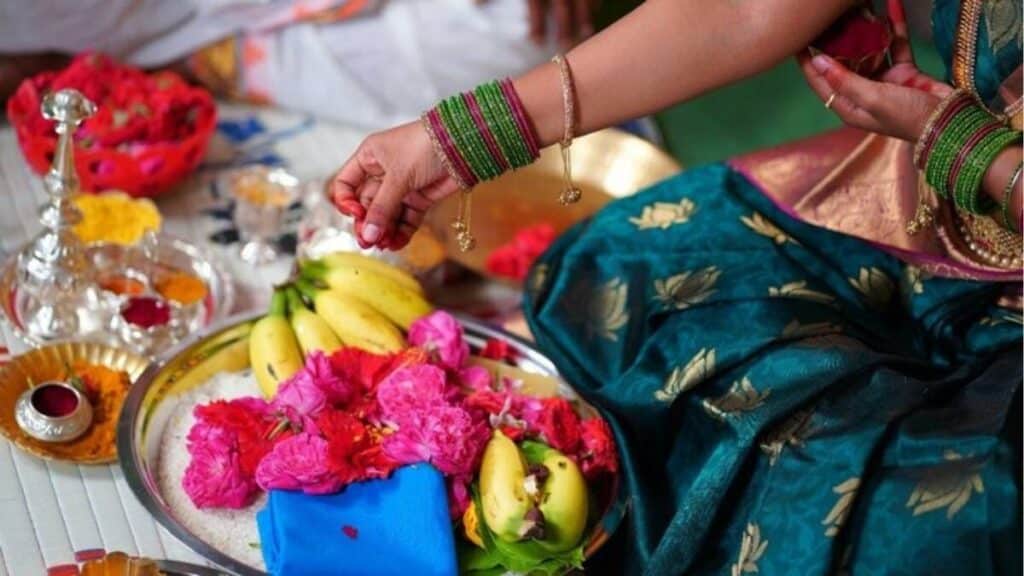
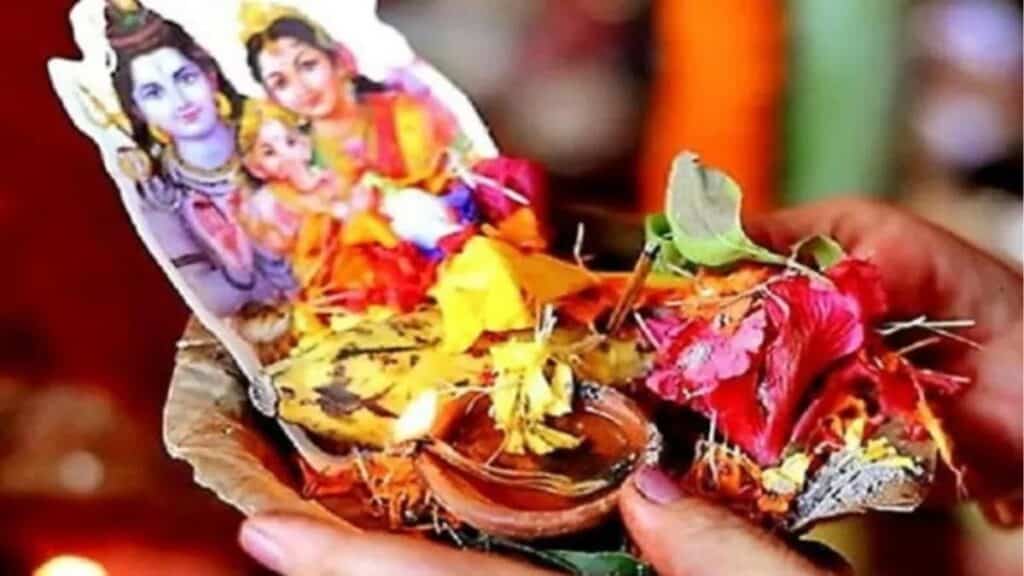
Teej rituals are performed to seek Parvati’s blessings for marital happiness, family well-being, and spiritual purification. On Hariyali Teej, women observe a daylong or half-day fast, visit Shiva temples, apply henna, and worship Parvati with offerings of flowers, fruits, and items of adornment.
On Hartalika Teej, the most austere of the three, women observe a nirjala vrat — no food, no water — from the previous evening through sunrise the following morning. Clay idols of Shiva, Parvati, Ganesha, and Kartikeya are fashioned and worshipped with the full Solah Shringar (16 adornments). The Hartalika Vrat Katha is recited, and women maintain an all-night vigil with bhajans and an oil lamp kept burning through the night. The idols are immersed in a holy water body the following morning.
On Kajari Teej, women fast without food and water, offer prayers to Lord Shiva and the neem tree, sing Kajari folk songs, and break the fast after moonrise with sattu (roasted gram flour).
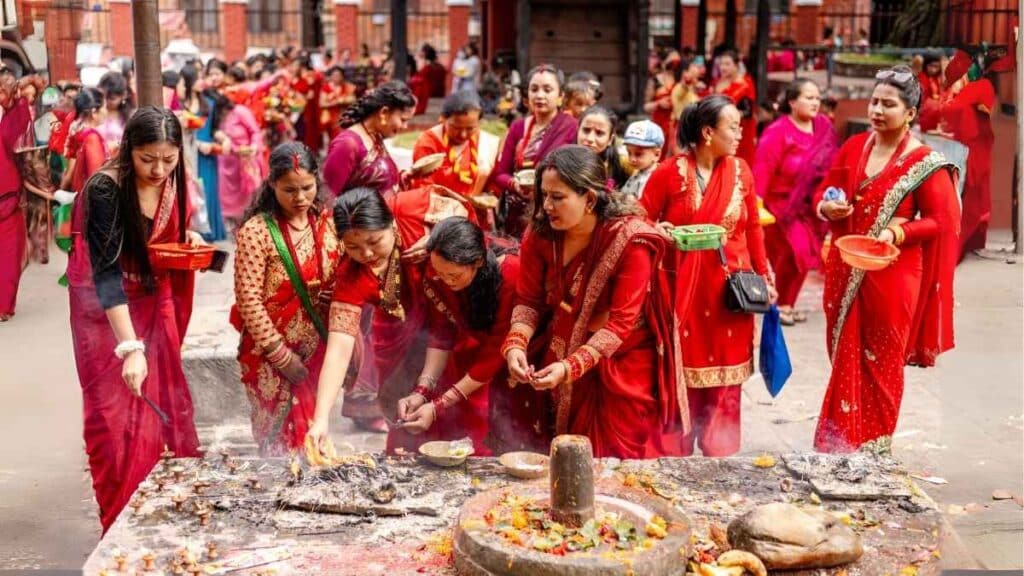
Whether observed at home or at temples — with the Pashupatinath Temple in Nepal drawing hundreds of thousands of devotees on Teej — the rituals of Teej emphasize devotion, endurance, adornment, and gratitude.
How Teej Is Celebrated Across India
While the spirit of Teej is consistent, its expressions vary beautifully across India’s regions.
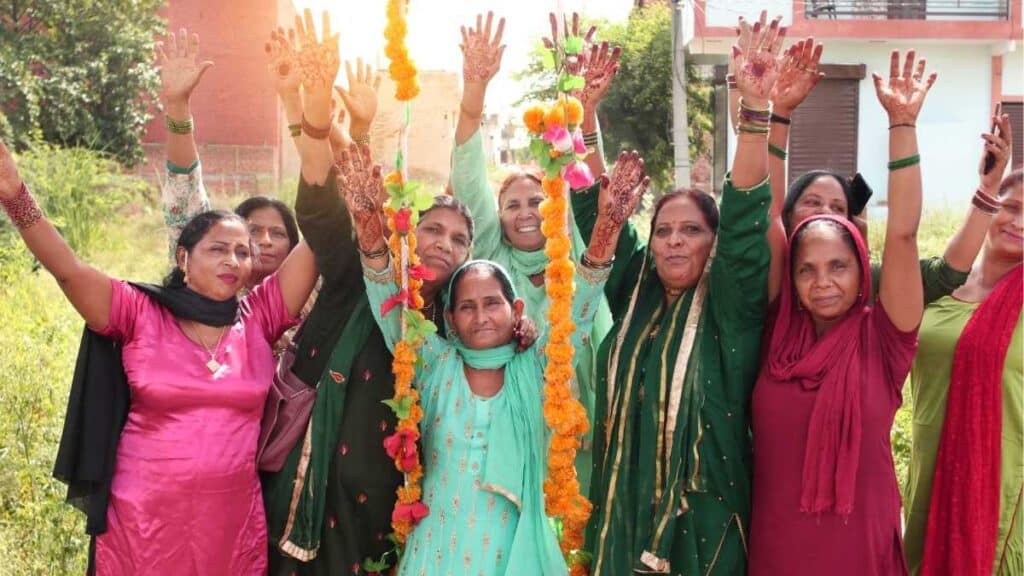
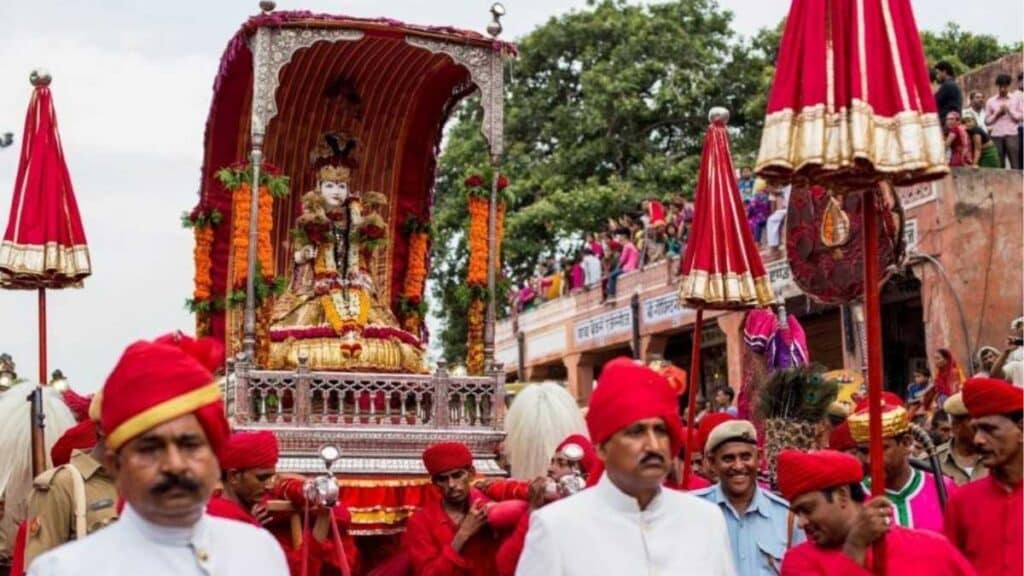
In Rajasthan, Teej is a grand public celebration. Jaipur hosts a famous two-day procession of the Teej idol through the old city. Women dress in green attire, prepare swings under trees, and receive Sindhara — ceremonial gift baskets from their parents. The day before Hariyali Teej is celebrated as Sinjara, dedicated to mehndi application.
In Haryana and Chandigarh, Hariyali Teej is an official public holiday. The government organizes cultural events, the Chandigarh administration arranges celebrations at Rock Garden, and women receive gifts from parents and in-laws. The festive baya (ceremonial gift) is a cherished tradition.
In Punjab, Teej is called Teeyan and extends for nearly 13 days around the Shraavana full moon. It is a seasonal women’s festival welcomed by women across faiths, centered on Gidda folk dance performances, family reunions, competitive dance at college fairs, and swinging under trees.
In Bihar, Jharkhand, and Eastern UP, Hartalika Teej is the most significant. Women make clay idols, wear their wedding Banarasi sarees, apply orange sindoor from the tip of their nose, and prepare traditional offerings of Thekua and Pidukia. Kajari folk songs fill the air.
In Maharashtra, Hartalika Teej — known as Hartalika Tritiya Vrat — is observed with a one-and-a-half-day nirjala fast, clay idol worship, the wearing of new red or green sarees, and all-night bhajan-sankirtan.
In Nepal, Teej is a three-day national festival: a grand feast on Day 1 (Dar Khane Din), the fasting and temple day on Day 2, and Rishi Panchami on Day 3. Hundreds of thousands of women in red sarees gather at Pashupatinath Temple, creating one of South Asia’s most visually spectacular religious gatherings.
In Karnataka, Andhra Pradesh, and Tamil Nadu, Hartalika Teej is observed as Gowri Habba, where women perform Swarna Gowri Vratha for the blessings of Goddess Gowri for a happy married life.
Participation Across Religions in India
While Teej is a Hindu festival at its core, its cultural and seasonal dimensions have made it a shared celebration in several regions. In Punjab, Teeyan is celebrated by women across faiths as a seasonal monsoon festival, with its emphasis on community singing, swinging, and family reunion making it welcoming beyond religious boundaries. In Rajasthan’s cities, the Teej processions, mehndi markets, and Ghevar sweet stalls are enjoyed as public cultural events across communities. The Banjara tribal community in Telangana observes Kajal Teej as one of their most significant festivals. Teej’s spirit of joy, solidarity, and women’s togetherness speaks to a shared cultural experience that extends beyond any single tradition.
How Teej Is Celebrated Outside India
Indian diaspora communities across the United States, Canada, the UK, Australia, the UAE, and beyond celebrate Teej through community events and Teej melas, mandir gatherings and cultural programs, mehndi stalls and folk dance performances, Rajasthani food and sweets, traditional dress competitions and fashion shows. These celebrations help second-generation Indians connect to their roots while introducing non-Indian communities to the beauty of the festival. Hariyali Teej 2026 falls on August 15 — a Saturday — making it especially accessible for diaspora weekend celebrations worldwide.
Teej Gifting Traditions
Gifting is woven into the heart of Teej through the tradition of Sindhara (सिंधारा) — the ceremonial gift basket sent by a married woman’s parents to her and her in-laws. The word derives from the Sanskrit sringar, meaning the decoration and beauty of women. Traditional Sindhara contains Ghevar, homemade sweets, henna, green bangles, bindi, new clothes (ideally green), cosmetics, and adornments. The mother-in-law gifts the new bride clothes, bangles, and sweets, symbolizing blessings for enduring marital happiness. Today, thoughtful modern Teej gifts include designer mehndi kits, curated ethnic wear sets, artisanal mithai boxes, and wellness hampers — popular both in India and among diaspora families worldwide.
Traditional Teej Foods and Sweets
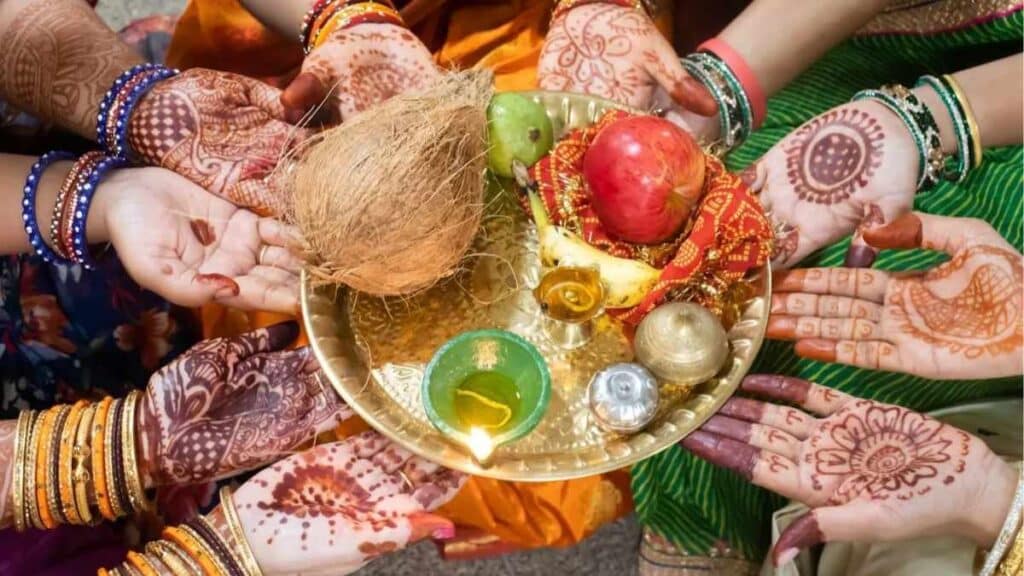
Food is central to Teej — from the grand Dar Khane Din feast before the fast, to the devotional offerings prepared during puja. Common Teej delicacies include Ghevar (the iconic Rajasthani disc-shaped honey-soaked sweet, essential to Sindhara), Kheer and Malpua (offered to Shiva during puja), Thekua and Pidukia (traditional wheat-and-jaggery offerings from Bihar and Jharkhand), Sattu (roasted gram, used to break the Kajari Teej fast after moonrise), and Gulagula, Shakkarpara, and Seviyan prepared as festive treats throughout the Shravan month.
Teej: Music, Art, and Cultural Expression
Music is inseparable from Teej. The Kajari — a classical-folk song form from the Bhojpuri belt of UP, Bihar, and Jharkhand — is one of India’s most distinctive monsoon music traditions. Kajari songs are filled with imagery of rain, green forests, longing, and the emotion of women separated from loved ones during the season. Kajari has been sung by celebrated classical and semi-classical artists and remains a living part of Banaras’s cultural heritage.
In Nepal, Teej songs have evolved from devotional hymns to bold social commentary, giving women a public, sanctioned voice to express joy, hardship, and critique of gender norms. In Punjab, Teeyan is defined by Gidda — a vibrant women’s folk dance performed in circles with clapping, bolis (poetic couplets), and singing. Swings hung from trees form a universal symbol of Teej across regions, representing both the joy of the monsoon and the freedom of the festival day.
Teej in the Modern World
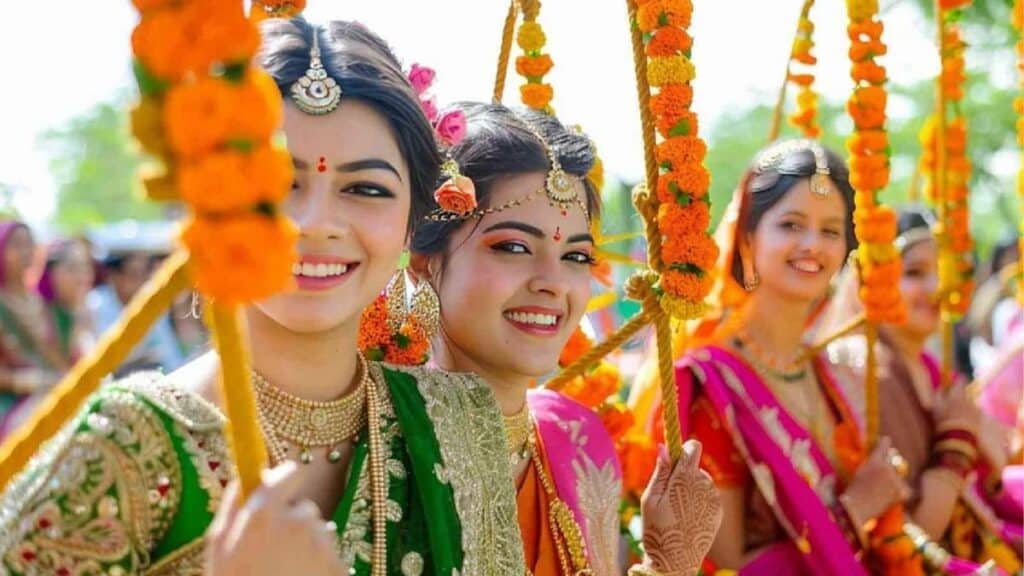
Teej continues to evolve while staying true to its essence. Younger generations and diaspora communities are embracing sustainable Teej practices — eco-friendly clay idols that dissolve without polluting water bodies, natural henna, and ethically sourced festival attire. Digital platforms have connected Teej celebrations globally: women share mehndi designs, outfit inspiration, and greetings across Instagram and WhatsApp, making the festival feel collective even across continents.
The meaning of Teej prayers is also being gently broadened — many women now offer Hartalika Teej’s devotions as prayers for partnership, love, and family well-being more broadly, making the festival more inclusive. Teej melas, Teej brunches, and cultural events in cities and diaspora hubs bring the festival into accessible, joyful community spaces.
How to wish someone on Teej: “Teej ki Hardik Shubhkamnayein!” (Hindi) | “Tij ko Shubhakamana!” (Nepali) | “Happy Teej! May Goddess Parvati bless your home with love and harmony.” (English)
Cultural Reflection
In a fast-moving world, Teej remains a festival of rare and genuine meaning. It centers women’s devotion, women’s community, and women’s joy. It connects the human calendar to the natural world — to rain, to green, to the scent of wet earth. And through the story of Parvati — a woman who chose who she loved, worked across lifetimes toward that union, and prevailed — it carries a timeless message about the power of devotion and patience.
Whether celebrated at a Rajasthani haveli, at Pashupatinath Temple in Kathmandu, at a community mandir in Toronto, or through a video call between a mother in Lucknow and her daughter in London — Teej endures because it speaks to something universal: the desire for love, the strength of faith, and the joy of celebrating both with the women you love most.