
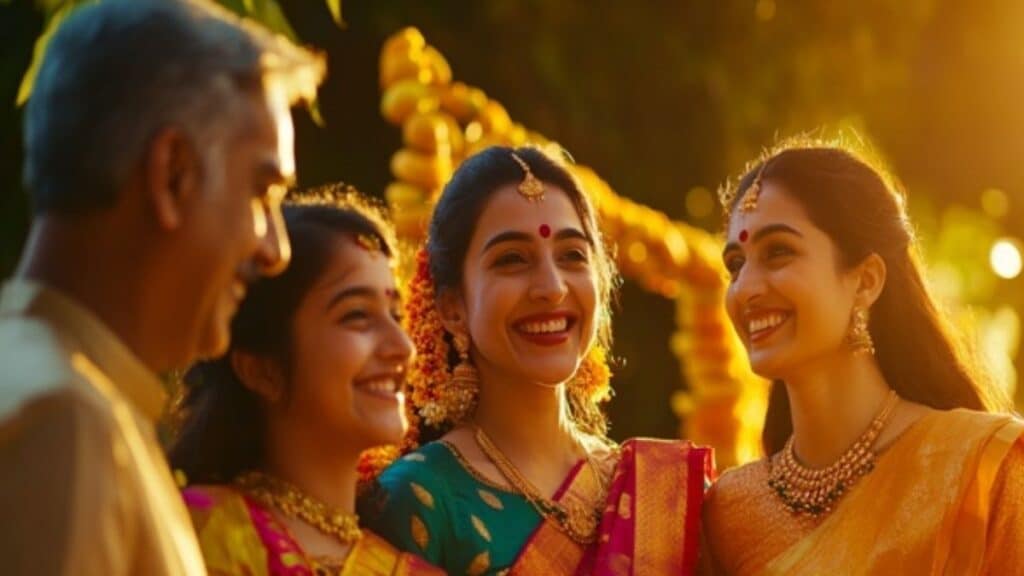
Ugadi is one of most significant and beloved South Indian festival, celebrated as the New Year by Telugu and Kannada communities. Observed on the first day of the Hindu lunisolar month of Chaitra, Ugadi marks the beginning of a new Samvatsara — a named year within the 60-year Hindu calendar cycle. The word Ugadi comes from the Sanskrit yuga (era) and ādi (beginning), meaning “the beginning of a new era.”
The festival’s spiritual core is expressed through the Ugadi Pachadi — a dish combining all six flavors of life: sweet, sour, salty, bitter, spicy, and astringent. Eating it is a conscious reminder that the coming year will hold every kind of experience, and all must be embraced with grace. Beyond ritual, Ugadi is a celebration of renewal, community, and the timeless human instinct to begin again.
Ugadi is primarily observed in Andhra Pradesh, Telangana, and Karnataka, and is celebrated by millions of Telugu and Kannada speakers worldwide in the USA, UK, UAE, Australia, and beyond.
When Is Ugadi Celebrated in 2026?
Ugadi is celebrated on the first day (Pratipada) of the bright fortnight of the Hindu month of Chaitra, which typically falls in late March or early April.
Ugadi 2026 Date in India
Ugadi / Yugadi: Thursday, March 19, 2026
The Pratipada Tithi begins at 06:52 AM IST on March 19 and ends at 04:52 AM IST on March 20. Ugadi is observed on the day the Pratipada Tithi is active at sunrise — making March 19, 2026 the festival day across India. Shaka Samvat 1948 commences on this day.
Table of Contents
Ugadi In USA, Canada, Australia, New Zealand, UK, UAE, Singapore 2026 Dates
Ugadi on March 19, 2026 (Thursday)
- Pratipada Tithi Begins: March 18, 2026, at 09:22 PM
- Pratipada Tithi Ends: March 19, 2026, at 07:22 AM
Ugadi on March 19, 2026 (Thursday)
- Pratipada Tithi Begins: March 18, 2026, at 09:22 PM
- Pratipada Tithi Ends: March 19, 2026, at 07:22 AM
Ugadi on March 20, 2026 (Friday)
- Pratipada Tithi Begins: March 19, 2026, at 12:22 PM
- Pratipada Tithi Ends: March 19, 2026, at 10:22 AM
Ugadi on March 19, 2026 (Thursday)
- Pratipada Tithi Begins: March 19, 2026, at 01:22 AM
- Pratipada Tithi Ends: March 19, 2026, at 11:22 PM
Ugadi on March 19, 2026 (Thursday)
- Pratipada Tithi Begins: March 19, 2026, at 05:22 AM
- Pratipada Tithi Ends: March 20, 2026, at 03:22 AM
Ugadi on March 20, 2026 (Thursday)
- Pratipada Tithi Begins: March 19, 2026, at 09:22 AM
- Pratipada Tithi Ends: March 20, 2026, at 07:22 AM
Why Do Ugadi Dates Change Every Year?

Ugadi follows the Hindu lunisolar calendar, not the Gregorian calendar. It always falls on the Pratipada (first day) of Chaitra Shukla Paksha — the first new moon after the March equinox. Because the lunar year is roughly 11 days shorter than the solar year:
- Ugadi’s Gregorian date shifts every year
- The date is calculated using moon phases and sunrise timing
- It typically falls anywhere between late March and mid-April
Ugadi Other Names & Regional Identities
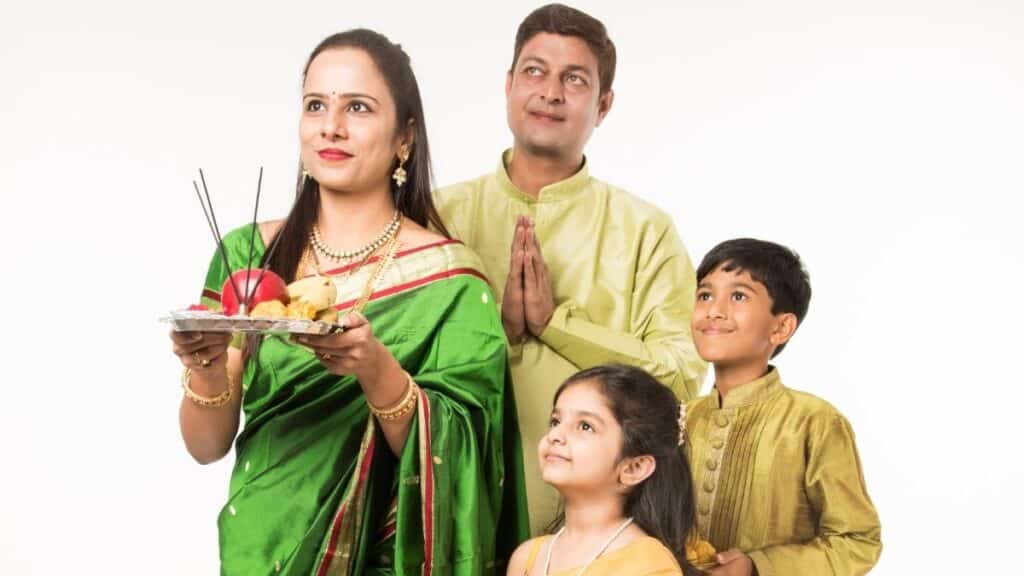
These are widely used names for Ugadi across regions and languages:
Ugadi / Yugadi — Standard names in Telugu and Kannada respectively Samvatsarādi — Sanskrit name meaning “beginning of the year”
South India
- Ugādi (ఉగాది) — Telugu; Andhra Pradesh and Telangana
- Yugādi (ಯುಗಾದಿ) — Kannada; Karnataka
- Souramana Ugadi / Mesha Sankranti — Solar calendar variant observed in Karnataka
Other Regional / Cultural Variants
- Gudi Padwa — Maharashtra and Goa; same day, distinct traditions
- Cheti Chand — Sindhi community; marks the birthday of Jhulelal
- Sajibu Nongma Panba — Manipuri New Year, observed on the same day
Diaspora / International Naming Outside India, the festival is commonly referred to as Telugu New Year, Kannada New Year, or simply Ugadi. Cultural organizations use the term Ugadi Utsavam for their annual community programs.
The Origins, History, and Legends of Ugadi
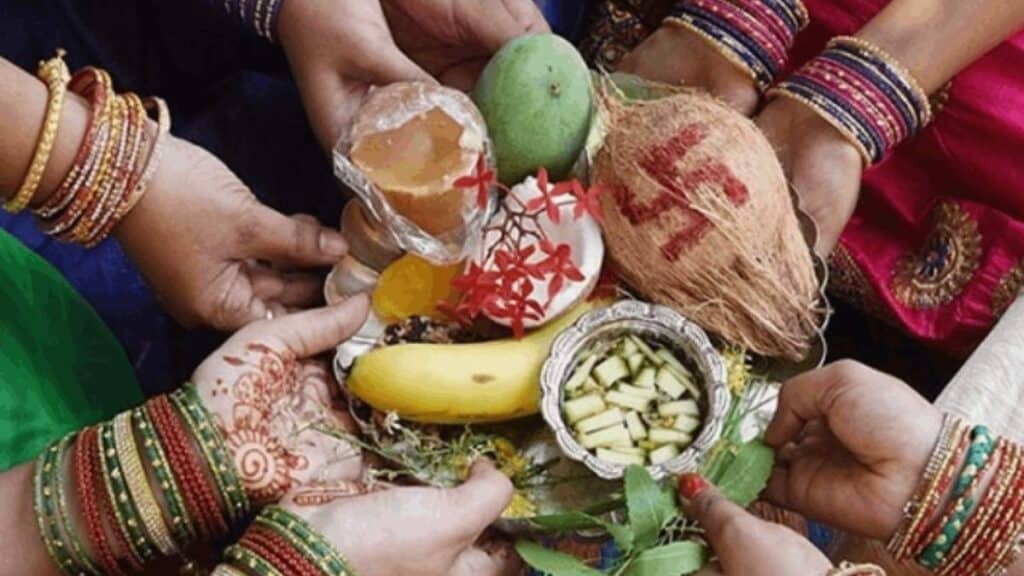
Ugadi is among the oldest festivals of South India, with roots in ancient Hindu scripture and historical tradition. The festival is described in texts including the Puranas and Harivamsa as a day of auspicious beginnings, spiritual merit, and community charity.
According to Hindu tradition, Lord Brahma began the act of creation on Chaitra Shukla Pratipada — making Ugadi not just a cultural new year but a commemoration of the universe’s very origin.
A key historical legend connects Ugadi to King Shalivahana, who established the Shalivahana (Shaka) calendar after his victory on this day. This calendar — the basis of India’s National Calendar — places Ugadi at its origin, embedding the festival in South Indian historical identity for over 2,000 years. The Shaka Samvat year 1948 beginning on March 19, 2026 continues this tradition.
Medieval temple inscriptions from Karnataka and Andhra Pradesh record significant charitable donations made on Ugadi, confirming its importance as a day of spiritual merit and community welfare for centuries. Scripturally, Chaitra Pratipada is described as the ideal time for new resolutions, auspicious undertakings, and fresh beginnings.
Ugadi: Cultural and Spiritual Significance
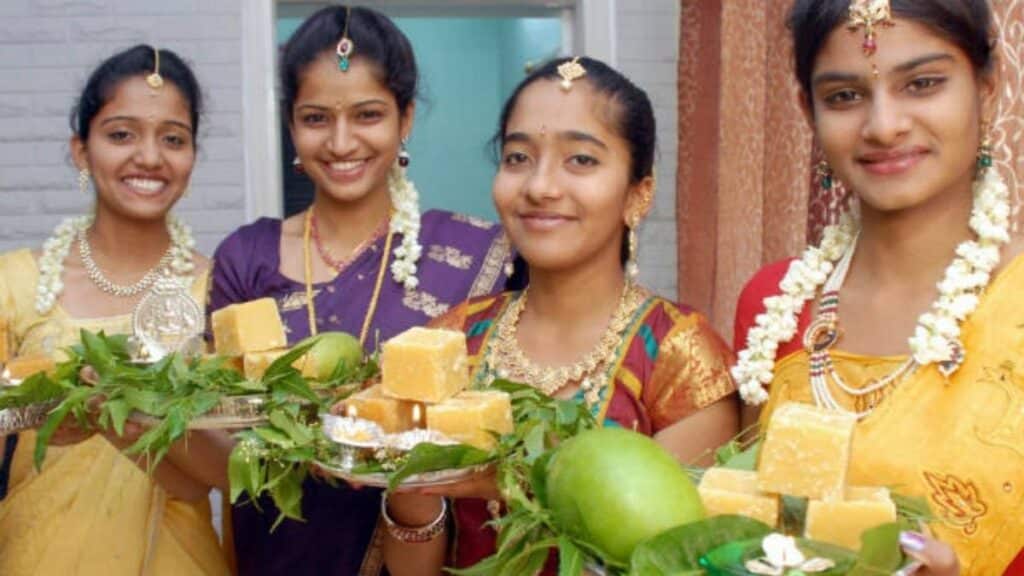
Ugadi is a festival that celebrates renewal, life’s wholeness, and the acceptance of all experiences. Spiritually, it represents a reset of cosmic time — a window of heightened auspiciousness for new beginnings, intentions, and spiritual growth.
Culturally, Ugadi brings communities together across social boundaries. The preparation and sharing of Ugadi Pachadi is the festival’s most profound teaching: a single dish combining all six tastes that reminds those who eat it that life is never only sweet — and that joy is found in embracing the full range of experience.
“The pacchadi festive dish symbolically reminds the people that the following year — as all of life — will consist of not just sweet experiences, but a combination of sweet, sour, salty, and bitter episodes. Even in the midst of bitter experiences, there are sweet moments.” — Vasudha Narayanan, Professor of Religion, University of Florida
The mango tree and neem tree — both central to Ugadi rituals — bloom precisely around this time of year, grounding the festival in the rhythms of nature and the arrival of spring.
Ugadi Prayers and Religious Observances
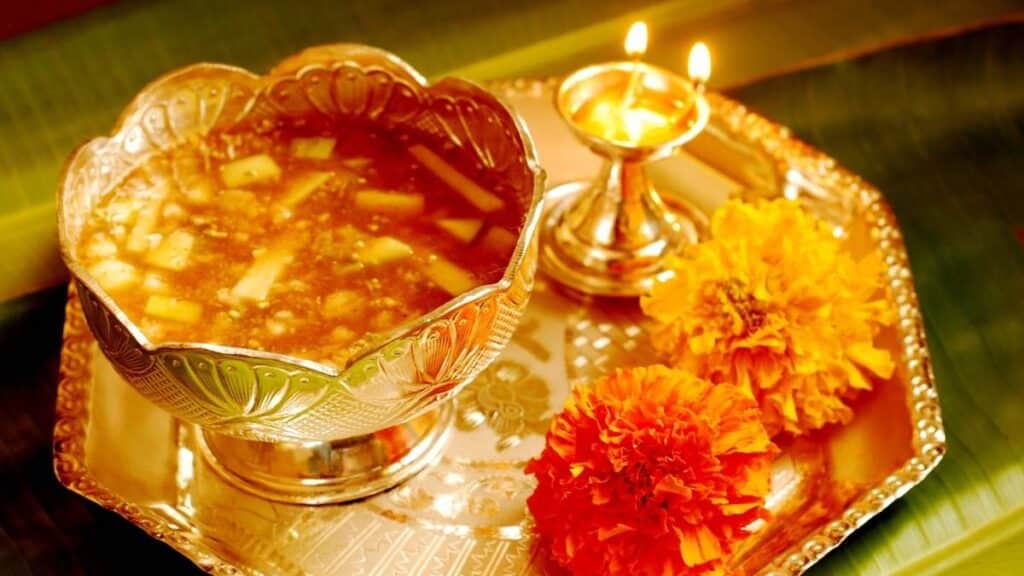
Ugadi rituals combine personal purification, devotional prayer, and community celebration. The day begins before sunrise and unfolds through a sequence of meaningful observances:
Taila Abhyanga (Oil Bath): The day begins with a ritual oil massage before bathing — a practice of purification marking a fresh start for the new year.
Bevu Bella: Neem flowers and jaggery are consumed together as the first act of the day — bitterness and sweetness held in a single mouthful. Hindu scriptures consider this ritual essential.
Muggulu & Torana: Intricate rangoli patterns are drawn at home entrances and fresh mango-leaf garlands (torana) are hung above doorways to welcome prosperity.
Panchanga Sravanam: Pandits publicly recite the new year’s almanac at temples and community halls, forecasting themes for the year ahead in rainfall, harvests, and collective well-being.
Temple Visits & Poojas: Families visit temples for new year blessings. Special poojas honor Lord Brahma, the creator whose act of creation is symbolically commemorated on this day.
New Clothes & Charity: Wearing new clothes symbolizes a fresh start. Giving charity (dakshina) to priests, temples, and those in need is considered highly meritorious — a practice documented in medieval temple inscriptions.
How Ugadi Is Celebrated Across India

While Ugadi’s core rituals are consistent, regional character adds richness to the celebrations across states.
In Andhra Pradesh and Telangana, Ugadi is observed with elaborate Muggulu at every doorstep, a sumptuous feast of pulihora (tamarind rice), bobbatlu (sweet stuffed flatbread), and chakara pongal. The Ugadi Pachadi is the centrepiece. Public Panchanga readings draw large community crowds.
In Karnataka (celebrated as Yugadi), the traditions include Holige or Obattu, mango pickles, the bevu bella ritual, and Kavi Goshti — gatherings where poets read new compositions welcoming the year. Karnataka also separately observes Souramana Ugadi based on the solar calendar.
In Maharashtra and Goa, the same day is Gudi Padwa, marked by hoisting a decorated Gudi pole. The Sindhi community celebrates Cheti Chand with processions and prayers to Jhulelal. In Mauritius, Ugadi is one of five Hindu national public holidays.
Participation Across Religions in India

Ugadi has long carried a community spirit that extends beyond its Hindu religious origins. In Andhra Pradesh, Telangana, and Karnataka, people of many faiths participate in the festival’s public dimensions — receiving Ugadi Pachadi from neighbors, admiring Muggulu designs, and joining community feasts.
Muslim artisans craft the mango-leaf toranas sold in markets before the festival; Christian neighbors exchange Ugadi greetings and sweets with Hindu families. This natural interfaith participation reflects the pluralistic character of South Indian civic life, where festivals serve as bridges between communities. The Panchanga reading, held publicly in many towns, attracts curious audiences of all backgrounds who share an interest in the year’s forecast.
How Ugadi Is Celebrated Outside India
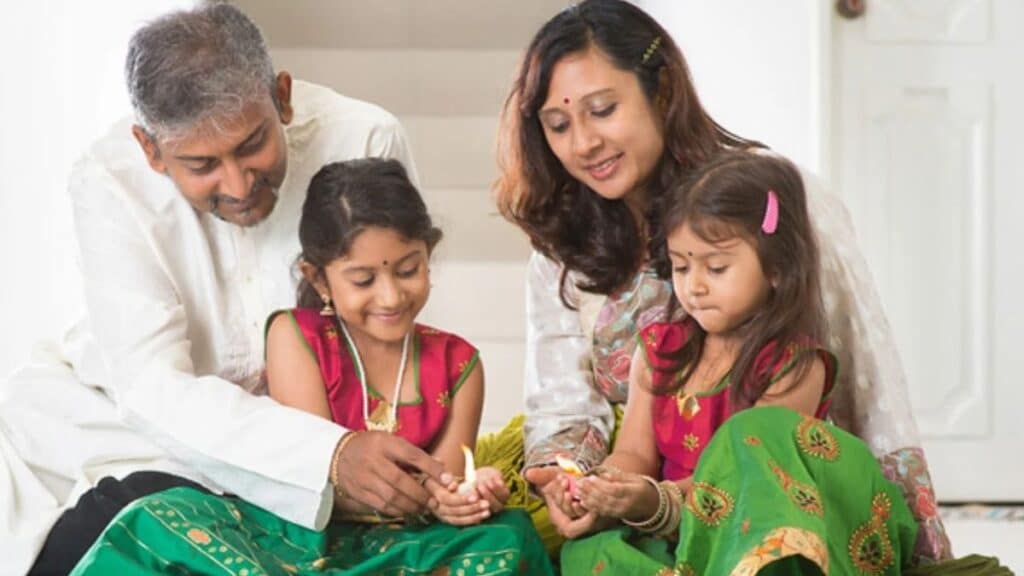
With over 3 million Telugu speakers and significant Kannada communities living outside India, Ugadi is a genuinely global festival. Indian diaspora communities across the USA, UK, UAE, Australia, Canada, Singapore, Germany, and New Zealand celebrate through:
- Ugadi Utsavams — cultural stage events featuring Carnatic music, Kuchipudi dance, Harikatha, and children’s performances
- Temple poojas and Panchanga Sravanam — increasingly live-streamed for diaspora audiences across time zones
- Community feasts and Pachadi distributions organized by Telugu and Kannada associations
- Cultural competitions — Muggulu contests, cooking competitions, and activities for second-generation youth
These celebrations help younger generations stay connected to their cultural roots while introducing the broader world to South Indian traditions. substitutes, and connect virtually with India-based families during arghya times.
Ugadi Gifting Traditions
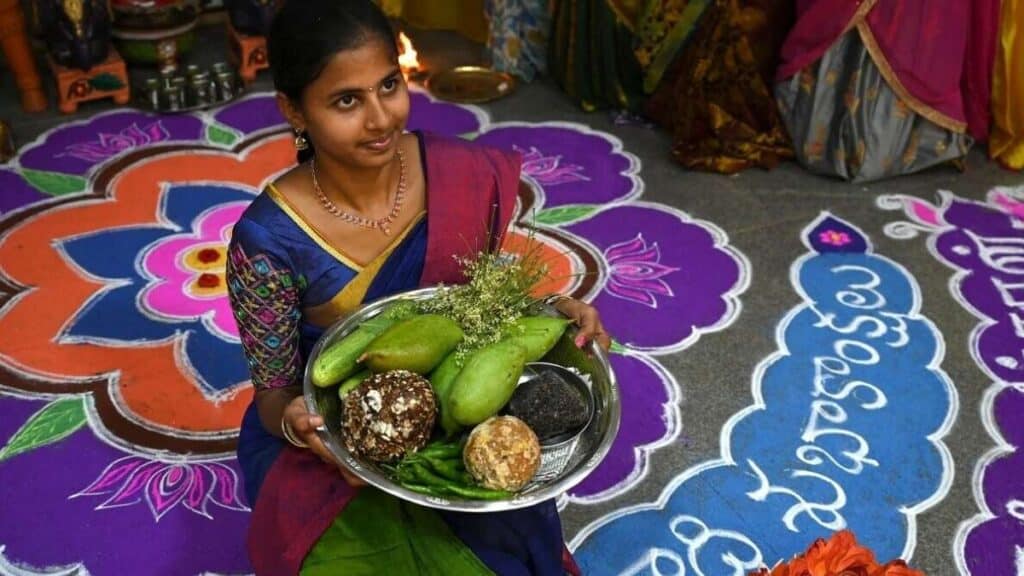
Ugadi gifting is a warm tradition that celebrates love, goodwill, and new beginnings. New clothes remain the most traditional gift — elders give clothing to younger family members as a symbol of starting the year fresh. Sweets including bobbatlu, Mysore Pak, and traditional halwa are exchanged between households as blessings for the coming year.
In the diaspora, gifting has evolved to include curated festive hampers, artisanal Indian sweets, handcrafted silver items, and South Indian home décor. The tradition of dakshina — charitable giving to priests, temples, and those in need — remains a core spiritual act on Ugadi, reflecting the belief that prosperity is meant to be shared.
Ugadi Foods and Culinary Traditions
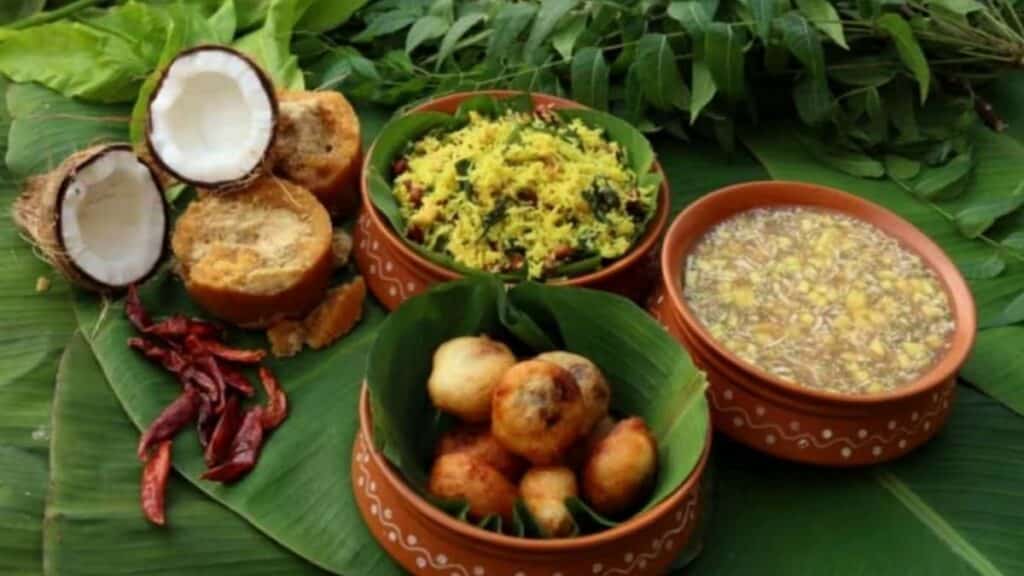
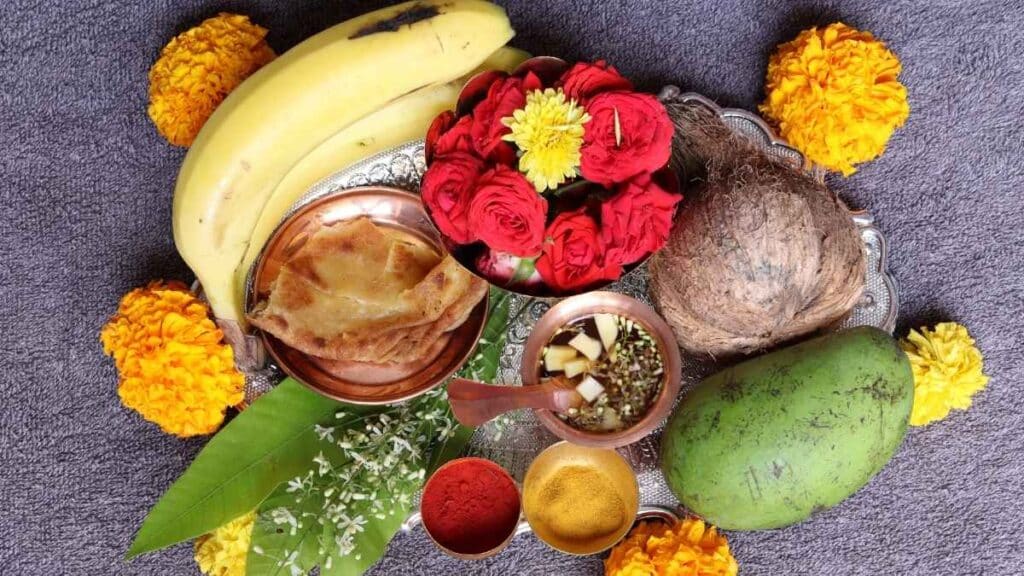
Food is central to Ugadi, and no dish carries more meaning than the Ugadi Pachadi — a chutney-like preparation combining all six flavors, eaten as both a ritual offering and a philosophical reminder on the morning of the festival.
Common Ugadi Pachadi ingredients include:
- Neem flowers (bitter) — life’s difficulties
- Jaggery (sweet) — joy and success
- Tamarind paste (sour) — unexpected challenges
- Salt (salty) — fear and anxiety
- Green chili (spicy) — anger and passion
- Raw mango (astringent) — caution and mindfulness
Beyond the Pachadi, the Ugadi feast includes pulihora (tamarind rice), bobbatlu/holige (sweet stuffed flatbread), chakara pongal, raw mango dal, and seasonal mango pickles. The seasonal abundance of raw mango — at its peak around Ugadi — features prominently across both Telugu and Kannada festive cooking, grounding the celebration in nature’s own cycle.
Ugadi: Music, Art, and Cultural Expression
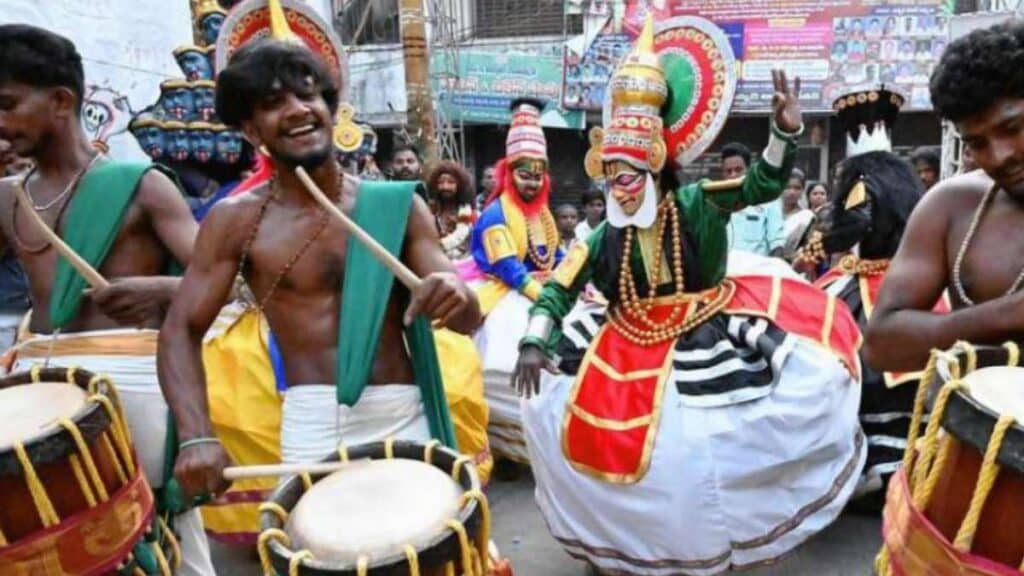
Music and arts are at the heart of Ugadi. The Panchanga Sravanam is itself a performance — pandits deliver the year’s almanac recitation in a stylized, musical format before community audiences. Carnatic vocal concerts, veena, violin, and flute performances mark the day in temples and cultural halls across the region.
In Karnataka, Kavi Goshti — poetry readings welcoming the new year — is a beloved literary tradition unique to Yugadi. Kuchipudi dance is performed as a devotional offering at temples and Ugadi Utsavams. The art of Muggulu reaches its most elaborate expression at this time, with neighborhood competitions showcasing traditional motifs of mango leaves, lotus flowers, and peacocks.
In popular culture, Ugadi is a major film release window for Telugu and Kannada cinema — major productions premiere on the festival day to packed audiences, making movies part of the New Year celebration.
Ugadi in the Modern World

In recent years, Ugadi has evolved alongside growing awareness of sustainability and cultural continuity. Many communities now emphasize:
- Natural, eco-friendly Muggulu using rice flour and plant-based powders — a return to pre-synthetic traditions
- Minimal-waste celebrations with clay vessels, natural decorations, and locally sourced seasonal ingredients
- Digital Panchanga Sravanam live-streamed by pandits for diaspora families across time zones
For younger generations globally, Ugadi has become a personal new year reset — a day to set intentions, reflect on the past year, and embrace the Pachadi’s philosophy of accepting life in its full complexity.
How to wish someone on Ugadi 2026:
- Telugu: ఉగాది శుభాకాంక్షలు (Ugadi Shubhākāṅkṣalu)
- Kannada: ಯುಗಾದಿ ಹಬ್ಬದ ಶುಭಾಶಯಗಳು (Yugādi Shubhāśayagaḷu)
- English: Happy Ugadi 2026!
- Hindi: उगादि की शुभकामनाएं
Cultural Reflection
Ugadi’s enduring relevance lies in the honesty of its central message. In a world that often promises the removal of difficulty, Ugadi offers something more grounded — not the elimination of life’s bitterness, but the wisdom to hold it alongside the sweet. The Pachadi is not pessimism; it is preparation and acceptance.
For the global diaspora, Ugadi is also an act of cultural continuity — connecting a child growing up in Houston or Melbourne to generations of family who drew Muggulu on red-earth courtyards in Vijayawada or Mysuru. It is a beginning: of a year, of a renewed commitment to tradition, and of another season met with openness, gratitude, and the full flavor of life.