
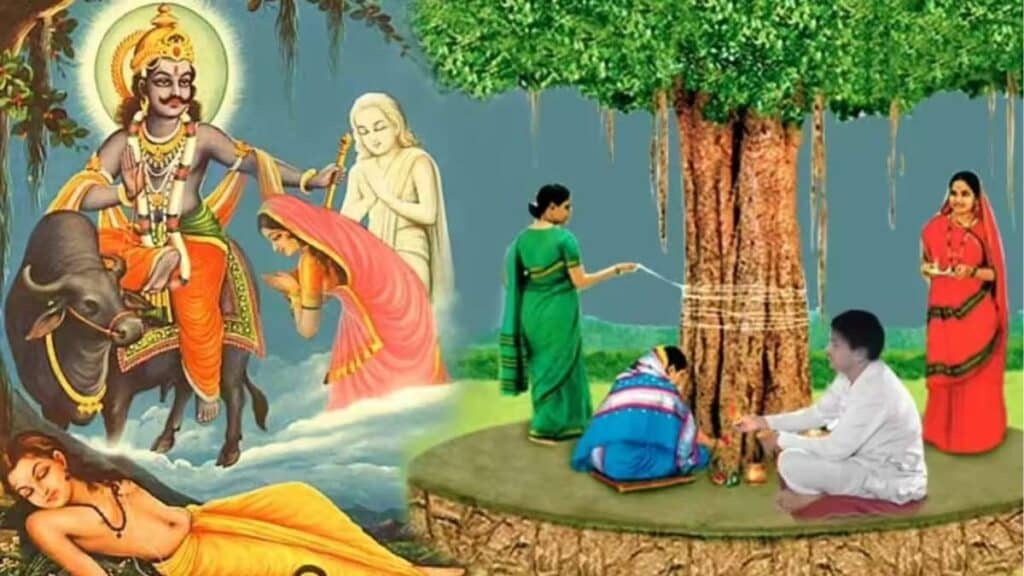
Vat Savitri Vrat is one of the most significant fasting observances for married Hindu women, celebrated with deep devotion across India and among Indian communities worldwide. Named after the legendary Savitri — who outwitted Yama, the god of death, to reclaim her husband’s life — this vrat honors the power of feminine devotion, wisdom, and unwavering love.
Observed around the banyan tree (vat), which symbolizes eternal life and marital continuity, the festival is both a spiritual fast and a cultural celebration of marriage, faith, and the enduring bond between husband and wife.
When Is Vat Savitri Vrat Celebrated in 2026?
Vat Savitri Vrat falls in the Hindu month of Jyeshtha and is observed on two different dates depending on the regional lunar calendar followed.
Vat Savitri Amavasya Vrat — Saturday, May 16, 2026 Observed in North India (Uttar Pradesh, Bihar, Madhya Pradesh, Punjab, Haryana) and Nepal, following the Purnimanta calendar.
Amavasya Tithi Begins: 05:11 AM, May 16, 2026 Amavasya Tithi Ends: 01:30 AM, May 17, 2026
Vat Savitri Purnima Vrat — Monday, June 29, 2026 Observed in Maharashtra, Gujarat, Goa, Karnataka, and other states following the Amanta calendar.
Table of Contents
Vat Savitri In USA, Canada, Australia, New Zealand, UK, UAE, Singapore 2026 Dates
- Vata Savitri Amavasya on Saturday, May 16, 2026
- Vat Savitri Purnima Vrat on Sunday, June 28, 2026
- Vata Savitri Amavasya on Saturday, May 16, 2026
- Vat Savitri Purnima Vrat on Sunday, June 28, 2026
- Vata Savitri Amavasya on Saturday, May 16, 2026
- Vat Savitri Purnima Vrat on Monday, June 29, 2026
- Vata Savitri Amavasya on Saturday, May 16, 2026
- Vat Savitri Purnima Vrat on Monday, June 29, 2026
- Vata Savitri Amavasya on Saturday, May 16, 2026
- Vat Savitri Purnima Vrat on Monday, June 29, 2026
- Vata Savitri Amavasya on Saturday, May 16, 2026
- Vat Savitri Purnima Vrat on Monday, June 29, 2026
Why Are There Two Dates for Vat Savitri Vrat?
Vat Savitri is one of the few Hindu festivals observed on two different dates across regions. In the Purnimanta calendar followed in North India, the vrat falls on Jyeshtha Amavasya (new moon), which also coincides with Shani Jayanti.
In the Amanta calendar followed in Maharashtra, Gujarat, and southern states, the same observance is called Vat Purnima Vrat and falls on Jyeshtha Purnima (full moon) — 15 days later. The legend, rituals, and purpose remain identical in both traditions.
Vat Savitri Vrat Overview
Vat Savitri Vrat is a day-long fasting observance kept by married Hindu women for the long life, health, and well-being of their husbands. Women dress in traditional attire, perform puja around a banyan tree, listen to the Vrat Katha (sacred story of Savitri), and pray for their husband’s longevity.
The festival is widely observed in Odisha, Bihar, Uttar Pradesh, Maharashtra, Gujarat, and Nepal. It is one of the most important marital observances in Hindu tradition, alongside Karwa Chauth and Teej, and holds both spiritual depth and cultural significance for millions of women across generations.
Other Names and Regional Identities
Vat Savitri is known by different names across India’s regions and languages:
| Name | Region / Language |
|---|---|
| Vat Savitri Vrat | Hindi-speaking North India |
| Savitri Vrata / Sabitri Brata | Odisha |
| Vat Purnima Vrat | Maharashtra, Gujarat |
| Savitri Amavasya | North Indian communities |
| Bata Savitri | Some Bengali communities |
In diaspora communities across the USA, UK, Canada, UAE, and Australia, the festival is often referred to simply as Savitri Puja or Vat Savitri Puja, with regional calendar distinctions often merged for community observance.
Origins, History, and Legends of Vat Savitri
The story of Savitri and Satyavan is recorded in the Mahabharata and forms the spiritual heart of this festival. Ritual details are codified in the Skanda Purana, with later texts like the Chaturvarga Chintamani and Vratarka further elaborating on the customs.
Savitri was the wise and devoted daughter of King Ashvapati. She chose Satyavan as her husband — a prince in exile living in the forest with his blind father — despite being foretold by sage Narada that Satyavan would die within a year. On the fated day, Satyavan collapsed in the forest and died. Yama, the god of death, arrived to claim his soul. Savitri refused to turn back and followed Yama steadfastly. Moved by her extraordinary devotion, Yama granted her three boons — anything except Satyavan’s life. With great wisdom, Savitri asked that her father-in-law regain his sight, that her father-in-law regain his kingdom, and finally, that she be blessed with many children by Satyavan. Yama, bound by his word, had no choice but to restore Satyavan’s life. Satyavan was revived, Dyumatsena regained his sight, and the lost kingdom was restored.
Savitri is said to have drawn her spiritual strength while resting under a banyan tree during this vigil — which is why the tree is the central symbol of this vrat. The banyan, with its self-regenerating aerial roots, represents immortality and continuity, mirroring a wife’s prayer for an enduring, unbroken marriage.
Cultural and Spiritual Significance
Vat Savitri Vrat holds deep meaning on multiple levels. Spiritually, it is an act of tapas — austerity performed with love — that a wife undertakes to invoke divine blessings for her husband’s long life. The fast during the intense heat of Jyeshtha (summer) reflects the same endurance and resolve that Savitri herself embodied.
Culturally, Savitri’s story is not simply about wifely duty — it is a celebration of feminine intelligence and courage. She did not weep and accept fate; she argued with the lord of death and won on the strength of her wisdom. This dimension of Savitri’s character — the devoted yet fiercely intelligent woman — makes her an enduring symbol for Hindu women across generations.
The banyan tree, offered reverence during the festival, represents eternal life and marital stability. Winding a thread around it and circumambulating it is a wife’s living prayer that her marriage, like the banyan, will be rooted, expansive, and undying.
Prayers and Religious Observances
Vat Savitri Vrat rituals follow a structured sequence rooted in the Skanda Purana tradition.
Women wake before sunrise, bathe, and dress in auspicious attire — typically a sari or salwar suit in red, yellow, or green. Married women apply sindoor, wear bangles, and carry a puja thali containing flowers, turmeric, kumkum, betel leaves, fruits, and a diya.
At the banyan tree — in a temple courtyard, public garden, or near the home — women water the tree, apply vermilion and turmeric to its roots, and wind a sacred thread (mauli) around its trunk while circumambulating it, traditionally 3, 7, or 108 times, accompanied by prayers and mantras. A simple salutation used is “Om Savitri Devyai Namah.”
Listening to the Vrat Katha — the story of Savitri and Satyavan — is considered an essential part of the observance, as the story’s narration itself is believed to activate the blessings sought. The fast is broken after evening aarti, with fruits and sweets consumed first.
In urban settings and among the diaspora, many women perform a simplified puja at home using a potted banyan sapling or an image of Savitri, particularly when access to a banyan tree is limited. Temples in India and abroad often host organized Vat Savitri programs with collective puja and katha sessions.
Celebrations Across India
Uttar Pradesh and Bihar: Women dress in traditional finery, visit banyan trees at temple premises or community spaces, and gather in groups to perform the puja. The fast is strictly observed, often nirjala (without water), and community participation is a highlight.
Odisha: Known as Sabitri Brata, Odisha’s celebration has a distinct local tradition where women worship a sila pua — a grinding stone — as a symbolic representation of Savitri, in addition to the banyan tree.
Maharashtra, Gujarat, and Goa: Celebrated 15 days later as Vat Purnima Vrat on the full moon, with the moonlit night adding a beautiful backdrop. Women tie colorful threads around banyan trees, and community gatherings and gift exchanges are central to the occasion.
Rajasthan and Madhya Pradesh: Observed on Amavasya with strong participation, often combined with Shiva temple visits given the coincidence with Shani Jayanti.
Nepal: Savitri Brata is observed with significance, particularly among Brahmin and Chhetri communities, closely mirroring North Indian traditions.
Participation Across Religions in India
Vat Savitri Vrat is a Hindu observance rooted in Vedic mythology and customs. However, the themes at its core — devotion, marital love, and the strength of family bonds — resonate widely across communities.
In many regions, neighbors and family members of different faiths participate in the celebratory aspects of the day, sharing sweets and good wishes, making Vat Savitri a culturally inclusive occasion even as its religious heart remains Hindu.ns neighborhood bonds, creating collaborative festive atmospheres that transcend religious divisions.
Global and Diaspora Celebrations
Indian diaspora communities across the world observe Vat Savitri with a blend of traditional devotion and practical adaptation.
In the USA and Canada, temples in cities like New York, Houston, Chicago, Toronto, and Vancouver host organized Vat Savitri pujas and katha programs. Because May 16, 2026 falls on a Saturday, participation is expected to be especially high for working communities in North America.
In the UK, Hindu communities in London, Leicester, and Birmingham observe the vrat through temple programs and women’s cultural groups.
In the UAE, Indian expat communities in Dubai, Abu Dhabi, and Sharjah observe Vat Savitri through local temples and community satsangs.
In Australia and New Zealand, temples in Sydney, Melbourne, Auckland, and Wellington organize collective observances. The date may advance by one day due to time zone differences.
In Germany and Singapore, the festival is observed more privately at home or through community groups, with local temples serving as centers for organized programs.
Gifting Traditions
While Vat Savitri is primarily a day of fasting and devotion, meaningful exchanges take place around the occasion. Elder women bless younger married women with the suhag thali — a tray containing sindoor, bangles, bindi, a comb, mirror, and coconut — as an auspicious gift symbolizing long married life. Fruits and sweets are exchanged between women who fast together, and prasad from the puja is shared with family and neighbors.
Among the diaspora, modern gifting has expanded to include sarees, traditional jewelry, organic sindoor kits, puja kits with pre-arranged items, and festive sweets — all carrying the underlying symbolism of saubhagya, the blessing of a happy and enduring marriage.
Vat Savitri Foods and Culinary Traditions
Vat Savitri is a fasting day, so the culinary focus falls on vrat-approved foods and the celebratory meal after the fast is broken. Women observing a strict nirjala fast avoid even water through the day, while others consume fruits, milk, sabudana (sago) preparations, water chestnuts, fresh coconut, and foods made with sendha namak (rock salt).
The fast is broken with seasonal fruits, followed by a traditional home-cooked meal. In Maharashtra, patolya — sweet rice dumplings steamed in turmeric leaves — are a beloved Vat Purnima preparation. Prasad offerings commonly include fruits (mangoes are in season during Jyeshtha), coconut, and sweets like kheer or peda.
Music, Art, and Cultural Expression
The legend of Savitri and Satyavan has inspired rich artistic expression across Indian culture. Women in Bihar, Odisha, and UP sing traditional vrat geets — devotional songs passed down through generations — while circumambulating the banyan tree. In Odisha, Odissi dance performances and folk storytelling mark the occasion.
Nobel laureate Sri Aurobindo composed Savitri, an epic spiritual poem of over 23,000 lines based on this story — considered one of the longest poems in English. Savitri’s confrontation with Yama is also a popular subject in Indian devotional painting, calendar art, and illustrated Purana editions. Around the festival period, films, TV serials, and digital content on the Savitri-Satyavan legend surface regularly, bringing the story to new audiences.
Modern Observance and Evolving Practices
In contemporary India and among the diaspora, Vat Savitri continues to evolve while holding firm to its core spirit. Urban women often perform a simplified puja at home using a potted banyan sapling or a symbolic image of Savitri. Apartment complexes and women’s groups increasingly organize collective Vat Savitri pujas, turning a household ritual into a shared community experience.
Younger generations are reconnecting with the festival not just as a ritual for a husband’s longevity but as a celebration of Savitri’s own qualities — intelligence, courage, and devotion grounded in wisdom. Some communities are also embracing eco-friendly puja practices, avoiding synthetic materials and reducing waste.
How to wish someone on Vat Savitri:
- “Wishing you a blessed Vat Savitri Vrat!”
- “May the blessings of Savitri Mata grace your home and family.”
- “Happy Vat Purnima — wishing you and your husband a long and joyful life together.”
Cultural Reflection
Vat Savitri Vrat endures because the story it celebrates has never grown old. Savitri did not accept what fate decreed — she followed the god of death into the forest, argued with him, and brought her husband back to life through the sheer force of her love and wisdom. In her, Hindu tradition honors not passive submission but fierce, intelligent devotion.
For millions of women across India and the diaspora, the annual ritual of circling the banyan tree, whispering prayers, and fasting through the summer heat is both an act of love and an act of faith — a living thread connecting them to generations of women who did the same. In 2026, with Vat Savitri Amavasya falling on a Saturday, the festival is poised to be observed with renewed enthusiasm, from temple courtyards in Patna and Bhubaneswar to community halls in New Jersey and Dubai.