
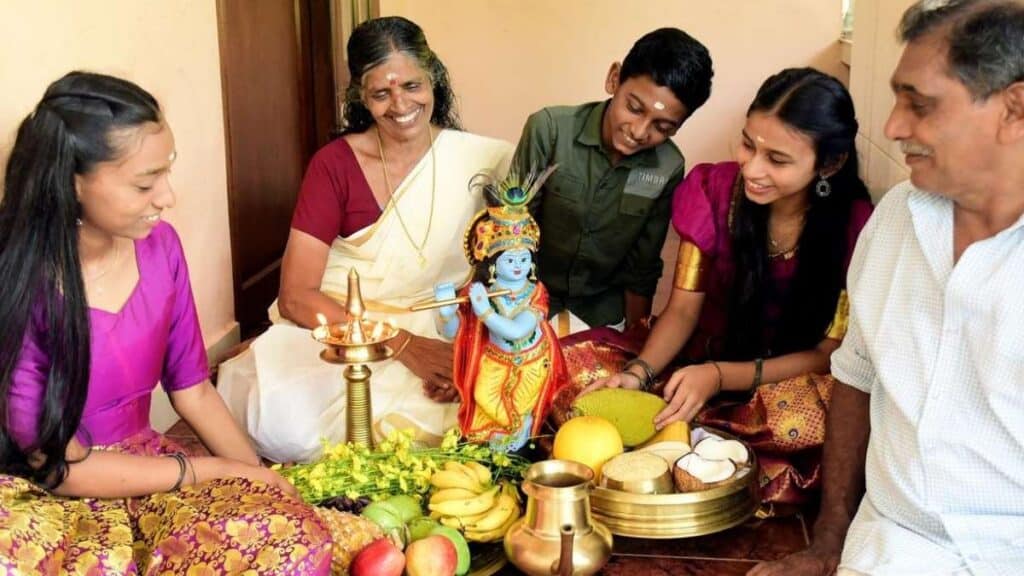
Vishu is one of the most beloved festivals of Kerala, celebrated as the traditional Malayalam New Year and the arrival of spring. Observed on the first day of the solar month of Medam, Vishu marks the Sun’s entry into the zodiac sign of Aries — a moment of astrological renewal that signals new beginnings, prosperity, and the bounty of the harvest season.
Rooted in Hindu mythology and the astronomical traditions of Kerala, Vishu is a festival of auspicious first sights, family togetherness, and collective joy. The spiritual heart of Vishu is the Vishukkani — a sacred arrangement of golden flowers, fruits, coins, and the divine image of Lord Krishna or Vishnu — which families view with eyes closed at dawn, ensuring that abundance and grace are the very first things they behold in the new year. The day unfolds with the gifting of new clothes and money, the grand Vishu Sadhya feast, devotional prayers, and the crackling of fireworks at dusk.
Celebrated primarily in Kerala and by Malayali communities worldwide, Vishu has also become a shared cultural celebration — bringing together people of different faiths under the common spirit of renewal, hope, and togetherness.
When Is Vishu Celebrated in 2026?
Vishu is celebrated on the first day of Medam, the first month of the solar Malayalam calendar, marking the Sun’s transit into the zodiac sign of Aries (Mesha Sankranti). In 2026, Vishu falls on Wednesday, April 15.
Vishu 2026 Date in India
- Vishu: Wednesday, April 15, 2026
- Mesha Sankranti Moment: 9:39 AM IST, April 14, 2026
- Vishukkani Time: Before sunrise, Brahma Muhurta (~4:00 AM)
- Pathamudayam: April 25, 2026 (10th day after Vishu)
Table of Contents
Vishu In USA, Canada, Australia, New Zealand, UK, UAE, Singapore 2026 Dates
- Vishu Kani on Tuesday, April 14, 2026
- Sankranti Moment on Vishu Kani – 12:09 AM
- Vishu Kani on Tuesday, April 14, 2026
- Sankranti Moment on Vishu Kani – 12:09 AM
- Vishu Kani on Wednesday, April 15, 2026
- Sankranti Moment on Vishu Kani – 02:09 PM, Apr 14
- Vishu Kani on Tuesday, April 14, 2026
- Sankranti Moment on Vishu Kani – 05:09 AM
- Vishu Kani on Wednesday, April 15, 2026
- Sankranti Moment on Vishu Kani – 08:09 AM, Apr 14
- Vishu Kani on Wednesday, April 15, 2026
- Sankranti Moment on Vishu Kani – 12:09 PM, Apr 14
Why Do Vishu Dates Change Every Year?
Vishu is a solar festival determined by the Sun’s transit into Aries in the sidereal (nirayana) zodiac. Unlike lunisolar festivals tied to moon phases, Vishu follows the Sun’s actual astronomical position.
Because of the difference between the Gregorian calendar and the sidereal solar year, Vishu alternates between April 14 and April 15 each year. The exact date is calculated using precise astronomical panchang tables.
Vishu Overview
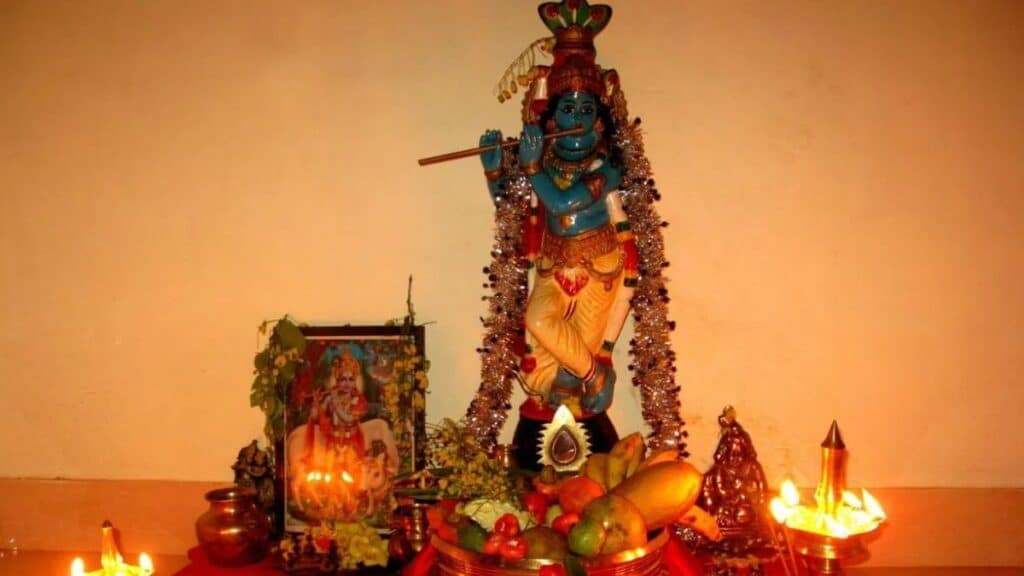
Vishu is the traditional new year of the Malayali people, celebrated with great warmth across Kerala, bordering areas of Tamil Nadu, Karnataka’s Tulu Nadu coast, the Union Territory of Mahe, and by Malayali communities worldwide. The word Vishu derives from the Sanskrit Viṣuvam, meaning “equal” — a reflection of the spring equinox, when day and night are nearly equal in length.
At its heart, Vishu is a festival of auspicious first sights, family togetherness, bountiful feasting, the gifting of new clothes and money, and the joy of firecrackers at dawn. It coincides with other Indian solar new years — Tamil Puthandu, Punjabi and Sikh Vaisakhi, Assamese Bihu, and Bengali Pohela Boishakh — all falling on or near April 14–15.
Other Names and Regional Identities
| Language / Region | Name |
|---|---|
| Malayalam | വിഷു – Vishu |
| Tamil Nadu | Puthandu |
| Tulu Nadu (Karnataka) | Bisu / Bishu |
| Punjab / Sikh | Vaisakhi |
| Assam | Rongali Bihu |
| Bengal / Odisha | Pohela Boishakh / Pana Sankranti |
| Sri Lanka | Sinhala Aluth Avurudda |
| Southeast Asia | Songkran (Thailand / Myanmar) |
| Nepal (Farwest) | Bishu |
| Caribbean Diaspora | Vishu (less common; Phagwah for Holi equivalent) |
In Tulu-speaking coastal Karnataka, the parallel festival Bisu shares the Vishukkani tradition. The Sinhalese New Year in Sri Lanka shares strikingly similar customs — auspicious sightings, traditional foods, new clothes, and fireworks — reflecting ancient shared cultural connections across the Indian Ocean world.
The Origins, History, and Legends of Vishu
Vishu has been celebrated in Kerala since at least the 9th century CE, with historical records from the reign of the Chera dynasty ruler Sthanu Ravi documenting royal celebrations. Over centuries, it became woven into Kerala’s agricultural and cultural calendar, marking the beginning of the spring harvest season.
The Legend of Lord Surya: One of the most cherished legends holds that the demon king Ravana had forbidden the Sun from rising in the east, plunging the world into darkness. Only after Ravana’s death was Lord Surya — the Sun God — free to rise from the east again. Vishu commemorates that first glorious sunrise, the restoration of light and cosmic order. The Malayalam New Year follows the day after Ravana’s defeat.
The Legend of Lord Krishna and Narakasura: Another legend connects Vishu to Lord Krishna’s slaying of the demon Narakasura. The defeat of Narakasura symbolizes the triumph of light over darkness — a theme deeply woven into Vishu’s spirit of new beginnings.
Astronomical Roots: Vishu marks the Sun’s transit into Aries in the sidereal zodiac. This transit was once precisely aligned with the spring equinox; today, due to the precession of the equinoxes, the equinox falls about 24 days earlier, but Vishu remains anchored to the sidereal solar calendar, preserving its astro-cultural significance.
Vishu: Cultural and Spiritual Significance
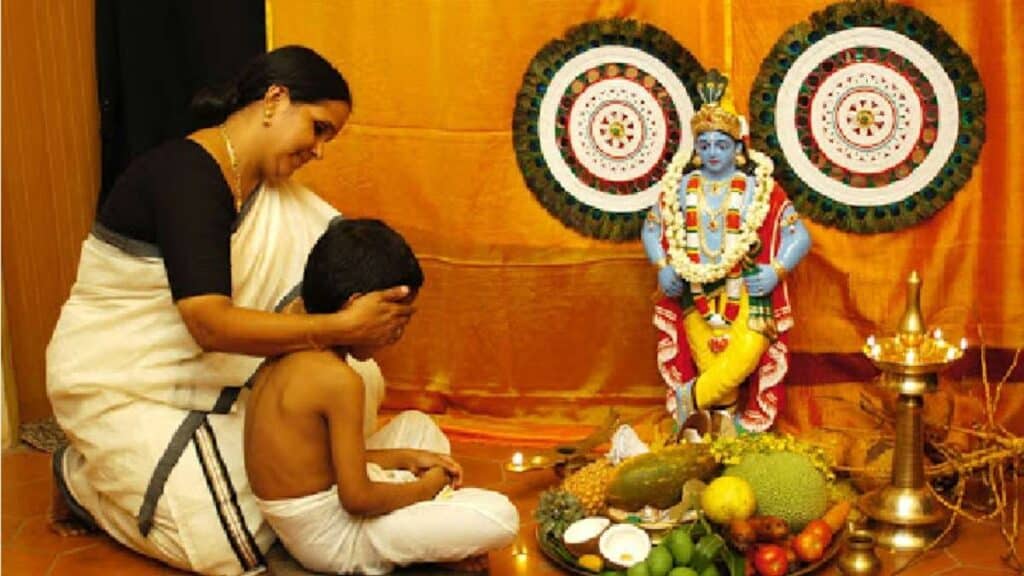
Vishu holds a rare dual identity: it is simultaneously an astronomical event, a religious observance, and a deeply human celebration of beginnings. Spiritually, Vishu is dedicated primarily to Lord Vishnu and his avatar, Lord Krishna. The Vishukkani arrangement is an act of inviting divine abundance into the home at the start of the year — ensuring that the first thing one sees is not the ordinary world, but the grace and prosperity of God.
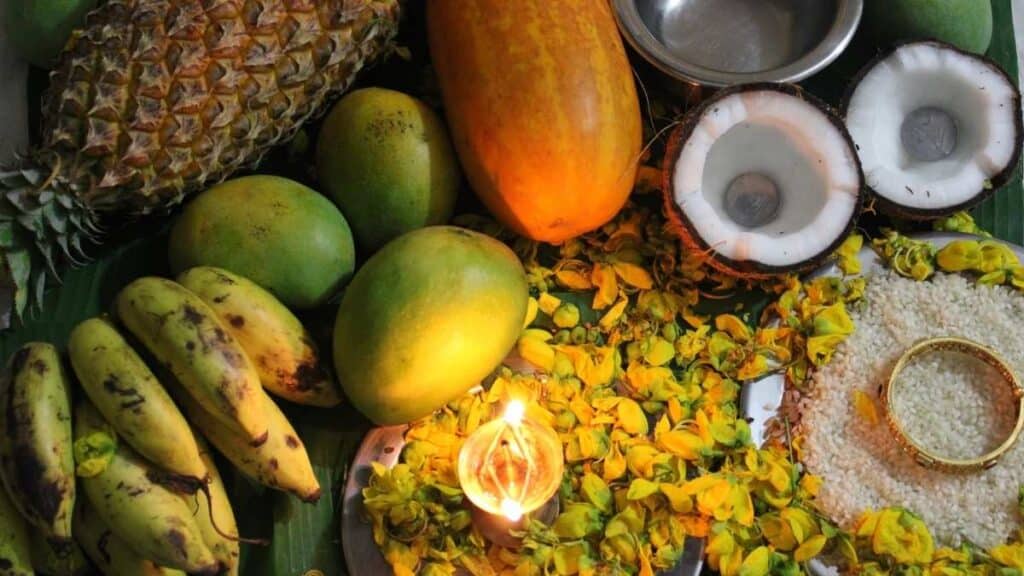
The golden Kani Konna blossoms (Indian laburnum, Cassia fistula), which bloom exclusively during this season, are considered inseparable from the festival’s identity, linking the spiritual to the natural world. Culturally, Vishu reinforces bonds between generations and communities — through shared feasts, temple processions, and collective fireworks — affirming that prosperity, when shared, multiplies.
Vishu Prayers and Religious Observances
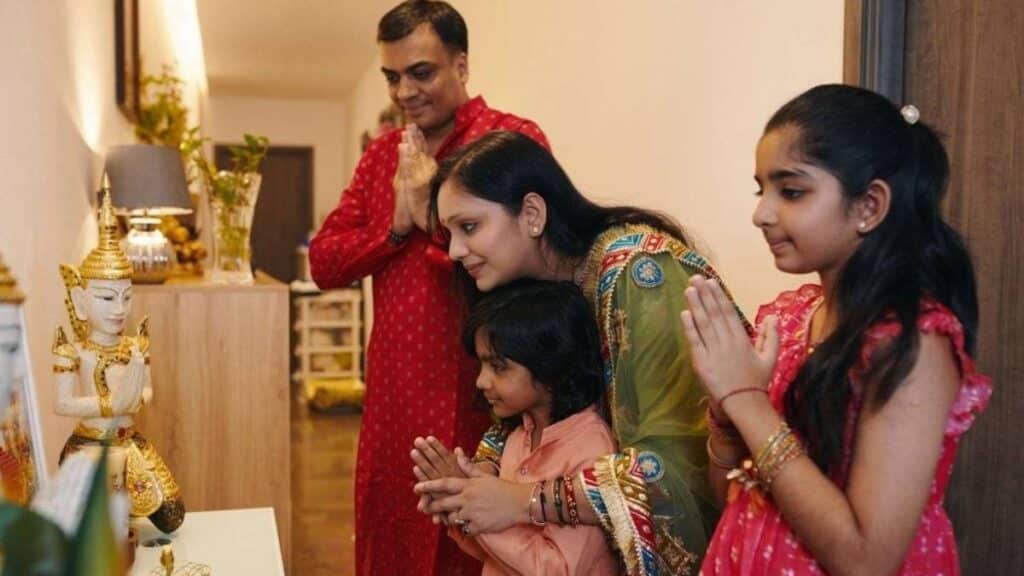
Vishu begins in the sacred pre-dawn hour called Brahma Muhurta, around 4:00 AM. The eldest female member of the household prepares the Vishukkani the previous evening and lights the Nilavilakku (traditional brass oil lamp) at dawn. Family members are gently woken and led with eyes closed to view the Vishukkani — ensuring it is truly the first sight of the new year.
The Vishukkani is a carefully arranged collection of auspicious items including an idol of Lord Vishnu or Krishna, golden Kani Konna flowers, rice, coconut, golden cucumber, jackfruit, mango, betel leaves, the sacred Aranmula Kannadi (metal mirror), gold coins and jewellery, and holy texts. Each item carries symbolic meaning: the mirror represents self-reflection amidst abundance; the coins invite prosperity; the flowers connect the divine to the seasonal earth.
Temples across Kerala — particularly Vishnu and Krishna temples like the Guruvayur Temple — hold special early morning pujas and community prayers. On Pathamudayam, ten days after Vishu, oil lamps with ten wicks are lit to honour the ten sunrises since the new year and to celebrate the sun at the peak of its annual power.
How Vishu Is Celebrated Across India
While the core rituals of Vishu are consistent, regional expressions vary. In Kerala, Vishu is a state-wide celebration with home decorations of Thoranam (mango and coconut leaf garlands), Kolam (Rangoli), and Nilavilakku lamps at every entrance.
Families dress in traditional Kerala attire — women in the Kasavu saree or Mundum Neriyathum, men in the Kasavu Mundu. The Vishukkaineetam exchange of coins follows the Vishukkani, and the day culminates with the grand Vishu Sadhya feast and evening fireworks.
In Tamil Nadu’s bordering districts (Coimbatore, Nilgiri), Vishu is observed alongside Puthandu, blending Malayali and Tamil traditions. Along coastal Karnataka’s Tulu Nadu, the community celebrates Bisu with near-identical dawn rituals. In Mahe, Vishu is a public holiday marked by temple processions and community feasts.
Participation Across Religions in India
While Vishu is rooted in Hindu mythology and dedicated to Lord Vishnu, it is in practice a cultural festival embraced across Kerala’s diverse religious communities. Christian and Muslim Malayalis participate in the cultural aspects of Vishu — sharing in the Sadhya feast, exchanging Vishukkaineetam, wearing new clothes, and enjoying fireworks — as expressions of shared Malayali identity.
Many Christian churches in Kerala hold special Vishu services, and it is common for neighbours of all faiths to exchange sweets and greetings on the day, reflecting Kerala’s tradition of communal harmony.
How Vishu Is Celebrated Outside India
Indian diaspora communities across the United States, Canada, the UK, Australia, the UAE, Singapore, and beyond celebrate Vishu through community events and Grand Sadhya feasts, temple pujas and cultural programs, traditional Kerala arts performances (Kathakali, Mohiniyattam, Panchavadyam), family Vishukkani arrangements recreated in diaspora homes, and Vishukkaineetam gifting via digital payment apps across borders.
These celebrations help second-generation Malayalis stay connected to their cultural roots while introducing non-Indians to Kerala’s rich traditions.
Vishu Gifting Traditions
The central gifting tradition of Vishu is the Vishukkaineetam — literally “extending the hand” — where elders present younger family members and dependents with monetary gifts. Traditionally given in amounts ending in the numeral 1 (₹11, ₹21, ₹51, ₹101), the convention signals new beginnings with continuity — the “1” represents growth and an ongoing journey.
The Vishukodi or Puthukodi is the tradition of gifting new clothes — typically the Kasavu saree or Mundu — so every family member wears fresh attire on Vishu morning. In diaspora communities, gifting has expanded to include sweets, dry fruits, jewellery, and curated Kerala specialities — banana chips, payasam mixes, and handloom garments available through online platforms. Digital transfers have made Vishukkaineetam instant across borders.
Vishu Foods and Culinary Traditions
Food is central to Vishu, and the Vishu Sadhya — a grand feast served on banana leaves — brings together Kerala’s full culinary heritage. True to the festival’s philosophy, the Sadhya balances sweet, sour, salty, bitter, and astringent flavours, a culinary reminder that life is made of many tastes.
Common Vishu delicacies include:
Vishu Kanji — A comforting rice porridge made with coconut milk and spices, the quintessential Vishu breakfast
Vishu Katta — A steamed rice cake made from freshly harvested rice powder and coconut milk, served with jaggery
Thoran — A dry stir-fry of seasonal vegetables with fresh coconut and curry leaves
Payasam — Creamy rice or lentil kheer in coconut milk with jaggery and cardamom
Veppampoorasam — A deliberately bitter neem flower preparation, eaten first to signify acceptance of life’s challenges
Mampazhapulissery — A tangy ripe mango soup in seasoned yogurt and coconut
Avial — A mixed vegetable medley in thick coconut and yogurt gravy, a signature Kerala preparation
Olan — A delicate curry of ash gourd and cowpeas in thin coconut milk
Music, Art, and Cultural Expression
Music, art, and performance are inseparable from Vishu. At dawn, the air fills with Vishuppattu — traditional devotional songs praising Lord Krishna and Vishnu. One of the most beloved, popularised by the 1962 Malayalam film Omanakkuttan, begins with the vision of Krishna adorned in golden yellow — “Kanikanum Neram Kamalanetrande…” — a song generations of Malayali children have heard at the Vishukkani.
Temple celebrations feature the thundering rhythms of Panchavadyam — the traditional ensemble of five percussion and wind instruments. Kathakali performances bring mythological stories to life through elaborate costumes, while Mohiniyattam, Kerala’s graceful classical dance, is performed at cultural events. The folk art form Ottan Thullal, with its witty social commentary in verse and dance, is a natural fixture of Vishu celebrations. Contemporary Malayalam cinema also has a cherished tradition of major film releases around Vishu, making the festival a cultural event far beyond its religious roots.
Vishu in the Modern World

While the core traditions of Vishu have remained remarkably stable, the festival’s expression continues to evolve. In urban Kerala and diaspora communities, Vishukkani arrangements are sourced online, Kani Konna flowers are available through florists, and Vishukkaineetam flows digitally across borders. Social media amplifies Vishu’s visibility every April, as Malayalis worldwide share photographs of Vishukkani arrangements, Sadhya spreads, and family portraits in traditional attire under the hashtag #Vishu.
Sustainability has become an increasingly prominent theme, with families choosing organic Sadhya produce and handloom Kasavu sarees from Kerala’s traditional weaving cooperatives. The festival also serves as a cultural preservation act for diaspora families — a way of remaining Malayali in Melbourne or Manchester, and of passing something living to children who have never seen Kerala’s paddy fields turn green in April.
How to wish someone on Vishu: The most traditional Malayalam greeting is “Vishu Ashamsakal” (വിഷു ആശംസകൾ), meaning “Vishu Wishes.” Other warm greetings include “Happy Vishu,” “Vishu Nalvaranam,” and among the Tulu community, “Bisu Biruva.”
Cultural Reflection
Vishu endures because it speaks to something universal through something deeply particular. In the quiet ritual of closing one’s eyes before dawn and being led to a golden arrangement of fruits, flowers, and light, there is a profound intention: choosing, consciously and collectively, to let abundance be the first thing one sees in a new year.
For the Malayali diaspora, Vishu is also an act of cultural memory — a way of staying connected to Kerala in every corner of the world. The Kani Konna flowers, the brass lamp, the grandmother’s hands arranging the coconut and coins by lamplight — these acts, repeated across a million homes and a thousand years, make culture portable and belonging something you carry inside you, wherever the year takes you.
Vishu Ashamsakal — May your new year begin with the golden abundance of Kani Konna, the warmth of family, and the light of a thousand oil lamps.