


On January 30, 1948, at 5:17 PM, three gunshots shattered the evening prayer gathering at Birla House in New Delhi. Mohandas Karamchand Gandhi—the man who’d led India to independence through non-violence, who’d brought the British Empire to its knees without firing a single bullet—fell, his last words reportedly “Hey Ram” (Oh God). Seventy-eight years later, Mahatma Gandhi Punyatithi marks that assassination, transforming a national tragedy into annual remembrance of the principles he lived and died for.
Quick Summary:
Mahatma Gandhi Punyatithi, observed January 30 as Shaheed Diwas (Martyrs’ Day), commemorates Gandhi’s 1948 assassination at Birla House, New Delhi. The day honors his sacrifice and philosophy of Satya (truth) and Ahimsa (non-violence), with tributes at Raj Ghat and nationwide events teaching his principles—distinct from March 23 Martyrs’ Day remembering Bhagat Singh, Rajguru, and Sukhdev.
What Happened on January 30, 1948?
The war was over. Independence achieved. British had left. Gandhi, now 78, had spent the months since August 1947 trying to stop the communal violence tearing apart newly partitioned India and Pakistan. He’d fasted repeatedly, walked through riot-torn villages, begged Hindus and Muslims to see each other as brothers rather than enemies.
The assassination’s immediate aftermath:
- Gandhi collapsed immediately, blood staining his white shawl
- His granddaughters Manu and Abha, walking beside him, tried to support his body
- He was carried inside Birla House, where he died within minutes
- News spread through Delhi, then across India via All India Radio’s somber announcement
- Millions wept—the man who’d given them freedom was gone before he could see the India he’d envisioned
The irony was devastating. Gandhi had survived decades of British imprisonment, numerous assassination attempts, debilitating fasts, and exhausting political battles. He’d outlasted the empire. But he couldn’t outlast the communal hatred that partition had unleashed, the very hatred he’d spent his final months trying to extinguish.
Godse and his co-conspirator Narayan Apte were arrested, tried, and hanged in November 1949 despite pleas for clemency from Gandhi’s sons. India’s first major political assassination established a pattern that would tragically repeat—Indira Gandhi (1984), Rajiv Gandhi (1991), others killed by those who saw violence as legitimate political tool, the very opposite of everything Gandhi represented.
Understanding Punyatithi: Death Anniversary as Remembrance
“Punyatithi” combines two Sanskrit words—”punya” (sacred, virtuous) and “tithi” (lunar day, anniversary). It’s specifically a death anniversary, but not mournful in the way Western death anniversaries often are. Hindu tradition treats death of realized souls as return to the divine, worthy of reverence rather than just grief.
For Gandhi, punyatithi carries additional weight because he was assassinated while performing religious duty (attending prayer), making his death martyrdom rather than natural passing. In Hindu understanding, dying while engaged in dharmic action—fulfilling one’s sacred duty—brings spiritual merit. Gandhi’s final moments epitomized his life: walking toward prayer, serving peace, embodying non-violence even as violence struck him down.
Why punyatithi observance matters culturally:
- It transforms death into teaching moment, asking “what did this life mean?”
- Annual repetition creates collective memory, each generation learning the story
- Public ceremonies make personal loss into shared national grief and pride
- Remembering the day of death emphasizes the sacrifice, not just the achievements
- For martyrs especially, punyatithi becomes call to live by the ideals they died for
January 30 isn’t just “the day Gandhi died.” It’s the day Gandhi’s philosophy was tested by its ultimate challenge and proved true. He could’ve called for protection, could’ve advocated violence against those threatening him, could’ve abandoned non-violence when it became personally dangerous. He didn’t. The assassination vindicated everything he’d taught about meeting hatred with love, violence with steadfastness, fear with courage.
Shaheed Diwas: Martyrs’ Day Explained
January 30 is officially designated Shaheed Diwas (Martyrs’ Day), but this can confuse people because India observes multiple Martyrs’ Days for different martyrs. The January 30 observance specifically honors Gandhi and, by extension, all freedom fighters who sacrificed for independence, with Gandhi’s assassination serving as symbolic culmination.
“Shaheed” means martyr in Urdu/Hindi—someone who dies for a cause greater than themselves. Gandhi fits this definition perfectly. He didn’t die accidentally or naturally. He died because of his beliefs, because of the stands he took, because of the people he defended. His death was consequence of his commitment to Hindu-Muslim unity in a time when that commitment enraged Hindu extremists.
The different Martyrs’ Days in India:
- January 30: Gandhi’s assassination (1948), honoring his sacrifice and all freedom fighters
- March 23: Bhagat Singh, Rajguru, and Sukhdev’s execution (1931) by British for revolutionary activities
- November 19: Rani Lakshmibai’s birth anniversary, honoring 1857 rebellion martyrs
- Various states observe additional martyrs’ days for regional freedom fighters
The January 30 versus March 23 distinction is particularly important because they represent different philosophies of resistance. Gandhi’s Shaheed Diwas honors non-violent sacrifice—he died promoting peace. March 23 honors revolutionary violence—Bhagat Singh and companions were hanged for bombing British officials. Both are respected, both called martyrs, but the methods they represented remain fundamentally opposed.
Raj Ghat: Where India Mourns and Remembers
Raj Ghat, the memorial marking Gandhi’s cremation site on the banks of the Yamuna River in Delhi, becomes the nation’s focal point every January 30. The black marble platform, eternally inscribed with Gandhi’s final words “Hey Ram,” hosts the President, Prime Minister, and other dignitaries who come to pay homage.
The ceremony follows precise protocol: arrival at dawn, removal of shoes before approaching the memorial, garlands placed on the platform, two minutes of silence observed at 5:17 PM (the exact time of assassination), prayers and bhajans (devotional songs) that Gandhi loved. The simplicity mirrors Gandhi’s own aesthetic—no grand statues, no elaborate architecture, just black marble, an eternal flame, and the memory of a man who owned almost nothing when he died.
What makes Raj Ghat significant beyond the ceremony:
- It’s where Gandhi’s body was cremated on January 31, 1948, with over a million mourners attending
- The site includes a museum showcasing Gandhi’s belongings, photographs, and letters
- Every visiting head of state pays respects here, making it diplomatic as well as spiritual space
- The memorial gardens contain trees planted by world leaders over decades
- For many Indians, it’s pilgrimage site—touching the platform, sitting in silence, reflecting on his teachings
How India Observes Mahatma Gandhi Punyatithi
January 30 brings coordinated observances across India and at Indian embassies worldwide. The day typically begins with President and Prime Minister paying homage at Raj Ghat at dawn, setting the tone for nationwide remembrance.
Typical Gandhi Punyatithi activities include:
- Two minutes of silence observed nationwide at 5:17 PM, the assassination time
- Prayer meetings at Gandhi memorials, ashrams, and community centers
- Distribution of copies of “Hind Swaraj” or his other writings
- Cleanliness drives inspired by his Swachh Bharat (Clean India) emphasis
- Discussions about applying Gandhian principles to modern challenges
- Social media campaigns sharing his quotes, photographs, and teachings
Government offices, schools, and many businesses close for the day. Indian flags fly at half-mast. Television channels air special programming about Gandhi’s life. Newspapers publish editorials reflecting on his continuing relevance or debating his limitations.
For diaspora communities, January 30 often brings mixed observance. Temples and cultural organizations might hold prayer meetings or discussions. Parents might use it as opportunity to teach children about their heritage. But for many Indians abroad, the day passes largely unnoticed—work continues, schools are open, life proceeds without interruption.
This creates interesting generational dynamics. First-generation immigrants who grew up in India, who were taught Gandhi’s story in school, who have visceral connection to independence—they observe the day consciously. Second and third generations might know Gandhi abstractly but lack emotional connection. January 30 becomes one more cultural date parents care about that kids find historically interesting but personally distant.
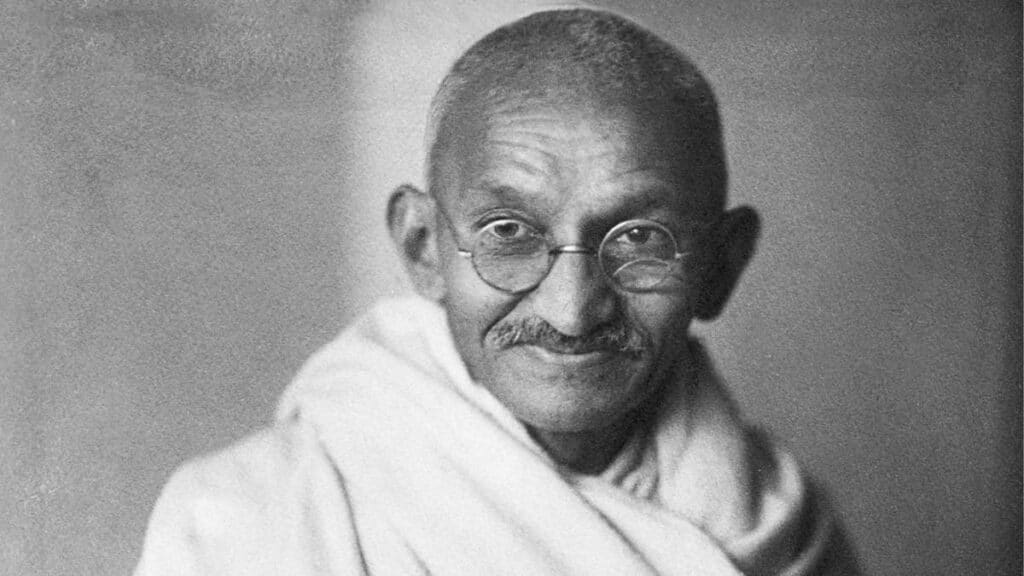
Gandhi’s Assassination: Why It Still Matters
Understanding why Gandhi was killed helps understand why his punyatithi remains significant. Nathuram Godse didn’t act randomly or from personal grievance. He represented an ideology—Hindu nationalism that saw Gandhi’s pluralism and Muslim accommodation as weakness, even betrayal.
Godse’s statement during his trial laid out the reasoning: Gandhi had weakened Hindus by preaching non-violence when Muslims supposedly used violence. Gandhi had supported Pakistan’s creation by not stopping partition. Gandhi had advocated giving Pakistan financial resources after partition. Gandhi had prioritized Muslim sensibilities over Hindu interests.
The assassination’s political context:
- Partition had displaced 10-15 million people, killed potentially a million in communal violence
- Hindu refugees from Pakistan arrived with stories of atrocity, demanding revenge
- Gandhi insisted on Hindu-Muslim brotherhood even as communities slaughtered each other
- His fasts to stop violence seemed to some like emotional blackmail favoring Muslims
- Hindu Mahasbha and RSS (organizations Godse associated with) promoted Hindu assertiveness over Gandhian pluralism
The assassination wasn’t just personal tragedy—it was ideological statement. It said some Indians believed violence was acceptable political tool, that Hindu nationalism trumped pluralistic democracy, that Gandhi’s vision for India was wrong.
Seventy-eight years later, these tensions haven’t disappeared. Contemporary debates about secularism versus Hindu nationalism, about minority rights versus majority interest, about India’s identity as pluralistic democracy versus Hindu nation—all echo the fault lines that led to Gandhi’s assassination. That’s why January 30 remains relevant, even urgent.
When we observe Gandhi Punyatithi, we’re not just remembering a death. We’re recommitting to pluralism over sectarianism, non-violence over political violence, truth and dialogue over hatred and revenge. Or we’re supposed to be.
The Complicated Legacy: Gandhi’s Limitations
Gandhi’s views on caste, particularly regarding untouchables (whom he called Harijans—”children of God”), were progressive for his time but inadequate by today’s standards. He opposed untouchability but supported varna system (caste hierarchy based on occupation). He wanted untouchables accepted into Hindu society but didn’t advocate destroying caste itself. Dr. B.R. Ambedkar, himself from untouchable community, found Gandhi’s approach patronizing and insufficient.
Other areas where Gandhi’s legacy is contested:
- Gender: He elevated women’s participation in freedom struggle but held conservative views on female sexuality and domesticity
- Race: His early writings in South Africa contain troubling references to Black Africans, though he later evolved
- Sexuality: His celibacy experiments, including sleeping naked with young women to test his control, are deeply problematic
- Science: His suspicion of modern medicine, railroads, and industrialization seems regressive now
- Partition: Critics argue his approach toward Muslim League inadvertently enabled partition
For Dalits especially, Gandhi’s veneration can feel exclusionary. They argue Ambedkar, not Gandhi, was their true liberator—the one who fought for their constitutional rights, their temple entry, their education. Gandhi Jayanti (birth anniversary) and Punyatithi can seem like celebrations of savarna (upper caste) leadership that, however well-intentioned, ultimately preserved hierarchies.
Diaspora engagement with Gandhi often sanitizes these complications. We learn the inspiring parts—non-violence defeated empire, one man changed history, truth and love conquer hatred. We don’t learn the messy parts—his evolving and sometimes troubling beliefs, the criticisms from other independence leaders, the limitations of his vision.
Meaningful observance of Gandhi Punyatithi should include this complexity. We can honor his immense contributions while acknowledging his limitations, respect his courage while learning from his blind spots, celebrate his achievements while recognizing other leaders who complemented or challenged him.
Comparing January 30 and March 23 Martyrs’ Days
The existence of multiple Martyrs’ Days reflects India’s diverse independence movement. January 30 (Gandhi) and March 23 (Bhagat Singh, Rajguru, Sukhdev) represent the movement’s philosophical range—non-violence versus armed resistance, patience versus urgency, moral persuasion versus militant action.
Bhagat Singh was 23 when hanged in 1931 for bombing the Central Legislative Assembly and assassinating British police officer John Saunders. He was revolutionary socialist who believed violence against oppressors was justified, whose writings challenged both British rule and Indian social conservatism, whose youth and fearlessness inspired millions.
Key differences between the martyrs:
| Aspect | Gandhi (Jan 30) | Bhagat Singh (Mar 23) |
|---|---|---|
| Method | Non-violent resistance | Armed revolutionary action |
| Age at death | 78 years old | 23 years old |
| Death cause | Assassinated by extremist | Executed by British state |
| Philosophy | Spiritual, reformist | Socialist, revolutionary |
| Legacy | Father of Nation status | Revolutionary youth icon |
| Contemporary relevance | Peace, pluralism, democracy | Radical change, anti-imperialism |
Neither is more “correct” than the other—both contributed to freedom. Gandhi’s mass movements made independence inevitable; Bhagat Singh’s radicalism made gradualist approaches seem reasonable by comparison. Gandhi gave the movement moral authority; Bhagat Singh gave it youthful energy and urgency.
Modern Indians often identify with one or the other based on political orientation and personality. Those who value stability, process, and peace gravitate toward Gandhi. Those who feel frustrated by slow change, corruption, and injustice gravitate toward Bhagat Singh’s revolutionary impatience.
For diaspora youth especially, Bhagat Singh can feel more relatable than Gandhi. He was young, angry at injustice, unwilling to wait for gradual change, willing to sacrifice everything for beliefs. Gandhi was old, patient, willing to compromise, operating in moral framework that can seem foreign to secular modern sensibilities.
Both Martyrs’ Days deserve observance, both martyrs deserve respect. The tension between their approaches—work within systems versus overthrow systems, persuade opponents versus defeat opponents, transform through love versus transform through force—remains relevant to every social movement, every attempt at change.
Teaching Gandhi to Diaspora Children
For Indian parents abroad, January 30 presents opportunity and challenge. Opportunity to transmit heritage, teach significant history, connect children to cultural identity. Challenge to make a 78-year-old assassination relevant to kids growing up in societies far removed from Indian independence struggles.
The standard approach—Gandhi was a great man who freed India through non-violence—often feels abstract to children whose lived reality includes few connections to colonialism or independence. They might learn it for school assignments but not internalize its meaning or relevance.
More effective approaches to teaching Gandhi:
- Connect his principles to contemporary issues kids care about: bullying (responding with strength, not violence), environmental activism (living simply), standing up for others (swaraj through service)
- Show his humanity, not just heroism: his failures, evolution, doubts make him relatable rather than distant saint
- Compare his methods to other movements they know: civil rights, anti-apartheid, climate activism
- Explore his limitations honestly—show that heroes can be flawed, that we can learn from both strengths and mistakes
- Make it interactive: role-play non-violent resistance, discuss when non-violence works versus when it doesn’t, debate his controversial positions
The key is avoiding hagiography while maintaining respect. Gandhi doesn’t need to be perfect to be significant. His willingness to experiment, to admit mistakes, to evolve his thinking—these are more valuable lessons than sanitized greatness.
Some diaspora parents struggle with Gandhi’s spiritual framework. Teaching about fasting, prayer, ashram life, celibacy experiments, spiritual seeking can feel alien in secular Western contexts. But these elements can’t be separated from his political philosophy—his non-violence was rooted in Hindu and Jain religious traditions, his courage came from spiritual conviction, his persistence came from viewing struggle as spiritual discipline.
Finding age-appropriate ways to discuss his sexuality experiments, his views on race in South Africa, his conflicts with Ambedkar and other leaders requires care. Young children need simplified narratives; teenagers can handle complexity and contradiction. The worst approach is pretending these issues don’t exist, because kids will eventually learn about them and feel betrayed that their cultural education omitted important truths.
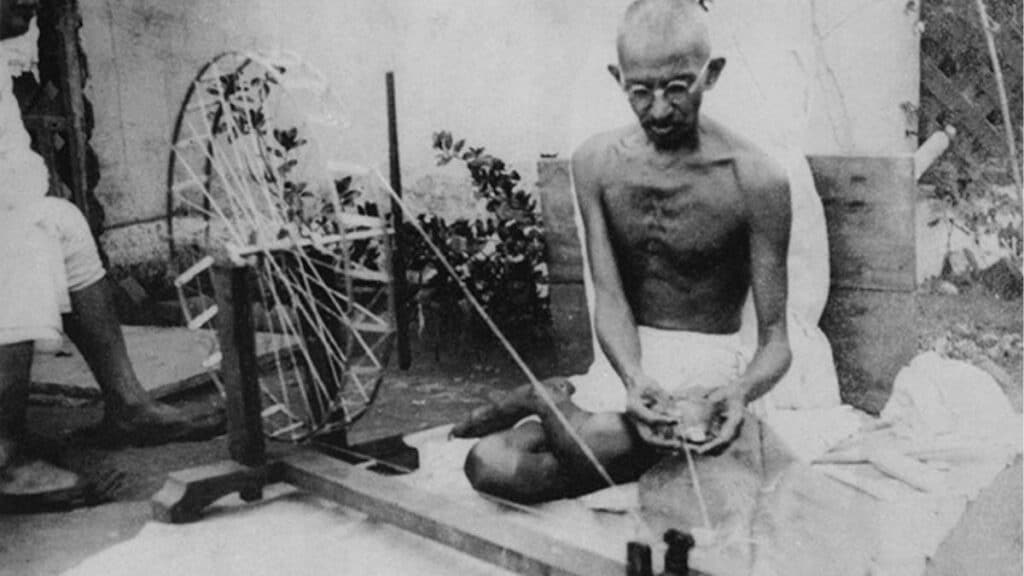
Gandhi’s Relevance to Modern India and the World
Does Gandhi matter in 2026? Does his philosophy of non-violence have relevance when geopolitics runs on military power, when social media amplifies outrage, when climate crisis demands urgent action, when inequality seems permanent and systematic?
The answer depends on whether you see his methods as universally applicable or historically specific to anti-colonial struggle. Gandhi believed non-violence worked because it appealed to oppressor’s conscience, assuming oppressors had consciences that could be appealed to. Does that apply to autocrats, to corporations, to impersonal systems of exploitation?
Where Gandhian principles remain relevant:
- Community organizing and grassroots activism still use non-violent resistance effectively
- Environmental movements employ his concept of living simply and reducing material consumption
- Conflict resolution increasingly emphasizes dialogue and reconciliation over punishment
- His emphasis on means and ends—that wrong means can’t achieve right ends—challenges political expediency
- His concept of “being the change” empowers individual action rather than waiting for systemic change
Where his approach seems inadequate: structural inequality that persists regardless of moral persuasion, global systems of exploitation that function without individual villains to convert, threats requiring immediate forceful response, situations where oppressors benefit from maintaining oppression and have no incentive to change.
Contemporary India grapples with how much Gandhi to embrace. His emphasis on village economy seems impractical in aspirational, modernizing nation. His religious language fits uncomfortably in officially secular democracy. His non-violence can seem naive when facing terrorism or border conflicts. His simple lifestyle feels judgmental of middle-class consumption.
Yet his core insights remain powerful: that means matter as much as ends, that sustainable change requires moral transformation not just policy shifts, that individuals have power to resist injustice, that hatred cannot be defeated by more hatred.
For the diaspora, Gandhi’s relevance might lie less in specific tactics and more in underlying principles. His insistence on truth in an era of misinformation. His emphasis on personal responsibility in a culture of blame. His willingness to sacrifice comfort for conviction. His belief that ordinary people can challenge power structures and win.
How to Observe Gandhi Punyatithi Meaningfully
As January 30, 2026 approaches, moving beyond performative commemoration to meaningful engagement requires intention. Posting Gandhi quotes on social media, changing profile pictures, attending obligatory events—these can be empty gestures if they don’t connect to actual reflection or action.
Meaningful ways to observe Gandhi Punyatithi:
- Read or reread “Hind Swaraj” or selections from his writings—engage with his actual ideas
- Have honest family discussions about when non-violence works and when it doesn’t
- Practice something Gandhian for the day: media fast, simple meal, service to others
- Donate to causes Gandhi cared about: rural development, interfaith harmony, anti-discrimination work
- Visit local Gandhi statue or memorial if available, spend time in reflection
- Watch documentary or film that grapples seriously with his life, not just celebrates it
- Discuss with children what principles matter enough to sacrifice for
- Examine your own relationship with truth—where do you compromise, rationalize, avoid difficult honesty?
For diaspora communities, this could mean organizing events that go beyond the usual format. Instead of speeches praising Gandhi, host debates about his relevance. Instead of only Indians speaking, invite those from other movements inspired by his methods—civil rights activists, peace organizers, environmental advocates. Make connections between his struggles and current issues.
It could mean supporting organizations working on issues Gandhi cared about—rural education in India, interfaith dialogue, anti-discrimination efforts, sustainable development. Turn commemoration into action.
Most importantly, it means sitting with the uncomfortable question: if Gandhi’s assassination came from ideological hatred, from those who saw pluralism as weakness and violence as legitimate political tool, what are we doing to prevent similar ideology from taking root today?
