


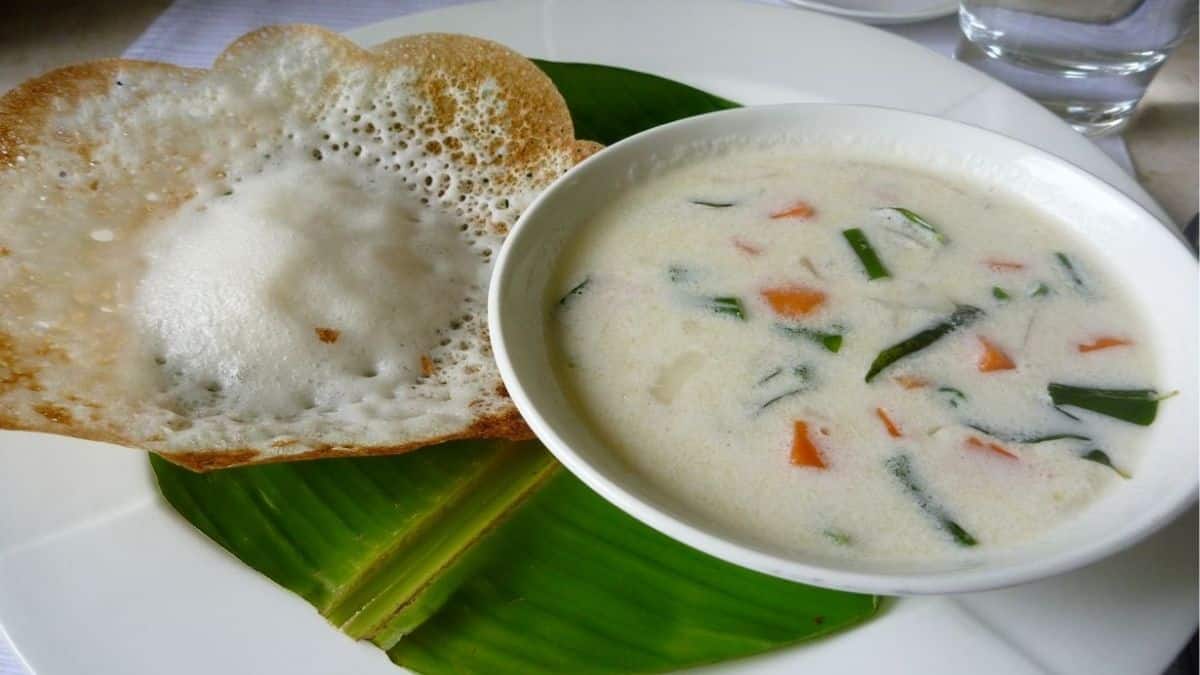
There are certain meals that carry the weight of a day without needing to say a word. Meals that arrive quietly, that don’t demand attention but somehow hold everything together — the solemnity, the togetherness, the small comfort of eating something familiar when the day itself is heavy. Appam with vegetable stew is that meal for Good Friday in Kerala Christian homes.
Good Friday is observed as a day of fast, prayer, and reflection across Christian communities worldwide. For Kerala’s large Syrian Christian and Latin Catholic communities, the day ends not with feasting but with something gentle — a simple, meatless meal served after the long church service and evening prayers. Appam and vegetable stew is the dish that appears on almost every Kerala Christian table on this night. White, mild, and nourishing, it fits the day perfectly.
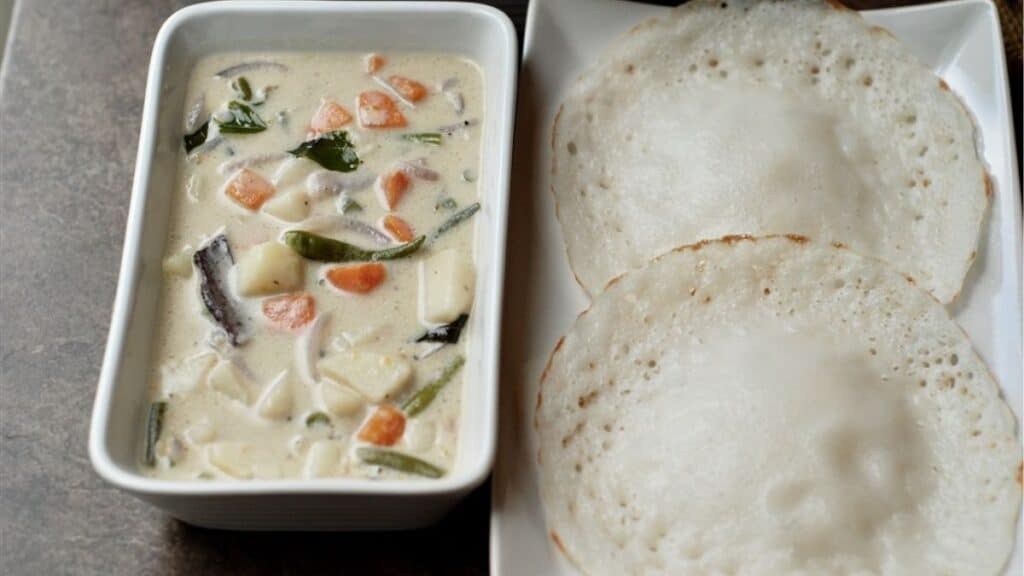
Appam is a soft, fermented rice crepe with crispy lacy edges and a thick, spongy centre. The Kerala-style vegetable stew is a lightly spiced, coconut milk-based dish with carrots, beans, and potatoes. Together, they make one of the most beloved breakfast (or any-time) meals from South India. This recipe uses a suji-based quick batter (no overnight ferment needed) and a pressure cooker stew that comes together in under 30 minutes. Vegetarian, gluten-adaptable, and deeply satisfying.
In this Article
What Makes Good Friday Appam and Stew Different
Appam and vegetable stew exists in its everyday form year-round — a beloved Kerala breakfast, a Sunday morning ritual, a diaspora comfort food. But the Good Friday version carries a specific intentionality that changes how it’s made and experienced.
On this day, the dish is:
- Strictly vegetarian, with no meat, poultry, or seafood on the table. The mildness is deliberate — on a day of fasting and penance, the stew is kept light and clean, without the additions of chicken or egg that might appear on other occasions.
- Served as the evening meal after the long church service and Stations of the Cross, when families return home tired, hungry, and still in a reflective mood.
- White in both colour and character — the appam’s pale, lacy surface and the stew’s ivory coconut milk base are visually aligned with the simplicity and restraint the day calls for.
- A communal, family meal. In many Kerala Christian households, particularly Syrian Christian families, the women of the house prepare the stew while the men finish evening prayers. Eating together after the service is the quiet close to the day.
What sets this apart from restaurant appam or casual breakfast versions is the care with which it is made. On Good Friday, the stew simmers longer, the spices are used more sparingly, and the coconut milk is added slowly. It isn’t fancy. It is, deliberately, the opposite of fancy — and that’s exactly the point.
Recipe Overview
| Detail | Information |
|---|---|
| Prep Time | 10 minutes |
| Cook Time | 20 minutes |
| Total Time | 30 minutes |
| Yield | 5–6 servings |
| Cuisine | Kerala / South Indian |
| Course | Main meal |
| Diet | Vegetarian, suitable for fasting |
| Difficulty Level | Easy–Medium |
| Calories per Serving | ~320 kcal |
| Occasion | Good Friday |
Why Appam and Stew Is the Traditional Good Friday Meal
Good Friday is the most solemn day in the Christian calendar, observed as the anniversary of the crucifixion of Jesus Christ. In Kerala — home to one of the oldest Christian communities in the world, with roots going back to the apostle Thomas — Good Friday observance is taken seriously and practised with genuine devotion.
The day typically begins with morning church service, followed by fasting or eating only once, and the afternoon Stations of the Cross or Tre Ore service. Evening prayers conclude before nightfall, and it is only after this that families sit down to eat.
The theology behind the meal is simple: on the day Christ died, celebration is not appropriate. Rich meats, elaborate feasts, and festive sweets are set aside. What remains is nourishment — clean, simple, sustaining food that feeds the body without drawing attention away from the spiritual significance of the day.
Appam and vegetable stew satisfies every requirement. It is meatless, it is mild, it is made with local Kerala ingredients, and it is filling without being indulgent. The coconut milk provides richness without excess. The whole spices — cardamom, cloves, cinnamon, star anise — are fragrant and warming but never aggressive. It is a meal that comforts quietly.
The Two Critical Techniques: The Ladle Swirl and Coconut Milk Timing
Before the step-by-step, two techniques determine whether your appam and stew arrive at the table beautifully or disappointingly.
1. The Ladle Swirl for the Signature Appam Shape
The defining characteristic of a well-made appam is the contrast between its thick, spongy centre and its thin, lacy, crispy edges. This doesn’t happen on its own — it requires a deliberate technique during cooking.
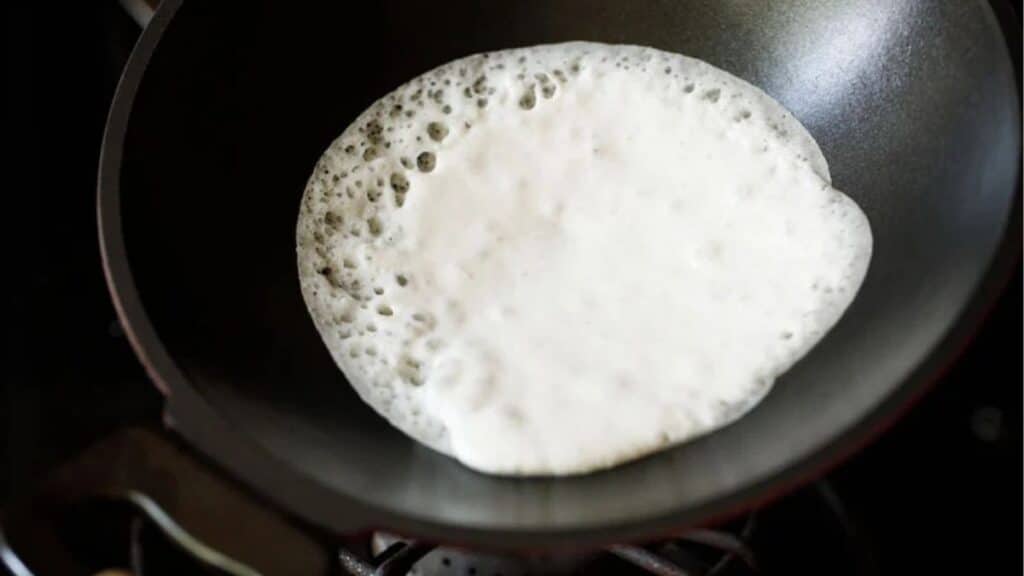
After pouring the batter onto the greased hot pan, immediately tilt and rotate the pan in a quick circular motion so the batter spreads outward from the centre. Do not chase the edges with your ladle. The centre stays thick where the batter pools; the edges run thin where it spreads. This circular spreading motion is what creates the characteristic appam shape — and it takes two or three appams to get the feel of it. Don’t be discouraged by the first one.
2. The Coconut Milk Timing in the Stew
Coconut milk cannot be rushed, and it cannot be boiled vigorously. Add it only after the vegetables are fully cooked and the heat has been reduced to its lowest setting. Pour it in slowly, stir it gently, and let it simmer — not boil — for 8 to 10 minutes.
A hard boil will cause the milk to split. The fat separates, the liquid turns grainy, and the silky, glossy consistency that makes Kerala stew what it is will be gone. The visual cue to look for: the stew should look smooth, slightly thickened, and faintly glossy. The moment it reaches that point, take it off the heat.
Ingredients
Appam Batter
| Ingredient | Quantity | Notes |
|---|---|---|
| Suji (semolina) | 1 cup | Fine grade preferred |
| Curd (yogurt) | ¾ cup | Room temperature, mildly sour |
| Coconut milk | 3 tbsp | Full-fat for best results |
| Water | ¾ cup | |
| Salt | 1 tsp | |
| Sugar | 1 tsp | |
| Fruit salt (Eno) | 1 tsp | Added just before cooking |
Vegetable Stew
| Ingredient | Quantity | Notes |
|---|---|---|
| French beans | ½ cup | Cut into 1-inch pieces |
| Potato, diced | ½ cup | Peeled, roughly 1cm cubes |
| Carrot, diamond cut | ½ cup | Diagonal slices, similar size to potato |
| Coconut oil | 1 tbsp | Non-negotiable for authentic flavour |
| Onion, sliced | 1 cup | Thin slices |
| Ginger, chopped | ½ tbsp | Fresh |
| Green chilli, slit | 1–2 pcs | Adjust for heat tolerance |
| Curry leaves | 10–12 pcs | Fresh, not dried |
| Coconut milk | 1 cup | Full-fat, added at the end |
| Star anise | 3 pcs | |
| Cinnamon | 1 inch piece | |
| Green cardamom | 2–3 pcs | Lightly crushed |
| Cloves | 2–3 pcs | |
| Black peppercorns | 8–10 pcs | |
| Salt | 1 tsp | Adjust to taste |
| Water | As required | Just enough to cover vegetables |
Step-by-Step Instructions: Making Good Friday Appam and Stew
Step 1: Prepare the Appam Batter (5 Minutes)
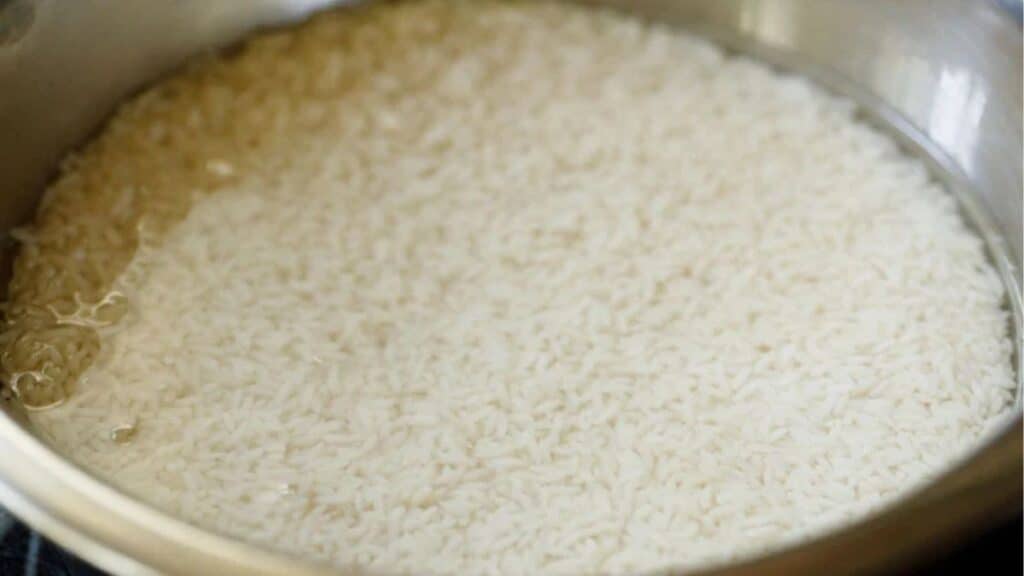
In a blender, combine suji, salt, sugar, and water. Blend for about 1 minute until you have a smooth, lump-free paste. Add the curd and blend again until fully combined. Transfer to a bowl and stir in the coconut milk. The batter should be pourable — slightly thinner than a pancake batter. Set aside. Add the fruit salt only when you are ready to begin cooking.
Step 2: Temper the Whole Spices for the Stew (2 Minutes)
Heat coconut oil in a pressure cooker over medium heat. Add star anise, cinnamon, cardamom, cloves, and black peppercorns. Let them crackle and bloom in the oil for about 30 seconds until the kitchen smells fragrant. This step is quick but important — the spices need the heat of the oil to release their essential oils.
Step 3: Build the Stew Base (5 Minutes)
Add the sliced onions to the cooker and sauté until soft and lightly golden, about 3 minutes. Add ginger, slit green chilli, and curry leaves. Stir and cook for another minute until the raw smell of ginger is gone.
Step 4: Add the Vegetables and Pressure Cook (8 Minutes)
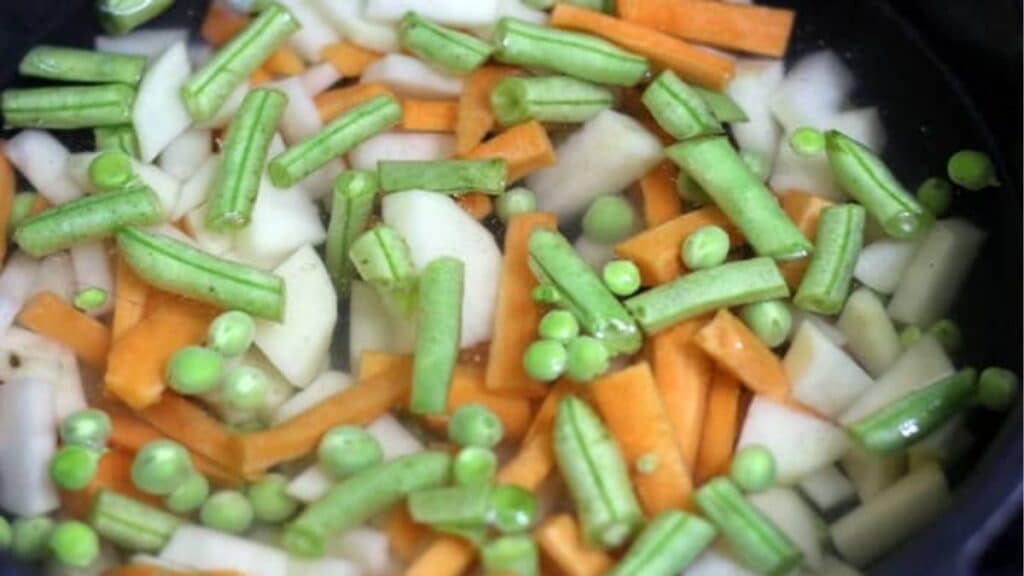
Add the beans, potato, and carrot. Toss them in the oil and spice base for 2 minutes. Pour in just enough water to cover the vegetables, add salt, and close the pressure cooker. Cook for 2–3 whistles — the vegetables should be just tender, not falling apart.
Step 5: Finish with Coconut Milk (10 Minutes)
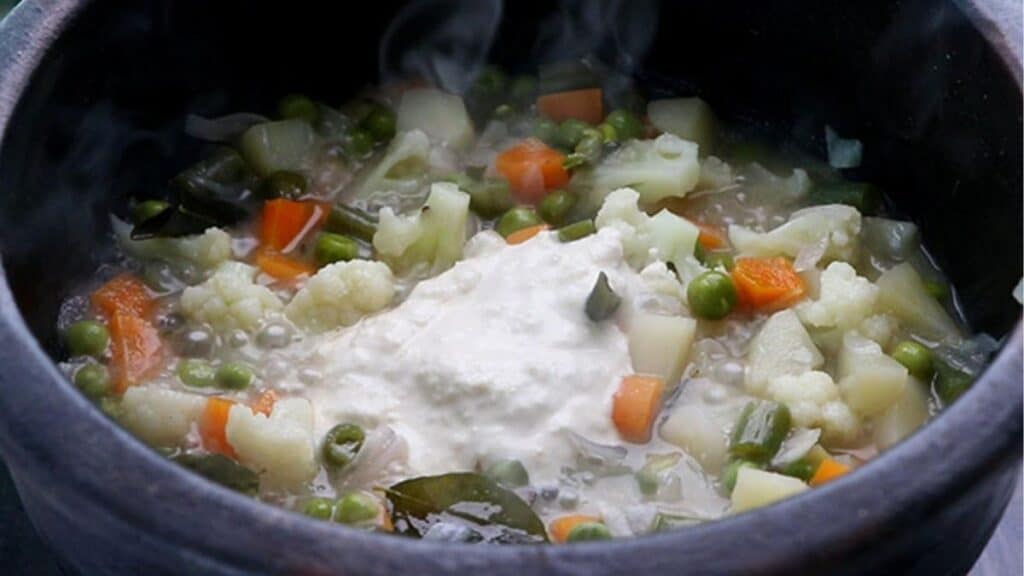
Once the pressure releases, open the cooker and reduce heat to its lowest setting. Pour in the coconut milk slowly, stirring gently as you pour. Simmer — do not boil — for 8 to 10 minutes. The stew will thicken slightly and take on a glossy, ivory appearance. Taste and adjust salt. Remove from heat.
Step 6: Activate the Appam Batter (1 Minute)
Add the fruit salt to the batter and fold it in with one or two gentle stirs. Do not overmix. Cook immediately — the leavening effect of the fruit salt is immediate and short-lived.
Step 7: Cook the Appams (2–3 Minutes Each)
Heat a flat non-stick pan or appachatti over medium-low heat and grease it lightly. Pour a ladle of batter onto the pan and immediately tilt it in a circular motion to spread the batter outward. Let the centre stay thick. Cook on low to medium heat until the edges are golden and crispy and the centre is set and no longer wet on top. Flip carefully and cook the other side for 1 minute. Remove and cover with a soft cloth to retain softness. Repeat.
Step 8: Serve Together While Hot
Plate the appams immediately alongside warm bowls of stew. The contrast of temperatures — the hot appam just off the pan and the gently warm stew — is part of the experience.
Total Active Time: 30 Minutes
Expert Tips for the Best Good Friday Appam and Stew
Coconut oil is essential for authenticity. The distinct aroma of coconut oil blooming with whole spices is what makes Kerala stew smell the way it does. Vegetable oil produces a noticeably flatter result. On Good Friday especially, when the simplicity of the dish is the point, every ingredient matters.
Keep your curd mild and at room temperature. Very sour curd will make the appam taste sharp and acidic rather than gently tangy. If your curd is too sour, balance it with a little extra coconut milk in the batter.
Curry leaves must be fresh. Dried curry leaves have very little flavour. Fresh curry leaves fried in coconut oil release a distinctive, slightly citrusy aroma that is irreplaceable in this dish. If you can’t find fresh ones, increase the ginger and green chilli slightly — don’t substitute with dried.
For a more traditional festive version, skip the pressure cooker and cook the vegetables in an open pot over medium heat. It takes longer — about 20 minutes — but the stew develops a slightly deeper flavour and the vegetables hold their shape better.
Don’t skip the cold water rinse on the pan between appams. If the pan gets too hot, the batter will set before you can spread it. A quick wipe with a damp cloth between each appam keeps the temperature consistent.
Regional Variations and Adaptations
Across Kerala’s Christian communities, subtle differences in how this meal is prepared reflect geography, community history, and family tradition.
- In Syrian Christian households — particularly in Kottayam, Thiruvalla, and Ernakulam — the Good Friday stew is sometimes enriched with a small amount of thick coconut cream stirred in at the very end, making it richer than the everyday version while still remaining meatless.
- In Latin Catholic coastal communities, the stew occasionally includes raw banana or yam alongside the standard vegetables, giving it more body and a faintly earthy sweetness.
- In Malankara Orthodox homes, the stew is sometimes made without any green chilli at all on Good Friday, keeping it entirely mild as a mark of the day’s solemnity. The heat comes only from the black peppercorns in the whole spice base.
- For the Kerala diaspora making this in the UK, the US, Australia, or the Gulf, the most common adaptation is using canned full-fat coconut milk and store-bought frozen curry leaves — both acceptable shortcuts that still produce a recognisably authentic result.
- A vegan version requires no changes to the vegetable stew. The only adaptation needed is in the appam batter: substitute the curd with a plant-based yogurt — oat or cashew work best — and the result is nearly indistinguishable from the original.
Make-Ahead Strategy for Good Friday
Good Friday is a day of church services and prayers, which means the cook in the family often has limited time in the hours before the evening meal. Both the stew and the batter can be partially prepared in advance.
The Night Before: Make the full vegetable stew up to the point just before the coconut milk goes in. Refrigerate the cooked, spiced vegetables in their pot overnight.
The Morning Of: Prepare the appam batter and refrigerate it. Take it out 20–30 minutes before cooking to bring it back to room temperature. Mix the fruit salt in only when you’re ready to cook.
When Reheating the Stew: Warm the cooked vegetable base on low heat. Once warm, add the coconut milk and simmer for 8–10 minutes. The flavour will actually be deeper than if made fresh — overnight resting allows the whole spices to bloom further into the base.
At Serving Time: Add the fruit salt to the batter and cook appams fresh. This takes about 20 minutes for 12 appams and is the only step that genuinely cannot be done in advance. The rest is already done.
Serving Suggestions and Presentation
- Post-service evening timing: This meal is ideally served after the family has returned from church. It should be warm, ready, and waiting — not something that requires the cook to spend an hour at the stove after a long day.
- Table setting: In traditional Kerala Christian homes, appam and stew on Good Friday is served simply — no elaborate spread, no multiple dishes. Two bowls per person: one for the appams, one for the stew. A small bowl of coconut chutney on the side is common, as is a glass of cold water or light buttermilk.
- For larger gatherings and family dinners: Make a double or triple batch of the stew the night before. For the appams, set up an assembly line with two pans going simultaneously — one person cooking, one person serving. The stew keeps warm well; appams are best eaten the moment they come off the pan.
- Pair with: Coconut chutney, a simple Kerala banana or plantain on the side, and plain rice if the gathering is larger. On Good Friday, the meal is deliberately restrained — resist the urge to add more dishes.
Why This Meal Still Matters
In the landscape of festival foods, most dishes announce themselves loudly — they are celebratory, abundant, decorated with colour and garnish. Appam and vegetable stew on Good Friday is the exception. It is a meal that says nothing loudly, and yet says everything it needs to say.
The white stew and lacy white appam on a Good Friday table are not plain because of poverty or lack of effort. They are plain because the day calls for it. This is food made with intention — the choice of mildness over richness, simplicity over spectacle, nourishment over indulgence — that mirrors the spiritual purpose of the day itself.
For Kerala Christians in the diaspora — in London, in Sydney, in New Jersey, in the Gulf — making this meal on Good Friday is one of the most quietly powerful ways to maintain a connection to home. The smell of coconut oil and curry leaves, the sound of the appam batter sizzling on the pan, the bowl of pale, aromatic stew carried to the table after a long day — these sensory memories don’t need explanation. They carry the day forward, year after year, in kitchens far from Kerala, cooked by people who may never have lived there but who know, somehow, exactly what this meal is supposed to feel like.
Some traditions survive not because they are enforced but because they are loved.
Can I make appam without an appam pan?
Yes. A regular flat non-stick pan works well for this suji-based batter.
Why does my appam stick to the pan?
The pan needs to be properly preheated and lightly greased before each appam. If it sticks repeatedly, your pan may not have sufficient non-stick coating — switch to a well-seasoned cast iron or a good quality non-stick pan.
Can I use light coconut milk in the stew?
You can, but the stew will taste noticeably thinner.
How do I prevent the coconut milk from curdling?
Keep the heat low once the coconut milk goes in and never let it boil. Stir gently and remove from heat as soon as the stew looks smooth and well combined.
