
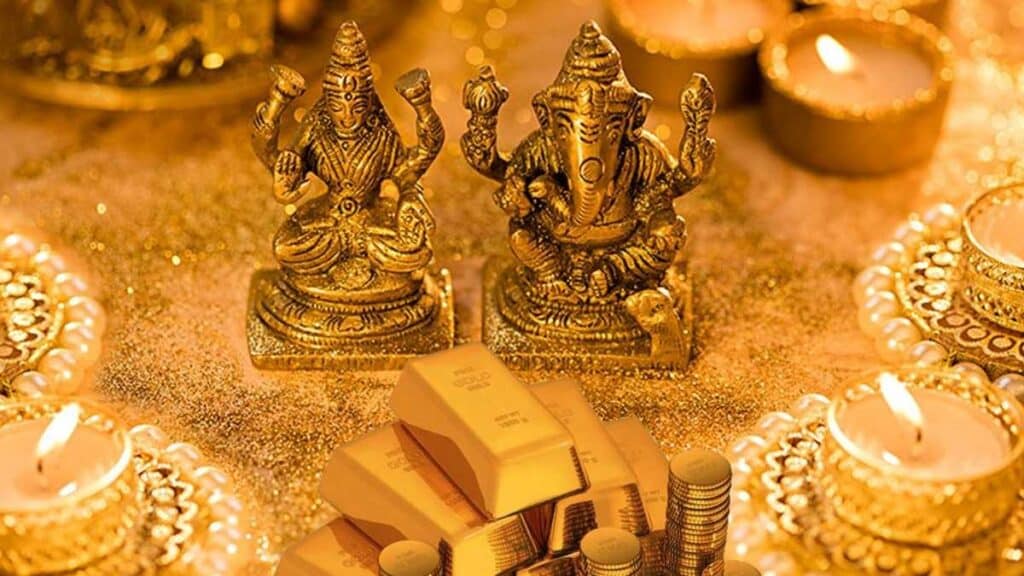
Akshaya Tritiya, also known as Akha Teej, is one of the most auspicious and widely celebrated festivals in the Hindu and Jain calendars. Observed on the third lunar day (Tritiya) of the bright fortnight (Shukla Paksha) of the Hindu month of Vaishakha, this sacred day is synonymous with eternal prosperity, new beginnings, and spiritual merit.
The word Akshaya (अक्षय) in Sanskrit means “never diminishing” — encompassing prosperity, hope, joy, and lasting success. Any act of charity, devotion, investment, or new beginning undertaken on this day is believed to yield benefits that never fade but only grow with time.
Rooted in both Hindu and Jain traditions, Akshaya Tritiya is one of only three days in the entire Hindu calendar considered universally self-auspicious (Swayamsiddha Muhurta) — meaning no additional planetary alignment or muhurta calculation is needed to begin auspicious activities. The other two are Yugadi and Vijaya Dashami.
Widely celebrated across India and by the Indian diaspora worldwide, Akshaya Tritiya is the occasion for purchasing gold, starting businesses, solemnizing weddings, performing charity, and deepening spiritual practice.
When Is Akshaya Tritiya in 2026?
Akshaya Tritiya 2026 falls on Sunday, April 19, 2026.
Akshaya Tritiya follows the Hindu lunisolar calendar, which is why its Gregorian date changes every year. It is determined by the Tritiya Tithi (third lunar day) of Vaishakha Shukla Paksha — the position of the Moon in the Hindu month of Vaishakha. This means the festival falls between late April and mid-May each year.
Akshaya Tritiya 2026 Timings (India)
- Tritiya Tithi Begins: 10:49 AM on April 19, 2026
- Tritiya Tithi Ends: 7:27 AM on April 20, 2026
- Akshaya Tritiya Puja Muhurat: 10:49 AM – 12:20 PM IST
- Duration: 1 Hour 32 Minutes
Table of Contents
Akshaya Tritiya In USA, Canada, Australia, New Zealand, UK, UAE, Singapore 2026 Dates
Akshaya Tritiya on Sunday, April 19, 2026
- Akshaya Tritiya Puja Muhurat – 06:11 AM to 12:55 PM
- Duration – 06 Hours 44 Mins
Akshaya Tritiya on Sunday, April 19, 2026
- Akshaya Tritiya Puja Muhurat – 06:28 AM to 01:17 PM
- Duration – 06 Hours 49 Mins
Akshaya Tritiya on Monday, April 20, 2026
- Akshaya Tritiya Puja Muhurat – 06:31 AM to 11:57 AM
- Duration – 05 Hours 26 Mins
Akshaya Tritiya on Sunday, April 19, 2026
- Akshaya Tritiya Puja Muhurat – 06:19 AM to 01:00 PM
- Duration – 06 Hours 41 Mins
Akshaya Tritiya on Sunday, April 19, 2026
- Akshaya Tritiya Puja Muhurat – 09:19 AM to 12:19 PM
- Duration – 03 Hours 00 Mins
Akshaya Tritiya on Monday, April 20, 2026
- Akshaya Tritiya Puja Muhurat – 06:59 AM to 09:57 AM
- Duration – 02 Hours 58 Mins
Why Do Akshaya Tritiya Dates Change Every Year?
Akshaya Tritiya is observed according to the Hindu lunisolar calendar, not the Gregorian calendar. Since lunar months are shorter than solar months, the festival’s date shifts each year, typically falling anywhere between late April and mid-May.
The exact timing of the Tritiya Tithi is calculated based on local sunrise and the position of the Moon, which is why the festival date and puja timings vary slightly by location.
Akshaya Tritiya — Overview
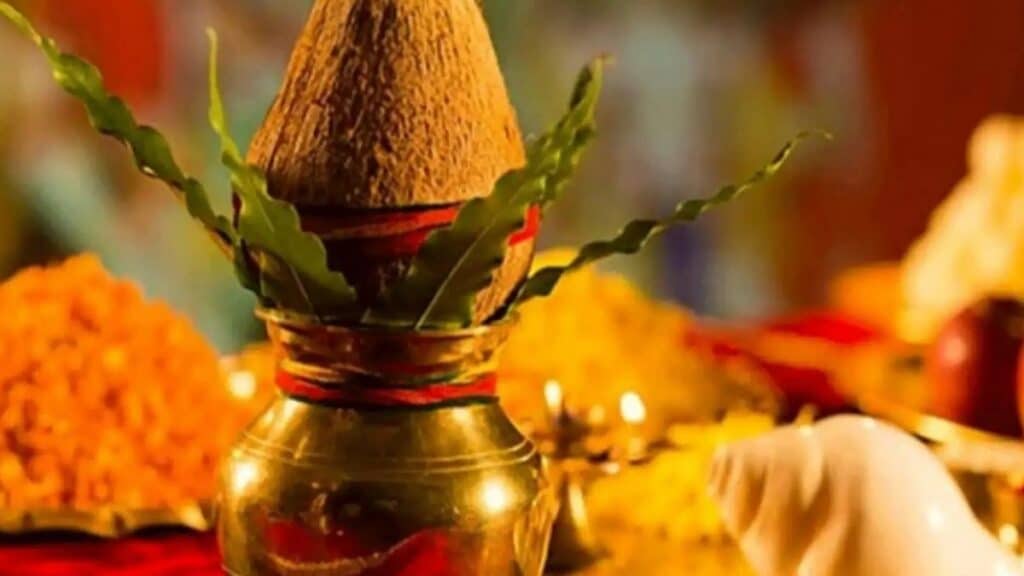
Akshaya Tritiya is one of the most auspicious days in the Hindu and Jain calendars, observed annually by hundreds of millions of people across India and the global diaspora. The festival is presided over by Lord Vishnu, the preserver in the Hindu Trinity, whose energy is associated with protection, abundance, and cosmic order.
The day holds extraordinary spiritual and cultural significance — it is believed to mark the beginning of the Treta Yuga, one of the four great cosmic ages in Hindu cosmology. It is also the day the Yamunotri and Gangotri temples in the Himalayas reopen after winter, formally beginning the Chota Char Dham pilgrimage season.
For millions of families, Akshaya Tritiya is the day to buy gold, launch businesses, get married, perform charitable acts, and honor departed ancestors through Pitra Tarpan — all with the belief that every good deed done on this day carries blessings that never diminish.
Akshaya Tritiya Other Names and Regional Identities
Akshaya Tritiya is known by different names across India’s diverse linguistic and cultural landscape.
In Hindi and Sanskrit it is अक्षय तृतीया (Akshaya Tritiya). In Rajasthan and Gujarat it is widely known as Akha Teej (अखा तीज). In Odisha, the agricultural ritual observed on this day is called Akhi Muthi Anukula. In Maharashtra, Akshaya Tritiya is counted among the Sadetin Muhurtas — the three and a half most sacred days of the Marathi calendar.
In Jain communities, the day is celebrated as Varshitap Parana, marking the end of the year-long alternate-day fast. In the Telugu-speaking states of Andhra Pradesh and Telangana, it is associated with the rare Nija Roopa Darsanam at Simhachalam temple.
In diaspora communities across the USA, Canada, UK, UAE, Australia, and Singapore, the festival is most commonly referred to as Akshaya Tritiya or Akha Teej.
The Origins, History, and Legends of Akshaya Tritiya
Akshaya Tritiya is rich with mythological significance drawn from both Hindu and Jain traditions.
Jain Origin — Rishabhanatha Breaks His Fast
The most significant Jain narrative centers on Rishabhanatha (Adinath), the first Tirthankara, who undertook a rigorous fast lasting 400 days (as per the Śvetāmbara tradition) or six months (as per the Digambara tradition) after renouncing the world. His fast could only be broken when food was offered completely free from the 42 ritual faults that Jain monastic code prescribes.
When Rishabhanatha entered Hastinapur, King Shreyansha — his great-grandson — attained the knowledge of his previous births (Jati Smaran Gyan) and recalled the precise rules of offering food to a Jain monk. He offered freshly prepared sugarcane juice that had not been made specifically for Rishabhanatha, fulfilling all conditions. Rishabhanatha cupped his hands to receive the juice, and not a single drop fell — a divine feat possible because Tirthankaras possess the kar-paatra labdhi (the power to use their hands as a vessel). Demi-gods and celestial beings celebrated this moment. The site where this occurred, in Hastinapur, remains one of the most sacred Jain pilgrimage sites today.
Hindu Mythology — The Akshaya Patra
During the Pandavas’ exile in the Mahabharata, Yudhishthira prayed to the sun god Surya, who gifted him the Akshaya Patra — a magical vessel that remained perpetually full of food until Draupadi finished eating each day. On this very day, the sage Durvasa arrived with his disciples right after Draupadi had finished her meal, with only three grains of rice left in the bowl. Draupadi called upon Lord Krishna, who ate those three grains and miraculously satiating the hunger of all beings in the universe, including the sages — saving the Pandavas from Durvasa’s wrath.
Birth of Parashurama
Akshaya Tritiya is also celebrated as Parashurama Jayanti — the birthday of Parashurama, the sixth avatar of Lord Vishnu. Temples dedicated to Vishnu observe special rituals on this day. Depending on when the Tritiya Tithi begins, Parashurama Jayanti may occasionally fall on the preceding day.
Other Legends
According to Hindu tradition, the sage Vyasa began narrating the Mahabharata to Lord Ganesha on Akshaya Tritiya. The holy river Ganga is believed to have descended to Earth on this day. Kubera, the god of wealth, is said to have been appointed his divine role on this auspicious tithi.
Akshaya Tritiya: Cultural and Spiritual Significance
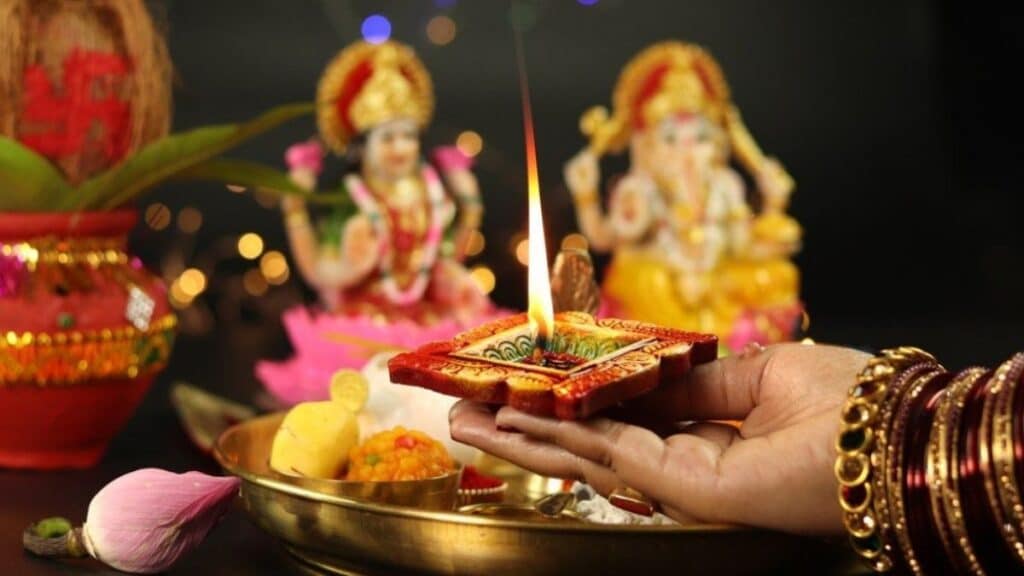
At its heart, Akshaya Tritiya is a festival of eternal abundance. The belief that no act of goodness, devotion, or generosity performed on this day will ever diminish gives the festival its spiritual power. It invites people to invest — in faith, in relationships, in prosperity, and in the well-being of others.
For Hindus, the day is presided over by Lord Vishnu and Goddess Lakshmi, whose blessings are invoked for protection, wealth, and cosmic harmony. For Jains, it represents the highest ideals of renunciation, spiritual purity, and the grace of the Tirthankaras.
Socially, Akshaya Tritiya transcends the religious to become a shared cultural moment — a day when families across generations align themselves with the promise of abundance and new beginnings.
Akshaya Tritiya Prayers and Religious Observances
At Temples: Devotees visit Vishnu temples for special Lakshminarayan pujas, offered with tulsi, yellow flowers, and seasonal fruits. The Abhijit Muhurat — considered the most powerful window for worship — typically falls around midday. In Jain temples, Rishabhanatha (Adinath) is worshipped and sugarcane juice offerings are made.
At Home: Families set up a puja space with an image of Lord Vishnu and Goddess Lakshmi. Offerings include flowers, panchamrit, incense, and yellow-colored items symbolic of prosperity. Many households chant the Vishnu Sahasranama or Lakshmi Ashtottara. Pitra Tarpan — ancestral water offerings — are also performed, as the day is associated with remembrance of loved ones who have passed.
Powerful Akshaya Tritiya Mantras
माँ लक्ष्मी — समृद्धि & वैभव
मंत्र (Hindi):
ॐ श्रीं महालक्ष्म्यै नमः॥
Hinglish:
Om Shreem Mahalakshmyai Namah
कुबेर देव — धनाधिपति
मंत्र (Hindi):
यक्षाय कुबेराय वैश्रवणाय धनधान्याधिपतये,
धनधान्यसमृद्धिं मे देहि दापय स्वाहा॥
Hinglish:
Yakshaya Kuberaya Vaishravanaya Dhanadhanyadhipataye,
Dhanadhanyasamruddhim Me Dehi Dapaya Swaha
माँ महालक्ष्मी — विशेष पाठ
मंत्र (Hindi):
ॐ श्रीं ह्रीं श्रीं कमले कमलालये प्रसीद प्रसीद,
ॐ श्रीं ह्रीं श्रीं महालक्ष्म्यै नमः॥
Hinglish:
Om Shreem Hreem Shreem Kamale Kamalalaye Praseed Praseed,
Om Shreem Hreem Shreem Mahalakshmyai Namah
Jain Observance: Jains observing the year-long Varshitap fast break it on Akshaya Tritiya by drinking sugarcane juice. This deeply moving ceremony, known as Varshitap Parana, is observed at major pilgrimage sites including Hastinapur, Palitana, Kesariyaji Tirth, Ranakpur, and Kulpakji Tirth.
Charity: Donating food, clothing, gold, or contributions toward education on this day is considered especially meritorious. No act of giving on Akshaya Tritiya — however small — is believed to go without lasting reward.
Akshaya Tritiya Katha
In Hindi
भगवान श्री कृष्ण एक बार धर्मराज युधिष्ठिर से कहते हैं — “हे पार्थ! प्राचीनकाल में महोदय नाम का एक वैश्य था।”
महोदय एक सच्चरित्र, मृदुभाषी व्यापारी था। उसका मन सदा शास्त्र-चिंतन में लगा रहता। देवताओं और ब्राह्मणों की सेवा उसका स्वभाव था। जब भी दैनिक कार्यों से थोड़ा समय मिलता, वह सत्संग में जा बैठता।
एक दिन मार्ग में उसने कुछ ऋषियों को अक्षय तृतीया के महत्त्व का वर्णन करते सुना। ऋषि कह रहे थे —
“अक्षय तृतीया के दिन ही नर-नारायण, हयग्रीव और परशुराम अवतार प्रकट हुये।
इस तिथि पर किये गये दान, हवन, पूजन का फल कभी नष्ट नहीं होता।”
यह सुनकर महोदय का हृदय भर आया। वह गंगा तट पर गया, पितृ-तर्पण किया, और श्रद्धापूर्वक ब्राह्मणों को जल से भरे घड़े, खांड, जौ, गेहूँ, दही-चावल, गन्ना और दुग्ध पदार्थ दान किये। उसकी पत्नी माया के बंधन में थी और दान से रोकती रही — पर महोदय डिगा नहीं।
अंत में भगवान का चिंतन करते हुये उसने सद्गति पाई। अगले जन्म में वह कुशावतीपुरी में क्षत्रिय कुल में जन्मा — और उसे अक्षय सुख-सम्पदा मिली। गौ-दान, स्वर्ण-दान, अन्न-दान किया, फिर भी सम्पदा घटी नहीं। यही था उसके पूर्व जन्म की अक्षय तृतीया के व्रत का अटूट फल।
भगवान श्री कृष्ण कहते हैं — “हे युधिष्ठिर! इस तिथि पर किये गये जप, तप, हवन, दान — कुछ भी क्षय नहीं होता। इसीलिये यह ‘अक्षय तृतीया’ कहलाती है।”
In Hinglish
Bhagwan Shri Krishna ek baar Yudhishthir se kehte hain — “Arjun ke bhai, bahut purane zamane mein Mahoday naam ka ek vaishya (vyapari) tha.”
Mahoday sachcha insaan tha. Seedha-saadha, meetha bolne wala. Har waqt bhagwan ka dhyaan, shastra sunna, satsang karna — yahi uska kaam tha. Business toh chalta tha, par dil hamesha dharma mein laga rehta.
Ek din raste mein unhone kuch rishiyon ko sunta suna — woh log Akshaya Tritiya ki mahima bata rahe the.
“Is din Nar-Narayan, Hayagriva aur Parshuram ke avataar praakat hue the.
Is tithi par kiya gaya daan, havan, pujan kabhi naashan nahi hota.”
Mahoday ka dil bhar aaya. Seedha Ganga ke kinare gaya, pitron ka tarpan kiya, aur jo bhi ghar mein tha — paani ke ghade, shakkar, jau, gehun, dahi-chawal, ganna — sab dil se Brahmanon ko daan kar diya. Biwi roki, boli paisa kyu phenko — par Mahoday nahi ruka.
Zindagi achchi tarah jeeke aur Bhagwan ka naam lete lete, Mahoday ne sadgati payi. Agle janam mein woh Kushavati nagar mein kshatriya ghar mein paida hua — aur seedha akshay sampada mili. Daanta-daanta daan karte rahe, phir bhi daulat kam nahi hui. Yeh tha unke purane janam ki Akshaya Tritiya ka phal.
Krishna bolte hain — “Yudhishthir, is din jo bhi karo — jap, tap, daan, havan — woh kabhi khatam nahi hota. Isliye is tithi ka naam hai — Akshaya Tritiya.”
Akshaya Tritiya Aarti
श्री लक्ष्मी जी की आरती (Lakshmi Ji Aarti)
In Hindi:
ॐ जय लक्ष्मी माता, मैया जय लक्ष्मी माता।
तुमको निशिदिन सेवत, हरि विष्णु विधाता॥
उमा, रमा, ब्रह्माणी, तुम ही जग माता।
सूर्य-चन्द्रमा ध्यावत, नारद ऋषि गाता॥
दुर्गा रूप निरंजनी, सुख सम्पत्ति दाता।
जो कोई तुमको ध्यावत, ऋद्धि-सिद्धि धन पाता॥
जिस घर में तुम रहतीं, सब सद्गुण आता।
सब सम्भव हो जाता, मन नहीं घबराता॥
तुम बिन यज्ञ न होते, वस्त्र न कोई पाता।
खान-पान का वैभव, सब तुमसे आता॥
महालक्ष्मी जी की आरती, जो कोई जन गाता।
उर आनन्द समाता, पाप उतर जाता॥
In Hinglish:
Om Jai Lakshmi Mata, Maiya Jai Lakshmi Mata
Tumko Nishidin Sevat, Hari Vishnu Vidhata
Uma, Rama, Brahmani, Tum Hi Jag Mata
Surya Chandrama Dhyavat, Narad Rishi Gaata
Durga Roop Niranjani, Sukh Sampatti Data
Jo Koi Tumko Dhyavat, Riddhi Siddhi Dhan Pata
Jis Ghar Mein Tum Rehti, Sab Sadgun Aata
Sab Sambhav Ho Jata, Man Nahin Ghabrata
Tum Bin Yagya Na Hote, Vastr Na Koi Pata
Khan-Paan Ka Vaibhav, Sab Tumse Aata
Mahalakshmi Ji Ki Aarti, Jo Koi Jan Gaata
Ur Anand Samata, Paap Utar Jata
How Akshaya Tritiya Is Celebrated Across India
While the spirit of Akshaya Tritiya is consistent, its expressions vary beautifully across India’s regions.
In Maharashtra, Akshaya Tritiya is one of the Sadetin Muhurtas — the most sacred days of the Marathi year. New businesses are launched, homes are purchased, and weddings are solemnized. Traditional foods like Puran Poli and Aamras are prepared and offered as Naivedhya.
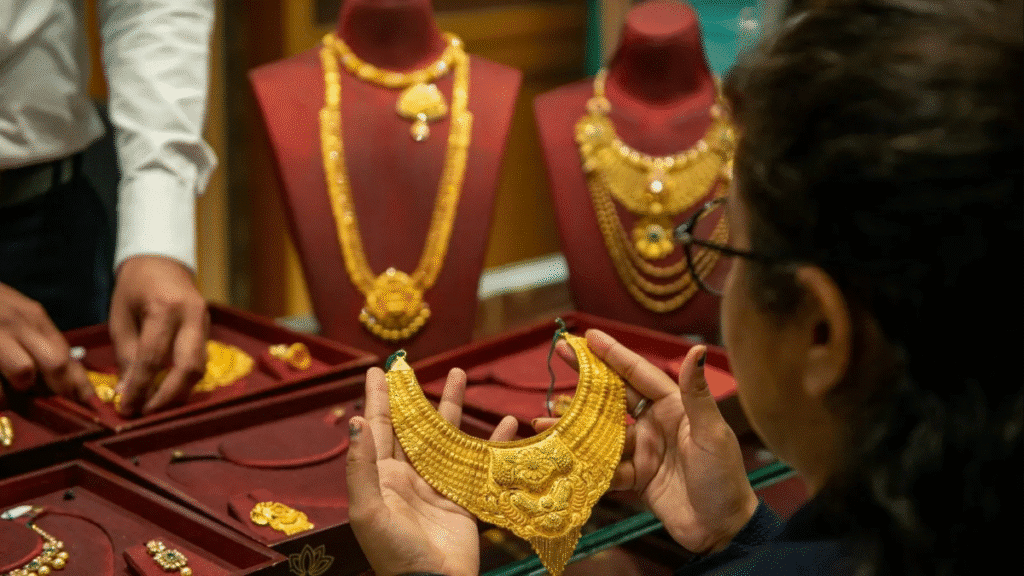
In Rajasthan and Gujarat, known as Akha Teej, the day is one of the biggest gold and jewelry buying occasions of the year. It is also a highly auspicious day for weddings, with mandaps booked months in advance.
In Odisha, farmers celebrate Akhi Muthi Anukula — the ceremonial sowing of the first fistful of paddy seeds, marking the start of the Kharif season. The construction of the chariots for Puri’s famous Rath Yatra also begins on this day.
In Andhra Pradesh and Telangana, the Simhachalam Temple performs the rare Nija Roopa Darsanam — removing layers of sandalwood paste from the deity to reveal the actual idol. This event draws thousands of pilgrims.
In Uttar Pradesh (Hastinapur), thousands of Jain pilgrims gather for the Varshitap Parana ceremony — one of the most spiritually significant Jain events of the year.
In Uttarakhand, the Yamunotri and Gangotri temples reopen on the Abhijit Muhurat of Akshaya Tritiya, welcoming the beginning of the Char Dham Yatra season., standing in water for arghya, singing folk songs, offering thekua—remain consistent everywhere.
Participation Across Religions in India
Though rooted in Hindu and Jain traditions, Akshaya Tritiya has grown into a broadly inclusive cultural occasion across India. The spirit of auspiciousness, generosity, and new beginnings resonates widely, and people of many faiths participate — particularly in the traditions of gold-buying, gifting sweets, and attending community events. In states like Gujarat and Rajasthan, the day holds cultural weight that brings communities together beyond religious affiliation.
How Akshaya Tritiya Is Celebrated Outside India
Akshaya Tritiya is celebrated with enthusiasm by Indian diaspora communities worldwide. In the USA, Canada, UK, and Australia, Hindu temples and Jain derasars hold special pujas, abhishekams, and community meals. Indian jewelers in cities across New Jersey, Toronto, London, Melbourne, and Dubai organize gold-buying events and cultural promotions.
In Singapore and the UAE, where South Asian communities are sizeable, temples see strong attendance and diaspora families observe traditional rituals alongside modern gold investments. In the UK, cities like Leicester, Birmingham, and London host cultural evenings and community gatherings. In Germany, smaller but close-knit communities come together at cultural centers for puja and celebration.
For diaspora families, Akshaya Tritiya often becomes the day to make a meaningful financial decision, call home, or take a first step on something long planned — honoring the belief that beginnings made on this day carry enduring blessings.
Akshaya Tritiya Gifting Traditions
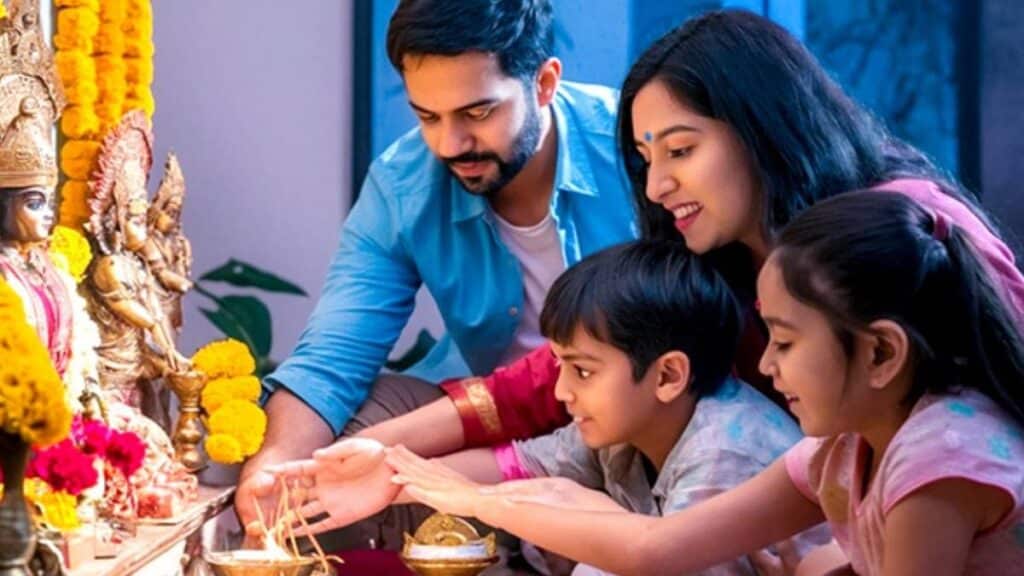
The most iconic Akshaya Tritiya gift is gold — coins, jewelry, or ornaments — rooted in the belief that gold bought or gifted on this day will always grow and never diminish. Silver, new clothing, sweets, dry fruits, and silver puja items are also traditional gifts. In Jain tradition, offering sugarcane juice holds deep symbolic meaning.
In modern diaspora contexts, gifting has evolved to include digital gold, gold ETFs, home appliances, and charitable donations made in someone’s name. Gifts that support education — books, courses, scholarships — align beautifully with the day’s ethos of lasting investment.
Akshaya Tritiya Foods and Culinary Traditions
Mango — at its seasonal peak during Vaishakha — features prominently on the Akshaya Tritiya table. In Maharashtra, Puran Poli (sweet stuffed flatbread) and Aamras (thick mango purée) are the quintessential festive foods, offered as Naivedhya.
In Gujarat and Rajasthan, sweets like lapsi, churma, and kheer are prepared. In South India, raw mango rice (Mamidikaya Pulihora), coconut rice, and payasam are popular. In Odisha, freshly harvested rice and seasonal vegetables are shared in community meals.
Sugarcane juice, with its deep Jain significance, is consumed widely across communities on this day. Sattvic food — cooked without onion and garlic — is preferred in households observing heightened ritual purity.
Akshaya Tritiya: Music, Art, and Cultural Expression
Devotional singing and classical music are central to Akshaya Tritiya observances. Vishnu bhajans, Lakshmi stotras, and vedic chants fill temples during puja hours. In Jain communities, devotional stavans in praise of Rishabhanatha and the Tirthankaras are sung during Varshitap Parana celebrations.
Cultural organizations in the diaspora use Akshaya Tritiya as an occasion for classical dance performances — particularly Bharatanatyam, Odissi, and Kathak — drawing on themes from the legends of Vishnu and Rishabhanatha. In Odisha, folk songs associated with the harvest season accompany the agricultural rituals of Akhi Muthi Anukula.hath references, poems, and stories. Cinema (Gangs of Wasseypur) and television feature Chhath prominently, while #ChhathPuja trends globally on social media.
Akshaya Tritiya’s Modern Observance and Evolving Practices
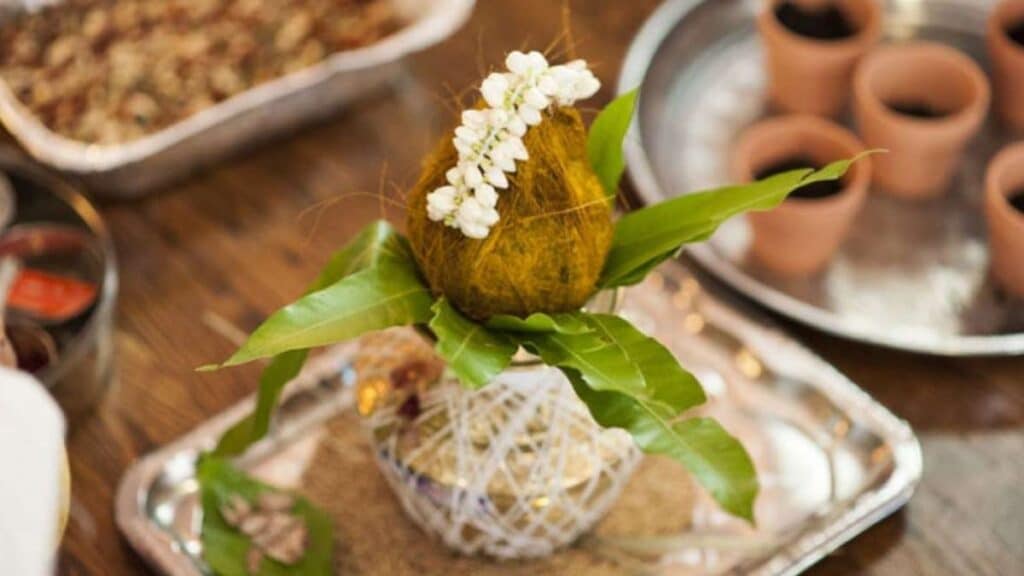
Today, Akshaya Tritiya straddles the ancient and the contemporary effortlessly. It is one of India’s largest gold-buying occasions of the year, with jewelry brands and digital gold platforms recording peak sales. Online pujas streamed from temples in India, virtual family gatherings, and group charitable donations have become part of how diaspora families mark the day.
Environmentally conscious families are choosing lightweight jewelry, recycled gold, or digital gold rather than heavy ornaments. Many communities channel the day’s spirit into charitable giving — donating to education funds, food banks, or community organizations in the belief that giving on Akshaya Tritiya multiplies.
How to wish someone: “Wishing you endless prosperity and joy this Akshaya Tritiya!” or in Hindi — “Akshaya Tritiya ki hardik shubhkamnayen!” (अक्षय तृतीया की हार्दिक शुभकामनाएं)
Cultural Reflection
Akshaya Tritiya endures because it speaks to a universal human hope — that goodness invested with intention will grow, that generosity is never wasted, and that new beginnings deserve to be honored. From the Jain monk breaking a 400-day fast in Hastinapur to a family in Toronto buying their first gold coin, the thread of intention is the same.
For the Indian diaspora, Akshaya Tritiya is an act of cultural memory as much as a spiritual observance — a moment each year when families across continents pause to align themselves with something ancient, meaningful, and enduring. Its message remains as fresh as the spring season it arrives with: what you sow in faith, you shall always reap in abundance.