
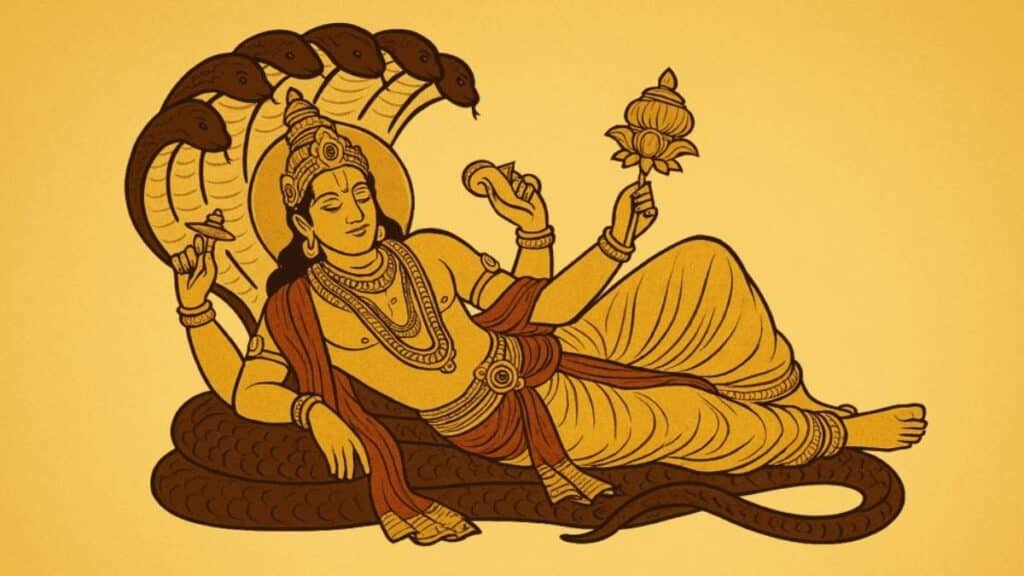
Anant Chaturdashi is one of Hinduism’s most spiritually profound festivals, dedicated to Lord Vishnu in his infinite, eternal form — Ananta, meaning “without end.” Observed on the 14th day (Chaturdashi) of the Shukla Paksha (bright fortnight) in the Hindu month of Bhadrapada, it is a day of fasting, sacred vows, and deep devotion.
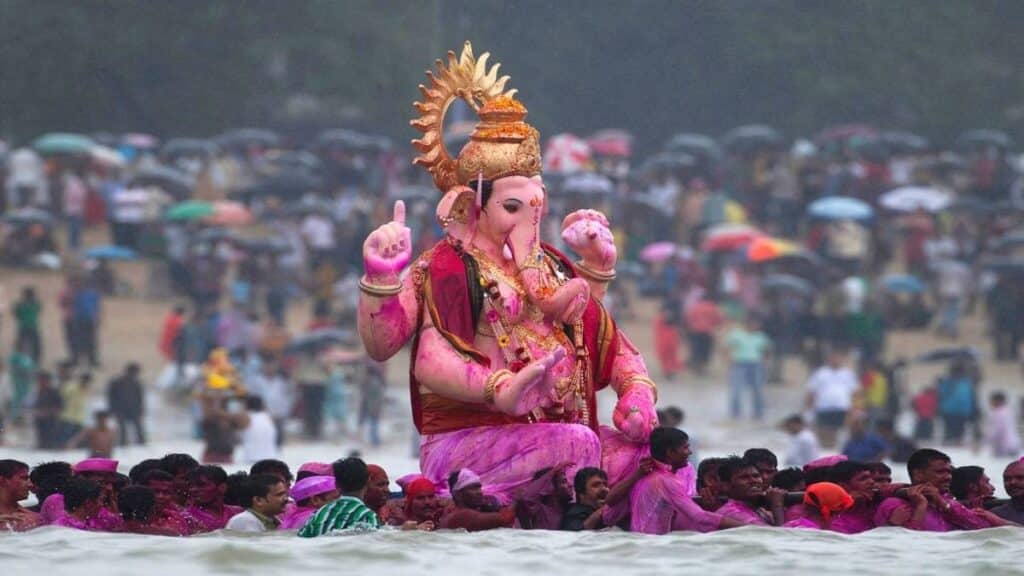
The festival also marks the conclusion of the ten-day Ganesh Chaturthi celebration. On this day, millions of devotees bid a heartfelt farewell to Lord Ganesha through Ganesh Visarjan — the ceremonial immersion of Ganesha idols in rivers, lakes, or the sea — filling streets with music, color, and emotion.
The dual significance of Anant Chaturdashi — honoring Vishnu’s eternal presence while bidding farewell to Ganesha — makes it one of the most spiritually and culturally rich days in the Hindu calendar.
When Is Anant Chaturdashi in 2026?
Anant Chaturdashi is observed on the Chaturdashi Tithi of Bhadrapada Shukla Paksha, which falls in September each year.
Anant Chaturdashi 2026 Date: Friday, September 25, 2026
| Detail | Timing (IST – New Delhi) |
|---|---|
| Puja Muhurat | 06:11 AM – 11:06 PM |
| Puja Duration | 16 hours 55 minutes |
| Chaturdashi Tithi Begins | 11:18 PM on September 24, 2026 |
| Chaturdashi Tithi Ends | 11:06 PM on September 25, 2026 |
Table of Contents
Anant Chaturdashi In USA, Canada, Australia, New Zealand, UK, UAE, Singapore 2026 Dates
Anant Chaturdashi on Friday, September 25, 2026
- Anant Chaturdashi Puja Muhurat – 06:47 AM to 01:36 PM
- Duration – 06 Hours 50 Mins
Anant Chaturdashi on Friday, September 25, 2026
- Anant Chaturdashi Puja Muhurat – 07:08 AM to 01:36 PM
- Duration – 06 Hours 28 Mins
Anant Chaturdashi on Friday, September 25, 2026
- Anant Chaturdashi Puja Muhurat – 05:49 AM to 03:36 AM, Sep 26
- Duration – 21 Hours 47 Mins
Anant Chaturdashi on Friday, September 25, 2026
- Anant Chaturdashi Puja Muhurat – 06:51 AM to 06:36 PM
- Duration – 11 Hours 45 Mins
Anant Chaturdashi on Friday, September 25, 2026
- Anant Chaturdashi Puja Muhurat – 06:09 AM to 09:36 PM
- Duration – 15 Hours 27 Mins
Anant Chaturdashi on Friday, September 25, 2026
- Anant Chaturdashi Puja Muhurat – 06:53 AM to 01:36 AM, Sep 26
- Duration – 18 Hours 43 Mins
Why Does the Date Change Every Year?
Anant Chaturdashi follows the Hindu lunisolar calendar, not the Gregorian solar calendar. It falls on the Chaturdashi Tithi of Bhadrapada Shukla Paksha, which shifts each year relative to the Gregorian calendar. In 2025, it fell on September 6; in 2026, it falls on September 25.
This variation occurs because lunar months are shorter than solar months, requiring periodic adjustments to keep the Hindu calendar aligned with seasons.
Anant Chaturdashi Overview
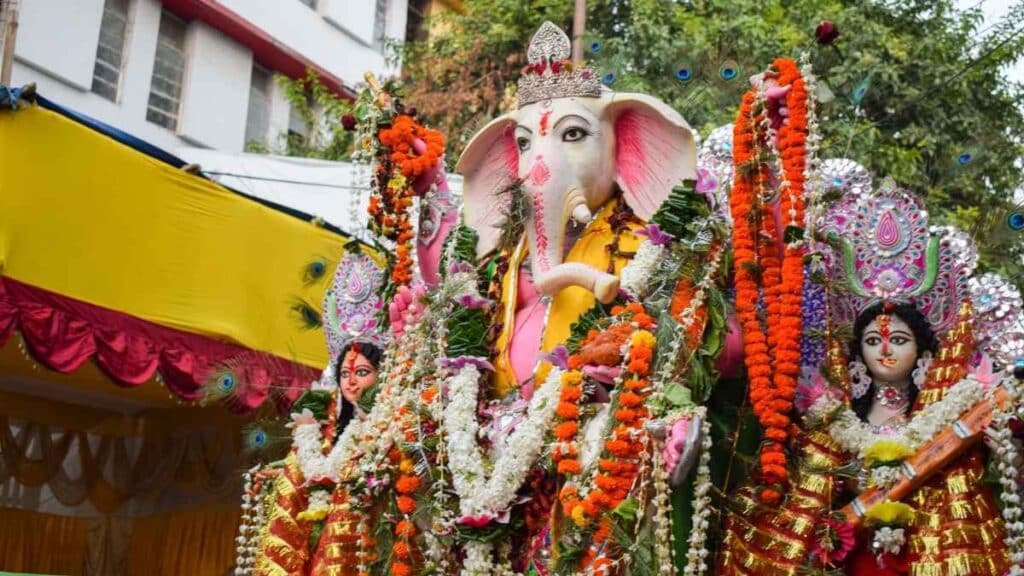
Anant Chaturdashi is observed by millions of Hindus across India, Nepal, and diaspora communities worldwide. The name comes from Sanskrit — “Ananta” means infinite or eternal, and “Chaturdashi” means the 14th lunar day. Together, the festival is a celebration of Vishnu’s boundless, all-pervading nature.
The spiritual heart of the festival is the Anant Sutra puja — the worship and tying of a 14-knotted sacred thread believed to carry Lord Vishnu’s blessings. Alongside this, the day marks the emotionally charged Ganesh Visarjan, where ten days of intimate devotion to Ganesha culminate in a grand communal farewell.
The festival is observed with particular grandeur in Maharashtra, Goa, Andhra Pradesh, Telangana, Karnataka, Uttar Pradesh, Bihar, and Nepal.
Other Names and Regional Identities
Anant Chaturdashi is known by several names across India’s diverse linguistic and regional communities:
| Language / Region | Name |
|---|---|
| Sanskrit | Anantacaturdaśī (अनंतचतुर्दशी) |
| Hindi | Anant Chaturdashi / Anant Chaudas |
| Marathi | Anant Chaturdashi / Ganpati Visarjan Day |
| Telugu | Ananta Chaturdashi |
| Kannada | Anantha Chaturdashi |
| Bengali / Odia | Ananta Chaturdashi |
| Gujarati | Anant Chaturdashi |
| Jain Communities | Ananta Chaudas / Last Day of Daslakshan Parv |
| Diaspora | Anant Chaturdashi / Ganesh Visarjan Day |
In Maharashtra, the day is most popularly called Ganpati Visarjan — the emotional farewell to Bappa. In Jain communities, it is observed as Ananta Chaudas, the final day of the ten-day Daslakshan festival.
Origins, History, and Legends
Anant Chaturdashi finds mention in ancient Hindu scriptures including the Mahabharata and the Agni Purana, which describe the veneration of Ananta — Lord Vishnu’s cosmic serpent form — as a means to free devotees from sin and grant spiritual liberation.
The most celebrated legend is the story of Sage Kaundinya and his wife Sushila. Sushila once joined a group of women worshipping Ananta on a riverbank, receiving a 14-knotted sacred thread on her wrist. The couple soon prospered greatly. But when Kaundinya, driven by pride, snatched the sacred thread from Sushila’s wrist and threw it into fire, misfortune followed swiftly — their home burned, wealth vanished, and their neighbors turned away.
A repentant Kaundinya searched everywhere for Ananta to seek forgiveness. The Lord finally appeared before him disguised as an elderly Brahmin. After Kaundinya confessed and pleaded, Ananta forgave him and instructed him to observe the Anant Chaturdashi vrat for 14 consecutive years. The couple did so and regained divine blessings and prosperity.
This legend encapsulates the festival’s core teaching: humility, devotion, gratitude, and faith in the infinite grace of Lord Vishnu.
For Jain communities, Ananta Chaudas is the concluding day of Daslakshan Parv and commemorates the nirvana of Vasupujya, the 12th Tirthankara of the present cosmic cycle. The following day, Kshamavani, is observed as a day of seeking forgiveness from all beings.
Cultural and Spiritual Significance
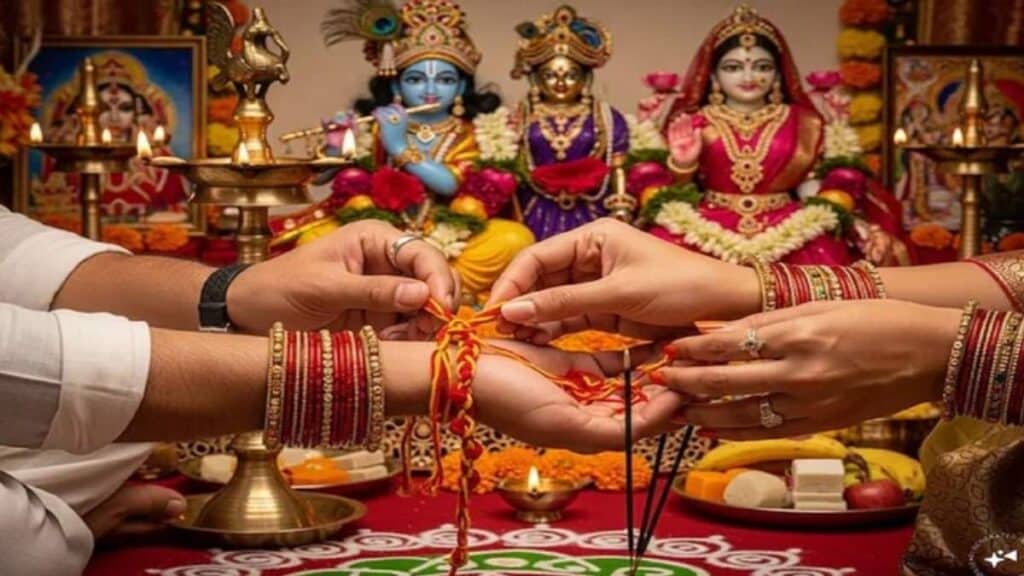
At its spiritual core, Anant Chaturdashi celebrates infinity itself. The number 14 runs through every element of the festival — 14 knots on the Ananta Sutra, 14 puja offerings, 14 days of wearing the sacred thread — all symbolizing the 14 worlds (Lokas) in Hindu cosmology and the limitless nature of divine grace.
The festival also teaches the principle of surrender and devotion. Through Kaundinya’s story, it warns against ego and the dismissal of sincere faith, reminding devotees that prosperity flows from humility, not pride.
For Ganesh devotees, the day carries profound emotional weight. The Visarjan is not merely an immersion of clay — it reflects the Hindu philosophy of the transient and the eternal, captured in the beloved farewell chant: “Ganapati Bappa Morya, Pudchya Varshi Lavkar Ya” (O Lord Ganesha, come back soon next year).
Prayers and Religious Observances
Anant Sutra Puja
The central ritual of Anant Chaturdashi is the worship and tying of the Anant Sutra — a 14-knotted sacred thread consecrated during puja. Devotees believe Lord Vishnu himself resides within this thread. Key steps include:
- Setting up the puja: Place 14 kumkuma tilakas on a wooden plank along with 14 puris and 14 puas (sweet fried wheat cakes)
- Panchamrita bowl: Prepare a bowl of panchamrita (milk, curd, honey, jaggery, and ghee) symbolizing the Kshira Sagara (Ocean of Milk) where Vishnu reclines on Ananta
- Thread consecration: Wrap the 14-knotted thread around a cucumber and swirl it five times in the panchamrita
- Tying the thread: Men wear the Ananta Sutra on the right arm above the elbow; women on the left arm
- Vrat Katha: Recite the story of Kaundinya and Sushila
- Fasting: Many devotees observe a full-day fast, breaking it after puja
The Ananta Sutra is worn for 14 days before being respectfully immersed in water.
Ganesh Visarjan
On Anant Chaturdashi, Ganesha idols worshipped for ten days are carried in processions to rivers, lakes, or the sea:
- Final aarti and farewell puja at home or in community pandals
- Grand processions with dhol-tasha drum ensembles, dancing, and bhajans
- Ceremonial immersion with prayers for Ganesha’s return the following year
- Eco-friendly home immersion in buckets using clay idols is increasingly common
How Anant Chaturdashi Is Celebrated Across India
While the spirit of Anant Chaturdashi remains consistent, its expressions vary widely across regions.
Maharashtra sees the most spectacular observance. Mumbai’s Lalbaugcha Raja, Pune’s Kasba Ganpati and Tambdi Jogeshwari mandals attract millions during Visarjan processions. Chowpatty Beach becomes the epicenter of emotional farewell ceremonies as thousands carry idols to the sea, often continuing through the night.
Andhra Pradesh and Telangana celebrate as Vinayaka Chavithi concludes with large Visarjan processions in Hyderabad, Vijayawada, and Visakhapatnam. The iconic giant Ganesha idol at Hussain Sagar lake is ceremonially submerged.
Goa celebrates with a uniquely Goan character, often with Hindu and Christian neighbors participating together in festive processions to the nearest water body.
Karnataka observes Ananta Chaturdashi with traditional puja and Visarjan processions in Bengaluru, Mysuru, and coastal districts.
Uttar Pradesh and Bihar focus primarily on the Anant Vishnu puja, with the Ananta Sutra ritual central to household observances. River Ganga ghats become sites of prayer and offering.
Nepal observes the festival with both Vishnu puja and Ganesh immersion rituals, particularly in the Kathmandu Valley.
Participation Across Religions in India
While Anant Chaturdashi is primarily a Hindu festival, it has evolved into a shared cultural celebration in many communities.
Jain communities observe Ananta Chaudas as the final day of Daslakshan Parv with temple visits, fasting, and community prayers. The following day, Kshamavani, is a day of universal forgiveness — a practice that resonates across faiths.
People of all backgrounds participate in Ganesh Visarjan processions across Maharashtra and Goa, joining the music, carrying idols, and sharing in the communal spirit without distinction of faith.
Interfaith environmental initiatives — NGOs, civic bodies, and community groups working together on eco-friendly Visarjan campaigns — have further brought communities together around shared values of cultural respect and environmental responsibility.
How Anant Chaturdashi Is Celebrated Outside India
The Indian diaspora has carried Anant Chaturdashi worldwide, adapting its observance to local contexts while preserving its spiritual core.
USA: Hindu temples in New Jersey, Houston, Chicago, San Francisco, and Atlanta organize community Anant Chaturdashi pujas and Ganesh Visarjan in designated pools or lakes.
UK: Temples in Wembley, Leicester, and Birmingham conduct Ananta Sutra pujas and community Visarjan events with bhajan programs.
Canada: Toronto and Vancouver Hindu mandals host puja events and cultural programs, with immersion ceremonies at community pools or Ontario’s lakes.
UAE: Dubai and Abu Dhabi’s large Indian community observes the festival through temple pujas and eco-friendly Visarjan using large containers.
Australia: Sydney, Melbourne, and Brisbane’s Hindu communities hold Ganesh Chaturthi celebrations culminating in Visarjan at local beaches or parks.
Singapore: The Hindu Endowment Board and local mandirs organize traditional puja with prasad distribution.
Germany: Frankfurt and Berlin’s growing Indian community gathers for temple events combining cultural programs with spiritual observances.
Gifting Traditions
Anant Chaturdashi gifting carries spiritual and cultural meaning:
Traditional gifts include the Ananta Sutra (sacred 14-knotted thread) gifted to family, prasad boxes with puri, pua, and coconut, framed images of Lord Vishnu and Ananta, and devotional books like the Ananta Vrat Katha or Vishnu Sahasranama.
Modern and diaspora gifting has evolved to include handcrafted eco-friendly clay Ganesha idols, puja kits with incense and diya, traditional sweets like modak and laddoo, and donations to charitable causes in the name of Anant puja.
Anant Chaturdashi Foods and Culinary Traditions
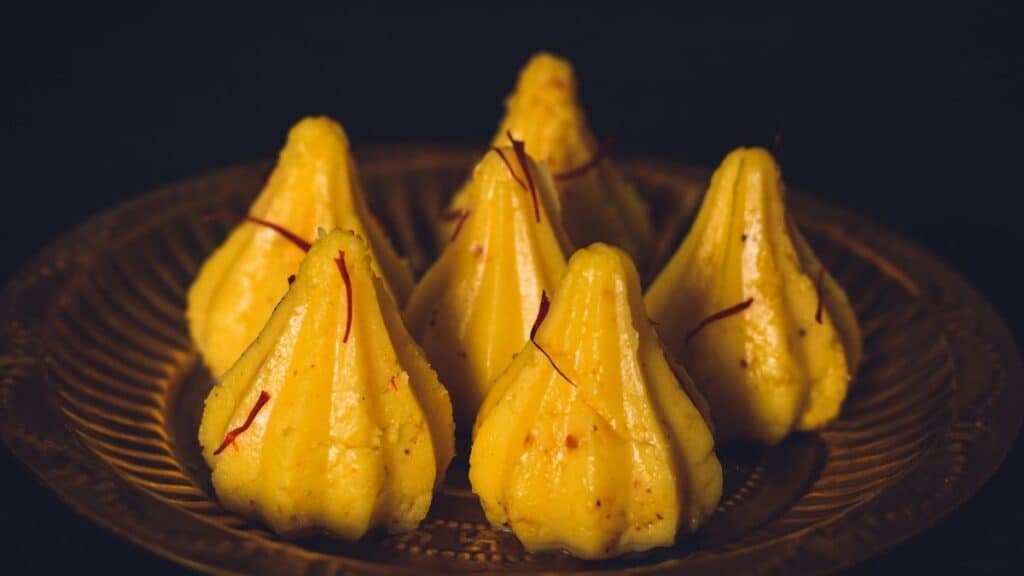
Food is central to the festival, symbolizing devotion, hospitality, and celebration.
Puja offerings include 14 puris and 14 puas placed on the worship plank, panchamrita prepared from milk, curd, honey, jaggery, and ghee, along with coconut and seasonal fruits.
Festive foods enjoyed across regions include:
- Modak — Lord Ganesha’s favorite sweet, made with rice flour, jaggery, and coconut; prepared steamed or fried across Maharashtra and Goa
- Puran Poli — sweet flatbread stuffed with lentil and jaggery, a Maharashtrian staple
- Karanji / Nevri — deep-fried sweet dumplings popular in Goa and Maharashtra
- Panchakajjaya — a Karnataka sweet made with sesame, jaggery, coconut, banana, and puffed rice
- Sabudana Khichdi — widely eaten during vrat (fast) across Maharashtra and UP
Music, Art, and Cultural Expression
Anant Chaturdashi is one of the most musically vibrant days in the Indian festival calendar.
Dhol-Tasha percussion ensembles unique to Pune and Mumbai lead the Ganesh Visarjan processions with thundering, rhythmic energy.
The iconic Ganesh Aarti — “Sukhakarta Dukhaharta” by Sant Samartha Ramdas — resonates in every household and pandal. Bhajans, kirtans, and Bollywood Ganesh anthems like “Deva Ho Deva” fill the streets throughout the day and night.
In visual arts, Ganesha idol-making is a revered traditional craft. The city of Pen in Raigad district is the capital of Ganesh idol manufacturing, with artisans working months in advance. Elaborate community pandals featuring sculpted and painted themes transform public spaces into artistic landmarks.
Rangoli and kolam adorn home entrances, while classical dance recitals and Lavani and Tamasha performances are associated with the festival in Maharashtra.
Modern Observance and Evolving Practices
Anant Chaturdashi has evolved meaningfully alongside growing environmental awareness. The movement toward clay (shadu mati) idols and home immersion tanks has gained widespread support across India and diaspora communities, replacing Plaster of Paris idols that cause water pollution. Many governments and NGOs actively promote eco-friendly Visarjan, and younger generations have embraced this shift with enthusiasm.
Live-streamed Ganesh Visarjan on YouTube, Facebook, and dedicated apps now allows global devotees to participate virtually in real time from major Mumbai and Pune mandals.
How to Wish Someone on Anant Chaturdashi
- “Happy Anant Chaturdashi! May Lord Vishnu’s infinite blessings bring you peace and prosperity.”
- In Hindi: “Anant Chaturdashi ki Shubhkaamnayein! 🙏”
- In Marathi: “Anant Chaturdashichya Hardik Shubhechha!”
- “Ganapati Bappa Morya! Wishing you joy and abundance this Anant Chaturdashi.”
Cultural Reflection
Anant Chaturdashi endures because it speaks to something timeless: the human need to honor the infinite, to say farewell with love, and to return to what matters. Whether it is the Ananta Sutra tied on the wrist as a daily reminder of divine grace, or the emotional chant of “Ganapati Bappa Morya” as an idol is carried to the water, the festival carries both spiritual depth and collective joy. For the Indian diaspora worldwide, it remains a powerful thread connecting generations to their heritage — as enduring and unbreakable as Ananta itself.