
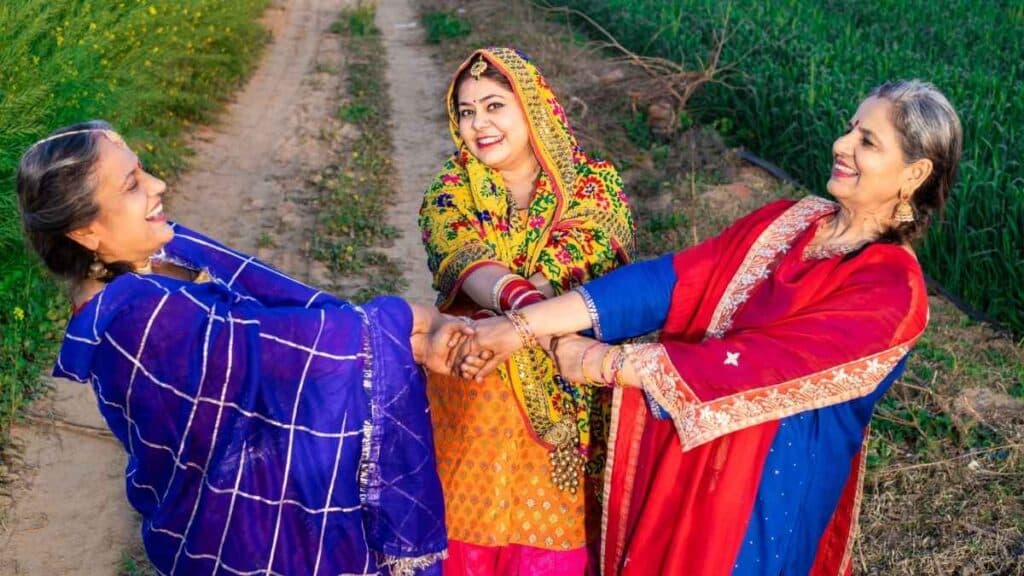
Baisakhi, also known as Vaisakhi, is one of the most significant festivals of the Indian subcontinent — a celebration of the spring harvest, the Hindu solar new year, and for Sikhs, the sacred anniversary of the founding of the Khalsa. Observed every year on April 13 or 14, Baisakhi marks the sun’s entry into the zodiac sign of Aries (Mesha Rasi) and the ripening of the rabi (wheat) harvest in Punjab. It is a festival of gratitude, renewal, and community — celebrated with Bhangra dances, Kirtan prayers, community feasts, and vibrant fairs across India and around the world.
When Is Baisakhi in 2026?
Baisakhi is determined by the Hindu Solar Calendar (Bikrami Samvat) and consistently falls on April 13 or 14 each year.
Baisakhi 2026 in India
- Date: Tuesday, April 14, 2026
- Sankranti Moment (IST): 09:39 AM
- Calendar Event: Mesha Sankranti / Vaishakhi Sankranti
Table of Contents
Baisakhi In USA, Canada, Australia, New Zealand, UK, UAE, Singapore 2026 Dates
Baisakhi on Monday, April 13, 2026
- Vaishakhi Sankranti Moment – 12:09 AM, Apr 14
- Mesha Sankranti on Monday, April 13, 2026
Baisakhi on Monday, April 13, 2026
- Vaishakhi Sankranti Moment – 12:09 AM, Apr 14
- Mesha Sankranti on Monday, April 13, 2026
Baisakhi on Monday, April 14, 2026
- Vaishakhi Sankranti Moment – 02:09 PM
- Mesha Sankranti on Tuesday, April 14, 2026
Baisakhi on Monday, April 14, 2026
- Vaishakhi Sankranti Moment – 05:09 AM
- Mesha Sankranti on Tuesday, April 14, 2026
Baisakhi on Monday, April 14, 2026
- Vaishakhi Sankranti Moment – 08:09 AM
- Mesha Sankranti on Tuesday, April 14, 2026
Baisakhi on Monday, April 14, 2026
- Vaishakhi Sankranti Moment – 12:09 PM
- Mesha Sankranti on Tuesday, April 14, 2026
Why Does the Baisakhi Date Change?
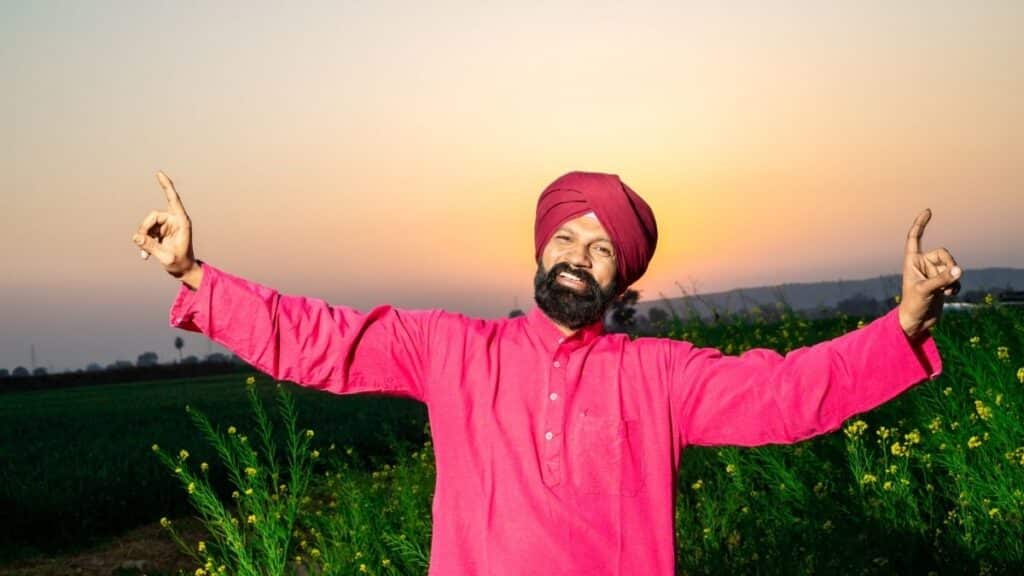
Baisakhi is one of only three Sikh festivals still calculated using the traditional Bikrami solar sidereal calendar (alongside Bandi Chhor Divas and Guru Nanak Gurpurab). Because the Bikrami calendar accounts for the slow precession of Earth’s axis over millennia, the Mesha Sankranti moment shifts forward approximately one day every 72 years.
This is why Baisakhi fell on March 30 in 1699, on April 11 in 1801, and consistently falls on April 13 or 14 today. It is projected to shift to April 29 by the year 2999.sixth”) because it occurs on the sixth day (Shashthi) of Kartik Shukla Paksha.
Baisakhi Overview
Baisakhi is simultaneously a harvest festival, a solar new year, and a deeply spiritual occasion. For Sikhs, it marks the founding of the Khalsa Panth in 1699 and is observed as Khalsa Sajna Divas — one of the holiest days in the Sikh calendar. For Hindus, it is Mesha Sankranti, the solar new year, observed with ritual bathing in sacred rivers and thanksgiving prayers. For all Punjabis, it is an ancestral celebration of the earth’s abundance, community, and shared joy.
The festival is primarily observed across Punjab, Haryana, Himachal Pradesh, and other parts of North India, but its celebrations extend to Bengali, Tamil, Malayali, and Assamese communities who observe their own regional solar new years on the same day.
Today, Baisakhi is celebrated by millions of people across India, Pakistan, Canada, the UK, the USA, Australia, and beyond.r calendar sequence.
Baisakhi Other Names and Regional Identities
The word Baisakhi derives from Sanskrit Vaiśākhī, meaning “related to the month of Vaisakh,” which itself comes from the star (nakshatra) Vishakha. The ‘V’ and ‘B’ interchangeability in Punjabi dialects gives the festival its dual spelling. In Bengali, the tonal shift produces ‘Boishakhi.’
In Indian languages:
- Punjabi (Gurmukhi): ਵੈਸਾਖੀ (Vaisakhi)
- Punjabi (Dogri/Jammu): Basoa / Basakhi
- Hindi: वैशाखी / बैसाखी
- Bengali: পহেলা বৈশাখ — Pohela Boishakh (Bengali New Year)
- Tamil: புத்தாண்டு — Puthandu (Tamil New Year)
- Malayalam: വിഷു — Vishu (Kerala New Year)
- Assamese: বহাগ বিহু — Bohag Bihu (Assamese New Year)
- Odia: ମହା ବିଷୁବ ସଂକ୍ରାନ୍ତି — Maha Vishuba Sankranti
- Sanskrit: Mesha Sankranti
International / diaspora: Vaisakhi, Visakhi, Baisakhi — all widely used across the Indian diaspora globally.
The Origins, History, and Legends of Baisakhi
Baisakhi predates Sikhism as an ancient Hindu harvest festival. Historically, it was North India’s most important annual market, with the Haridwar fair drawing merchants and pilgrims from across the subcontinent. Sacred texts describe the significance of bathing in the Ganges on Vaisakhi, believed to be the day the river goddess descended from heaven to earth.
1699 — The Birth of the Khalsa
The most defining moment in Baisakhi’s history took place on April 13, 1699, at Anandpur Sahib. Guru Gobind Singh, the tenth Sikh Guru, summoned thousands of followers and asked: “Who is willing to give his head for the Guru?” Five men — the Panj Pyare (Five Beloved Ones) — stepped forward. The Guru baptised them with Amrit (holy nectar) and declared them equal regardless of caste or background. He named this new order the Khalsa — the community of the pure — a spiritual and warrior brotherhood committed to justice, equality, and the defense of religious freedom. This was also the occasion when Guru Gobind Singh later declared Guru Granth Sahib as the eternal, living Guru of Sikhism.
The Khalsa’s founding came in direct response to the Mughal Emperor Aurangzeb’s execution of Guru Tegh Bahadur, the ninth Guru, for refusing to convert to Islam.
1801 — Ranjit Singh’s Coronation
In deliberate tribute to the Khalsa’s founding, Maharaja Ranjit Singh was proclaimed ruler of the Sikh Empire on April 12, 1801 — timed to coincide with Vaisakhi — marking the creation of a unified Punjabi state.
1919 — Jallianwala Bagh
Baisakhi 1919 carries a somber memory. British General Reginald Dyer ordered troops to open fire on a peaceful crowd gathered at Jallianwala Bagh in Amritsar, killing hundreds. The massacre became a turning point in India’s independence movement.
Baisakhi: Cultural and Spiritual Significance
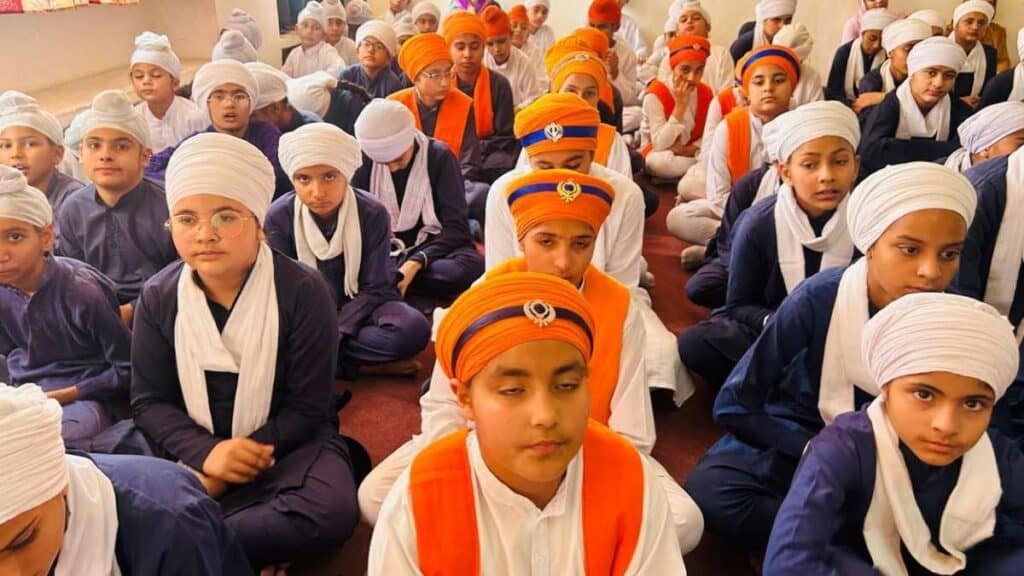
Baisakhi endures because it carries meaning on multiple levels simultaneously. For Sikhs, it is an annual recommitment to the Khalsa’s founding ideals of equality, courage, and selfless service. For Hindus, it represents gratitude to the earth and the divine for the harvest’s abundance. For all communities, it is a festival of renewal — the end of winter, the beginning of spring, and the promise of a prosperous year ahead.
The festival’s greatest spiritual gift is its message of equality. Guru Gobind Singh’s founding of the Khalsa explicitly abolished caste distinction, and the tradition of Langar — the free community kitchen open to all — embodies this principle every year. Baisakhi reminds us that celebration is most meaningful when it is shared.
Baisakhi Prayers and Religious Observances
Sikh observances begin before dawn with Nitnem prayers and Kirtan (devotional hymn singing from the Guru Granth Sahib) at Gurdwaras. The most sacred Baisakhi ritual is the Amrit Sanchar ceremony — the Sikh baptism — in which new initiates receive Amrit (holy water) and are formally inducted into the Khalsa. The Nishan Sahib (Sikh flag) is ceremoniously lowered, the flagpole cleaned, and a fresh flag raised. Prayers conclude with the distribution of Karah Parshad (a sacred sweet made of equal parts wheat flour, sugar, and ghee) and a communal Langar (free meal) is served to all.
Hindu observances center on ritual bathing (snan) in sacred rivers — most significantly the Ganges at Haridwar, which draws up to 5 million pilgrims. Families perform puja with offerings of seasonal fruits, flowers, and water. A mandatory daan (charity) is offered, traditionally including hand fans, water pitchers, and seasonal fruits. Community fairs are held at pilgrimage sites, and temple deity processions are taken out in many regions.
How Baisakhi Is Celebrated Across India
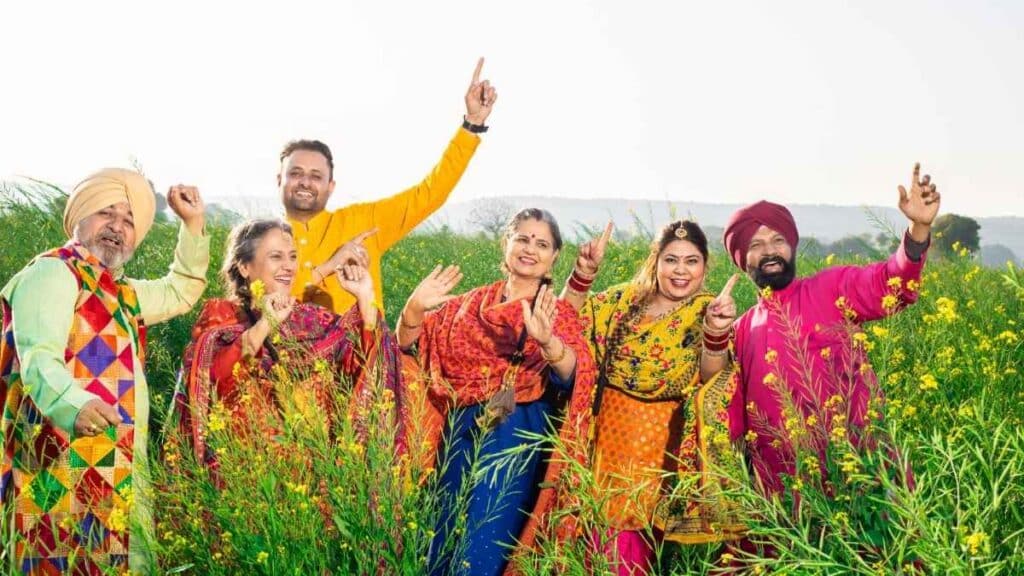
The spirit of Baisakhi is consistent, but its expression varies beautifully by region.
In Punjab, Baisakhi is the year’s biggest celebration. Farmers rejoice as the rabi wheat harvest is ready. Bhangra and Gidda folk dances fill every village and city. Massive melas (fairs) are held at the Golden Temple in Amritsar, Takht Kesgarh Sahib in Anandpur Sahib (birthplace of the Khalsa), and Takht Sri Damdama Sahib in Talwandi Sabo. The Aawat Pauni tradition of community wheat harvesting is observed.
In Himachal Pradesh, home rituals include lighting earthen lamps, offering rice and pulses, and the tradition of Prau Lagana (whitewashing homes). Sikhs visit the historic Paonta Sahib Gurdwara, which was Guru Gobind Singh’s residence for several years.
In Haryana, Vaisakhi fairs are held at sacred sites including Baan Ganga Tirtha in Kurukshetra, associated with the Mahabharata. The Haryana government organizes a Baisakhi festival at Pinjore Gardens.
In Jammu, Dogra Hindus take ritual baths at the Tawi River before dawn, followed by family puja and the offering of new seasonal fruits. Folk music events are held at Sudhmahadev.
In Uttar Pradesh (known as Sattuā), the tradition involves ritual bathing and eating sattu (roasted gram flour) with gur (jaggery) as the harvest’s sacred first food.
In West Bengal, Pohela Boishakh is the Bengali New Year, celebrated with morning temple visits, new traditional clothing, Rabindra Sangeet (Tagore songs), and the iconic breakfast of panta bhat (fermented rice) with hilsa fish.
In Assam, Bohag Bihu is a seven-day spring new year featuring the energetic Bihu dance, dhol drumming, and the gifting of gamosa (woven towels) to elders.
In Kerala, Vishu begins with the Vishukkani — an auspicious arrangement of golden Kani Konna flowers, rice, coins, fruits, and an image of Krishna that family members view as the year’s first sight. Elders give Vishukkaineetam (gift of money) to children, and the day ends with a vegetarian Sadya feast.
In Tamil Nadu, Puthandu (Tamil New Year) is marked with the Kani arrangement at dawn, new clothes, temple visits, and the greeting: “Puttāṇṭu vāḻttukkaḷ!”
Participation Across Religions in India
Baisakhi has always been an inclusive festival. In Punjab’s history, Hindus, Sikhs, and Muslims all observed Baisakhi as a communal harvest celebration. Scholar Ann Louise Wood notes that the festival was traditionally celebrated by all three communities. Today, Christians in Punjab sometimes join Baisakhi celebrations alongside their neighbours. The Langar at Sikh Gurdwaras — open to everyone regardless of religion or background — is the festival’s most powerful expression of its founding principle: that all human beings are equal.
How Baisakhi Is Celebrated Outside India
Canada hosts some of the world’s largest Baisakhi celebrations. The Surrey, British Columbia Nagar Kirtan has drawn over 500,000 attendees, making it one of North America’s largest single-day events. Vancouver’s Punjabi Market parade (held since 1979) attracts up to 300,000. Toronto’s parade travels from the Canadian National Exhibition to City Hall.
United Kingdom: The Birmingham Nagar Kirtan (partnered with Birmingham City Council) features two processions converging at Handsworth Park. London’s Trafalgar Square hosts an annual Vaisakhi festival with Kirtan, food stalls, and cultural performances. The Southall Nagar Kirtan is another major annual event.
United States: New York City, Los Angeles, Houston, Chicago, and the Bay Area all host major Baisakhi parades and community events. Hindu communities separately observe Vishu (Bay Area), Puthandu, and Pohela Boishakh events.
UAE, Australia & Singapore: Gurdwaras in Dubai and Abu Dhabi hold Amrit Sanchar ceremonies and Langar. Sydney and Melbourne host Punjabi cultural melas. Singapore’s Central Sikh Temple hosts one of Southeast Asia’s most vibrant celebrations.
Baisakhi Gifting Traditions
Baisakhi gifting reflects the festival’s spirit of abundance and generosity. Traditional Hindu daan (charity) includes seasonal fruits, water pitchers, and hand fans — offerings symbolizing summer abundance. New clothing, particularly traditional Punjabi suits and kurtas, is a beloved and auspicious gift.
Boxes of premium dry fruits, Punjabi mithai (sweets), and pinni (wheat ladoos with desi ghee) are shared with family and neighbours. In Kerala, elders give Vishukkaineetam — coins or money — to children as the year’s first auspicious gift. In Assam, the gamosa (woven towel) is gifted to elders as a mark of respect. For diaspora communities, online festive hampers, cultural gift boxes, and restaurant vouchers have become popular modern alternatives.
Baisakhi Foods and Culinary Traditions
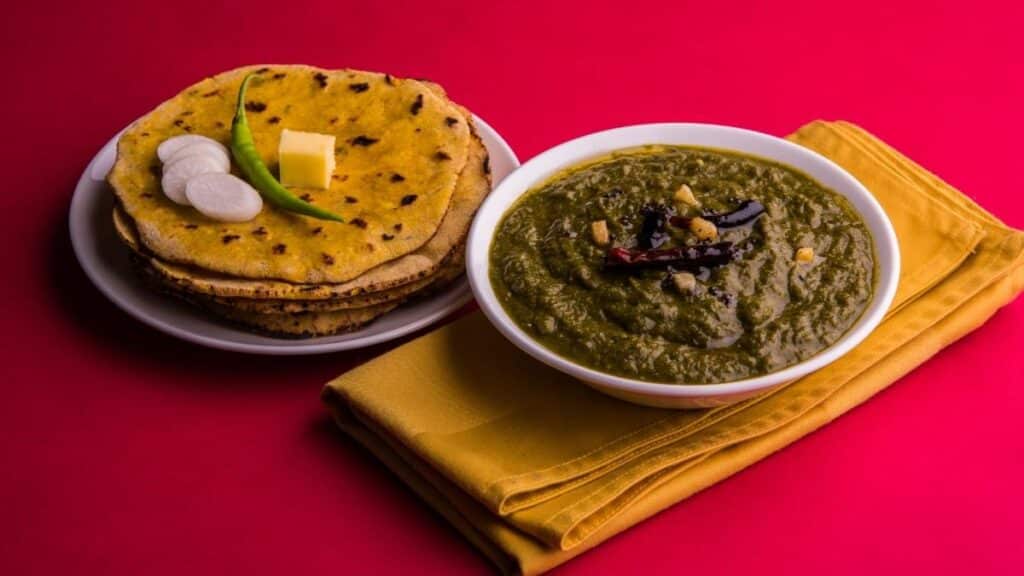
Baisakhi’s foods celebrate the freshly harvested wheat and the abundance of spring. From sacred temple prasad to regional new year feasts, every dish tells a story of gratitude and togetherness.
- Sattu & Gur (Uttar Pradesh) — Roasted gram flour mixed with jaggery — eaten and donated as the harvest’s first sacred food on Baisakhi morning
- Makki di Roti & Sarson da Saag — Punjab’s iconic harvest combination: corn flatbread with mustard leaf greens, finished with a generous dollop of white butter
- Karah Parshad — The sacred Sikh prasad made of equal parts wheat flour, sugar, and ghee, distributed with devotion at every Gurdwara
- Kheer & Pinni — Creamy rice pudding and Punjabi pinni (wheat and jaggery ladoos) — the festive sweets no Baisakhi table is complete without
- Lassi & Jalebi — Thick, cold lassi paired with crispy jalebis — inseparable from any Baisakhi mela across Punjab
- Panta Bhat & Ilish (Bengal) — The Bengali new year begins with fermented rice and hilsa fish, eaten with mustard oil, green chillies, and onion
- Vishu Sadya (Kerala) — An elaborate 20-dish vegetarian feast served on banana leaves: avial, olan, erissery, payasam, and more
Baisakhi: Music, Art, and Cultural Expression
Bhangra is the heartbeat of Baisakhi. Originally a harvest dance, it is performed by men to the thundering beat of the dhol drum, with high-energy leaps, colourful costumes, and infectious energy. Women perform the complementary Gidda — a graceful dance incorporating clapping, spinning, and folk poetry called boliyaan.
In Sikh tradition, Kirtan — the singing of Gurbani hymns from the Guru Granth Sahib — is the central musical expression of the festival. Ragi jathas (sacred musicians) perform through the night and early morning at Gurdwaras worldwide. In Assam, the energetic Bihu dance with dhol, pepa (buffalo-horn flute), and gogona (jaw harp) marks the season. Bengal fills with Rabindra Sangeet (Tagore songs) on Pohela Boishakh morning.
Contemporary Bhangra pop and fusion — blending Punjabi folk with hip-hop, EDM, and Bollywood — has carried Baisakhi’s spirit to global audiences through music festivals and diaspora dance competitions on every continent.
Baisakhi’s Modern Relevance and Cultural Continuity
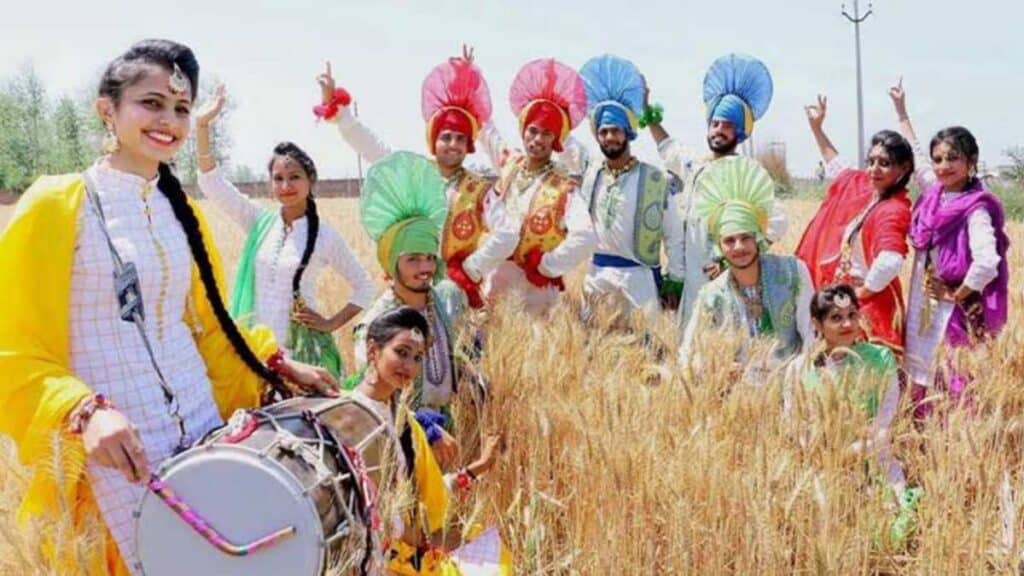
Baisakhi has evolved gracefully with the times. Online Kirtan streams from the Golden Temple now allow diaspora Sikhs to participate in dawn prayers from anywhere in the world. Virtual Langar donations have become an important channel for global Seva (service). Environmentally conscious celebrations are growing — eco-friendly Nagar Kirtan floats, plastic-free melas, and Baisakhi tree-planting drives reflect a new generation’s awareness. In diaspora communities, the festival has become a platform for cultural education, with school programs, Punjabi language workshops, and heritage events organized around it.
How to wish someone on Baisakhi 2026:
- Punjabi: ਵਿਸਾਖੀ ਦੀਆਂ ਲੱਖ ਲੱਖ ਵਧਾਈਆਂ! — Vaisakhi diyan lakh lakh vadhaiyaan!
- English: Wishing you a joyful and blessed Baisakhi 2026!
- Hindi: बैसाखी की हार्दिक शुभकामनाएं!
- Bengali (Pohela Boishakh): শুভ নববর্ষ! — Shubho Nababarsha!
- Tamil (Puthandu): இனிய புத்தாண்டு நல்வாழ்த்துகள்!
- Malayalam (Vishu): വിഷു ആശംസകൾ!
Cultural Reflection
Baisakhi is more than a date on the calendar — it is a living thread connecting millions of people across generations, geographies, and faiths to something essential: the joy of the harvest, the ideal of equality, and the courage to stand for what is right. Whether experienced through the thundering dhol at a Surrey Nagar Kirtan, the pre-dawn Kirtan at the Golden Temple, the golden Kani Konna flowers on a Vishu tray in Kerala, or the first bite of panta bhat in Dhaka on Pohela Boishakh, Baisakhi speaks a universal language of renewal and belonging. For the Indian diaspora especially, it is an annual act of cultural remembrance — a reminder that roots only deepen as branches spread across the world.