



There are certain drinks that don’t just quench thirst — they carry the weight of devotion, the memory of temple courtyards, and the particular silence of a festival morning before the puja begins. Bela Pana, Odisha’s sacred wood apple drink, is exactly that kind of offering. It arrives every Hanuman Jayanti not as an afterthought but as the centrepiece — thick with bael pulp, rich with chenna, fragrant with coconut, and lifted by a hit of black pepper that makes your first sip feel like a small revelation.
Most of India knows Aam ka Panna as the definitive summer cooler. But in Odisha, when the heat of Chaitra month becomes almost ceremonial in its intensity, families crack open a hard, round bael fruit and begin the quiet ritual of making Bela Pana. It is offered to Lord Hanuman on his Jayanti, served to devotees as prasad, and drunk through the season as both spiritual act and practical medicine. This is a drink that has been doing its job — cooling bodies, feeding devotion, marking the new year — for longer than any recipe card can trace.
Bela Pana is Odisha’s sacred wood apple drink made for Hanuman Jayanti and Pana Sankranti — bael pulp strained by hand, combined with mashed banana, fresh grated chenna, coconut, sugar, and freshly ground black pepper, then diluted and served chilled. Zero cooking, 20 minutes total, makes 6 substantial glasses. The two non-negotiables: use ripe bael (thud test, not bounce test) and mash the pulp with your fingers for a smooth, lump-free base. Don’t skip the black pepper and don’t over-dilute — this drink has body by design. For prasad, skip the ice and use jaggery over refined sugar.
Table of Contents
What Makes Bela Pana Special for Hanuman Jayanti
Bela Pana holds a specific sacred role in the Odia festival calendar that goes beyond being a seasonal refreshment. Hanuman Jayanti falls in the month of Chaitra — and bael fruit carries deep ritual significance in both this celebration and Pana Sankranti, the Odia New Year. The wood apple tree is considered sacred in Hindu tradition, its leaves used in Shiva worship, and the fruit itself associated with cooling divine energy — exactly the quality you want in a prasad offered on a day of devotion.
The drink is made with paneer (chenna), a cornerstone of Odia cuisine that appears in everything from temple prasad to the famous Chhena Poda. Its inclusion here isn’t indulgent — it’s traditional. Fresh coconut adds natural sweetness. Black pepper, the surprising ingredient, cuts through the richness and warms the chest in a way that feels medicinal. Together, these are sattvic ingredients in the purest sense: nourishing, grounding, and free from anything that agitates the body or mind during a day of prayer.
What separates Bela Pana from every other summer drink is its texture and intention. This is not a thin juice. It is layered in flavour, substantial in body, and deliberately crafted to sustain a devotee through a long festival day.
Recipe Overview
| Detail | Information |
|---|---|
| Prep Time | 20 minutes |
| Cook Time | 0 minutes |
| Total Time | 20 minutes |
| Yield | 6 glasses |
| Servings | 6 people |
| Cuisine | Odia (Odisha) |
| Course | Festival Drink / Prasad |
| Diet | Vegetarian, Sattvic |
| Difficulty | Easy |
| Calories per Glass | ~122 kcal |
| Festival | Hanuman Jayanti / Pana Sankranti |
Why Bela Pana Is the Essential Hanuman Jayanti Drink
Hanuman Jayanti falls in the month of Chaitra — the peak of pre-monsoon heat in eastern India — and Bela Pana’s role on this day is both practical and devotional. Bael fruit has been used in Ayurvedic tradition for centuries as a cooling agent that soothes the digestive system and prevents sunstroke. Offering it as prasad on Hanuman Jayanti connects the physical reality of a hot festival day with the spiritual impulse to care for devotees who have fasted, walked in processions, or spent the morning at the temple.
In Odisha, it is also the drink that officially opens Pana Sankranti celebrations — poured slowly from an earthen pot over a Tulsi plant as a symbolic offering before being shared among family and guests. The act of making Bela Pana is itself a kind of prayer: there is no flame, no cooking, just the methodical work of hands breaking, straining, mashing, and assembling — a meditation disguised as a recipe.
For communities encountering this drink for the first time on Hanuman Jayanti, there is often a moment of genuine surprise at the first sip. It doesn’t taste like any other Indian drink. That’s the point.
The Two Critical Techniques: Pulp Straining and the Black Pepper Balance
Before the ingredients list, two techniques decide whether your Bela Pana is extraordinary or merely decent.
1. Mashing the Bael Pulp by Hand, Not by Spoon
The bael pulp is fibrous, uneven, and full of embedded seeds and tough strands. A spoon pushes this around. Your fingers actually break it down — finding the lumps and working them out, pressing the pulp through the strainer in a way that no utensil can replicate. Traditional Odia preparation consistently returns to this point: hands make the difference between a smooth, rich drink and a gritty, lumpy one. This is worth the mess.
2. Black Pepper Quantity — Precise, Not Generous
Black pepper in Bela Pana is not a seasoning. It is a structural ingredient. One teaspoon of freshly ground pepper against six glasses of drink sounds aggressive, but in practice it provides the note that makes this drink memorable. The error most people make is either skipping it entirely (producing something pleasant but flat) or using pre-ground pepper from a jar (which has lost its volatile oils and delivers bitterness rather than warmth). Use a mortar and pestle or grind fresh just before use. The difference is significant.
Ingredients
For the Bela Pana
| Ingredient | Quantity | Notes |
|---|---|---|
| Ripe bael fruit (wood apple) | 1 medium | Toffee-brown skin, doesn’t bounce |
| Banana | 1, ripe | Adds body and natural sweetness |
| Sugar (fine or powdered) | 5–6 tbsp | Adjust to taste; jaggery works too |
| Black pepper, freshly ground | 1 tsp | Non-negotiable — use fresh |
| Grated paneer (chenna) | ½ cup | Fresh, not packaged if possible |
| Fresh grated coconut | ¼ cup | Desiccated coconut as backup |
| Water | 2–2.5 cups | Add gradually for consistency |
| Ice cubes | 4–5 per glass | Serve immediately once poured |
Optional Garnish
| Ingredient | Notes |
|---|---|
| Bael leaves | Traditional, auspicious garnish |
| Pomegranate seeds | Colour contrast |
| Pinch of extra black pepper | For finishing |
| Cardamom powder | Some family traditions add this |
Step-by-Step Instructions: Making Perfect Bela Pana
Step 1 — Crack and Extract the Bael Pulp
Use a heavy knife or the edge of a thick cutting board to crack the wood apple shell — it is genuinely hard and requires deliberate force. Don’t be delicate. Once open, scoop every bit of pulp into a large bowl using a spoon, working along the interior walls of the shell. Discard the shell and seeds as you go.
Time: 5 minutes


Step 2 — Strain the Pulp
Add ½ cup of water to the pulp in the bowl. Now use your fingers — not a spoon, not a masher — to work the pulp through a medium-fine strainer into a clean deep bowl below. Press, squeeze, and push until only dry fibres and seeds remain in the strainer. Discard the strainer contents. What you have now is the base of your Bela Pana: dark amber, slightly thick, and smelling faintly of earth and toffee.
Time: 10 minutes
Step 3 — Mash and Combine
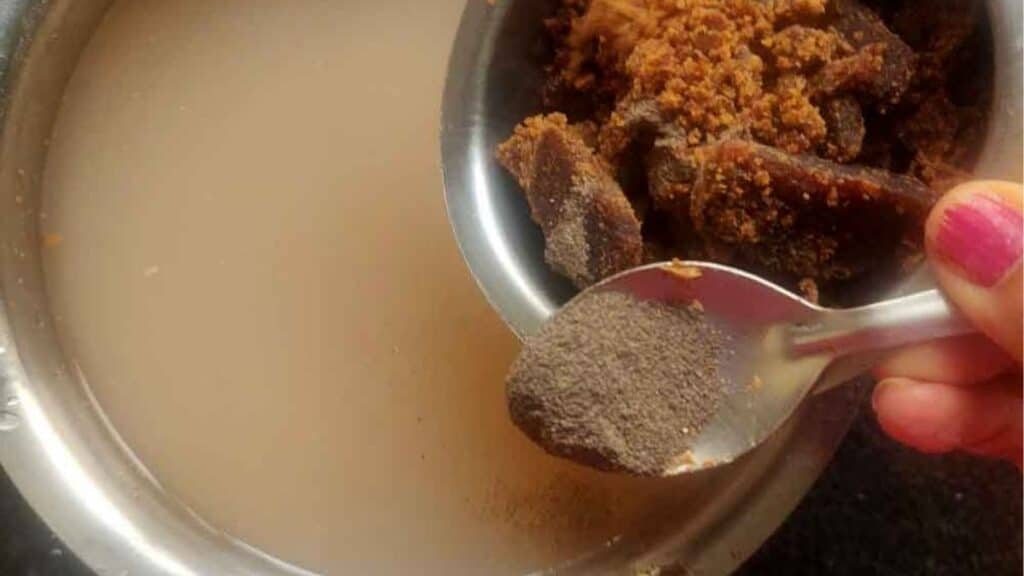
Into the strained bael base, add the banana first — mash it directly into the pulp using your hands until no chunks remain. Then add the grated paneer, fresh coconut, sugar, and freshly ground black pepper. Use a spoon or your hands to mix everything into a cohesive paste, making sure the sugar begins dissolving and the paneer integrates evenly rather than sitting in clumps.
Time: 5 minutes
Step 4 — Adjust Consistency
Add water slowly — roughly 2 cups total — stirring as you go. Bela Pana is not a thin drink. It should flow easily but feel substantial in the glass, more like a textured lassi than a juice. Taste now and adjust sugar if needed. If using jaggery, dissolve it in a small amount of warm water separately and add the liquid — don’t add solid jaggery at this stage.
Time: 5 minutes
Step 5 — Chill and Serve as Prasad
Pour over ice cubes, garnish with bael leaves or pomegranate seeds, and serve immediately. For prasad specifically — if you are offering this at a puja or temple — skip the ice, serve at room temperature, and use jaggery over refined sugar to keep the preparation fully traditional.
Time: 5 minutes
Total Active Time: 20 Minutes
Expert Tips for Perfect Bela Pana
The ripeness of the bael fruit is the single most important variable in this recipe. An unripe bael produces pale, fibrous, barely sweet pulp that no amount of sugar can rescue. The test: drop the fruit on a hard floor. A ripe bael lands with a dull, heavy thud. An unripe one bounces. The skin of a ripe bael will be toffee-brown, sometimes with a faint sweet smell through the shell.
Do not over-dilute. The instinct when making a summer drink is to add more water, but Bela Pana’s character lives in its thickness. Stick to 2 to 2.5 cups unless you are specifically making a thinner version for elderly guests or children.
Use fine or powdered sugar. It dissolves faster and distributes evenly. If you only have granulated sugar, blend it briefly and sieve before adding to the drink.
Make the pulp the night before if needed. The strained bael base keeps well in the fridge for up to 24 hours. Add the banana, paneer, coconut, sugar, and pepper only on the day of serving — banana especially will blacken and affect both appearance and flavour.
For prasad serving, skip the ice. Traditionally, prasad drinks are not served over ice during puja. Chill the drink in the fridge and pour directly into glasses or kulhads just before offering.
Regional Variations and Adaptations
The core recipe is consistent across Odisha, but regional and family variations are real and worth knowing. Some households add a tablespoon of dahi (yogurt) for additional tang and probiotic depth. Certain families include a pinch of cardamom powder, which softens the earthiness of the bael and adds a festive warmth. In temple traditions, the prasad version is simplified — bael pulp, coconut, and jaggery only, with no banana or paneer, keeping it minimal and sattvic.
Diaspora Adaptations
For communities making Bela Pana abroad, desiccated coconut works as a substitute for fresh, though the flavour is noticeably flatter. Frozen bael pulp — available at Indian grocery stores in the UK, Canada, US, and Australia — works well for the base. Look for it between March and May when seasonal imports tend to arrive. Sweetened versions should be avoided; you need pure pulp to control your own sugar levels.
Vegan Adaptation
Omit the paneer entirely and increase the coconut quantity slightly for richness. The drink is lighter without chenna but still distinctly Bela Pana.
Make-Ahead Strategy for Hanuman Jayanti
Night Before
Crack and strain the bael pulp. Store covered in the fridge. Grate the paneer and coconut; store separately. If using jaggery, prepare the dissolved jaggery liquid and refrigerate.
Morning of Hanuman Jayanti
Mash the banana and combine all ingredients except water. Mix thoroughly. Add water and adjust consistency. Refrigerate the complete mixture in a covered jug until needed.
At Serving Time
Pour over ice (or direct from fridge for prasad). Garnish and serve. The assembled drink holds for up to 2 hours in the fridge without significant quality loss — after that, the banana begins to affect the colour and the ice dilutes the consistency.
Serving Suggestions and Presentation
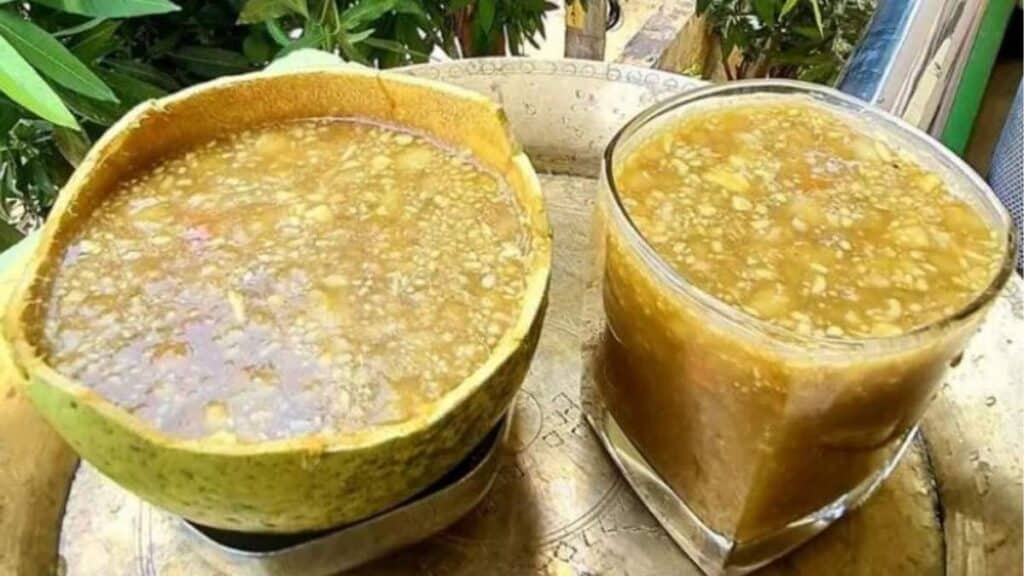
Traditional serving is in earthen kulhads or steel tumblers, with a sprig of bael leaves placed in the glass or alongside the offering. For home celebrations, tall chilled glasses show off the drink’s amber colour and natural texture beautifully. Pomegranate seeds scattered on top add colour contrast without altering the flavour.
For communal Hanuman Jayanti events or mandal gatherings, prepare the Bela Pana mixture in a large vessel and serve individually — each glass poured fresh over ice. This scales easily to 20 or 30 glasses with little additional effort, as the recipe requires no cooking and simply multiplies.
Bela Pana pairs naturally with the broader Hanuman Jayanti prasad spread — alongside panchamrit, fruits, and dry snacks like chana. In a diaspora context, it also pairs well with other Odia festival offerings like Karanji or Chakuli Pitha for guests who want to explore the full regional tradition.
Why This Drink Still Matters
Bela Pana occupies a specific and irreplaceable place in Odia devotional culture. It is not served at celebrations generally — it belongs to Chaitra, to the heat of April, to Hanuman Jayanti and Pana Sankranti specifically. Its seasonality is part of its meaning. You make it when the bael fruit is ripe, when the temperature demands something that cools from the inside, when a festival calls for an offering that is simultaneously practical and sacred.
For the diaspora, making Bela Pana in a Toronto kitchen or a Manchester flat is an act of cultural recovery. You are working with a fruit most of your neighbours have never seen, using a technique passed down through families that may have left Odisha one or two generations ago, and producing something that — on first sip — carries the taste of a place and a season that exists thousands of kilometres away.
The drink doesn’t need modernising. It doesn’t need a kombucha comparison or a superfood label. It needs to be made correctly, offered with intention, and shared with people who are ready to be surprised by how much a single glass can hold.
Jai Bajrangbali!


