
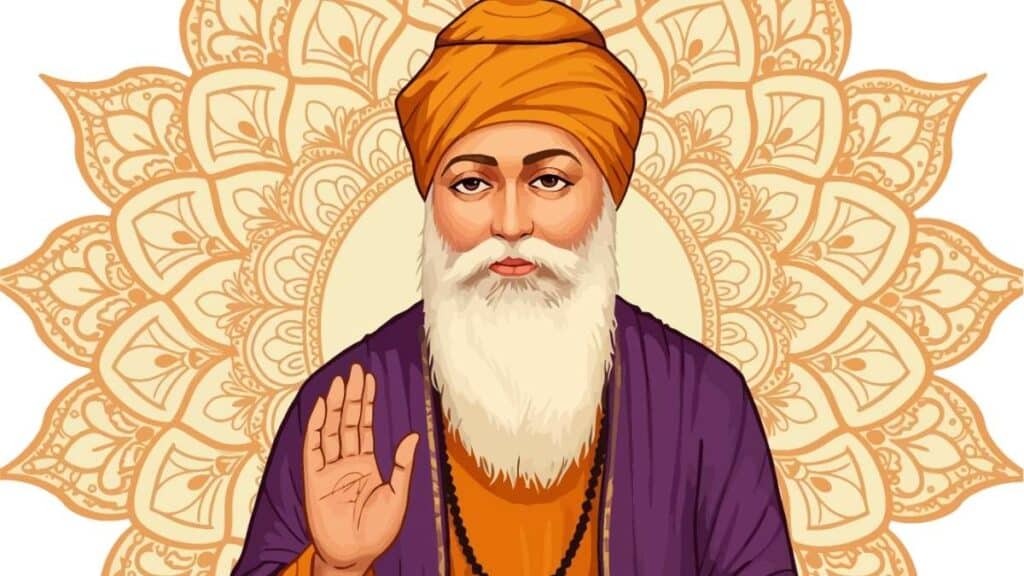
Guru Nanak Jayanti, also known as Guru Nanak Gurpurab or Prakash Utsav, is one of the most sacred festivals in Sikhism. It celebrates the birth of Guru Nanak Dev Ji (1469–1539), the founder of Sikhism and the first of the ten Sikh Gurus. Observed with prayer, scripture, processions, and community meals, the festival embodies Guru Nanak’s core teachings — devotion to one God, equality of all people, and selfless service to humanity.
Beyond the Sikh community, Guru Nanak Jayanti draws participation from Hindus, Nanakpanthis, and interfaith communities across India and around the world, affirming the universal relevance of Guru Nanak’s spiritual vision. It is a gazetted public holiday in India.
When Is Guru Nanak Jayanti Celebrated in 2026?
Guru Nanak Jayanti follows the traditional Bikrami (Vikram Samvat) lunar calendar and is observed on the full moon day (Purnima) of the lunar month Kartik — one of only three Sikh festivals still calculated using the Bikrami calendar, alongside Vaisakhi and Bandi Chhor Divas.
Guru Nanak Jayanti 2026 Dates in India
- Day 1: Akhand Path Begins — November 22, 2026 (Sunday) — The 48-hour uninterrupted reading of the Guru Granth Sahib commences.
- Day 2: Nagar Kirtan — November 23, 2026 (Monday) — The grand procession through city streets.
- Day 3: Guru Nanak Jayanti / Gurpurab — November 24, 2026 (Tuesday) — The main celebration, a gazetted public holiday in India, marking the 557th birth anniversary of Guru Nanak Dev Ji.
Table of Contents
Guru Nanak Jayanti In USA, Canada, Australia, New Zealand, UK, UAE, Singapore 2026 Dates
Guru Nanak Jayanti : November 24, 2026 (Tuesday)
Guru Nanak Jayanti : November 24, 2026 (Tuesday)
Guru Nanak Jayanti : November 24, 2026 (Tuesday)
Guru Nanak Jayanti : November 24, 2026 (Tuesday)
Guru Nanak Jayanti : November 24, 2026 (Tuesday)
Guru Nanak Jayanti : November 24, 2026 (Tuesday)
Why Does the Date of Guru Nanak Jayanti Change Every Year?
Guru Nanak Jayanti is observed on the full moon (Purnima) of the lunar month Kartik, following the Bikrami lunar calendar. Because the lunar calendar is approximately 11 days shorter than the Gregorian solar year, the Gregorian date of the festival shifts each year, typically falling in October or November. Intercalary (leap) months added to the lunar calendar to realign it with the solar year further cause variation. This makes Guru Nanak Jayanti a movable festival rather than a fixed-date event.
Guru Nanak Jayanti — Other Names and Regional Identities
| Language / Region | Name |
|---|---|
| Punjabi (Gurmukhi) | ਗੁਰੂ ਨਾਨਕ ਗੁਰਪੁਰਬ (Guru Nanak Gurpurab) |
| Punjabi (Gurmukhi) | ਗੁਰੂ ਨਾਨਕ ਪ੍ਰਕਾਸ਼ ਉਤਸਵ (Prakash Utsav) |
| Hindi | गुरु नानक जयंती (Guru Nanak Jayanti) |
| English | Guru Nanak’s Birthday / Gurpurab |
| Sindhi communities | Nanak Gurpurab |
| International / Diaspora | Guru Nanak Jayanti / Gurpurab |
“Gurpurab” combines “Guru” (spiritual teacher) and “Purab” (holy day or festival). “Prakash Utsav” translates as “Festival of Divine Light,” reflecting the belief that Guru Nanak brought spiritual light to the world. In diaspora communities across the UK, Canada, USA, and Australia, “Gurpurab” is widely used as the common name for all Sikh Guru anniversaries, with Guru Nanak’s being the most celebrated.
The Origins, History, and Legends of Guru Nanak Jayanti
Guru Nanak Dev Ji was born on the full moon of Kartik in 1469 CE in Rai-Bhoi-di Talwandi, now known as Nankana Sahib in present-day Pakistan. From childhood he displayed deep spiritual inclinations, questioning the orthodoxies of both Hindu caste hierarchy and rigid religious practice.
At around age 30, Guru Nanak experienced a profound spiritual awakening after disappearing into a river for three days. Upon his return, he is said to have declared: “There is no Hindu, there is no Muslim” — a statement that captured his vision of universal spiritual oneness beyond religious division. He then undertook four major journeys (Udasis) spanning South Asia, the Middle East, and Central Asia, spreading his message of equality, devotion, and service.
His teachings were compiled as the foundational hymns of the Guru Granth Sahib, the eternal scripture and living Guru of the Sikhs. Guru Nanak also established the institutions of Langar (community kitchen), Sangat (congregation), and Kirtan (devotional music) — pillars of Sikh community life that endure to this day.
The Bhai Bala Janamsakhi, one of the earliest biographical accounts of Guru Nanak, identifies Kartik Purnima as his birth date. Sikhs have celebrated Gurpurab in the month of Kartik for generations, with this tradition now deeply embedded in Sikh culture.
Guru Nanak Jayanti — Cultural and Spiritual Significance
Guru Nanak Jayanti is not merely a birthday commemoration — it is an annual renewal of the values Guru Nanak lived and taught. His philosophy of Ek Onkar (One God), Kirat Karo (honest labour), Vand Chakko (share with others), and Naam Japo (meditate on God’s name) forms the spiritual foundation of Sikhism and speaks to people of all backgrounds.
The festival affirms that God is universal and formless, that all human beings are equal regardless of caste, gender, or religion, and that service to humanity is the highest form of worship. The Langar — the free community kitchen that feeds all without distinction — remains one of the world’s most powerful symbols of radical equality in practice.
Guru Nanak’s legacy endures because his teachings bridge the sacred and the social, addressing spiritual longing and material inequality in the same breath.
Prayers and Religious Observances
Gurpurab observances typically begin 48 hours before the main day with the Akhand Path — a continuous, uninterrupted recitation of the entire Guru Granth Sahib carried out in relays of readers, concluding on the morning of Guru Nanak Jayanti.
On the main day, celebrations begin at Amrit Vela (4:00–5:00 AM) with the singing of Asa-di-Var, the morning hymns composed by Guru Nanak. This is followed by Katha (scriptural exposition), Kirtan (hymn singing), and Ardas (communal prayer). In the evening, Rehras Sahib is recited at sunset, and night kirtan sessions continue through the night. At approximately 1:20 AM — believed to be the exact hour of Guru Nanak’s birth — the congregation sings Gurbani in celebration, with observances concluding around 2:00 AM.
At home, devout Sikhs wake early to pray, recite Gurbani, and visit the Gurdwara. Many perform sewa (voluntary service) — cooking, cleaning, or serving in the Langar — as an act of devotion.
How Guru Nanak Jayanti Is Celebrated Across India
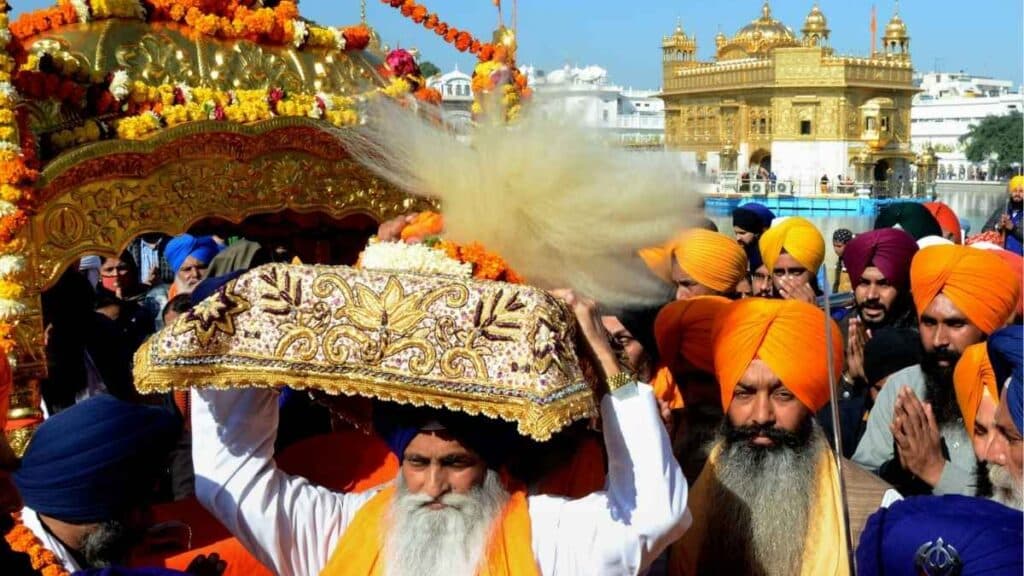
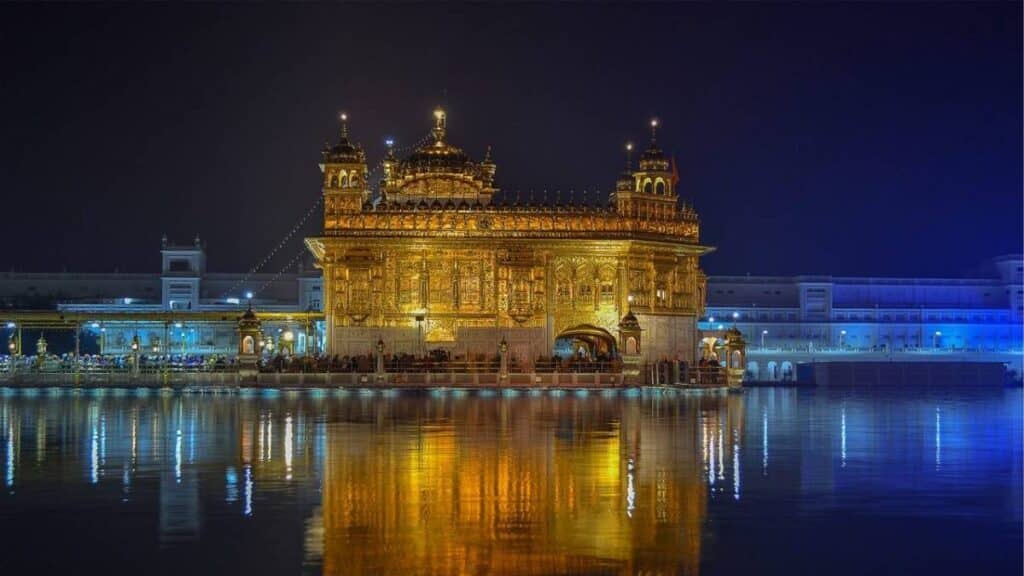
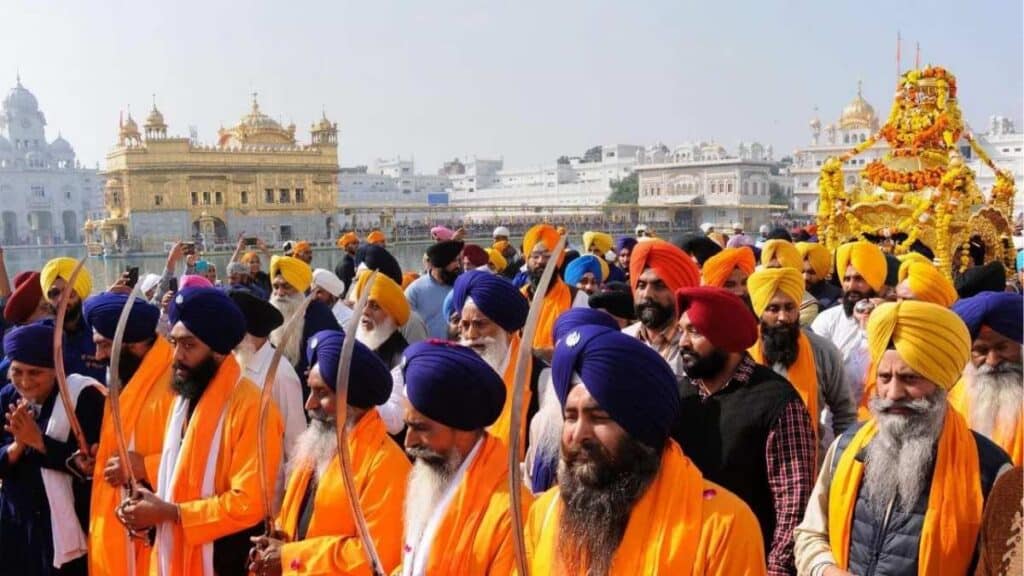
Punjab and Haryana: The most vibrant celebrations take place in the heartland of Sikhism. Amritsar’s Harmandir Sahib (Golden Temple) is brilliantly illuminated and draws hundreds of thousands of pilgrims. Gurdwaras across Chandigarh, Ludhiana, Patiala, and Jalandhar hold major Akhand Paths, Nagar Kirtan processions, and extended Langar services.
Delhi: Gurdwara Bangla Sahib and Gurdwara Sis Ganj Sahib are focal points for large Nagar Kirtan processions, Akhand Path, and community prayers in the capital.
Maharashtra and South India: Sikh communities in Mumbai, Pune, Bengaluru, and Hyderabad hold Gurdwara celebrations, community meals, and cultural programmes. Pune’s street processions have become established local traditions.
Nankana Sahib: Though in Pakistan, Guru Nanak’s birthplace receives thousands of Sikh pilgrims from India under bilateral arrangements, making Gurpurab a cross-border spiritual observance.
Participation Across Religions in India
Guru Nanak’s teachings of universal love have long attracted devotees beyond the Sikh faith. Hindus — particularly Nanakpanthis, who follow Guru Nanak’s path — have observed Gurpurab for generations. Among Sindhi Hindu communities, reverence for Guru Nanak is especially deep, with many families maintaining the Guru Granth Sahib in their homes.
In states like Rajasthan, Uttar Pradesh, and Maharashtra, Hindu devotees visit Gurdwaras on Gurpurab, participate in Langar, and listen to Kirtan. Interfaith prayer gatherings and shared community meals reflect the inclusive spirit that Guru Nanak himself championed throughout his life.
How Chhath Puja Is Celebrated Outside India
United Kingdom: Southall (London), Birmingham, and Wolverhampton host major Nagar Kirtan processions drawing tens of thousands. Southall’s procession is among the largest Sikh gatherings in Europe.
Canada: Brampton, Surrey, and Toronto are home to some of the world’s largest Sikh diaspora communities. Gurpurab processions here are major civic events, with Langar served to the public on a vast scale.
USA: Fremont, Yuba City, Los Angeles, and New York host significant Gurpurab celebrations. Yuba City’s Nagar Kirtan, held around Gurpurab, is one of the largest Sikh gatherings in the United States.
Australia and New Zealand: Gurdwaras in Sydney, Melbourne, and Auckland hold prayer services, cultural programmes, and community meals, with growing interfaith participation.
UAE: Gurdwaras in Dubai and Abu Dhabi serve the Gulf’s large Indian Sikh community with full Gurpurab observances.
Germany and Europe: Frankfurt, Cologne, and other European cities observe Gurpurab with kirtan, langar, and cultural events. Many communities hold weekend celebrations for broader participation.
Singapore: Gurdwara Silat Road (Central Sikh Temple) is the primary venue for Gurpurab prayers, processions, and Langar.
Gifting Traditions
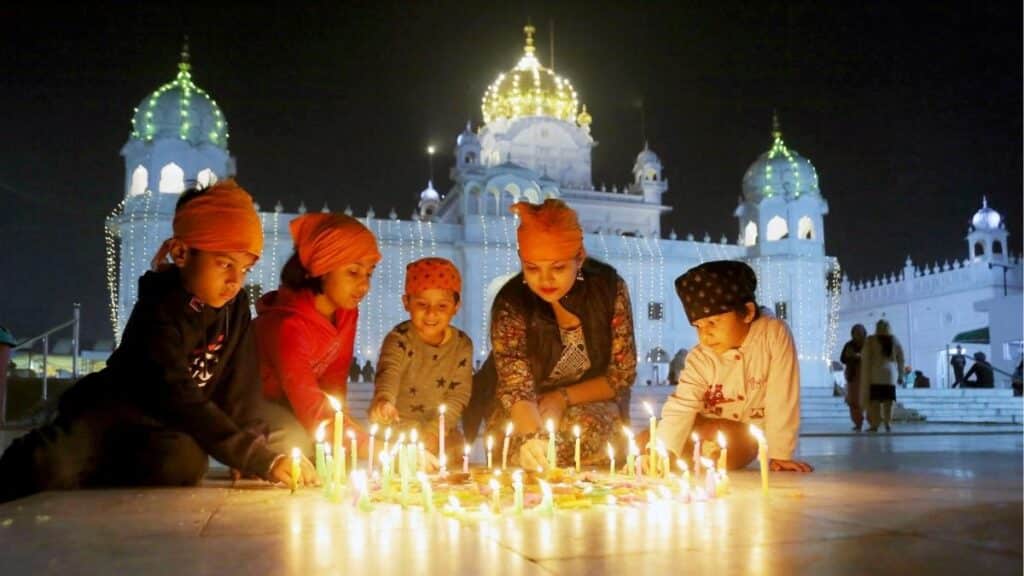
Gifting on Guru Nanak Jayanti is rooted in the spirit of sharing rather than material exchange. Traditional gifts include the Gutka Sahib (small prayer book), kara (steel bracelet), framed Gurbani verses, and Sikh artwork. Distributing karah prasad — the sacred semolina sweet prepared with prayers at the Gurdwara — is central to the gifting tradition.
In diaspora communities, gifting has evolved to include books on Sikh history and philosophy, Khanda-emblazoned jewellery, and charitable donations made in a loved one’s name — a fitting expression of Guru Nanak’s teaching of Vand Chakko (share with others). Many families sponsor Langar meals as an act of celebratory giving.
Guru Nanak Jayanti Foods and Culinary Traditions
Food — and specifically the Langar — is central to Guru Nanak Jayanti. The free community meal served at all Gurdwaras, prepared by volunteers in the spirit of sewa, was established by Guru Nanak himself to break caste barriers. All are welcome, seated together as equals, sharing the same simple vegetarian food.
Karah Prasad is the most iconic food of Gurpurab — a dense, warm sweet made from wheat flour, sugar, ghee, and water, distributed to every worshipper as a sacred offering. Classic Langar dishes include dal makhani, rajma, aloo sabzi, roti, and rice, with kheer and halwa served on festive occasions.
In diaspora kitchens, Punjabi festive foods such as pinni (wheat and ghee sweet), gur (jaggery) sweets, and seasonal favourites like makki di roti mark the celebration at home.
Music, Art, and Cultural Expression
Kirtan — the devotional singing of Gurbani — is the defining artistic and spiritual expression of Guru Nanak Jayanti. Performed by Ragis (trained musicians) on harmonium, tabla, and stringed instruments, Kirtan creates an atmosphere of meditative joy. Guru Nanak himself composed many of the ragas in which Gurbani is sung, and his verses in the Guru Granth Sahib are among the most celebrated poetic compositions in South Asian heritage.
Shabad Kirtan is broadcast live from the Golden Temple throughout Gurpurab, reaching Sikh households worldwide. Gatka — the traditional Sikh martial art — is performed in Nagar Kirtan processions, a dynamic display of swordsmanship celebrating Sikh warrior heritage. Religious painting, calligraphy of Gurbani verses, and folk art also feature in cultural programmes during the festival.
Modern Observance and Evolving Practices
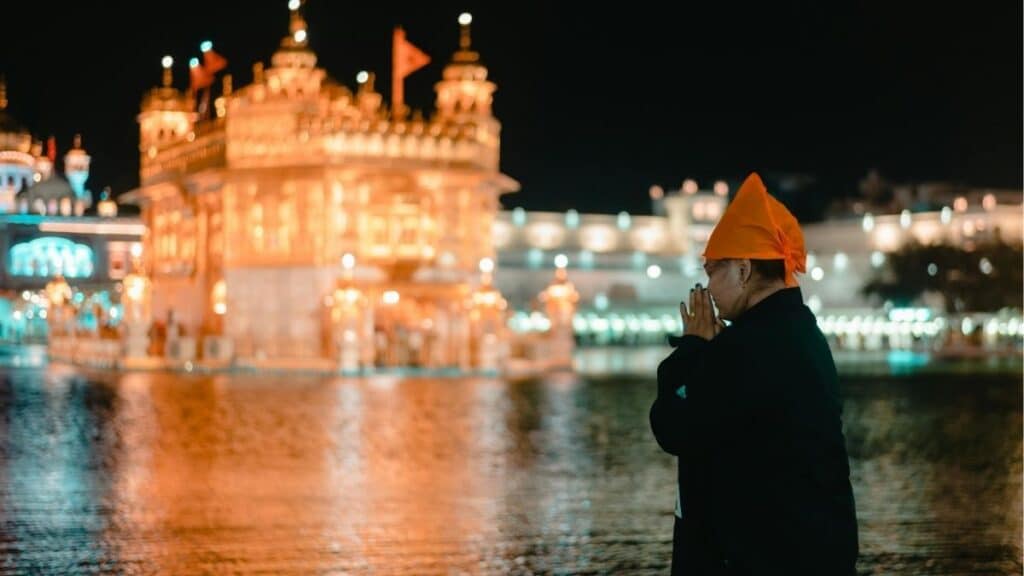
Contemporary Gurpurab celebrations blend tradition with modern connection. Live streaming of Golden Temple ceremonies reaches millions of Sikhs worldwide. Social media carries Gurbani quotes, artwork, and greetings across platforms. Many diaspora communities observe Gurpurab on the nearest weekend to November 24 to maximise community participation.
Environmental awareness is influencing Langar operations, with many Gurdwaras adopting waste-reduction and sustainable practices in keeping with the spirit of sewa (service to creation).
How to wish someone: Greet someone on Guru Nanak Jayanti with “Waheguru Ji Ka Khalsa, Waheguru Ji Ki Fateh” — the traditional Sikh salutation meaning “The Khalsa belongs to God; Victory belongs to God.” A warm “Gurpurab Mubarak” or “Happy Gurpurab” is equally welcomed.
Cultural Reflection
Guru Nanak Jayanti endures as one of the world’s most meaningful spiritual observances because the man it honours was, above all, a radical humanist. In an age of rigid caste and communal division, Guru Nanak sat with the poor, sang of a God beyond all religion, and built institutions of service that outlasted empires. His 557th birth anniversary in 2026 is a reminder that his vision of compassion, equality, and devotion remains as necessary as ever — for Sikhs, for India, and for the world.