
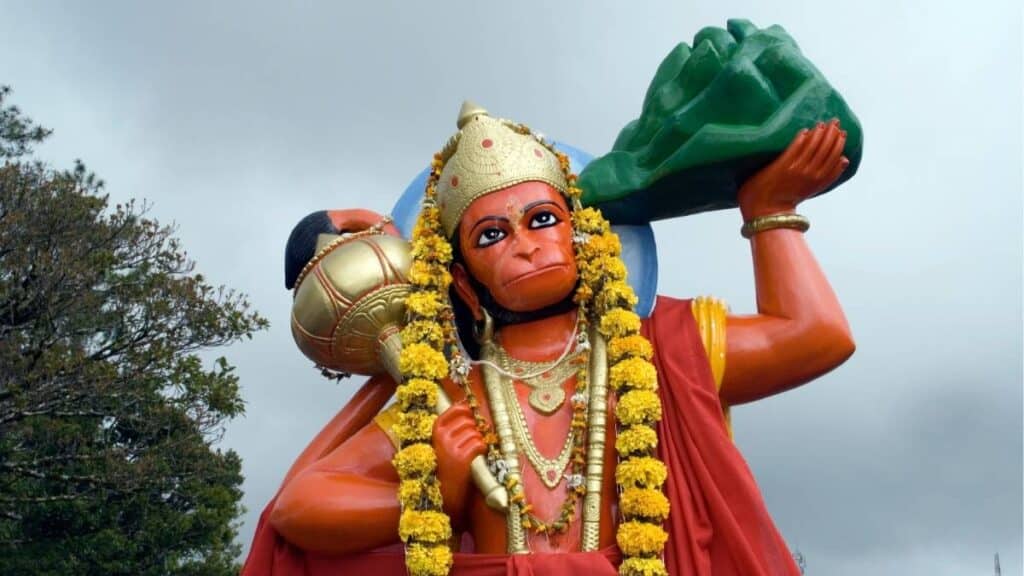
Hanuman Jayanti, also known as Hanuman Janmotsav, is one of the most spiritually significant Indian festivals, celebrating the birth of Lord Hanuman — the divine vanara deity revered as the ultimate symbol of devotion, strength, and selfless service. Observed by millions of Hindus across India and around the world, this festival honours Hanuman’s extraordinary role in the Ramayana as Lord Rama’s most faithful devotee and companion.
Unlike many Hindu festivals centred on feasting and gifting, Hanuman Jayanti is deeply devotional in character — marked by temple visits, recitation of the Hanuman Chalisa, fasting, and prayers for protection and courage. The festival’s dates and regional traditions vary beautifully across India, making it one of the country’s most diverse religious observances.
When Is Hanuman Jayanti Celebrated in 2026?
Hanuman Jayanti is observed on the full moon day (Purnima) of the Hindu lunar month of Chaitra in most parts of India. In 2026, the main observance falls in April.
Hanuman Jayanti 2026 Dates in India
Day 1 (Main Observance): Hanuman Jayanti — Thursday, April 2, 2026 Chaitra Purnima — the full moon of Chaitra month — is the principal date for North India, Maharashtra, and most other states.
Purnima Tithi Begins: 7:06 AM IST on April 1, 2026 Purnima Tithi Ends: 7:41 AM IST on April 2, 2026 Puja Time: Pre-dawn to Sunrise on April 2, 2026
Temples begin spiritual discourses at dawn and pause at sunrise, as Hanuman is believed to have been born at that precise moment. Prasadam is distributed after the birth-time puja.
Table of Contents
Hanuman Jayanti In USA, Canada, Australia, New Zealand, UK, UAE, Singapore 2026 Dates
Hanuman Jayanti on Wednesday, April 1, 2026
- Purnima Tithi Begins – 09:36 PM on Mar 31, 2026
- Purnima Tithi Ends – 10:11 PM on Apr 01, 2026
Hanuman Jayanti on Wednesday, April 1, 2026
- Purnima Tithi Begins – 09:36 PM on Mar 31, 2026
- Purnima Tithi Ends – 10:11 PM on Apr 01, 2026
Hanuman Jayanti on Thursday, April 2, 2026
- Purnima Tithi Begins – 12:36 PM on Apr 01, 2026
- Purnima Tithi Ends – 01:11 PM on Apr 02, 2026
Hanuman Jayanti on Wednesday, April 1, 2026
- Purnima Tithi Begins – 02:36 AM on Apr 01, 2026
- Purnima Tithi Ends – 03:11 AM on Apr 02, 2026
Hanuman Jayanti on Wednesday, April 1, 2026
- Purnima Tithi Begins – 05:36 AM on Apr 01, 2026
- Purnima Tithi Ends – 06:11 AM on Apr 02, 2026
Hanuman Jayanti on Thursday, April 2, 2026
- Purnima Tithi Begins – 09:36 AM on Apr 01, 2026
- Purnima Tithi Ends – 10:11 AM on Apr 02, 2026
Why Do Hanuman Jayanti Dates Change Every Year?
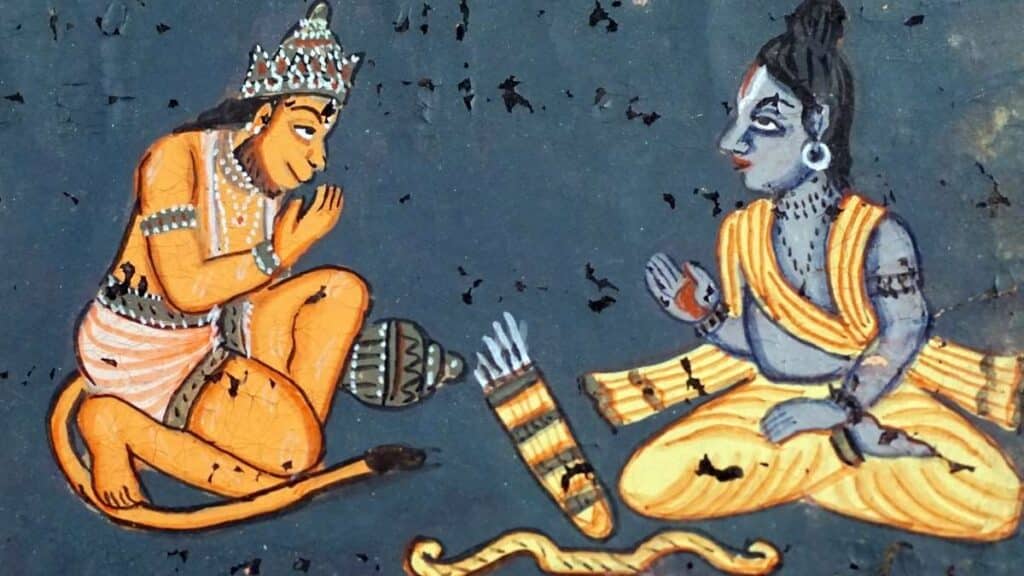
Hanuman Jayanti is based on the Hindu lunisolar calendar, not the Gregorian solar calendar. It falls on Chaitra Purnima — the full moon of Chaitra month — which shifts by approximately 10–11 days each year against Gregorian dates.
Occasional intercalary months (adhik maas) can create larger shifts. This is why the festival moves between late March and late April from year to year.
Regional Hanuman Jayanti Dates in 2026
Different states follow different calendar traditions for Hanuman’s birth, resulting in multiple regional observance dates:
| Region | 2026 Date | Tradition |
|---|---|---|
| Most of India (North, West, Maharashtra) | April 2, 2026 | Chaitra Purnima |
| Andhra Pradesh & Telangana (41-day observance begins) | April 2 – May 12, 2026 | Concludes on Vaishakha Krishna Dashami |
| Telugu Calendar (main Jayanthi day) | May 22, 2026 | Vaishakha Bahula Dashami |
| Odisha | April 13/14, 2026 | Pana Sankranti (Odia New Year) |
| Karnataka | December 3, 2026 | Margashirsha Shukla Trayodashi |
| Tamil Nadu & Kerala | December 19, 2026 | Margali (Dhanu) month, Amavasya |
while maintaining the four-day lunar calendar sequence.
Hanuman Jayanti — Other Names and Regional Identities
Hanuman Jayanti is known by different names across India’s linguistic regions:
General / Widely Used Names Hanuman Jayanti — Standard Hindi/English/Sanskrit name Hanuman Janmotsav — Formal name meaning “birth celebration” Bajrang Bali Jayanti — Popular devotional name
North & West India Hanuman Jayanti — Observed in UP, Delhi, Rajasthan, Bihar, MP, Maharashtra
South India Anjaneya Jayanthi — Telugu name used in Andhra Pradesh and Telangana Hanumath Jayanthi — Tamil name used in Tamil Nadu and Kerala Hanuman Vratam — Kannada name; the festival is observed as a vrat in Karnataka
Other Regional Names Hanuman Jayanti on Pana Sankranti — Odia tradition tied to the New Year
Diaspora / International Naming Phagwah traditions in the Indo-Caribbean community (Trinidad, Guyana, Suriname) include Hanuman devotion as a central cultural practice, with Jayanti observed at community mandirs.
The Origins, History, and Legends of Hanuman Jayanti
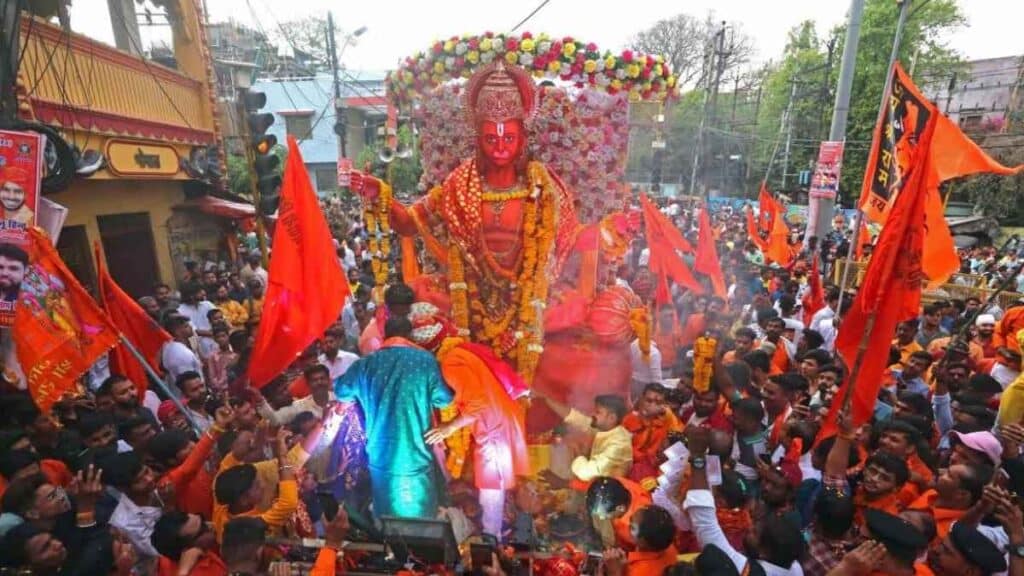
Hanuman’s birth is narrated differently across Hindu scriptures, each rooting the event in a specific sacred geography.
The oldest account comes from the Valmiki Ramayana. Hanuman’s father, Kesari, was king of a region near Kishkindha — identified with modern-day Hampi in Karnataka. His mother, Anjana, was an apsara reborn on earth due to a curse. She performed twelve years of intense prayers to Lord Shiva, who granted her a divine son.
A beloved parallel account, from Eknath’s Bhavartha Ramayana, tells that when King Dasharatha performed the Putrakameshti yajna to beget sons, a divine bird snatched a portion of sacred payasam (pudding) and dropped it over the forest where Anjana was meditating. The wind god Vayu delivered the falling pudding into her outstretched hands. Hanuman was born of this divine intervention — making him simultaneously the son of Vayu and the child of Anjana and Kesari.
In the Telugu tradition, the Venkatachala Mahatyam and Skanda Puranam record that Anjana performed penance on Venkatachalam (Tirumala, Andhra Pradesh). After Hanuman’s birth, he leaped toward the rising sun, mistaking it for a fruit. The gods eventually descended and granted him boons; one of Tirumala’s seven hills is called Anjanadri in Anjana’s honour.
A beloved legend explains the sindoor tradition: when Hanuman saw Sita applying sindoor (vermillion) to her forehead to ensure Rama’s long life, he smeared sindoor over his entire body — so Rama would be immortal forever. This is why devotees apply sindoor from Hanuman’s murti to their foreheads on Jayanti.
Historically, Hanuman Jayanti has been observed for centuries as part of the living Ramayana tradition across India, with temple festivals, scripture recitation, and community worship forming its core.
Hanuman Jayanti : Cultural and Spiritual Significance
Hanuman occupies a unique place in the Hindu pantheon as the perfect devotee — one whose entire being is directed toward God. Unlike other deities celebrated for cosmic roles, Hanuman is beloved precisely because he is a companion in struggle: fearless in the face of adversity, humble despite extraordinary power, and wholly devoted without expectation of reward.
His qualities — strength tempered by humility, courage rooted in faith, wisdom guided by devotion — represent an ideal that transcends caste, region, and social identity. Hanuman temples are among the most visited shrines in India, and his image appears in homes, vehicles, and workplaces across the country.
Hanuman Jayanti celebrates not just a birth but a principle: that unwavering devotion is the highest strength. The festival is especially meaningful for those seeking protection from adversity, courage in difficult times, and blessings for physical and spiritual strength. Hanuman is also one of the eight Chiranjivi (immortal beings) in Hindu tradition, and wrestlers, athletes, and soldiers have long worshipped him as their patron deity.
Hanuman Jayanti Prayers and Religious Observances
Hanuman Jayanti is one of the few Hindu festivals where spiritual practice takes clear precedence over social celebration.
Temples begin the day before sunrise with elaborate abhishekam — ritual bathing of the Hanuman murti with panchamrit (milk, curd, ghee, honey, sugar), water, and oil mixed with sindoor. Spiritual discourses begin at dawn and pause at the moment corresponding to Hanuman’s birth at sunrise, when the birth is celebrated with bells, prasadam distribution, and devotional singing.
Hanuman Jayanti Mantras
मूल मंत्र (नित्य जाप के लिए)
ॐ हनुमते नमः ॐ हं हनुमते नमः
Om Hanumate Namah Om Ham Hanumate Namah
हनुमान गायत्री मंत्र (बुद्धि और शक्ति के लिए)
ॐ आंजनेयाय विद्महे वायुपुत्राय धीमहि, तन्नो हनुमत् प्रचोदयात्
Om Aanjaneya Vidmahe Vaayuputraaya Dheemahi, Tanno Hanumat Prachodayaat
संकटमोचन मंत्र (कष्ट दूर करने के लिए)
ॐ नमो हनुमते रुद्रावताराय सर्वशत्रुसंहारणाय, सर्वरोग हराय, सर्ववशीकरणाय रामदूताय स्वाहा
Om Namo Hanumate Rudraavataaraaya Sarvashatrusanharanaya, Sarvarog Haraaya, Sarvavasheekarnaya Raamdootaaya Swaaha
Sacred texts recited on this day include:
- Hanuman Chalisa — the 40-verse hymn by Tulsidas, recited continuously; many devotees complete 108 recitations
- Sundara Kanda — the fifth chapter of the Valmiki Ramayana, focused on Hanuman’s journey to Lanka; especially sacred in Odisha
- Hanuman Bahuk and Hanuman Ashtak — additional compositions by Tulsidas
- Ramcharitmanas — recitations from Tulsidas’s Hindi Ramayana, particularly the Kishkindha and Sundara sections
At home, devotees light a diya at their shrine, offer red flowers, place a banana or coconut before Hanuman’s image, apply sindoor to the murti, and recite the Hanuman Chalisa. Many observe a full-day fast (upvas), breaking it after sunset with sattvic food — fruits, milk, and sabudana, free from onion and garlic.
Hanuman Jayanti katha
In Hindi
सुमेरु पर्वत पर केसरी का राज्य था — वो पर्वत जो सोने जैसा दमकता था, सूर्य के वरदान से बना। उनकी पत्नी अंजना अपने रूप और भक्ति दोनों में अनुपम थीं। एक दिन अंजना ने स्नान करके सुंदर वस्त्र और आभूषण धारण किए। उसी समय पवन देव ने उनके कानों में एक मधुर वचन फुसफुसाया — “तुम्हारे गर्भ से एक ऐसा पुत्र जन्म लेगा जो सूर्य, अग्नि और सुवर्ण के समान तेजस्वी होगा। वेद-वेदांगों का ज्ञाता, समस्त संसार का वंदनीय।”
और वो वचन पूरा हुआ — कार्तिक कृष्ण चतुर्दशी की अर्धरात्रि में माता अंजना की गोद में हनुमान जी का जन्म हुआ।
जब सुबह की पहली किरण फूटी, बालक हनुमान को भूख लगी। माता फल लेने निकल गईं। इधर लाल रंग के उगते सूर्य को नन्हे हनुमान ने रसीला फल समझा और एक छलांग में आकाश की ओर उड़ चले! उस दिन अमावस्या थी — राहु सूर्य को ग्रसने आया था, लेकिन हनुमान जी को देखकर वो भाग खड़ा हुआ, यह सोचकर कि यह तो दूसरा राहु आ गया।
इंद्र ने घबराकर अपना वज्र चला दिया। वज्र की चोट से हनुमान जी की ठुड्डी टेढ़ी हो गई — और इसी से उनका नाम “हनुमान” पड़ा। पवन देव को जब यह पता चला, तो उन्होंने क्रोध में संसार की वायु रोक दी। सांस लेना मुश्किल हो गया। तब ब्रह्मा, इंद्र, सूर्य, वरुण, यम, कुबेर, शंकर, विश्वकर्मा — सभी देवताओं ने हनुमान जी को वरदान दिए।
ब्रह्मा जी ने अमर आयु का वर दिया। इंद्र ने कहा वज्र अब इन्हें कभी नहीं छू सकेगा। सूर्य ने अपने तेज का सौवां हिस्सा और समस्त शास्त्रों का ज्ञान दिया। यम ने यमदंड से अभय किया। कुबेर, वरुण, शंकर और विश्वकर्मा ने भी एक से बढ़कर एक वरदान दिए।
इन्हीं वरदानों की शक्ति से वो बजरंगबली बने — जिन्होंने समुद्र लाँघा, लंका जलाई, लक्ष्मण के प्राण बचाए, और भगवान राम के सबसे प्रिय सेवक कहलाए। उनकी गाथा रामायण में है, पुराणों में है — और उनके भक्तों के दिलों में भी।
In Hinglish
Sumeru parvat par Kesari ka raj tha — woh pahad jo suraj ke vardan se sone ki tarah chamakta tha. Unki patni Anjana — roop mein bhi, bhakti mein bhi — dono mein anupam thin. Ek din unhone snan karke sundar vastra aur aabhushan dharan kiye. Usi waqt Pavan Dev ne unke kaano mein dheere se kaha — “Tere garbh se aisa putra janam lega jo surya, agni aur suvarna ke samaan tejasvi hoga. Veda-vedangon ka gyata, poore vishwa ka vandaniya.”
Aur woh vachan poora hua — Kartik Krishna Chaturdashi ki aadhi raat ko, Mata Anjana ki god mein Hanuman ji ka janam hua.
Jab subah ki pehli kirn phooti, baalak Hanuman ji ko bhook lagi. Mata phal laane nikal gain. Udhar laal rang ke ugte suraj ko nannhe Hanuman ji ne rasila phal samjha — aur ek chhalang mein aasman ki taraf ud chale! Us din Amavasya thi, Rahu suraj ko grasne aaya tha, lekin Hanuman ji ko dekh ke bhaag khada hua — “Yeh toh doosra Rahu aa gaya!”
Indra ne ghabra kar apna vajra chala diya. Us chot se Hanuman ji ki thoddi tedhi ho gayi — aur isi se unka naam “Hanuman” pad gaya. Jab Pavan Dev ko pata chala, unhone gusse mein poori duniya ki vayu rok di. Sans lena mushkil ho gaya. Tab Brahma, Indra, Surya, Yam, Kubera, Shankar, Vishwakarma — sabhi devon ne Hanuman ji ko vardan diye. Koi amarta ka varan diya, koi shakti ka, koi gyan ka.
Inhi vardanon ki shakti se woh Bajrangbali bane — jinhone samudra laangha, Lanka jalaayi, Lakshman ke praan bachaye, aur Bhagwan Ram ke sabse priye sevak kahlaaye. Unki gaatha Ramayan mein hai, Puranon mein hai — aur unke bhakton ke dilon mein bhi zinda hai.
Hanuman Chalisa
In Hindi
दोहा: श्रीगुरु चरन सरोज रज, निज मनु मुकुरु सुधारि। बरनऊं रघुबर बिमल जसु, जो दायकु फल चारि।। बुद्धिहीन तनु जानिके, सुमिरौं पवन-कुमार। बल बुद्धि बिद्या देहु मोहिं, हरहु कलेस बिकार।।
चौपाई: जय हनुमान ज्ञान गुन सागर। जय कपीस तिहुं लोक उजागर।। रामदूत अतुलित बल धामा। अंजनि-पुत्र पवनसुत नामा।। महाबीर बिक्रम बजरंगी। कुमति निवार सुमति के संगी।। कंचन बरन बिराज सुबेसा। कानन कुंडल कुंचित केसा।। हाथ बज्र औ ध्वजा बिराजै। कांधे मूंज जनेऊ साजै।। संकर सुवन केसरीनंदन। तेज प्रताप महा जग बन्दन।। विद्यावान गुनी अति चातुर। राम काज करिबे को आतुर।। प्रभु चरित्र सुनिबे को रसिया। राम लखन सीता मन बसिया।। सूक्ष्म रूप धरि सियहिं दिखावा। बिकट रूप धरि लंक जरावा।। भीम रूप धरि असुर संहारे। रामचंद्र के काज संवारे।। लाय सजीवन लखन जियाये। श्रीरघुबीर हरषि उर लाये।। रघुपति कीन्ही बहुत बड़ाई। तुम मम प्रिय भरतहि सम भाई।। सहस बदन तुम्हरो जस गावैं। अस कहि श्रीपति कंठ लगावैं।। सनकादिक ब्रह्मादि मुनीसा। नारद सारद सहित अहीसा।। जम कुबेर दिगपाल जहां ते। कबि कोबिद कहि सके कहां ते।। तुम उपकार सुग्रीवहिं कीन्हा। राम मिलाय राज पद दीन्हा।। तुम्हरो मंत्र बिभीषन माना। लंकेस्वर भए सब जग जाना।। जुग सहस्र जोजन पर भानू। लील्यो ताहि मधुर फल जानू।। प्रभु मुद्रिका मेलि मुख माहीं। जलधि लांघि गये अचरज नाहीं।। दुर्गम काज जगत के जेते। सुगम अनुग्रह तुम्हरे तेते।। राम दुआरे तुम रखवारे। होत न आज्ञा बिनु पैसारे।। सब सुख लहै तुम्हारी सरना। तुम रक्षक काहू को डर ना।। आपन तेज सम्हारो आपै। तीनों लोक हांक तें कांपै।। भूत पिसाच निकट नहिं आवै। महाबीर जब नाम सुनावै।। नासै रोग हरै सब पीरा। जपत निरंतर हनुमत बीरा।। संकट तें हनुमान छुड़ावै। मन क्रम बचन ध्यान जो लावै।। सब पर राम तपस्वी राजा। तिन के काज सकल तुम साजा।। और मनोरथ जो कोई लावै। सोइ अमित जीवन फल पावै।। चारों जुग परताप तुम्हारा। है परसिद्ध जगत उजियारा।। साधु-संत के तुम रखवारे। असुर निकंदन राम दुलारे।। अष्ट सिद्धि नौ निधि के दाता। अस बर दीन जानकी माता।। राम रसायन तुम्हरे पासा। सदा रहो रघुपति के दासा।। तुम्हरे भजन राम को पावै। जनम-जनम के दुख बिसरावै।। अन्तकाल रघुबर पुर जाई। जहां जन्म हरि-भक्त कहाई।। और देवता चित्त न धरई। हनुमत सेइ सर्ब सुख करई।। संकट कटै मिटै सब पीरा। जो सुमिरै हनुमत बलबीरा।। जै जै जै हनुमान गोसाईं। कृपा करहु गुरुदेव की नाईं।। जो सत बार पाठ कर कोई। छूटहि बंदि महा सुख होई।। जो यह पढ़ै हनुमान चालीसा। होय सिद्धि साखी गौरीसा।। तुलसीदास सदा हरि चेरा। कीजै नाथ हृदय मंह डेरा।।
दोहा: पवन तनय संकट हरन, मंगल मूरति रूप। राम लखन सीता सहित, हृदय बसहु सुर भूप।।
In Hinglish
Doha: Shri Guru Charan Saroj Raj, Nij Manu Mukuru Sudhari. Barnaun Raghubar Bimal Jasu, Jo Daayaku Phal Chaari. Buddhiheen Tanu Jaanike, Sumiron Pavan-Kumar. Bal Buddhi Vidyaa Dehu Mohi, Harahu Kalesh Vikaar.
Chaupai: Jai Hanuman Gyaan Gun Saagar. Jai Kapees Tihun Lok Ujaagar. Raamdoot Atulit Bal Dhaama. Anjani-Putra Pavan Sut Naama. Mahaveer Bikram Bajrangi. Kumati Nivaar Sumati Ke Sangi. Kanchan Baran Biraaj Subesa. Kaanan Kundal Kunchit Kesa. Haath Bajra Au Dhwaja Viraaje. Kaandhe Moonj Janeu Saaje. Shankar Suvan Kesarinandan. Tej Pratap Maha Jag Bandan. Vidyaavaan Guni Ati Chaatur. Raam Kaaj Karibe Ko Aatur. Prabhu Charitra Sunibe Ko Rasiya. Raam Lakhan Sita Man Basiya. Sookshma Roop Dhari Siyahi Dikhaava. Bikat Roop Dhari Lanka Jaraava. Bheem Roop Dhari Asur Sanhaare. Raamchandra Ke Kaaj Sanvaare. Laay Saajeewan Lakhan Jiyaaye. Shri Raghuveer Harshi Ur Laaye. Raghupati Keenhi Bahut Badaayi. Tum Mam Priya Bharatahi Sam Bhaai. Sahas Badan Tumharo Jas Gaavain. As Kahi Shripati Kanth Lagaavain. Sanakadik Brahmaadi Muneesa. Narad Sarad Sahit Aheesa. Jam Kubera Digpaal Jahaan Te. Kavi Kobid Kahi Sake Kahaan Te. Tum Upkaar Sugreevahin Keenha. Raam Milaay Raaj Pad Deenha. Tumharo Mantra Vibheeshan Maana. Lankeshwar Bhaye Sab Jag Jaana. Jug Sahastra Jojan Par Bhaanu. Liilyo Taahi Madhur Phal Jaanu. Prabhu Mudrika Meli Mukh Maaheen. Jaladhi Laanghi Gaye Acharaj Naaheen. Durgam Kaaj Jagat Ke Jete. Sugam Anugraha Tumhare Tete. Raam Duaare Tum Rakhwaare. Hot Na Aagya Binu Paisaare. Sab Sukh Lahai Tumhaari Sarna. Tum Rakshak Kaahu Ko Dar Na. Aapan Tej Samharo Aapai. Teeno Lok Haank Ten Kaanpai. Bhoot Pisaach Nikat Nahi Aavai. Mahaveer Jab Naam Sunaavai. Nasai Rog Harai Sab Peera. Japat Nirantar Hanumat Beera. Sankat Ten Hanuman Chhudaavai. Man Karm Bachan Dhyaan Jo Laavai. Sab Par Raam Tapasvi Raja. Tin Ke Kaaj Sakal Tum Saaja. Aur Manorath Jo Koi Laavai. Soi Amit Jivan Phal Paavai. Chaaron Jug Partaap Tumhaara. Hai Parsiddh Jagat Ujiyaara. Saadhu Sant Ke Tum Rakhwaare. Asur Nikandan Raam Dulaare. Asht Siddhi Nau Nidhi Ke Data. As Bar Deen Janaki Mata. Raam Rasayan Tumhare Paasa. Sada Raho Raghupati Ke Daasa. Tumhare Bhajan Raam Ko Paavai. Janam Janam Ke Dukh Bisraavai. Antakaal Raghubar Pur Jaayi. Jahaan Janam Hari Bhakt Kahaayi. Aur Devata Chitt Na Dharai. Hanumat Sei Sarb Sukh Karai. Sankat Katai Mitai Sab Peera. Jo Sumirai Hanumat Balbeera. Jai Jai Jai Hanuman Gosaain. Kripa Karahu Gurudev Ki Naayin. Jo Sat Baar Paath Kar Koi. Chhootahi Bandi Maha Sukh Hoi. Jo Yeh Padhai Hanuman Chalisa. Hoy Siddhi Saakhi Gaureesa. Tulasidas Sada Hari Chera. Keejai Naath Hriday Mah Dera.
Doha: Pavan Tanay Sankat Haran, Mangal Moorti Roop. Raam Lakhan Sita Sahit, Hriday Basahu Sur Bhoop.
Hanuman Ji Ki Aarti
In Hindi
आरती कीजै हनुमान लला की। दुष्ट दलन रघुनाथ कला की।।
जाके बल से गिरिवर कांपे। रोग दोष जाके निकट न झांके।।
अंजनि पुत्र महाबलदायी। संतान के प्रभु सदा सहाई।।
दे बीरा रघुनाथ पठाए। लंका जारी सिया सुध लाए।।
लंका सो कोट समुद्र सी खाई। जात पवनसुत बार न लाई।।
लंका जारी असुर संहारे। सियारामजी के काज संवारे।।
लक्ष्मण मूर्छित पड़े सकारे। आणि संजीवन प्राण उबारे।।
पैठी पताल तोरि जमकारे। अहिरावण की भुजा उखाड़े।।
बाएं भुजा असुर दल मारे। दाहिने भुजा संतजन तारे।।
सुर-नर-मुनि जन आरती उतारे। जै जै जै हनुमान उचारे।।
कंचन थार कपूर लौ छाई। आरती करत अंजना माई।।
लंकविध्वंस कीन्ह रघुराई। तुलसीदास प्रभु कीरति गाई।।
जो हनुमानजी की आरती गावै। बसी बैकुंठ परमपद पावै।।
In Hinglish
Aarti Keejai Hanuman Lala Ki. Dusht Dalan Raghunath Kala Ki.
Jake Bal Se Girivar Kaanpe. Rog Dosh Jake Nikat Na Jhaanke.
Anjani Putra Mahaabaldayi. Santaan Ke Prabhu Sada Sahaayi.
De Beera Raghunath Pathae. Lanka Jaari Siya Sudh Lae.
Lanka So Kot Samudra Si Khaai. Jaat Pavan Sut Baar Na Laayi.
Lanka Jaari Asur Sanhaare. Siyaaraамji Ke Kaaj Sanvaare.
Lakshman Moorchit Pade Sakaare. Aani Sanjeevan Praan Ubaare.
Paithi Pataal Tori Jamkaare. Ahiraavan Ki Bhuja Ukhaade.
Baayen Bhuja Asur Dal Maare. Daahine Bhuja Santjan Taare.
Sur Nar Muni Jan Aarti Utaare. Jai Jai Jai Hanuman Uchaare.
Kanchan Thaar Kapoor Lau Chhaai. Aarti Karat Anjana Maai.
Lankvidhwans Keenh Raghuraai. Tulasidas Prabhu Keerati Gaai.
Jo Hanumanji Ki Aarti Gaavai. Basi Vaikunth Parampad Paavai.
How Hanuman Jayanti Is Celebrated Across India
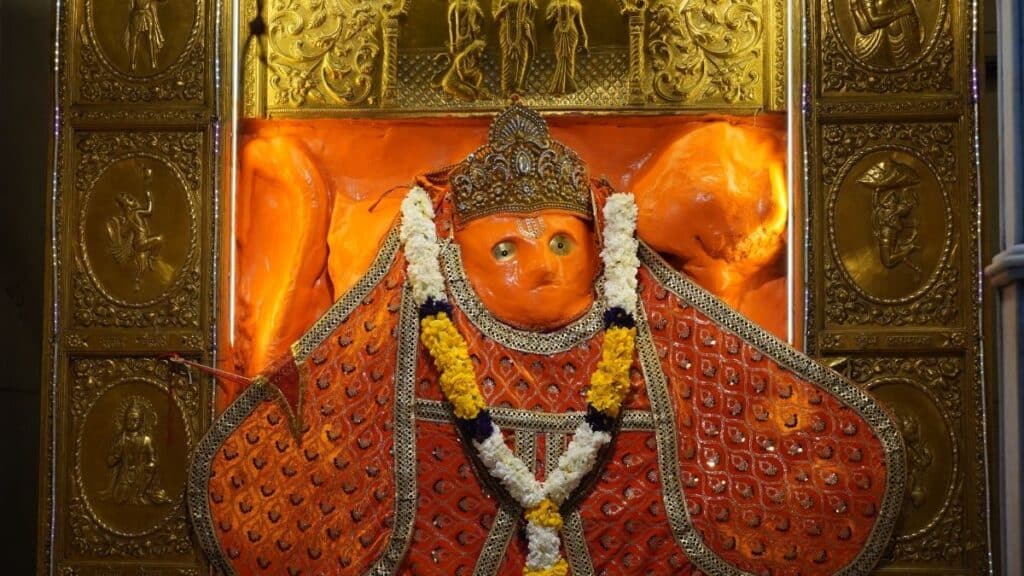
While the spirit of Hanuman Jayanti is consistent, its expressions vary richly across India’s regions.
In North India (UP, Delhi, Rajasthan, Bihar, Madhya Pradesh), April 2 sees enormous temple gatherings. Shrines like Sankat Mochan Mandir in Varanasi and Hanuman Mandir at Connaught Place in New Delhi overflow with devotees. Processions carry Hanuman’s image through streets, and akharas (wrestling clubs) perform special pujas — reflecting Hanuman’s role as patron of wrestlers.
In Maharashtra, the festival centres on kirtans (devotional singing) and spiritual discourses beginning before dawn. Prasadam distribution is a key community activity.
In Andhra Pradesh and Telangana, the observance is the most extended in India: a 41-day deeksha (spiritual vow) beginning on Chaitra Purnima (April 2) and concluding on Vaishakha Krishna Dashami. Devotees undertake daily worship and strict sattvic diet through this period. The famous Anjaneyaswami temple near Tirumala sees mass pilgrimages.
In Karnataka, Hanuman Jayanti (Hanuman Vratam) falls in December, with the Hanuman Temple at Hampi — near the legendary Kishkindha — as the central pilgrimage site.
In Tamil Nadu and Kerala, Hanumath Jayanthi is celebrated in the Margali month (December). Famous temples including Nanganallur Hanuman Temple (Chennai), Namakkal Anjaneyar Temple, Suchindram Temple, and Alathiyoor celebrate with major public events.
In Odisha, Hanuman Jayanti on Pana Sankranti (April 13/14) coincides with the Odia New Year. Reading the Sundara Kanda and distributing pana (bel fruit drink) are central traditions.
Participation Across Religions in India
While Hanuman Jayanti is fundamentally a Hindu festival, India’s syncretic culture means participation often extends beyond Hindu communities. In villages and towns where Hanuman temples serve as community gathering points, people of various backgrounds join prasadam distributions and processions out of neighbourhood solidarity and cultural tradition.
In some parts of rural Rajasthan, Uttar Pradesh, and Bihar, Hanuman is regarded as a village protector deity whose festival belongs to the whole community. The festival promotes social harmony and shared celebration across different communities — reflecting India’s pluralistic spirit.
How Hanuman Jayanti Is Celebrated Outside India
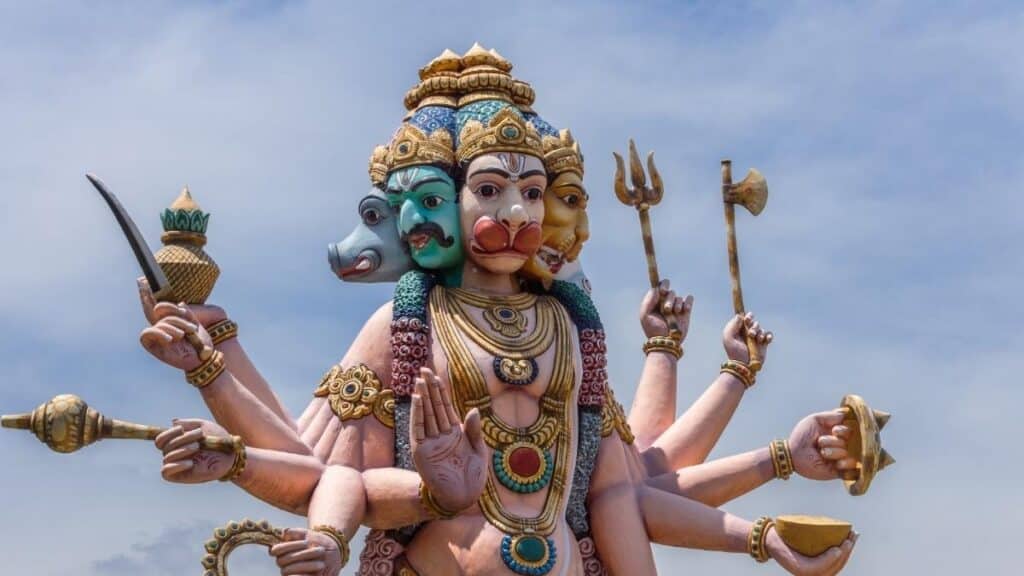
The Indian diaspora carries Hanuman Jayanti to every continent.
In the United States and Canada, Hindu temples — including BAPS Swaminarayan Mandirs, Chinmaya Mission centres, and dedicated Hanuman temples in Houston, Chicago, New Jersey, and Toronto — organise abhishekam, bhajan sessions, and prasadam distribution. Many community temples hold their main events on the weekend of April 4–5, 2026 for higher attendance.
In the United Kingdom, the large Hindu community in Leicester, London, Birmingham, and Coventry marks the day with temple pujas and community bhajan evenings.
In the UAE and Gulf countries, the enormous Indian expat community observes Hanuman Jayanti at Hindu temples and cultural halls. The large Tamil, Telugu, and Malayali populations also mark the December regional observance.
In Singapore and Malaysia, the Tamil Hindu community observes Hanumath Jayanthi at temples like Sri Mariamman Temple and dedicated Hanuman shrines.
In Australia and New Zealand, Hindu Councils coordinate celebrations in Sydney, Melbourne, and Auckland, with community bhajan programs and open temple events.
In the Caribbean and Fiji — Trinidad and Tobago, Guyana, Suriname, and Fiji — where Hindu communities have lived for five generations, Hanuman Jayanti is a major community event. In Trinidad, the Sanatan Dharma Maha Sabha organises island-wide celebrations. These communities have maintained Hanuman devotion across generations, and the festival carries profound ancestral resonance.
Hanuman Jayanti Gifting Traditions
Hanuman Jayanti is not primarily a gift-giving festival, but meaningful gestures of devotion and generosity are central to the day’s spirit.
Prasadam — especially boondi ladoo and churma ladoo from temples — is the most traditional gift to share with family and neighbours. Gifting a Hanuman Chalisa booklet, a small Hanuman murti, or a sindoor dabbi (vermillion box) to devotees is considered auspicious. Donating new vastra (cloth) to dress the temple murti is a revered act of devotion at smaller village temples.
Donating to temples and sponsoring annadanam (free meal service) is considered the highest form of Hanuman Jayanti giving — in keeping with Hanuman’s own spirit of selfless service.
In diaspora families, gifting children illustrated Ramayana books or a Hanuman Chalisa with translation is an increasingly popular way to pass on cultural heritage. Sending digital Hanuman Jayanti greetings via WhatsApp, Instagram, and community apps is now universal.
Traditional Hanuman Jayanti Foods and Culinary Traditions
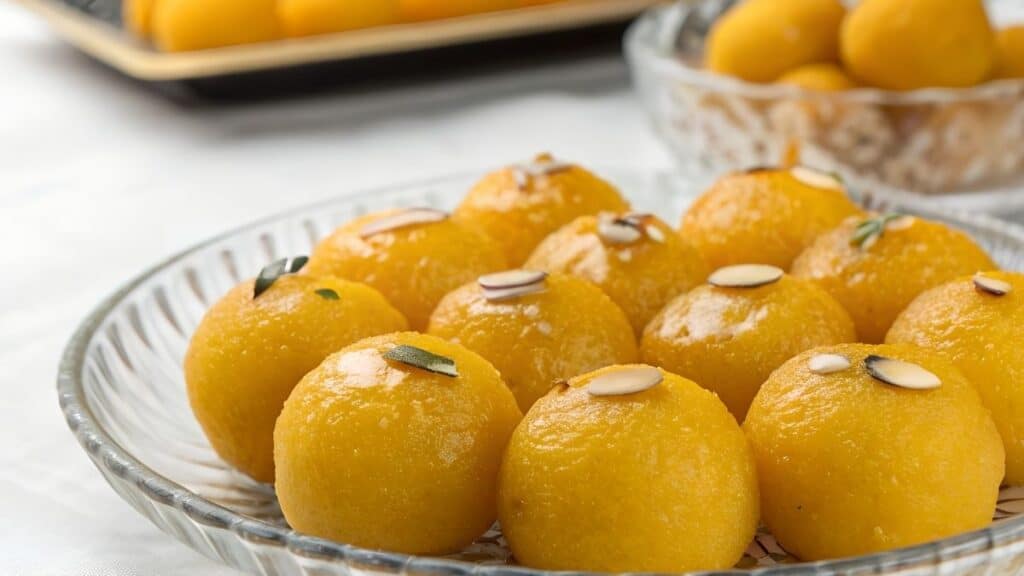
Hanuman Jayanti is not a food-centred festival, but specific offerings and traditional preparations mark the day.
Common Hanuman Jayanti offerings and foods include:
- Panchamrit — Five-ingredient divine nectar (milk, curd, ghee, honey, sugar) used in abhishekam and distributed as prasadam
- Boondi Ladoo — Hanuman’s favourite sweet; golden chickpea pearls in sugar syrup, the quintessential temple prasadam
- Churma Ladoo — Wheat-based sweet balls with ghee and jaggery; traditional North Indian offering
- Banana and Coconut — Offered as naivedyam and distributed as prasadam
- Tamarind Rice (Pulihora) — Offered at Hanuman temples in Andhra Pradesh and Telangana
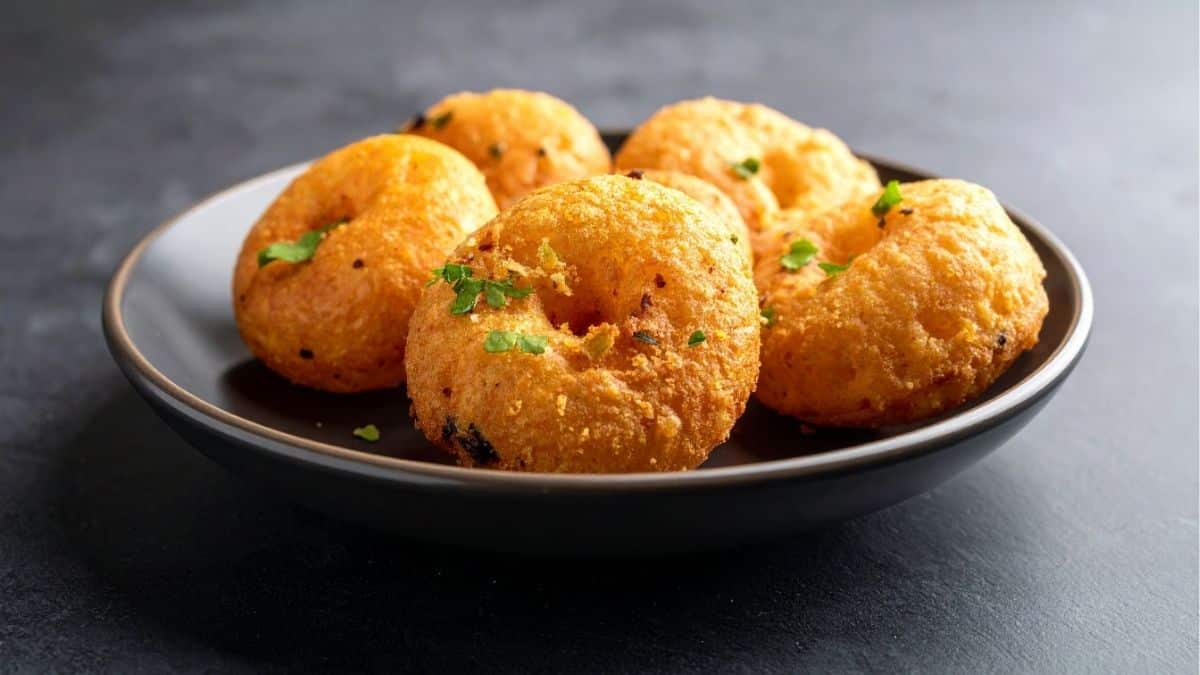
- Medu Vada — Crispy urad dal donuts offered at South Indian temples
- Bela Pana — Bel fruit drink with water and spices; the signature offering of Pana Sankranti in Odisha
Fasting devotees eat sattvic food — fruits, milk, sabudana — throughout the day, breaking the fast after sunset. Many temples serve free langar meals as part of the annadanam tradition.



Hanuman Jayanti : Music, Art, and Cultural Expression
Devotional music and art are central to Hanuman Jayanti celebrations.
The Hanuman Chalisa, composed by the 16th-century saint Tulsidas, is the defining text of the day — set to classical and folk ragas and sung in styles ranging from meditative to upbeat. Bhajans like Jai Jai Jai Bajrang Bali fill temple courtyards. Renditions by artists like Hari Om Sharan and Shankar Mahadevan are widely played.
In Maharashtra, Karnataka, and South India, kirtans and Harikatha performances — devotional narrative storytelling through music — draw large community audiences on Jayanti night. Ramayana episodes featuring Hanuman are narrated with song and devotional commentary.
Temple murtis are elaborately decorated with orange and red fabrics, marigold and hibiscus garlands, and sindoor mixed in oil. Rangoli and kolam designs featuring Hanuman’s image adorn temple entrances. In many communities, Jayanti week includes Ram Lila performances — theatrical enactments of the Ramayana — with Hanuman as a featured character.
Hanuman Jayanti’s Modern Relevance and Cultural Continuity
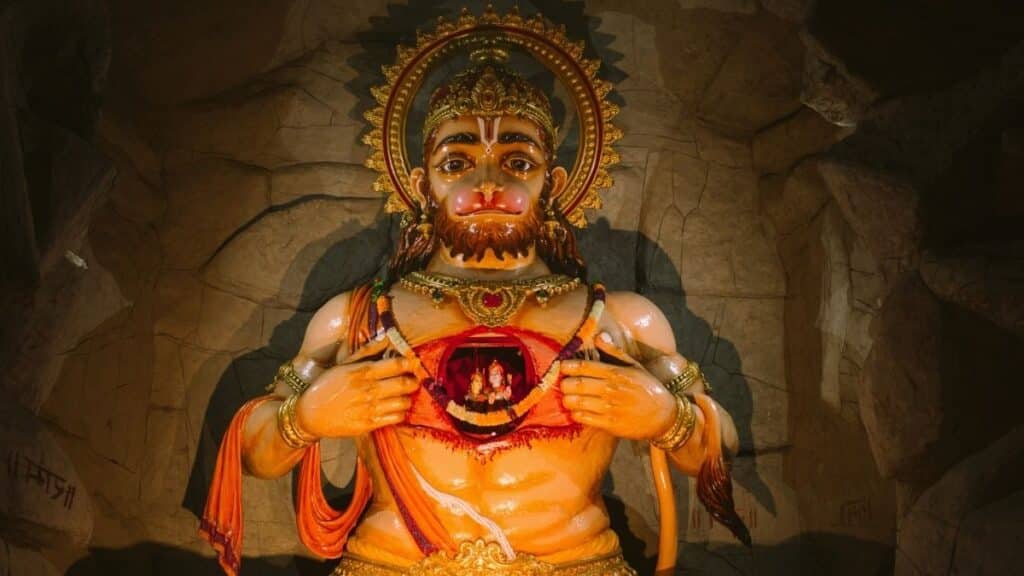
Hanuman Jayanti has adapted thoughtfully to modern life while preserving its devotional core.
Online pujas and live-streams have become mainstream, with temples in Varanasi, Tirumala, and Chennai streaming abhishekam and kirtan programs on YouTube and Facebook for diaspora families worldwide. Families in London or Toronto can participate in Hanuman Jayanti puja at Ayodhya’s Hanuman Garhi in real time.
Social media plays a central role: WhatsApp status updates featuring the Hanuman Chalisa, Instagram reels of temple celebrations, and YouTube compilations of Hanuman bhajans generate millions of views on Jayanti day. #HanumanJayanti trends nationally in India every year.
Eco-conscious observances are growing — biodegradable floral offerings, cloth temple flags replacing plastic ones, and water-conserving abhishekam rituals are increasingly promoted by younger temple committees.
How to wish someone on Hanuman Jayanti:
- Hindi: Hanuman Jayanti ki Hardik Shubhkamnayein
- Devotional: Jai Bajrang Bali! Jai Hanuman!
- Telugu: Anjaneya Jayanthi Shubhakankshalu
- Tamil: Hanumath Jayanthi Nalvazhthukkal
- English: Happy Hanuman Jayanti
Cultural Reflection
Hanuman endures as one of the most living presences in Indian culture — not a distant cosmic force, but a companion in difficulty and an embodiment of the truth that devotion is the deepest form of strength. In an era of uncertainty, his message resonates powerfully: that faith and selfless service, not power or position, are the foundations of a meaningful life.
For the Indian diaspora, Hanuman Jayanti carries an additional layer — a thread of cultural continuity connecting second-generation children in Toronto or Sydney to temples in Varanasi, Tirumala, and Hampi. The festival is not simply about honouring a deity; it is about affirming identity and heritage across generations and geographies.
As millions of voices rise before sunrise on April 2, 2026, reciting the Hanuman Chalisa — in temple courtyards, living rooms, and through phone screens — they are united in an aspiration that has endured for millennia: for strength, protection, devotion, and the grace of Bajrang Bali.
Jai Bajrang Bali 🙏