


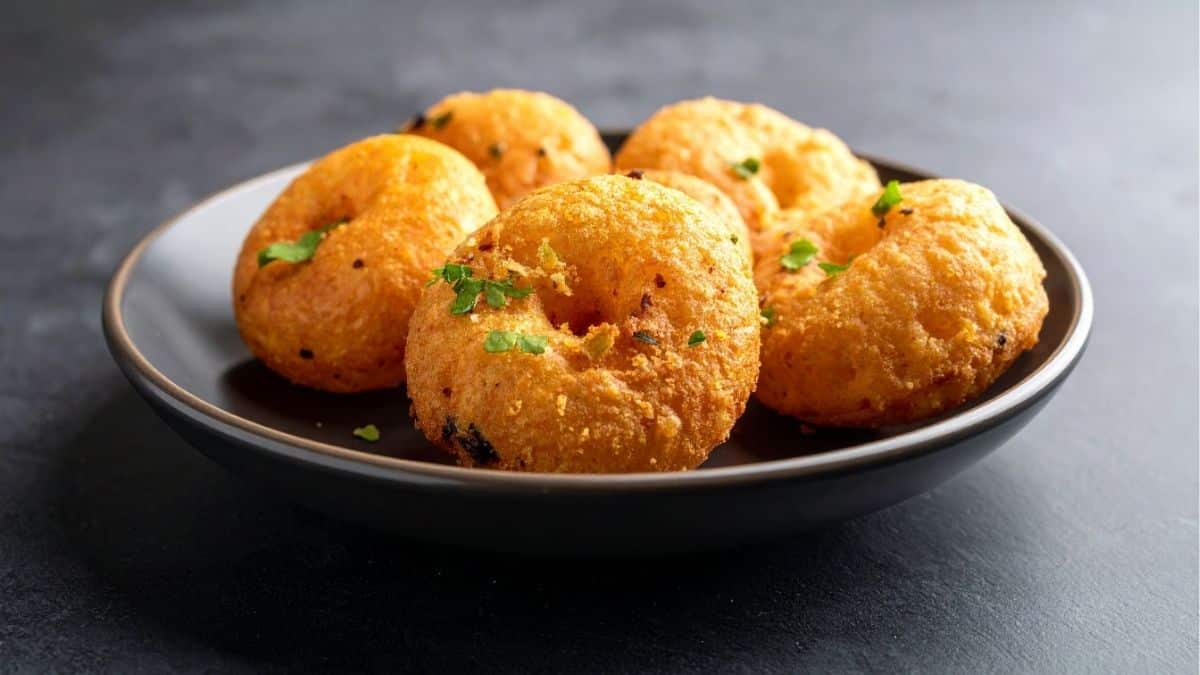
There are certain offerings that transform a festival kitchen into a sacred space—foods where the act of preparation becomes devotion, where the sizzle of oil carries intention, where the smell of curry leaves and ginger rising from hot batter feels like prayer made edible. Medu Vada, the crispy urad dal fritter offered as prasad on Hanuman Jayanti, is exactly that kind of sacred food.
Hanuman Jayanti celebrates the birth of Lord Hanuman and is observed with dawn pujas, Sunderkand recitations, and temple offerings across India and the diaspora. Medu Vada is among the most auspicious prasad offerings on this day—golden, round, and symbolic of Hanuman’s strength and warrior energy. In South Indian temples especially, no Hanuman Jayanti bhog is considered complete without a tray of freshly fried medu vada.
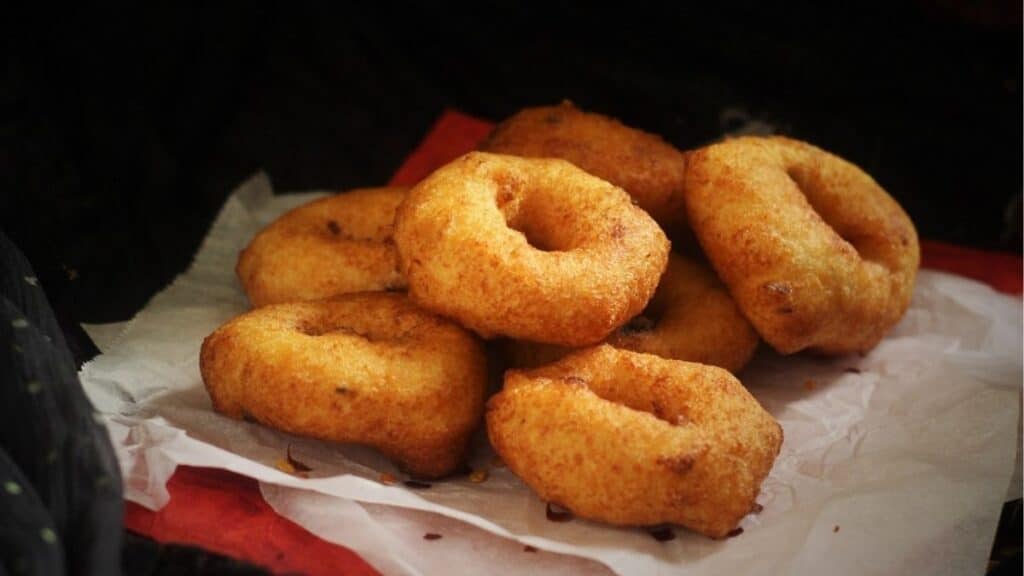
Medu Vada is the crispy urad dal fritter offered as sattvic prasad for Hanuman Jayanti—no onion, no garlic, fried golden in fresh oil. Critical techniques: soak dal overnight, grind to fluffy batter (float test mandatory—batter must float, not sink), add spices only just before frying, maintain medium oil temperature 175–190°C. Ready in 40 minutes frying after a 5-hour soak, yields 14 vadas per cup of dal, 72 calories each. Serve warm on banana leaf with fresh coconut chutney as part of the Hanuman Jayanti bhog thali. Batter stores refrigerated up to 24 hours without spices. The sacred golden circle offered to the golden-hued deity—form matching devotion.
In this Article
What Makes Hanuman Jayanti Medu Vada Special
Medu Vada appears across South Indian festival cooking, but Hanuman Jayanti medu vada carries specific sacred significance that sets it apart from everyday breakfast vada:
- Offered without onion or garlic. For Hanuman Jayanti prasad, medu vada is prepared in sattvic style—no onion, no garlic—keeping the offering pure and appropriate for temple distribution. The spicing relies on ginger, curry leaves, green chilli, cumin, and black pepper for flavor.
- Circular shape as sacred symbol. The donut shape of medu vada carries auspicious meaning in Hindu ritual context—the unbroken circle representing wholeness, completeness, and divine protection, qualities associated with Hanuman’s devotion to Ram.
- Fried in fresh oil only. The practice for prasad preparation: always use fresh oil, never reused, treating the frying process itself as part of ritual purity. The offering must be made with care and cleanliness from start to finish.
- Served warm from the tray. Unlike many sweets that can be prepared days ahead, prasad medu vada is always offered fresh—warm from the oil, not stored or reheated—because freshness signals devotion and care.
- Paired with coconut chutney as bhog. In South Indian temple tradition, Hanuman Jayanti bhog typically pairs medu vada with fresh coconut chutney—both white and auspicious, coconut being a sacred fruit in Hindu ritual.
- Sattvic preparation throughout. The entire process—soaking, grinding, frying—is done with focus and cleanliness, often after the cook has bathed, making the kitchen itself a space of offering.
Unlike restaurant-style medu vada made for taste alone, Hanuman Jayanti medu vada is made with intention layered into every step.
Recipe Overview
| Detail | Information |
|---|---|
| Prep Time | 20 minutes active |
| Soak Time | 4–5 hours or overnight (passive) |
| Cook Time | 40 minutes |
| Total Time | 5 hours 10 minutes |
| Yield | 14 vadas |
| Servings | 6–8 people |
| Cuisine | South Indian / Pan-Indian Festival |
| Course | Prasad, Festival Offering, Breakfast |
| Diet | Vegan, Sattvic (no onion, no garlic) |
| Difficulty Level | Easy-Medium |
| Calories per Vada | ~72 kcal |
| Festival | Hanuman Jayanti |
Why Medu Vada Is the Auspicious Prasad for Hanuman Jayanti
Hanuman Jayanti is observed on the full moon (Purnima) of Chaitra month, celebrating the birth of Lord Hanuman—the deity of strength, devotion, and selfless service. Medu Vada performs a specific sacred role on this day:
Offered at morning and evening pujas. In South Indian temples and homes, medu vada is prepared fresh for both the dawn puja and the evening aarti bhog—the golden fried rounds placed on banana leaf alongside other offerings.
Symbol of Hanuman’s warrior energy. The golden, crispy exterior and strong structure of medu vada symbolically mirrors Hanuman’s qualities—strength on the outside, softness and devotion within.
Suitable for mass prasad distribution. A single batch of batter scales easily to feed large temple congregations. One cup of urad dal produces 10–14 vadas, making it practical for community distribution after puja.
Sattvic food appropriate for fasting devotees. Made without onion or garlic, medu vada prasad is appropriate even for devotees observing Hanuman Jayanti fasts. For strict fasting versions, sendha namak (rock salt) replaces table salt.
Deep-fried offering considered especially auspicious. In Hindu ritual tradition, deep-fried foods offered to deities—poori, vada, pakoda—carry particular auspiciousness. The transformation of raw batter into golden fried form through fire mirrors the transformative power of devotion.
Connects South Indian and North Indian celebration. While medu vada originates in South Indian temple tradition, Hanuman is among the most universally worshipped deities across India, making this offering a bridge between regional food cultures and shared devotion.
The symbolic reading: crispy golden circles offered to the golden-hued deity—form matching divinity.
The Two Critical Techniques: Batter Consistency and Oil Temperature
Before the step-by-step, establish the two techniques that determine whether your prasad medu vada is light and auspicious or dense and disappointing:
1. Fluffy Batter with the Mandatory Float Test
The batter is the soul of medu vada. Soaked urad dal must be ground to a consistency resembling softly whipped cream—thick, airy, and smooth with no grits or lumps. The critical verification: drop a small teaspoon of batter into a bowl of water. If it floats intact without dissolving, the batter has enough air and the right consistency. If it sinks, the batter needs more whipping or has too much water. For prasad batches, this test is non-negotiable—correct batter means each vada will be light and worthy of offering.
2. Oil Temperature Held Steady at Medium Heat
The difference between perfect prasad and greasy, undercooked vada is entirely oil temperature. Oil held between 175–190°C (350–375°F) cooks the vada evenly—crispy crust forming while the inside cooks through. Oil too hot browns the exterior instantly while leaving the center raw. Oil too cool means the vada absorbs excess oil and becomes heavy. For a prasad batch, always test one small piece of batter before frying the full tray—it rises steadily to the surface within 2–3 seconds when the oil is ready.
Ingredients List
Vada Batter Components
| Ingredient | Quantity | Notes |
|---|---|---|
| Urad dal (husked, split or whole) | 1 cup (200g) | Unpolished preferred; must be fresh |
| Water for soaking | 2.5–3 cups | Discard after soaking |
| Water for grinding | 3–4 tablespoons | Add sparingly; less is more |
| Fine semolina (rava/suji) | 1–2 tablespoons | Only if batter turns thin; rescue tip |
Spice and Herb Layer
| Ingredient | Quantity | Notes |
|---|---|---|
| Curry leaves | 1 tablespoon (7–8 leaves) | Chopped; adds authentic fragrance |
| Green chilli | 1 teaspoon | Finely chopped; 1–2 chillies |
| Ginger | 1 teaspoon | Finely chopped or grated |
| Cumin seeds (jeera) | ½ teaspoon | Whole |
| Black pepper | ½ teaspoon | Lightly crushed or whole |
| Asafoetida (hing) | 1 pinch | Optional but traditional |
| Salt | ½ teaspoon | Sendha namak for strict vrat observers |
| Fresh coconut | ¼ cup | Chopped; optional but auspicious for prasad |
| Coriander leaves | 2 tablespoons | Chopped; optional |
| Oil | As needed | Fresh neutral oil—sunflower or groundnut |
Note for prasad: Onions and garlic are excluded entirely. All other spices remain.
Step-by-Step Instructions: Making Perfect Medu Vada Prasad
Step 1: Soak the Urad Dal (4–5 Hours or Overnight)
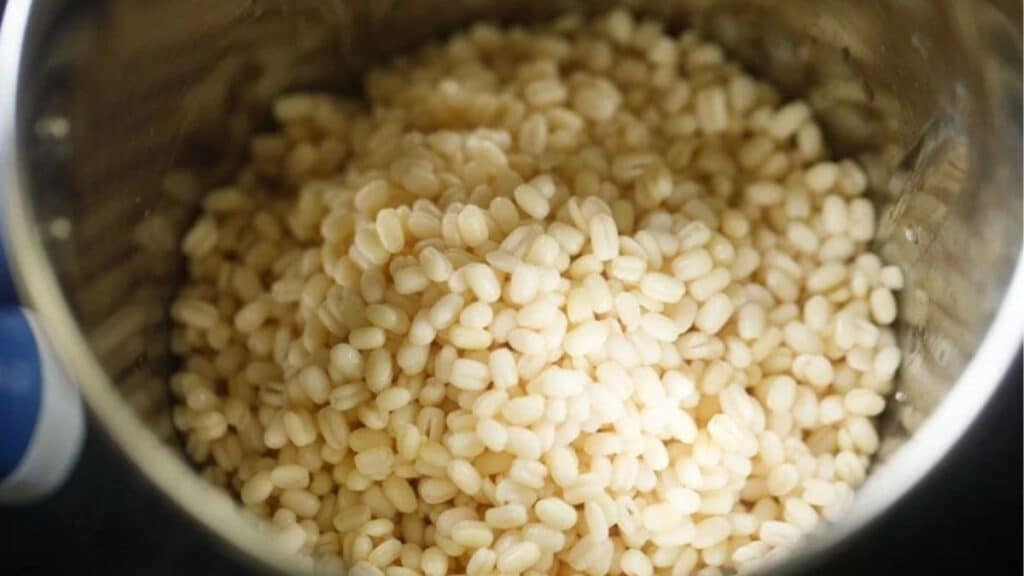
Rinse 1 cup urad dal thoroughly 2–3 times in cold water until the water runs clear. Transfer to a large bowl and cover with 2.5–3 cups of fresh water. Soak for a minimum of 4–5 hours. Overnight soaking is ideal—the longer the hydration, the lighter and fluffier the batter will grind. For Hanuman Jayanti morning puja, soak the dal the previous night before sleeping.
Time: 5 minutes active + 4–5 hours passive (or overnight)
Step 2: Grind to a Fluffy Batter (15 Minutes)
Drain and discard all soaking water completely. Transfer the soaked dal to a blender or mixer-grinder. Add only 3–4 tablespoons of fresh water to start—resist adding more. Grind in short bursts, scraping down the sides with a spatula between pulses. If the mixer heats up, pause for 5 minutes before continuing. The batter is ready when it is completely smooth with no grits, thick, and light—resembling whipped cream or thick cake batter rather than a pourable liquid. Transfer to a large bowl and whip briskly with a spatula or whisk for 2–3 minutes to incorporate air.
Time: 15 minutes
Step 3: The Float Test and Batter Correction (5 Minutes)
Fill a small bowl with plain water. Drop a teaspoon of batter into it. If the batter floats intact without dissolving or sinking—the batter is correct and ready. If it sinks, whip the batter for another minute and test again. If it still sinks or the batter appears thin and pourable, fold in 1–2 tablespoons of fine semolina, rice flour, or urad dal flour. Mix well and re-test. Do not proceed to shaping until the float test passes. For prasad, this step ensures every vada offered is worthy.
Time: 5 minutes
Step 4: Add Spices and Shape (15 Minutes)
Add curry leaves, green chilli, ginger, cumin seeds, crushed black pepper, asafoetida, and salt to the tested batter. If using, fold in chopped coconut and coriander. Mix thoroughly. Add spices only just before frying—earlier addition draws moisture and thins the batter.
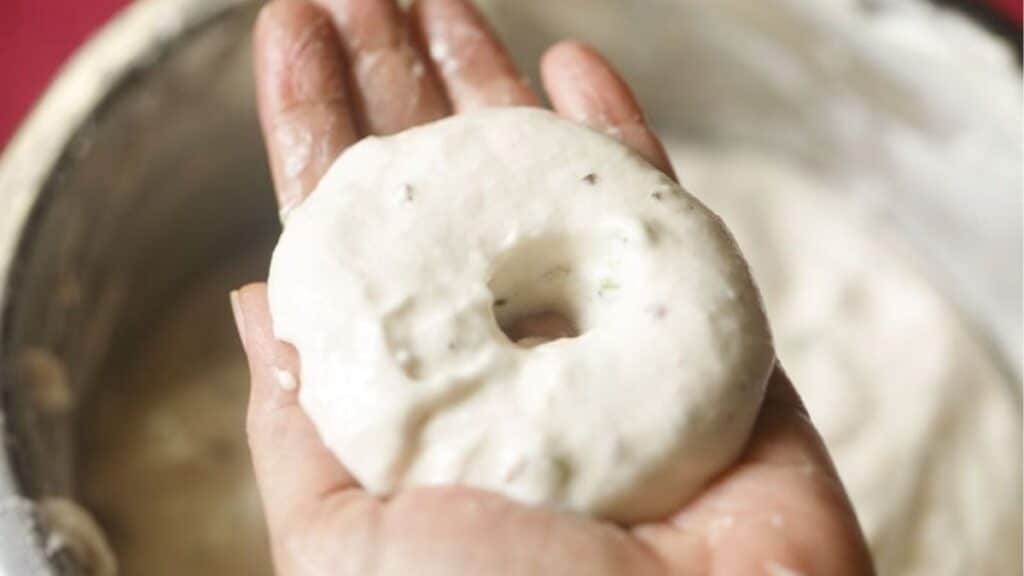
To shape: keep a small bowl of water beside you. Wet both palms. Take a portion of batter in your right hand and roll it into a smooth round. Press your thumb through the center to create the donut hole, then gently slide into hot oil. Alternatively—and equally valid for prasad—simply spoon the batter directly into oil without shaping. The taste is identical.
Time: 15 minutes
Step 5: Fry to Golden Perfection (40 Minutes)
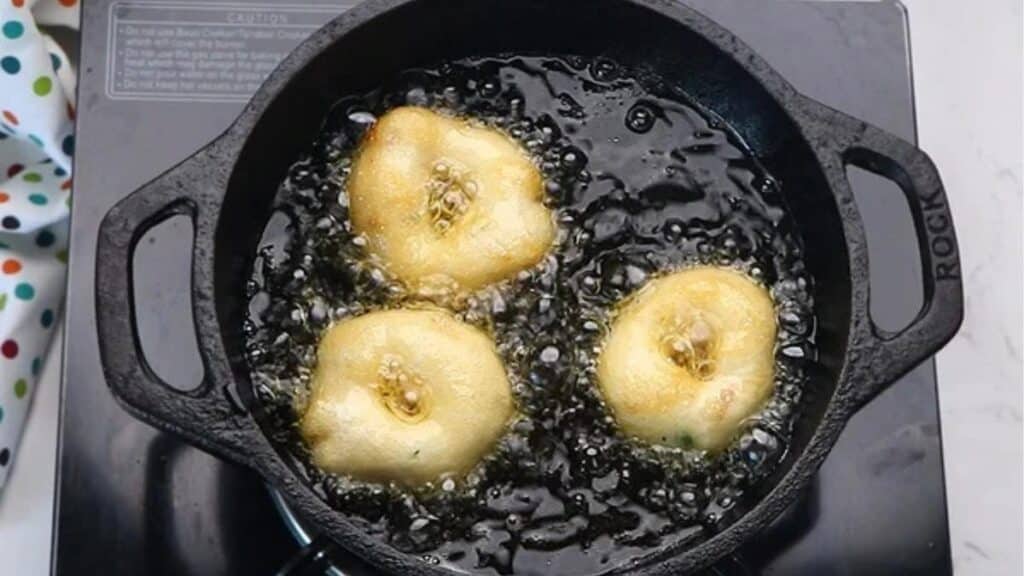
Heat fresh oil in a deep kadai or heavy-bottomed pan over medium heat to 175–190°C (350–375°F). Test with a small drop of batter—it should rise steadily to the surface within 2–3 seconds. Slide 3–4 vadas gently into the oil without crowding the pan. Fry for 2–3 minutes until the base is golden, then flip carefully with a slotted spoon. Continue frying and turning until the vada is evenly deep golden and crisp all over. Remove with a slotted spoon and drain on kitchen paper towels. Fry remaining batches the same way, maintaining steady oil temperature throughout.
Time: 40 minutes for full batch
Step 6: Offer as Prasad
Arrange warm medu vadas on a banana leaf or steel plate for offering. Place before the deity during puja. After the ritual, distribute prasad to family members and guests with fresh coconut chutney or as part of the Hanuman Jayanti bhog thali. Medu vada prasad is always served warm—never refrigerated and reheated for prasad distribution.
Expert Tips for Perfect Medu Vada
Use only fresh urad dal. Old, aged lentils do not grind to the required fluffy consistency. Always buy a fresh batch for festival cooking. The age of the dal determines the softness of the final vada more than any other single factor.
Overnight soaking changes everything. A 4-hour soak produces decent vadas. An overnight soak produces cloud-soft, restaurant-quality vadas. For Hanuman Jayanti, always soak the night before.
Whipping the batter after grinding is not optional. The two-minute vigorous stir after grinding traps air in the batter, which is what creates the soft, light interior. Skipping this step consistently produces denser vadas.
Wet hands prevent sticking. Keep a bowl of water beside you while shaping. Wet palms before every single vada—the batter releases cleanly and shapes easily.
Test one vada before frying the batch. Always fry a small trial piece first to verify oil temperature and batter consistency before committing to the full prasad batch.
Add spices only just before frying. Salt and acidic aromatics draw moisture from the batter. Mixing them in too early will thin the batter and compromise the float test result.
For strict vrat prasad. Use sendha namak, skip asafoetida if concerned about purity, and verify your specific vrat rules. The vada itself—urad dal, ginger, curry leaves, green chilli, cumin—is sattvic and appropriate.
Regional Variations and Festival Adaptations
- South Indian temple style. The most traditional presentation—plain medu vada without coconut or onion, served with fresh coconut chutney and sambar as part of the temple bhog. This is the standard form for Hanuman Jayanti prasad in South Indian temples.
- Maharashtra style. Slightly thicker vada with more ginger, served with groundnut chutney alongside coconut chutney. Often made in very large batches for community distribution after puja.
- North Indian festival adaptation. Medu vada introduced through South Indian restaurants and temples—paired with sambar and chutney as a cross-regional bhog increasingly adopted for Hanuman Jayanti celebrations in Delhi, Mumbai, and diaspora temples.
- Vrat-friendly version. Sendha namak replaces common salt, asafoetida is skipped, and the vada is fried in fresh groundnut oil—appropriate for devotees observing specific fasting rules on Hanuman Jayanti.
- Diaspora temple adaptation. In the UK, USA, Canada, and Australia, where fresh curry leaves may be unavailable, dried curry leaves are used. Coconut chutney is sometimes replaced with coriander-mint chutney based on ingredient availability.
- Air fryer adaptation for diaspora homes. Shaped vadas brushed lightly with oil and air fried at 180°C (350°F) for 10–12 minutes—appropriate for home distribution where deep frying large quantities is impractical, though not traditional for formal temple prasad.
Make-Ahead Strategy for Hanuman Jayanti
Night Before
- Soak urad dal in 2.5–3 cups of water before sleeping
- Prepare and refrigerate coconut chutney
- Chop curry leaves, ginger, and green chilli; store in airtight container in refrigerator
Morning of Hanuman Jayanti
- Grind soaked dal to fluffy batter (15 minutes)
- Perform float test and correct if needed (5 minutes)
- Add spices and fry for dawn puja offering (40 minutes)
Evening Puja Batch
- Mix a second batch from the same ground batter if refrigerated; bring to room temperature, re-whip briefly, add fresh spices, and fry immediately before the evening aarti
Important: Do not add salt or spices to batter stored in the refrigerator—add only just before frying each batch. Ground batter keeps for up to 24 hours refrigerated.
Serving Suggestions and Prasad Presentation
- Banana leaf presentation. Arrange 2–3 medu vadas on a fresh banana leaf piece for individual prasad distribution—traditional, biodegradable, and adds subtle fragrance to the offering.
- Bhog thali composition. For a complete Hanuman Jayanti bhog thali, pair medu vada with coconut chutney, a small cup of sambar, and a sweet such as boondi ladoo or motichoor ladoo—Hanuman’s traditionally beloved offering.
- Community distribution timing. For mandal or temple gatherings, fry in continuous batches and distribute warm. Medu vada is best within 20–30 minutes of frying; plan accordingly for large congregations.
- Post-puja family serving. At home, serve warm medu vada to family members after the puja concludes—with coconut chutney and hot filter coffee in South Indian households, or with sambar in the traditional full combination.
- Scaling for large gatherings. 1 cup (200g) urad dal produces 10–14 vadas. For 50 people receiving 2 vadas each, prepare 8–9 cups of dal. The technique scales without adjustment.
Why This Offering Still Matters
In the landscape of Hanuman Jayanti prasad foods, medu vada occupies sacred culinary territory—it is not made for taste alone but for offering, not served as snack but as blessed food, not fried carelessly but with the attention devotion demands. It is among the few festival foods where the technique itself—the float test, the steady oil temperature, the fresh spices added at the last moment—carries ritual intention embedded in practical cooking wisdom.
What makes medu vada culturally significant as prasad is how the preparation mirrors the values associated with Hanuman himself: strength requiring discipline, devotion expressed through action, service rendered with complete attention. You cannot make good prasad medu vada while distracted. The batter demands focus. The oil demands vigilance. The shaping demands practice. In this way, making the offering becomes the offering.
For Hanuman Jayanti, medu vada bridges South Indian temple tradition with pan-Indian Hanuman devotion—a crossing that reflects how Indian festival food culture travels, adapts, and still maintains its sacred core regardless of region or diaspora distance.
When you soak that urad dal the night before with the intention of offering prasad the next morning—when you grind the batter with care and whip it until it floats, when you heat the fresh oil and fry each round to golden, when you place the warm vadas before Hanuman’s image with coconut chutney and devotion—you are participating in something that has no clean beginning or end. It is festival, it is food, it is prayer in the form of a crispy, golden, donut-shaped fritter.
Jai Hanuman! Jai Bajrangbali!
