


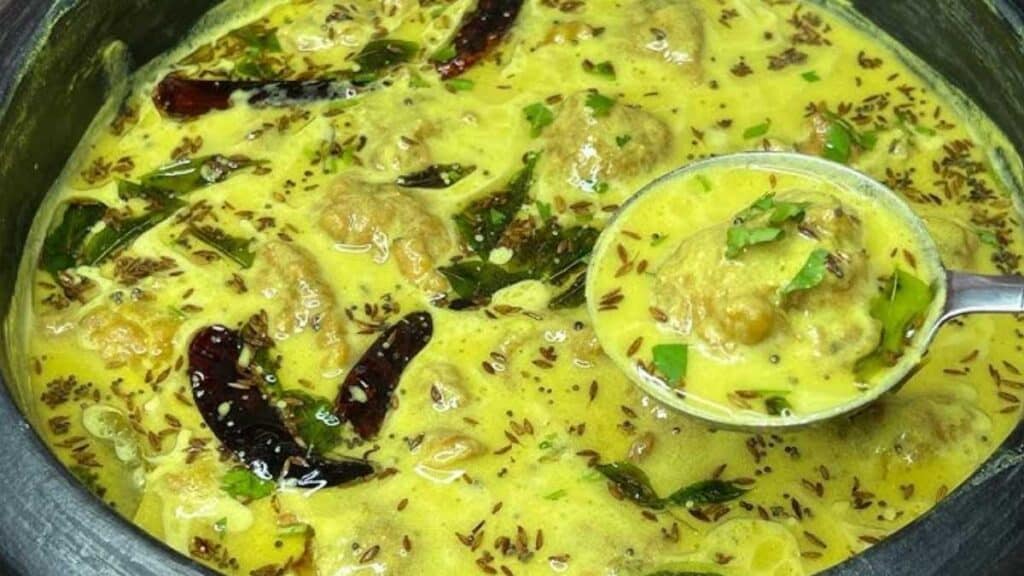
Few dishes capture the soul-warming comfort of Hyderabadi cuisine quite like dahi ki kadhi—a tangy, garlicky yogurt curry studded with crispy chickpea fritters that soften into pillowy dumplings as they soak up the aromatic broth. This is the kind of food that draws family members to the kitchen from different corners of the house, following the scent of tempering spices and fresh cilantro that signals something special is cooking, something that tastes like home even if you’ve never been to Hyderabad.
Quick Summary:
Hyderabadi kadhi pakora is a tangy yogurt-based curry thickened with chickpea flour and flavored with abundant garlic, ginger, and fresh cilantro. Crispy besan pakoras are added just before serving, creating a complete comfort meal that’s traditionally served over steaming white rice and ready in about 45 minutes using stovetop or Instant Pot methods.
Table of Contents
What Makes Hyderabadi Kadhi Different From Other Regional Variations
India’s regional kadhi preparations vary so dramatically that you could taste five versions and think you’re eating completely different dishes. Gujarati kadhi leans sweet and tangy with a thinner consistency, often seasoned with cloves and sometimes featuring no pakoras at all. Punjabi kadhi is thick, creamy, and rich, loaded with large, fluffy pakoras that are almost the size of tennis balls. Rajasthani kadhi incorporates vegetables and tends toward spicier profiles.
Texture-wise, Hyderabadi kadhi aims for what’s best described as thick and soupy—not as thin and pourable as Gujarati kadhi, but not as dense and gravy-like as Punjabi versions either. It should coat a spoon but still flow easily when ladled over rice. The pakoras themselves are simpler than their Punjabi counterparts, made with just chickpea flour, spices, and ginger-garlic paste without the onions that appear in many other regional variations.
Historically, this kadhi represents Hyderabad’s unique culinary position at the crossroads of North and South Indian cooking traditions, with influences from Mughlai cuisine meeting Deccan preparations. The result is something distinctly its own—not quite North Indian, not quite South Indian, but thoroughly Hyderabadi.
Essential Ingredients for Authentic Hyderabadi Kadhi
Yogurt forms the tangy base that defines all kadhi variations. Full-fat yogurt at room temperature works best, providing both richness and the acidity that gives kadhi its signature sour note. The yogurt should ideally be slightly sour rather than fresh and sweet—if you have time, leave your yogurt on the counter overnight before making kadhi. This controlled fermentation deepens the tangy flavor that makes the dish so craveable. You’ll need about 2-3 cups of yogurt depending on how many servings you’re making.
Besan (chickpea flour) serves double duty as both thickening agent and the foundation for pakoras. For the kadhi base, chickpea flour gets whisked with yogurt and water to create a smooth mixture that thickens during cooking while adding nutty, earthy flavor. For pakoras, it forms the batter that gets fried into fritters. Buy chickpea flour from Indian grocery stores if possible—the freshness and grind quality tends to be superior to what you’ll find in general supermarkets.
Fresh ginger adds warmth and bite that complements the garlic without overwhelming it. You’ll need about an inch of fresh ginger, peeled and either grated or processed into paste. Some cooks also use ginger-garlic paste for the pakora batter, which provides convenience while maintaining flavor. Organic ginger and garlic tend to have more pronounced flavor than conventional options, though both work fine.
Green chilies provide heat that can be adjusted to your tolerance. The recipe calls for Thai green chilies if you like spice, or milder serranos if you prefer gentler heat. The chilies get ground into the base paste, distributing their heat throughout the kadhi rather than creating concentrated spicy pockets. Remove the seeds if you want flavor without intense burn.
Fresh cilantro contributes both color and freshness that distinguishes Hyderabadi kadhi visually and flavor-wise. You’ll need a good handful—about half a bunch or roughly one cup of loosely packed leaves and stems. Some cooks use just the stems for the base paste (which are more flavorful than you’d expect) and save the leaves for garnish, maximizing both flavor and economy.
Curry leaves add aromatic complexity that’s difficult to replicate with substitutes. Fresh curry leaves from a home plant deliver the most impact, though dried curry leaves from Indian grocers work acceptably. If you absolutely can’t source curry leaves, the dish will still be good, just missing one layer of authentic flavor.
Spices divide into two categories—those that go into the base and those used for tempering. For the base, you’ll need turmeric powder (for color and earthy flavor), coriander powder (for warm, citrusy notes), red chili powder (for color and heat), and asafetida (for umami depth). For tempering, whole cumin seeds, fenugreek seeds (methi), coriander seeds, and whole dried red chilies provide the final aromatic flourish.
Oil choice affects the final flavor subtly. Canola or vegetable oil works for general cooking and frying pakoras. Some cooks add a small amount of mustard oil to the tempering for its characteristic pungent flavor, though this is optional if you don’t enjoy mustard oil’s assertiveness. Ghee can replace oil in the tempering for richer, nuttier aroma.
Step-by-Step Stovetop Hyderabadi Kadhi Method
Preparation begins with making the base paste that will flavor your entire kadhi. In a blender or food processor, combine your peeled garlic cloves (from that entire bulb), grated ginger, green chilies, fresh cilantro (stems and all), curry leaves, turmeric powder, coriander powder, and salt. Blend into a smooth, vibrant green paste, adding a tablespoon or two of water if needed to help the blending process. This paste is what gives Hyderabadi kadhi its distinctive color and complex flavor foundation.
The tempering starts your cooking process and builds the aromatic base. Heat a large, deep, heavy-bottomed pot over medium-high heat and add about 2-3 tablespoons of oil. Once the oil shimmers, add cumin seeds and let them sizzle for a few seconds until fragrant. Follow with a pinch of asafetida (hing), fenugreek seeds (methi), and lightly crushed coriander seeds. Sauté these whole spices for 1-2 minutes until they release their aromas and the kitchen smells incredible.
Adding the yogurt mixture requires care because yogurt can split if shocked with high heat. Give your prepared yogurt-besan mixture a good whisk to recombine everything, then carefully pour it into your pot with the tempered spices. Immediately begin stirring and continue stirring frequently as you bring the mixture to a rolling boil. This constant movement prevents the chickpea flour from settling to the bottom and scorching, which would ruin the entire batch with a burnt flavor.
You’ll know the kadhi is ready when the foam on top settles down significantly, the bubbles become slower and gentler rather than rapid and aggressive, the color deepens to a beautiful golden-green, and there’s no raw besan smell remaining—just fragrant, tangy, garlicky deliciousness. The kadhi should coat the back of a spoon but still be pourable, not stiff or paste-like. If it’s too thick, add a splash of water; if too thin, simmer uncovered a bit longer.
Making Perfect Chickpea Flour Pakoras
The pakora batter starts with chickpea flour mixed with aromatics and spices that complement but don’t overshadow the kadhi’s flavors. In a medium bowl, combine about 1 cup of besan (chickpea flour) with 1-2 teaspoons of ginger-garlic paste, ½ teaspoon turmeric powder, ½-1 teaspoon red chili powder (adjust to your heat preference), and salt to taste. Add water gradually while whisking, aiming for a thick, dropping consistency—the batter should be thick enough to hold its shape when dropped from a spoon but not so stiff that it won’t fall at all.
Resting the batter matters more than most people realize. Once you’ve achieved the right consistency, cover the bowl and let it sit for 10 minutes. This resting period allows the chickpea flour to fully hydrate, which helps create pakoras with better texture and structure. The gluten-free nature of chickpea flour means it behaves differently than wheat flour, and this resting time helps compensate.
Frying technique determines the final texture. Heat enough oil in a kadai (Indian wok) or deep pot to allow pakoras to float freely—you’ll need at least 2-3 inches of oil depth. Heat the oil over medium-high heat until it reaches proper temperature, which you can test by dropping a tiny bit of batter into it. If the batter immediately rises to the surface while sizzling gently, the temperature is right. If it sinks and stays at the bottom, the oil isn’t hot enough. If it browns instantly, the oil is too hot and will burn the outside before cooking the inside.
Fry the pakoras until golden brown on all sides, turning them halfway through cooking to ensure even coloring. This typically takes 3-4 minutes per batch. The pakoras should be crispy and golden when you remove them, with a satisfying crunch when you break one open to check doneness. Drain them on paper towels to remove excess oil while you finish the remaining batter.
Timing the pakora addition is crucial for perfect texture. Don’t add pakoras to the kadhi until just before serving—maybe 10-15 minutes before you plan to eat. If you add them too early, they’ll absorb too much liquid and become overly soft, almost disintegrating into the curry. The ideal pakora in kadhi maintains some structural integrity while being tender and thoroughly soaked with tangy curry.
The Final Tempering That Completes the Dish
Heat a small tadka pan or frying pan over medium-high heat and add about 1-2 tablespoons of oil (or ghee for richer flavor). Once the oil is hot, add a teaspoon of cumin seeds and let them sizzle and turn fragrant. Immediately add several whole garlic cloves (sliced or left whole depending on preference) and fry until they just begin to turn golden brown—this adds another layer of garlic flavor on top of what’s already in the kadhi.
Add whole dried red chilies (broken in half to release their heat and flavor) and a handful of fresh curry leaves. Stand back slightly when you add the curry leaves because they tend to sputter dramatically in hot oil. Let everything sizzle together for about 30 seconds until the curry leaves crisp up and the red chilies darken slightly.
Turn off the heat and immediately add about ½ teaspoon of Kashmiri red chili powder to the hot oil. Kashmiri chili provides vibrant red color without excessive heat, making the tempering visually stunning. Give the pan a quick swirl to mix the chili powder into the oil—it will bloom in the residual heat, releasing its color and mild heat.
Pour the entire tempering (oil, spices, and all) over your finished kadhi while it’s still in the pot. You should hear a satisfying sizzle as the hot oil hits the warm kadhi. Immediately cover the pot with a lid to trap all those aromatic vapors inside, allowing them to permeate throughout the curry. Let everything sit covered for a minute or two before stirring to distribute the tempering throughout.
Instant Pot Hyderabadi Kadhi for Faster Preparation
Prepare your base paste and yogurt mixture exactly as you would for stovetop kadhi—this prep work remains the same regardless of cooking method. The Instant Pot advantage comes during the actual cooking phase.
Turn your Instant Pot to sauté mode (use the “more” setting for higher heat) and add your oil. Once hot, add the same tempering spices you’d use for stovetop—cumin seeds, asafetida, fenugreek seeds, and crushed coriander seeds. Sauté for 1-2 minutes until fragrant, exactly as you would in a regular pot.
Add your prepared yogurt-besan mixture to the Instant Pot and stir well to combine with the tempered spices. Turn off sauté mode, close the lid, and set the valve to the sealing position. Select pressure cook on high for 6 minutes. This short cooking time under pressure achieves the same flavor development and chickpea flour cooking that requires 30+ minutes of simmering on the stovetop.
Allow natural pressure release for about 10 minutes after the cooking time completes, then carefully turn the valve to release any remaining pressure. When you open the lid, the kadhi will look foamy and perhaps a bit separated—this is normal and will correct in the next step.
Turn sauté mode back on (“more” setting) and bring the kadhi to a rolling boil, stirring frequently to prevent sticking to the bottom. As it boils, the kadhi will come together, the foam will settle, and the consistency will thicken to that perfect soupy texture. This takes about 5-7 minutes of active boiling and stirring.
Make your pakoras on the stovetop exactly as described in the earlier section while the Instant Pot kadhi cooks—there’s no shortcut for frying, which requires the steady, controllable heat of a stovetop burner.
Turn off sauté mode once the kadhi reaches the right consistency, then add your freshly fried pakoras and pour your tadka (tempering) over everything. Cover with the Instant Pot lid (don’t seal or pressure cook again—just cover to trap steam and aromas) and let everything sit for 10-15 minutes so the pakoras absorb flavors.

Serving Suggestions and Traditional Accompaniments
Steamed white rice is the classic pairing that appears at nearly every meal featuring kadhi in Hyderabad. The plain rice acts as a neutral canvas that soaks up the tangy, garlicky curry while providing starchy comfort that balances the kadhi’s acidity. Basmati rice works beautifully, though any long-grain white rice serves the purpose. The combination of hot rice and piping hot kadhi ladled generously over it creates one of Indian cuisine’s most satisfying comfort food experiences.
Jeera rice (cumin-scented rice) offers slight variation for when you want a bit more flavor in your rice without overwhelming the kadhi. The subtle cumin notes complement the kadhi’s spicing while maintaining the rice’s supporting role rather than making it compete for attention.
Roti or naan can substitute for rice if you prefer bread over rice, though this is less traditional in Hyderabad. The kadhi’s soupy consistency makes it excellent for dipping flatbreads, and the combination feels lighter than the rice version. Whole wheat rotis keep the meal more wholesome, while naan makes it feel more indulgent.
Simple accompaniments work best—a small bowl of plain yogurt on the side to cool things down if the kadhi is spicy, perhaps some pickle (achaar) for those who want extra tanginess, and maybe papad (crispy lentil wafers) for textural contrast. Elaborate vegetable dishes or rich gravies would clash with the kadhi’s bold flavors rather than complementing them.
Garnishing makes a difference in both appearance and final flavor. Right before serving, scatter fresh cilantro leaves over the kadhi for color and fresh herb aroma. A light drizzle of ghee over individual servings adds richness and visual gloss. Some people like a squeeze of lemon juice just before eating for an extra citrus kick, though the yogurt already provides plenty of acidity.
Serving temperature matters. Kadhi should be served hot—not lukewarm or room temperature, but steaming and aromatic straight from the pot. The pakoras specifically taste best when they’re freshly soaked in hot kadhi rather than reheated, which is another reason to add them just before serving rather than earlier in the cooking process.
CHECK MORE ON:These Viral 3-Ingredient Chocolate Truffles Are Easy Enough for Kids to Make
Storage and Reheating Hyderabadi Kadhi
Kadhi base stores excellently in the refrigerator for 3-4 days when kept in an airtight container. The flavors actually deepen and improve after a day or two as everything continues melding together. The yogurt base prevents spoilage surprisingly well despite being dairy, and the acidity acts as a natural preservative that extends shelf life beyond what you might expect.
Pakoras should be stored separately from the kadhi base if you’re planning to keep leftovers. Store fried pakoras in an airtight container at room temperature for a day or in the refrigerator for 2-3 days. When you’re ready to eat, reheat the kadhi base first, then add the pakoras and let them sit for those crucial 10-15 minutes to soften and absorb flavors. This prevents the pakoras from becoming overly soft and losing all structure during storage.
Freezing is possible but not ideal for yogurt-based curries, which can sometimes separate or develop grainy texture when frozen and thawed. If you do freeze kadhi (without pakoras), use freezer-safe containers with tight lids, leave some headspace for expansion, and plan to use within 1-2 months. Thaw overnight in the refrigerator and reheat gently, whisking to reincorporate any separation that occurred.
Reheating on the stovetop provides the best results and allows you to adjust consistency. Transfer refrigerated kadhi to a pot, add a splash of water if it’s thickened too much during storage, and warm over medium-low heat while stirring frequently. Don’t boil vigorously, which can cause the yogurt to separate—just bring it to a gentle simmer until heated through. Add your separately stored pakoras during the last 10 minutes of reheating.
Microwave reheating works in a pinch but requires more attention to prevent the yogurt from curdling or separating. Use 50% power or a reheat setting if your microwave has one, heat in 2-minute intervals, and stir well between each interval. Add a tablespoon or two of water before reheating to prevent the kadhi from drying out.
The kadhi will thicken significantly during refrigeration as the chickpea flour continues absorbing liquid even after cooking. This is normal and expected—simply thin it with water during reheating until you achieve the soupy consistency you prefer. Start with small amounts of water and add more as needed rather than adding too much at once.

Regional Variations and How to Adapt This Recipe
Punjabi kadhi differs dramatically in both flavor and structure. It uses significantly more pakoras that are larger and often contain onions. The kadhi base is richer and creamier, sometimes incorporating cream or butter. The sourness is more moderate, and the consistency tends thicker and more gravy-like. If you want to move this recipe in a Punjabi direction, add finely chopped onions to your pakora batter, make the pakoras larger, increase the ghee in the tadka, and use less water for thicker consistency.
Gujarati kadhi swings sweet with the addition of jaggery or sugar, creating a sweet-sour profile that’s distinctly different from the predominantly tangy Hyderabadi version. Gujarati kadhi is also much thinner, almost soup-like, and sometimes contains no pakoras at all. To adapt this recipe toward Gujarati style, reduce the besan for thinner consistency, add 1-2 tablespoons of jaggery or sugar, and consider adding curry leaves and ginger to the tadka while reducing the garlic significantly.
Sindhi kadhi incorporates vegetables like drumsticks, okra, and potatoes directly into the curry, making it a more complete one-pot meal. The flavor profile is similar to Hyderabadi kadhi but the addition of vegetables changes the entire character. If you want to try this variation, add your choice of vegetables during the simmering phase, allowing them to cook until tender in the tangy curry.
Rajasthani kadhi tends spicier and often includes different pakora preparations with more aggressive spicing. The base might include more red chili and sometimes incorporates local spices like dried mango powder (amchur) for additional sourness. To move this recipe toward Rajasthani style, increase the red chili powder, add a teaspoon of amchur powder, and make your pakoras spicier with extra chili.
All variations share the core concept of yogurt-chickpea flour curry with variations in thickness, sweetness-tartness balance, spicing intensity, and inclusion of pakoras or vegetables. Understanding these regional differences helps you adjust recipes based on what ingredients you have, what flavors you prefer, or simply to explore the incredible diversity within this one category of Indian cooking.
