
India’s Independence Day is one of the most significant national celebrations in the world — a day when over a billion people come together to honor the freedom, sacrifices, and spirit that gave birth to the world’s largest democracy. Observed every year on August 15, this national holiday commemorates India’s independence from British colonial rule on August 15, 1947 — a moment that changed the course of history.
From the iconic flag-hoisting ceremony at the Red Fort in New Delhi to cultural programs in schools, community gatherings across Indian diaspora neighborhoods, and patriotic celebrations spanning every continent, Independence Day unites Indians everywhere in a shared expression of pride, gratitude, and national identity.
Whether you are observing it in India or celebrating as part of the global Indian community, here is everything you need to know about India Independence Day 2026 — dates, history, significance, regional traditions, and how Indians around the world mark this unforgettable occasion.
When Is India Independence Day 2026?
India’s Independence Day is celebrated every year on August 15, commemorating the nation’s freedom from British colonial rule on August 15, 1947. Unlike lunar-calendar festivals, Independence Day always falls on this fixed date — making it simple to plan for.
Independence Day 2026 falls on Saturday, August 15, 2026 — marking India’s 79th Independence Day.
Since Independence Day is a fixed-date national holiday, it is observed on August 15 worldwide. In 2026, it falls on a Saturday, making it ideal for diaspora communities to participate fully in celebrations without weekday conflicts.
Table of Contents
Independence Day In USA, Canada, Australia, New Zealand, UK, UAE, Singapore 2026 Dates
Independence Day 2026 falls on Saturday, August 15, 2026
Independence Day 2026 falls on Saturday, August 15, 2026
Independence Day 2026 falls on Saturday, August 15, 2026
Independence Day 2026 falls on Saturday, August 15, 2026
Independence Day 2026 falls on Saturday, August 15, 2026
Independence Day 2026 falls on Saturday, August 15, 2026
Why Does Independence Day Always Fall on August 15?
Unlike festivals based on the Hindu lunar calendar, Independence Day is a fixed civil date. August 15, 1947 was specifically chosen by Lord Mountbatten — the last Viceroy of India — as the date of power transfer, coinciding with the second anniversary of Japan’s surrender in World War II. The date does not shift year to year.
Independence Day Overview
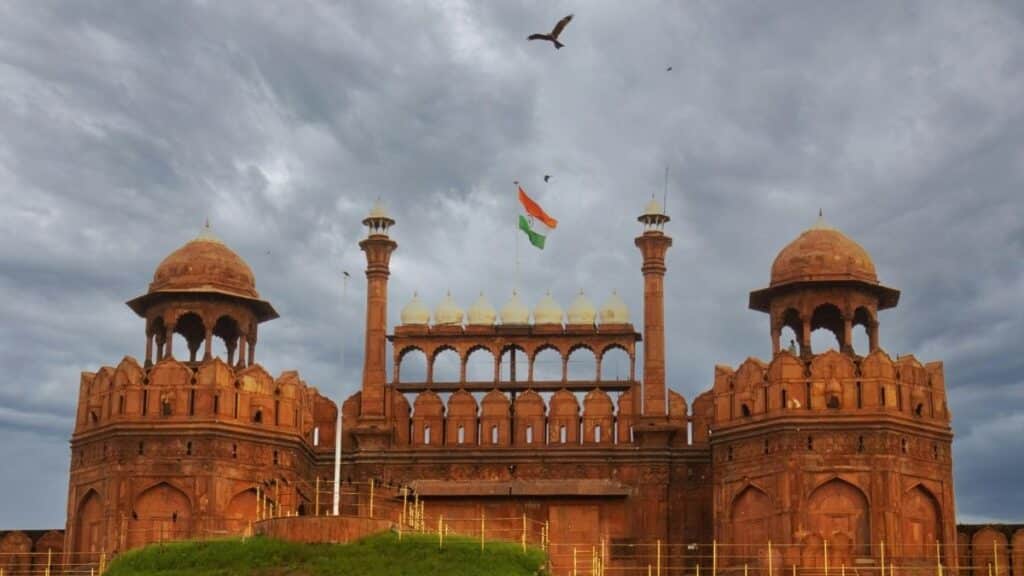
India’s Independence Day is one of three national public holidays in India, alongside Republic Day (January 26) and Gandhi Jayanti (October 2). It commemorates the moment India gained freedom from nearly 200 years of British rule — officially at the stroke of midnight on August 14–15, 1947, when the Indian Independence Act 1947 came into effect.
The day is observed by over 1.4 billion people in India and tens of millions across the global Indian diaspora. It is a secular national holiday that transcends religion, caste, and region — celebrated by every Indian, at home and around the world.
Other Names and Regional Identities
Independence Day is known by different names across India’s many languages:
| Language | Name |
|---|---|
| Hindi | स्वतंत्रता दिवस (Swatantrata Divas) |
| Bengali | স্বাধীনতা দিবস (Shadhinata Dibas) |
| Tamil | சுதந்திர தினம் (Sudhantira Thinam) |
| Telugu | స్వాతంత్ర్య దినోత్సవం (Swatantrya Dinotsavam) |
| Kannada | ಸ್ವಾತಂತ್ರ್ಯ ದಿನ (Swatantrya Dina) |
| Malayalam | സ്വാതന്ത്ര്യദിനം (Swatantryam Dinam) |
| Marathi | स्वातंत्र्य दिन (Swatantrya Din) |
| Punjabi | ਆਜ਼ਾਦੀ ਦਿਵਸ (Azadi Diwas) |
| Urdu | یوم آزادی (Yaum-e-Azadi) |
In diaspora communities, the day is widely known as “India Day” — particularly in the United States, where cities like New York host annual India Day Parades. In the UK, it is referred to as the Indian Independence Day celebration, observed prominently in cities like London, Leicester, and Birmingham.
Origins, History, and Legends
The Road to Freedom
European traders, particularly the British East India Company, established their foothold in the Indian subcontinent by the late 17th century. Through military strength, the Company gradually annexed local kingdoms, and following the Indian Rebellion of 1857, the British Crown assumed direct governance through the Government of India Act 1858, beginning the era of the British Raj.
The Indian National Congress, formed in 1885, became the primary vehicle for nationalist aspirations. Under Mahatma Gandhi, the independence movement adopted non-violent resistance and civil disobedience — mass movements that inspired millions and drew global attention to India’s cause.
Independence Day Before Independence
A remarkable historical footnote: India observed “Independence Day” long before independence arrived. At the 1929 Lahore session of the Indian National Congress, the Purna Swaraj (Complete Independence) declaration was promulgated, and January 26, 1930 was declared Independence Day. Congress observed this date annually until 1946 with public pledges and acts of civil disobedience. After actual independence in 1947, January 26 became Republic Day in 1950, when the Indian Constitution came into effect.
The Transfer of Power
Post-World War II Britain lacked the financial and political will to sustain its Indian empire. On February 20, 1947, Prime Minister Clement Attlee announced that full self-governance would be granted by June 1948. The new Viceroy, Lord Mountbatten, moved the date earlier to prevent the collapse of the interim government and chose August 15 as the date of transfer. The Indian Independence Act 1947 received royal assent on July 18, 1947, and took effect on August 15.
Tryst with Destiny
On the eve of independence, India’s first Prime Minister Jawaharlal Nehru delivered the iconic Tryst with Destiny speech to the Constituent Assembly at 11 PM on August 14, 1947 — one of the most celebrated speeches in modern history. On the morning of August 15, he raised the Indian national flag above the Lahori Gate of the Red Fort in Delhi, a tradition that continues to this day.
The Shadow of Partition
Independence came alongside the partition of British India into India and Pakistan — one of the largest mass migrations in history. Between 250,000 and 1,000,000 people died in the accompanying violence. While the nation celebrated, Mahatma Gandhi stayed in Calcutta, fasting to stem communal bloodshed — a testament to the profound human complexity behind the birth of a nation.
Cultural and Spiritual Significance
Independence Day carries deep secular and national significance for every Indian, regardless of faith or background. It represents:
- The triumph of non-violence — Gandhi’s philosophy inspired freedom movements worldwide, from the American Civil Rights Movement to South Africa’s anti-apartheid struggle.
- The birth of the world’s largest democracy — a legacy India continues to uphold.
- Unity in diversity — over 1,600 languages, dozens of religions, and hundreds of communities united under one tricolor flag.
- Collective memory and gratitude — honoring freedom fighters, martyrs, and leaders who sacrificed for the nation’s liberty.
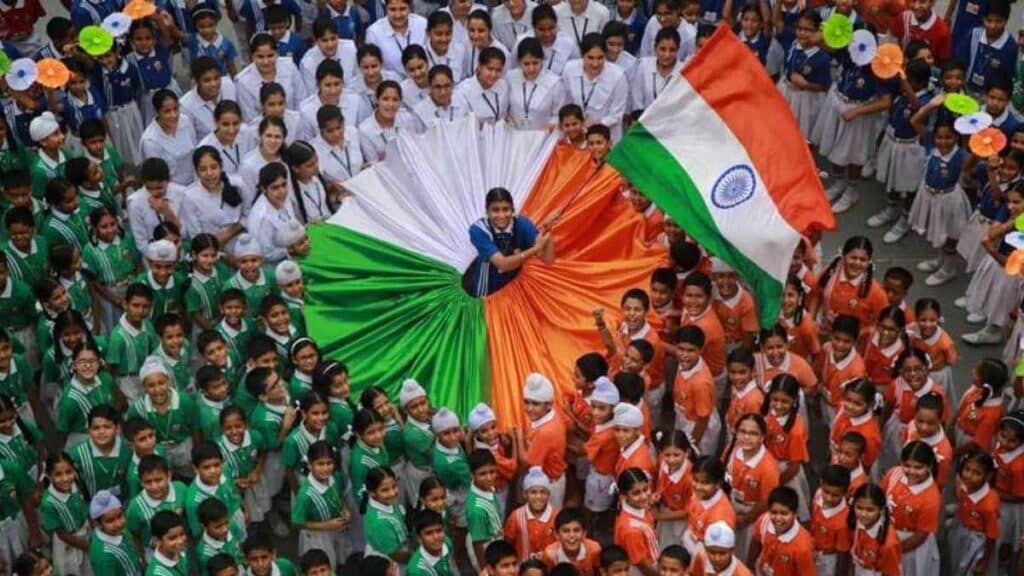
The Indian tricolor flag — saffron (courage and sacrifice), white (peace and truth), and green (faith and prosperity), with the blue Ashoka Chakra at its center — is the most powerful symbol of the day.
Prayers and Religious Observances
While Independence Day is a secular holiday, it carries a spirit of reverence expressed across India’s many faith traditions:
- Hindu temples hold special prayers (pujas) seeking blessings for the nation’s leaders and prosperity.
- Mosques offer duas for national peace and welfare.
- Gurdwaras conduct Ardas (communal prayers), remembering Sikh martyrs of the freedom movement.
- Churches hold thanksgiving services for national unity.
- All public ceremonies begin with the singing of the national anthem, Jana Gana Mana, composed by Rabindranath Tagore.
Many families begin the day with a personal moment of silence honoring fallen freedom fighters.
How Independence Day Is Celebrated Across India
The National Ceremony — Red Fort, New Delhi
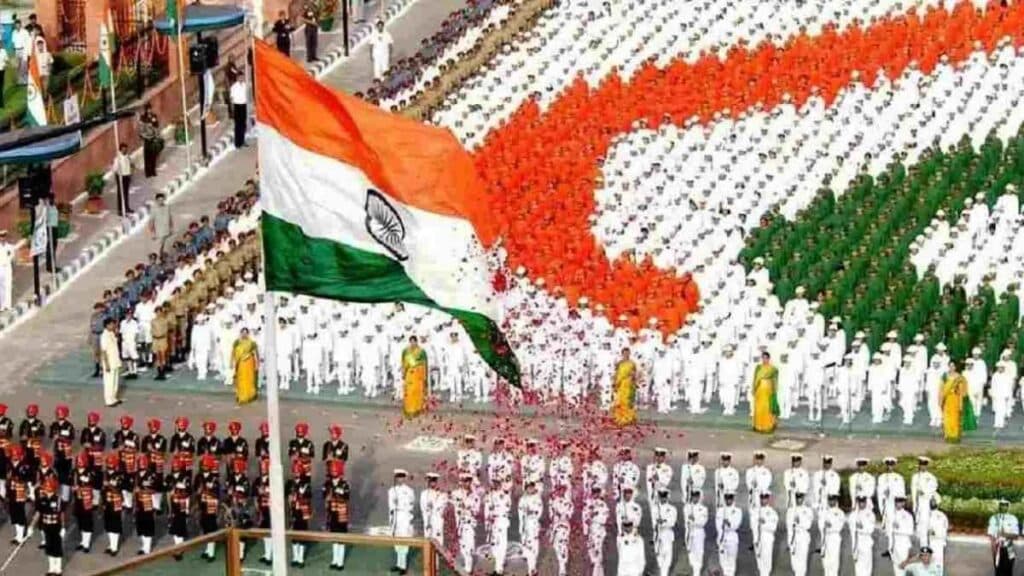
The heart of Independence Day is the Red Fort in Old Delhi. The Prime Minister arrives, a 21-gun salute is fired, and the national flag is hoisted on the ramparts. The national anthem is sung, followed by the Prime Minister’s nationally broadcast address reviewing the year’s achievements and charting the nation’s path forward. A march past by the Indian Armed Forces and cultural pageants follow.
The ceremony is broadcast live by Doordarshan and traditionally opens with the iconic shehnai music of Ustad Bismillah Khan. On the eve of Independence Day (August 14), the President of India delivers the Address to the Nation.
State Capitals and Regional Traditions
In every state capital, the Chief Minister hoists the national flag — a tradition that began only in 1974, championed by Tamil Nadu’s M. Karunanidhi. Regional celebrations add local color:
| State / Region | Special Tradition |
|---|---|
| Delhi | Kite flying fills the sky; tricolor merchandise floods markets |
| Punjab | Bhangra performances; tributes to Sikh freedom fighters |
| West Bengal | Parts of Nadia district celebrate on August 17–18, rooted in a 1947 border correction |
| Maharashtra | Street plays recreating independence movement scenes |
| Tamil Nadu | Kolam (rangoli) in tricolor designs; major school events |
| Northeast India | Unique cultural celebrations reflecting the region’s diversity |
Schools and colleges across India hold flag-hoisting ceremonies, patriotic performances, and cultural competitions. Government buildings are adorned with strings of lights and tricolor decorations.
Participation Across Religions in India
Independence Day is a truly inclusive celebration. The freedom movement itself was built on the cooperation of Hindus, Muslims, Sikhs, Christians, and people of all faiths — and Independence Day honors that plural legacy.
Leaders like Maulana Abul Kalam Azad (Muslim), Sikh martyrs of the Punjab, Christian communities of Goa and Kerala, and Dalit freedom fighters led by Dr. B.R. Ambedkar all shaped India’s independence. Today, their communities all participate in August 15 celebrations with equal pride. Independence Day’s secular character is its greatest strength — a rare thread uniting India’s magnificent diversity.
How Independence Day Is Celebrated Outside India
The Indian diaspora — over 32 million people worldwide — celebrates Independence Day with enormous enthusiasm, connecting younger generations to their cultural roots.
In the United States, August 15 has become “India Day” in many cities. The flagship India Day Parade in New York City draws tens of thousands along Madison Avenue. Cities including Chicago, Houston, San Francisco, Washington D.C., and Atlanta host Indian cultural festivals and gala dinners.
In Canada, Toronto, Vancouver, and Brampton host flag hoistings, cultural performances, and community dinners. The UK sees celebrations in London, Leicester, and Birmingham, organized by Indian community associations and the Indian High Commission. The UAE’s large Indian community celebrates through events at Indian consulates in Dubai and Abu Dhabi. Australia and New Zealand see flag hoistings at consulates and Indian community cultural festivals in Sydney, Melbourne, and Auckland. Singapore’s Little India transforms with cultural programs and community gatherings.
Since 2026 falls on a Saturday, diaspora celebrations are expected to see higher participation than weekday years.
Gifting Traditions
Independence Day gifting centers on national pride and patriotic symbolism rather than personal exchange.
Traditional gifts include tricolor flags and flag pins for home decoration, mithai (Indian sweets) in saffron, white, and green, and books on Indian history and freedom fighters.
Modern and diaspora gifting includes patriotic clothing in tricolor, Indian handicrafts celebrating homegrown artisanship, donations to Indian charities in the spirit of Gandhian service, and cultural experience tickets — classical music performances, dance recitals, or Indian cinema. Many Indian e-commerce platforms launch major Independence Day sales, and gifting of electronics, apparel, and home goods has become mainstream.
Independence Day Foods and Culinary Traditions
Unlike many Indian festivals, Independence Day has no fixed ritual foods — but tricolor-themed culinary creativity has become a beloved modern tradition.
Popular Independence Day treats include:
- Tricolor burfi — layered Indian fudge in saffron (kesar/mango), white (coconut/milk), and green (pistachio)
- Tricolor sandwiches — using mint chutney, cream cheese, and carrot fillings
- Tricolor dhokla — the Gujarati steamed cake reimagined in three colors
- Khichdi — Gandhi’s favored simple dish, a symbol of unity and humility
Indian bakeries and restaurants create special Independence Day menus. For the diaspora, the day is often marked with a large Indian potluck dinner celebrating regional home cooking — a reflection of India’s extraordinary culinary diversity.
Music, Art, and Cultural Expression
Independence Day has its own rich musical tradition. The day opens with the national anthem Jana Gana Mana and the national song Vande Mataram. Other beloved patriotic songs fill the airwaves — Saare Jahan Se Achha, Maa Tujhe Salaam by A.R. Rahman, and Ae Watan from the film Raazi.
Television and radio broadcast 24-hour patriotic programming — Bollywood films, freedom fighter documentaries, and regional patriotic songs. The Indian Postal Service releases commemorative stamps featuring independence movement leaders and national themes every August 15.
In literature, Salman Rushdie’s Midnight’s Children — which won the Booker Prize — wove its narrative around children born at midnight on August 14–15, 1947. Freedom at Midnight by Collins and Lapierre remains the definitive non-fiction account of the first Independence Day. Patriotic films remain perennial OTT and television favorites on August 15.
Schools host art competitions, rangoli in tricolor designs decorates homes, and street murals depicting freedom fighters appear across cities.
Modern Observance and Evolving Practices

Social media has transformed how Independence Day is observed. #HappyIndependenceDay, #JaiHind, and #79thIndependenceDay trend massively across Instagram, X (Twitter), and WhatsApp. Google has commemorated India’s Independence Day with a special doodle on its Indian homepage since 2003.
A growing sustainability movement encourages eco-friendly celebrations — cloth flags over plastic, biodegradable decorations, and tricolor plantings of saffron marigolds, white jasmine, and green plants in home gardens.
Over the decades, Independence Day has evolved from a solemn nationalistic observance to a broader celebration of Indian identity — blending patriotism with popular culture. Tricolor food, fashion, and social media aesthetics have entered the mainstream, particularly among younger generations.
How to wish someone on Independence Day:
- “Jai Hind!” — Victory to India
- “Happy Independence Day!”
- “Vande Mataram!”
- In Hindi: “Swatantrata Diwas ki Shubhkaamnayein!”
Cultural Reflection
India’s Independence Day endures because it speaks to something universal — the human longing for freedom, dignity, and self-determination. Seventy-nine years after the midnight of August 14–15, 1947, the story of India’s independence — won through non-violence, moral courage, and mass solidarity — remains one of the most remarkable chapters in modern history.
For the Indian diaspora across every continent, August 15 is more than a date. It is a thread connecting generations to a shared past, a bridge between ancestral roots and adopted homes. As India evolves as a global power, Independence Day remains its most personal public celebration — a day for every Indian, everywhere, to say with pride: Jai Hind.