


Kaattaan arrived on Jio Hotstar on February 14, 2026, and by the weekend of February 15 and 16, it had done exactly that. Trended. Generated heat. Made people who’d only watched the first two episodes tell everyone they knew to start watching. And when a Tamil series does that without a single conventional mass action sequence or a whistle moment—when it does it through character and moral complexity and a storytelling structure borrowed from Kurosawa—you know you’re dealing with something genuinely different.
This is that series. And Vijay Sethupathi, who has spent the better part of a decade proving that he is one of the most interesting actors working in Indian cinema, delivers what might be the defining performance of his already remarkable career.
Table of Contents
What Is Kaattaan About?
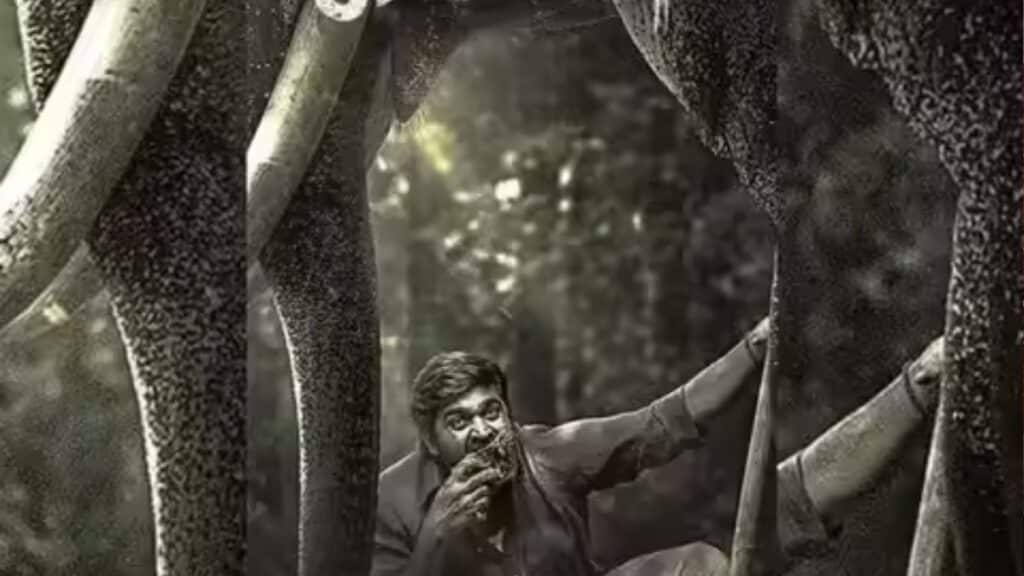
Not what happened. Everyone agrees on the basic facts. But what does it mean? Was he defending the innocent—a savior stepping into a moment of danger? Was he a man whose violence was calculated, premeditated, using the chaos of the festival as cover? Was there something almost supernatural about it—the right person in the right place at the wrong moment, a kind of divine accident?
This is the Rashomon structure—named for Akira Kurosawa’s 1950 masterpiece that used the same device to explore how subjective perception shapes truth—applied to rural Tamil Nadu with intelligence and discipline. The non-linear narrative doesn’t feel gimmicky because the questions it raises are genuinely interesting: not just who Kaattaan is, but who creates the legend of Kaattaan. Is he what he did? Is he what people need him to be? Does individual identity exist independently of the stories others tell about us?
Kaattaan (2026) – Complete Series Details
| Category | Details |
|---|---|
| Title | Kaattaan |
| Platform | Jio Hotstar |
| Release Date | February 14, 2026 |
| Episodes | 8 |
| Runtime per Episode | ~45 minutes |
| Total Runtime | ~6 hours |
| Language | Tamil |
| Country | India |
| Genre | Crime-Action, Psychological Drama |
| Sub-Genre | Rural Crime Saga, Moral Character Study |
| Narrative Device | Rashomon-style Multi-Perspective Storytelling |
| Setting | Rural Tamil Nadu |
| Director | M. Manikandan |
| Producer | Vijay Sethupathi (among others) |
| Series Type | OTT Original / Limited Series |
Complete Cast and Crew
| Role | Name | Contribution |
|---|---|---|
| Lead Actor / Producer | Vijay Sethupathi | Kaattaan; career-defining raw intensity |
| Key Cast | Milind Soman | Calculated menace; ideological contrast to Sethupathi |
| Comic Relief / Tonal Variation | Yogi Babu (rumored) | Provides tonal variation within dark narrative |
| Director | M. Manikandan | Grounded storytelling; rural realism |
| Cinematography | Uncredited in source | Rural landscape; dust, heat, moral harshness |
| Production | Vijay Sethupathi (producer) | Reflects deep creative investment in material |
The Cast: Who Brings Kaattaan to Life?
The ensemble of Kaattaan is built around a single gravitational center, and everything else orbits it.
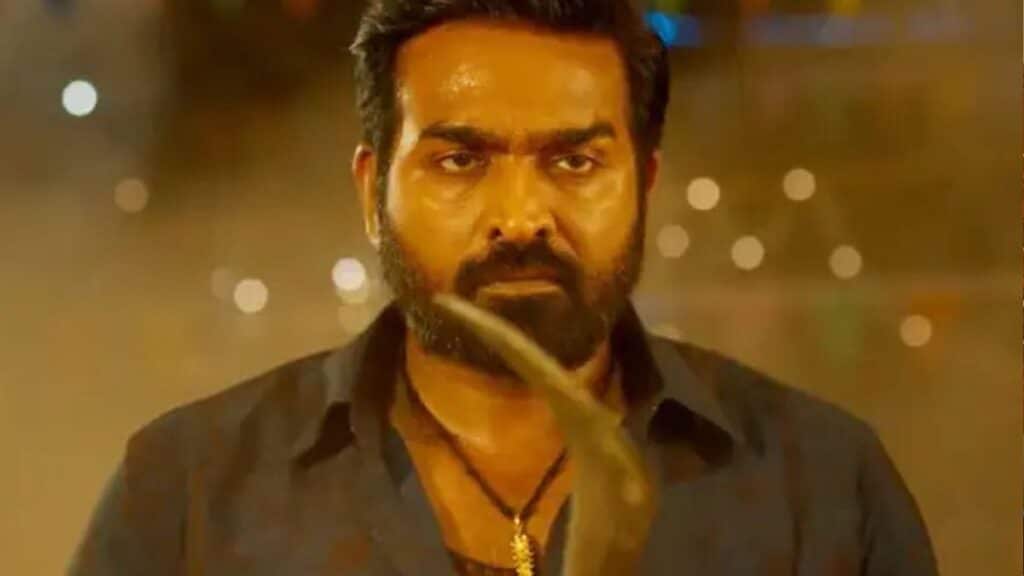
Vijay Sethupathi plays Kaattaan, and the performance is the kind that makes you forget you’re watching an actor perform. There’s a rawness here—a physical and emotional transformation—that goes beyond the usual parameters of committed acting. Kaattaan is a man who exists somewhere between savior and beast, and Sethupathi doesn’t resolve that duality. He inhabits it. You watch him in different episodes being framed as hero, monster, and miracle by different witnesses, and you believe every version. That’s the technical achievement at the heart of the performance: playing one man in a way that makes all contradictory accounts of him feel simultaneously true.
Milind Soman brings something unexpected and effective to his role. Where Sethupathi operates from a place of primal, physical energy, Soman’s character is calculated and ideologically sharp. The contrast between the two presences creates a tension that the series uses well—a push and pull between different kinds of power and different kinds of moral certainty.
What Works: The Genuine Strengths of Kaattaan
1. Vijay Sethupathi’s Performance
There isn’t a more important sentence in this review: the series works because Vijay Sethupathi is extraordinary in it. The savior-beast duality that the Rashomon structure requires isn’t just a narrative conceit—it’s a performance challenge of genuine difficulty, and Sethupathi meets it completely. He’s been consistently good throughout his career, but this feels like a gear shift. Like an actor who found material that matched his full range and decided to use all of it.
2. The Rashomon Narrative Structure
The decision to tell one story through contradictory perspectives isn’t just stylistically interesting—it’s thematically essential to what Kaattaan wants to say. The series is about how societies construct heroes and monsters from the same raw material, and the only way to dramatize that argument is to show the construction happening in real time. M. Manikandan and his team execute this structure clearly enough that even viewers unfamiliar with the Rashomon device can follow it, while giving it enough depth that it rewards closer attention.
3. Authentic Rural Backdrop
The setting of rural Tamil Nadu isn’t decorative. The dust, the heat, the specific social hierarchies of village life—these are load-bearing elements of the narrative. The cinematography emphasizes landscape as a kind of moral environment, a place where the line between order and violence has always been thin. This is grounded filmmaking in the truest sense: the story could not happen anywhere else.
4. Minimalistic Yet Impactful Action
For a series categorized partly as crime-action, Kaattaan is remarkably restrained in its violence. What action exists is purposeful and consequential rather than spectacular. The violence means something—it has weight, it has aftermath, it changes the people involved. This is a much harder thing to achieve than conventional action spectacle, and the series pulls it off.
5. Philosophical Undertone Without Preachiness
The series asks big questions without stopping to explain itself. It doesn’t tell you what to think about Kaattaan. It shows you multiple versions of him and trusts you to sit with the discomfort of contradiction. That restraint—the refusal to resolve moral ambiguity into a tidy lesson—is one of the series’ most sophisticated qualities.
6. The Finale Reframes Everything
Without spoiling anything: the final revelation doesn’t just conclude the story—it retroactively recontextualizes what came before. This is the reward for patient viewers who stayed with the slow build. The finale doesn’t deliver shock for shock’s sake; it delivers meaning. What you thought you understood about Kaattaan at the end of episode two is genuinely different from what you understand at the end of episode eight.
What Doesn’t Work: The Limitations Worth Knowing
1. Slow Early Pacing
The first two episodes ask for patience. The Rashomon structure requires establishing the central incident before beginning to reframe it, and that setup takes time. Viewers who need to be gripped immediately may struggle before the series finds its full momentum. The investment pays off substantially, but the early ask is real.
2. Perspective Shifts May Disorient Casual Viewers
The non-linear, multi-perspective structure is Kaattaan‘s greatest strength and its most significant accessibility challenge. Viewers accustomed to linear crime narratives may find the shifting accounts confusing rather than illuminating, especially in the middle episodes where the contradictions multiply fastest. This is not a series you can watch on your phone while doing something else.
Who Should Watch Kaattaan?
This Series Is For You If:
- You’re a Vijay Sethupathi fan who wants to see him at his absolute peak
- You appreciate Rashomon-style narrative structures and multi-perspective storytelling
- You enjoy psychological crime dramas that prioritize character over spectacle
- You’re part of the Tamil diaspora looking for quality streaming content from home
- You want OTT content that treats you as an intelligent viewer
- You have patience for slow-burn storytelling that pays off substantially
- You’re interested in films and series that explore how societies create myths
Key Themes the Series Explores
How Societies Create Heroes and Monsters: The central question of Kaattaan is whether identity is something a person possesses or something a community constructs. Each witness account doesn’t just reinterpret Kaattaan—it reveals something about the witness themselves, about what they needed the event to mean. This is a genuinely sophisticated idea, and the series dramatizes it without reducing it to a thesis.
Moral Ambiguity and Violence: The series refuses to judge Kaattaan’s act definitively. It contextualizes it, reframes it, shows its consequences—but it doesn’t tell you whether he was right or wrong. That refusal to resolve is the most morally honest thing about Kaattaan.
Rural Tamil Nadu as a Social Ecosystem: The setting is not incidental. Village social hierarchies, caste dynamics, community bonds and tensions—these form the environment in which the central act takes place and within which its meaning is contested. The rural backdrop is the moral landscape.
The Monster Inside: The phrase “Monster inside us all” that appears in promotional material isn’t just a tagline—it’s the series’ central argument. Kaattaan’s violence is extreme, but the series consistently suggests that the capacity for it is not unique to him. Every character in it is capable of framing the same act as heroic or monstrous depending on what they need to believe.
The OTT Context: Why Kaattaan Matters Beyond the Series
Kaattaan is positioned as a flagship “South Unbound” Tamil series for Jio Hotstar in 2026, and the platform’s bet on it appears to be paying off. Tamil OTT consumption grew approximately 40 percent post-2025 industry mergers, and the February 14 weekend saw a 30 percent surge in Tamil OTT viewership. The series reportedly generated 25 percent higher engagement than commercial masala releases during the same weekend—a meaningful data point about where audience appetite is actually moving.
The fact that a restrained, philosophical, slow-burn crime drama is outperforming conventional commercial content on engagement metrics should tell the Tamil OTT industry something important about what its audiences actually want when given a genuine alternative.
CHECK MORE ON:Shakha Proshakha : Stream Ritabhari Chakraborty’s Thriller on Hoichoi
Is Kaattaan Worth Your Time?
Here’s the unambiguous answer: yes. Emphatically yes, with the single caveat that you need to go in knowing what kind of series you’re about to watch.
Kaattaan is not a conventional crime thriller. It is not a mass action drama. It is not the kind of series that hands you satisfaction in regular intervals. It is slow, deliberate, morally complex, and built on the Rashomon premise that truth is plural and identity is constructed. If those qualities sound interesting to you, this is essential viewing—one of the strongest Tamil OTT releases in recent memory and the kind of series that justifies streaming platforms’ investment in regional content.
Vijay Sethupathi is extraordinary. M. Manikandan directs with genuine intelligence. The rural setting is rendered with authenticity. The finale delivers meaning rather than mere shock. And the central question—who creates the monster?—lingers after the credits roll in exactly the way good storytelling should linger.
Overall Rating: 4.5/5
The series trended for four days following its release. It generated the kind of audience engagement that commercial releases with ten times the marketing budget struggle to achieve. It did this by being genuinely good rather than strategically positioned—by being a series that people felt compelled to discuss because it gave them something worth discussing.
That’s what the best storytelling does. It doesn’t just entertain. It gives you something to carry. A question that doesn’t resolve. A character you can’t quite categorize. A moment that looked one way the first time you saw it and looks different now.
Kaattaan gives you all of that. Vijay Sethupathi carries it. M. Manikandan shapes it. And somewhere in rural Tamil Nadu, a man at a festival commits an act of violence that means everything and nothing, hero and monster, miracle and atrocity, all at once.
Watch it. Think about it. Then think about it again.
Now streaming on Jio Hotstar.
What is the Rashomon narrative structure used in Kaattaan?
The Rashomon structure—named after Akira Kurosawa’s 1950 film—tells the same event through multiple conflicting perspectives, with each account being equally plausible and equally incomplete.
How many episodes is Kaattaan and how long is each one?
Kaattaan is an 8-episode series with each episode running approximately 45 minutes. Total viewing time is approximately 6 hours, making it a comfortable weekend binge for most viewers.
Is Kaattaan available with subtitles for non-Tamil speakers?
The series is in Tamil on Jio Hotstar. Subtitle availability varies by region and platform configuration, but Jio Hotstar typically provides subtitles for regional language content.
