

New Year’s Day, observed on January 1, is one of the most widely celebrated occasions across the globe. Known as the Festival of New Beginnings, it marks the start of the civil year in the Gregorian calendar and is observed by people across cultures, religions, and nationalities. Whether celebrated with fireworks over a city skyline, a quiet family dinner, or a midnight prayer, New Year’s Day carries a universal message of hope, renewal, and fresh starts.
The emotional power of January 1 lies in its symbolism — the crossing of midnight from one year to the next represents a collective pause in the human journey. People reflect on what has passed, set intentions for what lies ahead, and come together in a spirit of joy and community. In India, while many communities observe their own regional new years at different times of the year, January 1 is enthusiastically embraced — especially in cities — as a shared moment of celebration that transcends religion and region.
When Is New Year’s Day in 2026?
New Year’s Day falls on Thursday, January 1, 2026. It begins at the stroke of midnight (12:00 AM) as December 31 transitions into January 1. In India, this moment occurs at 12:00 AM IST (UTC+5:30).
New Year’s Day 2026 Date in India January 1, 2026 — Thursday
Unlike lunar festivals, New Year’s Day is a fixed-date observance tied to the Gregorian solar calendar. It falls on January 1 every year without variation, though when the date falls on a Sunday, public holiday observances in some countries shift to the following Monday.
Table of Contents
New Year’s Day In USA, Canada, Australia, New Zealand, UK, UAE, Singapore 2026 Dates
New Year’s Day falls on Thursday, January 1, 2026
New Year’s Day falls on Thursday, January 1, 2026
New Year’s Day falls on Thursday, January 1, 2026
New Year’s Day falls on Thursday, January 1, 2026
New Year’s Day falls on Thursday, January 1, 2026
New Year’s Day falls on Thursday, January 1, 2026
Why the Date Doesn’t Change
New Year’s Day is anchored to the Gregorian solar calendar, which tracks the Earth’s full revolution around the sun. Unlike Holi, Diwali, or Eid — which follow lunar or lunisolar calendars — January 1 is a fixed point. New Zealand and Australia welcome the new year first, while the United States and Canada are among the last, meaning celebrations roll around the globe across a full 24-hour window.
New Year’s Day Overview
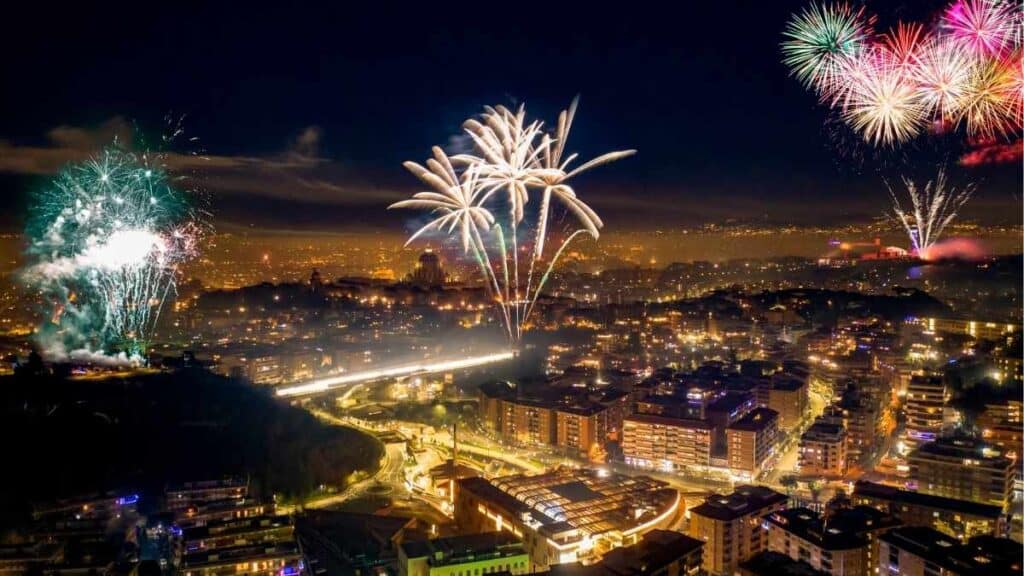
New Year’s Day on January 1 is a public holiday in almost every country in the world. It is observed by people of all religions and backgrounds, making it one of the few truly universal celebrations. The day marks the completion of one solar year and the beginning of the next — a moment recognized with fireworks, family gatherings, festive meals, and personal reflection.
In India, the occasion is embraced enthusiastically by younger generations and urban communities, even as individual states and communities also mark their own traditional new years — such as Ugadi, Puthandu, Vishu, Gudi Padwa, and Baisakhi — at different points in the calendar year.
Other Names and Regional Identities
New Year’s Day on January 1 is referred to differently across India’s languages:
| Language / Region | Name |
|---|---|
| Hindi / Urdu | Naya Saal (नया साल / نیا سال) |
| Marathi | Nava Varsh |
| Bengali | Nababarsha (নববর্ষ) |
| Tamil | Puththandu (in common use for Jan 1 greetings) |
| Telugu | Nutana Samvatsaram |
| Kannada | Hosa Varsha |
| Malayalam | Puthuvarsham (പുതുവർഷം) |
| Punjabi | Nave Saal |
| International | New Year’s Day / New Year |
In the Indian diaspora across the USA, UK, Canada, Australia, UAE, and Singapore, January 1 is simply called “New Year’s” and is marked with community events that blend Indian cultural warmth with mainstream global celebrations.
Origins, History, and Legends
The story of January 1 as New Year’s Day goes back over two thousand years. The early Roman calendar began the year on March 1, with ten months. January was later added and named after Janus, the Roman god of gateways and beginnings — depicted with two faces, one looking back at the past and one forward into the future. This imagery remains a fitting symbol for the new year.
In 46 BC, Julius Caesar reformed the Roman calendar. The Julian calendar, which took effect on January 1, 45 BC, formally established this date as the new year. Over the following centuries, Christian Europe observed the new year on varying dates — including March 25 and December 25 — until the Gregorian calendar, introduced by Pope Gregory XIII in 1582, re-established January 1 as the universal civil new year. England and its colonies did not formally adopt it until 1752.
For India, January 1 carries no ancient mythological root — it arrived through colonial and global influence. Yet it has been warmly adopted as a moment that belongs to everyone.
Cultural and Spiritual Significance
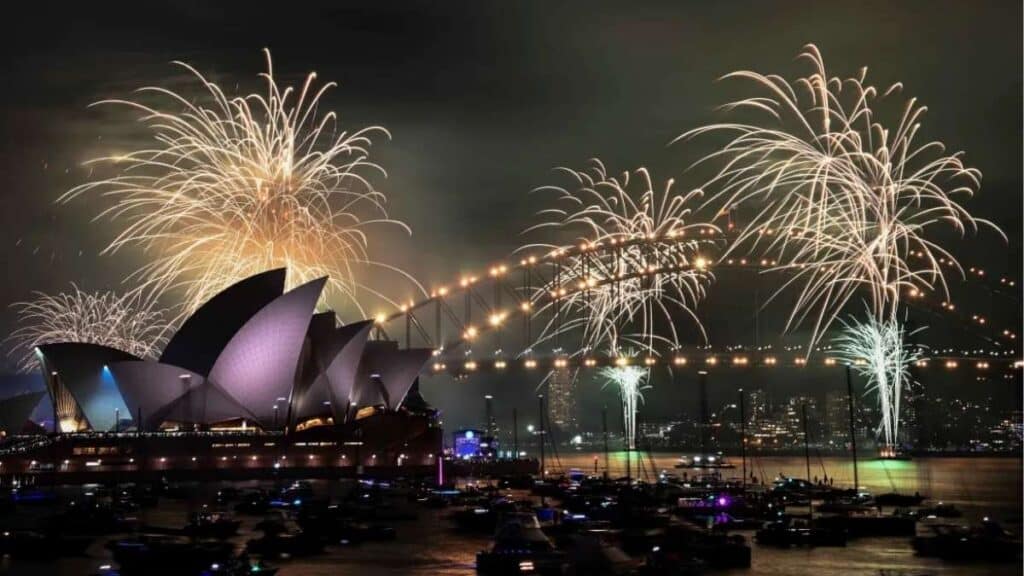
At its core, New Year’s Day is a celebration of time — of cycles, passage, and possibility. The act of crossing midnight from one year to the next taps into a deep human instinct to mark endings and welcome beginnings. For many, the day carries a quietly spiritual quality: a moment to be grateful for what was, and hopeful for what is to come.
The tradition of making New Year’s resolutions reflects this desire for self-renewal. In a cultural sense, New Year’s Day promotes unity — it is a day when the world, across all its differences, is doing something remarkably similar at the same time. For India’s diverse population, January 1 offers a rare shared moment of collective joy that cuts across religious, linguistic, and regional lines.
Prayers and Religious Observances
In Christian communities worldwide, watchnight services are a central observance connected to New Year’s. Held through the night of December 31 into the early morning of January 1, these services include singing, prayer, preaching, and Holy Communion — a structured way to spiritually close the old year and welcome the new. The Roman Catholic Church observes the Solemnity of Mary on January 1, while Anglican and Lutheran churches mark the Feast of the Holy Name.
In India, churches across denominations — particularly in Goa, Kerala, Tamil Nadu, and the Northeast — hold special New Year’s Masses and midnight services. Hindu households may offer prayers to family deities or visit temples on January 1 for blessings. Muslim families recite dua for a prosperous and peaceful year. The day, though civic in character, is touched by personal and communal moments of gratitude across all faiths.
Celebrations Across India
India’s New Year celebrations are as varied as its geography.
Goa is the country’s undisputed New Year capital — its beaches, shacks, and music festivals draw millions for days of revelry. Mumbai lights up Marine Drive and Bandra, with hotel galas and rooftop parties. Delhi’s Connaught Place and nightlife hubs fill with crowds, while Bengaluru’s Indiranagar and Koramangala host energetic street parties. Kolkata celebrates on Park Street, a tradition with deep historical roots. In the Northeast, particularly in Christian-majority states like Mizoram and Meghalaya, church services and community gatherings anchor the celebrations.
Across smaller cities and towns, young people gather on rooftops and public spaces with sparklers and festive food, making January 1 a genuinely pan-India moment.
Participation Across Religions in India
New Year’s Day on January 1 is one of India’s most inclusive celebrations because it carries no single religious identity. Hindus, Muslims, Christians, Sikhs, Buddhists, Jains, and Parsis participate freely — through prayers, family gatherings, or shared public festivities. The secular character of the date makes it a natural common ground in India’s religiously diverse landscape, reflecting the country’s pluralism in its most relaxed and joyful form.
How New Year Is Celebrated Outside India
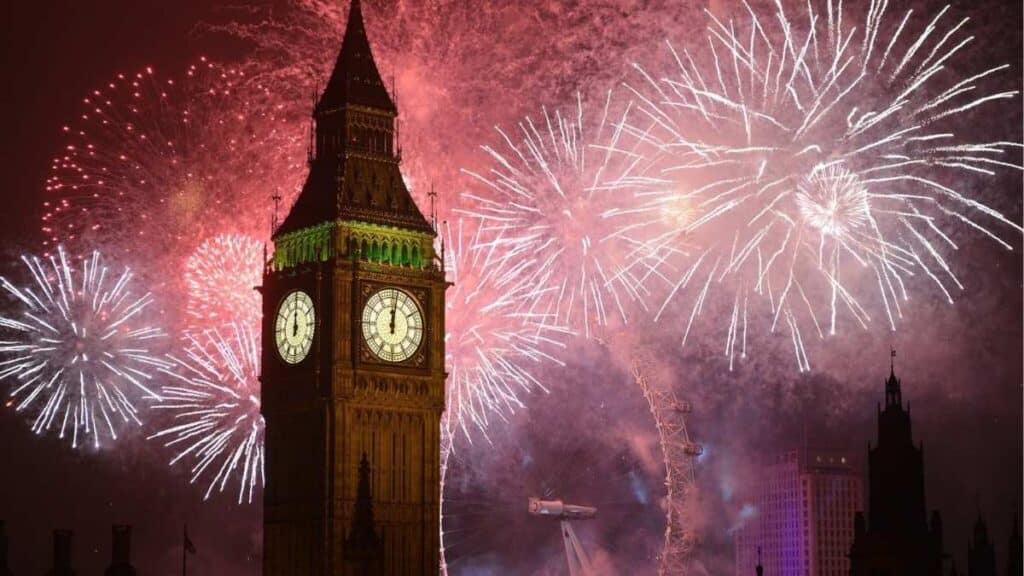
The Indian diaspora brings a distinctly warm cultural flavor to New Year’s celebrations around the world. In the USA, Indian communities in New York, Houston, and the Bay Area organize Bollywood countdown parties, temple prayers, and community dinners. In the UK, South Asian cultural associations in Leicester, Birmingham, and East London host events with dance, music, and festive meals. In Canada, Toronto and Vancouver see large diaspora gatherings with cultural programming. In Australia, families join Sydney’s iconic harbor fireworks before informal community celebrations. In the UAE and Singapore — both home to large Indian communities — the new year is marked with concerts, temple visits, and restaurant specials.
WhatsApp messages in regional Indian languages, video calls across time zones, and social media greetings in Hindi, Tamil, and Telugu are among the most distinctively Indian ways of marking the global new year.
Gifting Traditions
New Year’s gifting has ancient roots — exchanging gifts at the winter solstice was a well-established custom in early European communities. Today, the tradition takes many forms. In India, sweets, dry fruits, chocolate hampers, and greeting cards are popular gifts. Corporate India distributes branded New Year’s gifts to employees and clients. In the diaspora, wine, gourmet hampers, experience vouchers, and personalized planners are common. Among younger generations, digital gift cards and heartfelt personal gestures are increasingly preferred over material gifts.
New Year’s Day Foods and Culinary Traditions
Food is central to how communities mark the new year. In North India, festive sweets like gajar ka halwa and gulab jamun are favorites. In South India, payasam and coconut-based dishes mark the occasion. Goa’s New Year feasts feature sorpotel, bebinca, and fresh seafood.
Globally, New Year’s food carries symbolic meaning: Spain’s tradition of eating twelve grapes at midnight (one for each chime of the clock) is believed to bring luck for each month. In Italy, lentils with pork sausage symbolize prosperity. In the southern United States, black-eyed peas and collard greens are eaten for luck and wealth. In Japan, long soba noodles represent longevity. For the Indian diaspora, New Year’s meals are often a joyful hybrid — regional Indian dishes alongside the adopted country’s culinary traditions.
Music, Art, and Cultural Expression
Music is inseparable from New Year’s Eve and New Year’s Day worldwide. In English-speaking countries, Auld Lang Syne — Robert Burns’s poem set to a Scottish folk melody — is sung at midnight, a tradition recognized across continents. In India, Bollywood anthems and upbeat playlist countdowns soundtrack celebrations from Goa’s beach stages to Delhi’s rooftop parties.
The Vienna Philharmonic’s New Year’s Concert is one of classical music’s most-viewed global broadcasts. Across pop culture, year-end music charts, streaming recaps, and “best of the year” cultural retrospectives shape the texture of the season. Street art, countdown installations, and rangoli designs featuring the new year in cities across India add a local artistic dimension to a global celebration.
Modern Observance and Evolving Practices

New Year’s Day has changed significantly in the digital age. Social media countdowns, Instagram reels, and WhatsApp forwards now carry much of the celebration. Virtual gatherings, which gained prominence during the pandemic, have remained part of the landscape alongside in-person events. Several cities are experimenting with drone light shows as lower-pollution alternatives to traditional fireworks.
New Year’s resolutions remain a defining cultural habit, with mental health, fitness, financial wellbeing, and digital balance among the most common themes in recent years. To wish someone on New Year’s Day: “Happy New Year!” is the universal standard. In India, “Naya Saal Mubarak,” “Puthuvarsham Aashamsakal,” or “Nav Varsha ki Shubhkamnayein” carry the warmth of regional greeting traditions.
Cultural Reflection
New Year’s Day is not simply a date change — it is a collective human ritual of hope. Across centuries and continents, January 1 has absorbed local meaning, religious resonance, and personal significance while remaining, at its core, a shared pause to mark the passage of time. For India and its global diaspora, it is a rare moment when the world’s celebrations align — when the sounds of fireworks, the warmth of family, and the quiet promise of something new are felt simultaneously across every time zone. In that shared moment lies the enduring power of the new year.