


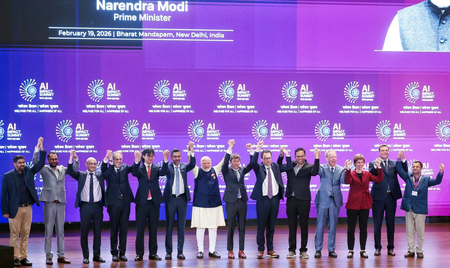
The AI Impact Summit in New Delhi has been a significant event, with global leaders and innovators acknowledging India’s increasing capabilities in the new technological era. India is focusing on inclusion as the world prepares for advancements in AI and grapples with ethical challenges. The country is transitioning from being known as the world’s back office to actively shaping the future technological landscape.
Artificial intelligence is a crucial aspect of the current era, and India is urged not to step back from it. The journey with AI must be collaborative and inclusive to ensure shared benefits. Reflecting on past experiences, the introduction of computerization in Indian banking and railways in the 1980s initially raised concerns about job losses. However, over time, technology enhanced efficiency, broadened services, and created new job opportunities.
AI has the potential to promote educational equity by providing personalized learning experiences. Students in remote areas can access quality education through digital platforms, tailored to their pace and needs. Language barriers can be overcome with AI-driven translation tools, enabling access to educational content in regional languages. Empowering teachers is essential, with AI assisting in reducing administrative tasks and allowing more time for mentorship and personalized guidance.
Despite the promises of AI in education, challenges such as the digital divide and data privacy concerns persist. Uneven access to electricity, internet, and devices across regions hinders the full realization of AI-enabled learning. Policy frameworks need to address privacy issues and the overreliance on automated solutions. Initiatives like the National Education Policy 2020 and PM SHRI program aim to enhance educational standards and facilities, emphasizing the need for broader integration and expansion to benefit all regions.
The ultimate goal is to align technological advancements with social inclusivity, ensuring that India’s global AI engagement translates into economic growth and diplomatic influence at the grassroots level. The focus should be on integrating technological ambitions into everyday educational settings to drive progress and inclusivity.
