


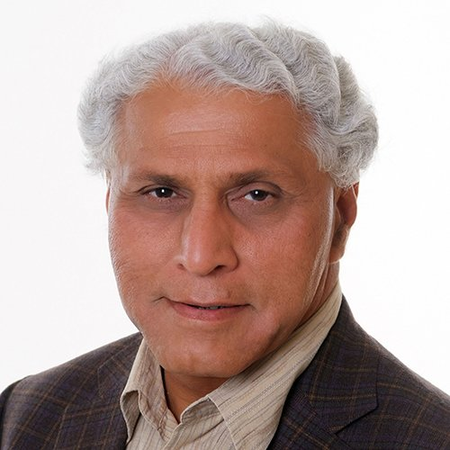
Artificial intelligence’s rapid advancement will shape economic growth, geopolitical power, and social stability based on national policy decisions made in the coming years, highlighted technology entrepreneur Romesh Wadhwani. Speaking at a CSIS conference before India’s AI Impact Summit, Wadhwani emphasized the emergence of autonomous AI agents capable of independent planning, execution, and learning with minimal human supervision.
Wadhwani noted the evolution from early generative AI tools to AI agents that can enhance, replace, and potentially outperform human workers. He projected a significant growth in AI agents, expecting them to collaborate independently, take over various tasks from humans, and eventually manage complete business processes. This transformation, he emphasized, is not a distant future but a vision achievable within five years.
The pace of AI development surpasses regulatory frameworks, drawing parallels to the delayed establishment of US telecommunications policy after the telephone’s invention. Wadhwani stressed that AI policy will influence outcomes across geopolitics, economic growth, business competitiveness, innovation speed, and social stability, determining winners and losers in the process.
Discussing global strategies, Wadhwani outlined the US favoring light regulation and innovation, Europe prioritizing regulation through the AI Act, and China enforcing mandatory AI adoption under political control. He characterized India’s approach as centered on economic growth and widespread AI deployment, focusing on practical innovation through applications, reskilling initiatives, and limited regulation. India aims to rank among the top three global AI powers, following the US and China, with AI potentially contributing $1 trillion to $1.5 trillion to India’s GDP over five years and generating millions of new jobs despite automation displacing some roles.
The upcoming AI Impact Summit in India signifies a shift in global AI dialogues towards implementation and development outcomes, particularly for regions in the Global South.
