


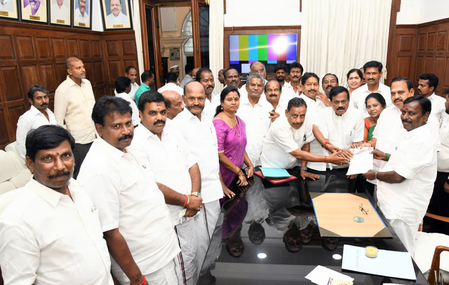
A significant crisis is brewing within the AIADMK in the Tamil Nadu Legislative Assembly, with rival factions led by former Chief Minister Edappadi K. Palaniswami (EPS) and senior leader S.P. Velumani vying for the party’s leadership. The confrontation escalated during Assembly proceedings as both Palaniswami and Velumani claimed the support of the majority of AIADMK MLAs to lead the party in the House.
The dispute has raised uncertainty over the official recognition of the AIADMK Legislature Party leader and the authority to appoint the party whip and represent its position in the Assembly. Legal experts are closely monitoring the situation, highlighting the potential implications of the Speaker’s decision on the party’s future.
Constitutional experts explain that the process of selecting a legislative party leader typically involves elected MLAs choosing a leader among themselves after an election. However, complications arise when the party leadership and a majority of MLAs support different individuals, leading to a legal and political standoff.
Political disputes over leadership often place the Speaker in the challenging position of determining the legitimate faction representing the party. The Supreme Court’s past judgments underscore the significance of identifying the “real political party” in such scenarios, emphasizing the critical role of legislative strength within the Assembly.
Experts point out that until a clear majority of MLAs support one faction, the authority to appoint the whip and decide the party’s stance in the Assembly remains with the party’s recognized general secretary. Any independent actions by MLAs against the official leadership may trigger consequences under the anti-defection law, further complicating the ongoing power struggle within the AIADMK.
